
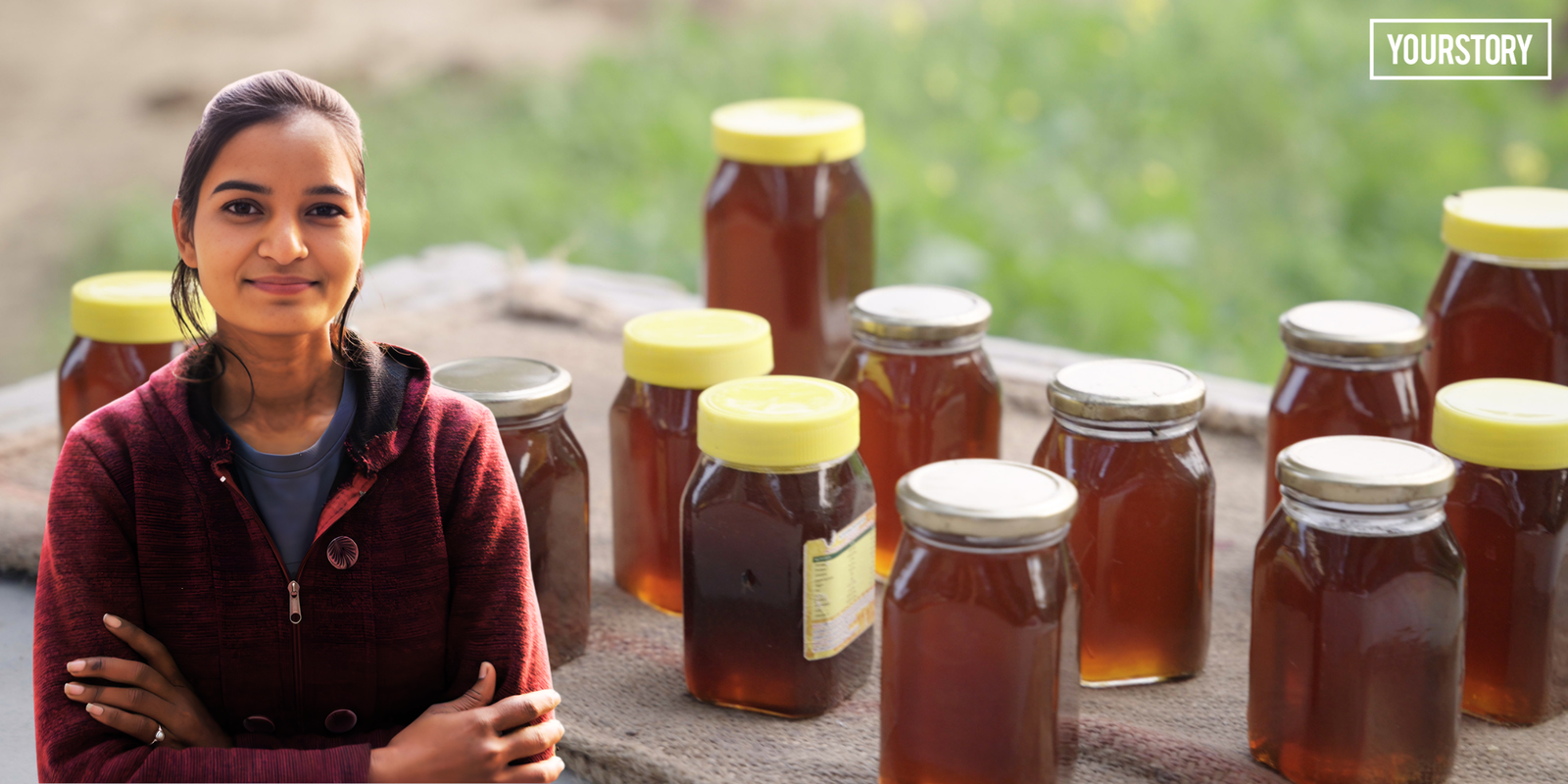
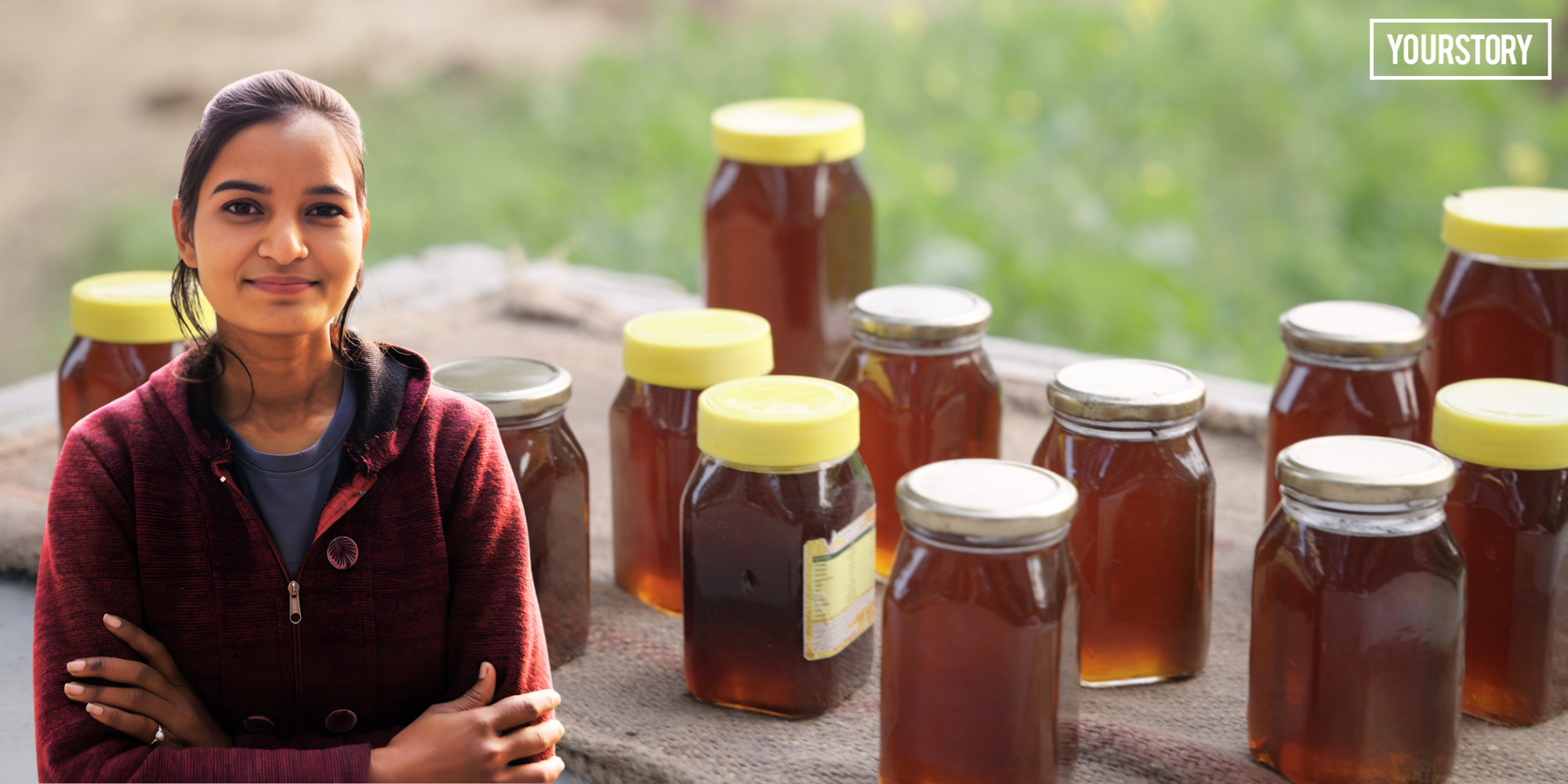

Her enterprise, Banarasi Honey, focuses on honey production through organised beekeeping. The work involves maintaining bee boxes, monitoring colonies, extracting honey, filtering impurities, and packaging varieties, such as multi-flower and mustard honey. The scale is modest but structured, and she also aims to provide work opportunities to a few local women.
Before starting her business, Patel worked in private jobs that offered Rs 12,000 to Rs 15,000 a month with long 12-hour shifts. She recalls that the work environment was often stressful and left little room for independence. “In my previous job, there were many difficulties, but now I work as my own boss,” she says.
Building the business
She began with five bee boxes. Each box contains around four frames and roughly 24,000 bees. Over a period of about 30 days, the colony grows, and within 40 to 45 days she can expand from one box to another. The bees can forage up to three kilometres from the box and typically gather sufficient honey within a week for extraction to begin.
The process requires regular monitoring to ensure the bees are not disturbed and that the surrounding environment remains moderate; neither too hot nor too cold. Once collected, the honey is extracted in stages, filtered to remove debris, and then packed. She explains that different floral sources result in variations in colour and flavour. Mustard honey appears yellowish, while older honey tends to darken over time. Local demand, she says, often favours honey that has been stored for two to three years.
Support and stability
While exploring ways to finance her venture, Patel learned about the Mukhyamantri Yuva Udyami Vikas Abhiyan (CM YUVA) Yojana. After contacting the branch office and completing the online application process, she secured support that helped her scale operations without immediate financial strain.
Under the CM Yuva Yojana, she was able to access an interest-free loan for up to four years, easing the burden she would have faced with private lenders who typically charge 10 to 12 percent interest. The absence of interest payments allowed her to focus on stabilising production and gradually recover the principal through business income.
Today, Banarasi Honey continues to operate from Odar village, with a system that balances traditional knowledge and structured practice. For Patel, the shift from uncertain employment to running her own enterprise has not transformed her life overnight, but it has provided a steadier path, one where early experience and calculated risk have led to greater control over her livelihood.
Discover more from News Link360
Subscribe to get the latest posts sent to your email.