



Govt notifies Rs 7,280 Cr scheme to boost rare earth magnet production

The initiative is targeting to reduce dependence on China for critical inputs and secure supply chains for electric vehicles, electronics, aerospace and green energy. The move comes amid supply disruptions triggered by China’s export restrictions on rare earth magnets and related technologies imposed in April this year, which have affected automobile, defence and clean energy supply chains globally.
The scheme, approved earlier by the Union Cabinet, aims to build a complete domestic value chain of converting rare earth oxide into sintered NdFeB, essential for India’s strategic and industrial advancement.
Neodymium-Iron-Boron (NdFeB) is the alloy used to create the strongest type of permanent magnets. These magnets are critical components in electric traction motors, power steering systems, sensors, and audio systems, and are widely used across electric vehicles, aerospace applications, and electronics.
“Through this scheme, the Government of India intends to incentivise setting up of 6,000 MTPA (million tonnes per annum) of integrated REO (rare earth oxides) to sintered NdFeB REPM’s manufacturing facilities in the country,” the Heavy Industries Ministry said in the notification.
Indigenously produced sintered NdFeB REPMs from NdPr oxide will be eligible for sales-linked incentives and capital subsidy under the scheme.
The scheme will allocate up to 6,000 MTPA of integrated sintered NdFeB magnet manufacturing capacity to five applicants through a transparent bidding process, Global Tender Enquiry (GTE) by issuing a request for proposal.
The minimum allocation to a beneficiary will be 600 MTPA, going up to a maximum allocation of 1,200 MTPA, in multiples of 100 MTPA, as per the notification.
The beneficiaries will receive sales-linked incentives on the sale of sintered NdFeB REPM and a capital subsidy for setting up the allocated manufacturing capacity.
Further, three selected beneficiaries with the lowest bids would receive an assured limited supply of NdPr oxide from IREL (India) Ltd, a central public sector enterprise iunder the Department of Atomic Energy.
The total duration of the scheme will be seven years, which comprises two years of gestation period for setting up the manufacturing facilities and five years for incentive disbursement on the sale of sintered NdFeB REPM.
Further, in case the first sale of sintered NdFeB REPM commences prior to the completion of the gestation period, then this additional period will also be eligible for sales-linked incentive over and above the five-year duration.
.thumbnailWrapper{
width:6.62rem !important;
}
.alsoReadTitleImage{
min-width: 81px !important;
min-height: 81px !important;
}
.alsoReadMainTitleText{
font-size: 14px !important;
line-height: 20px !important;
}
.alsoReadHeadText{
font-size: 24px !important;
line-height: 20px !important;
}
}
India has one of the world’s largest rare earth reserves, mostly located in coastal regions. However, despite this resource base, the country remains heavily import-dependent. Over 80% of its approximately 540-tonne rare earth magnet imports were sourced from China in the last fiscal year, according to a Crisil Ratings report published earlier this year.
IREL (India) is the only company in India that is engaged in the mining of rare earth ores and refining these into REOs.
While India possesses upstream capabilities in mining, separation and oxide refining, there is a notable gap in the industrial-scale midstream capabilities needed for oxide-to-metal, metal-to-alloy and alloy-to-magnet conversion. China controls more than 85% of global rare earth magnet processing capacity, a dominance built over decades, industry estimates showed in 2024.
Due to this, India currently imports all its sintered NdFeB REPM demand for downstream applications. In parallel, the government has been exploring interim measures since mid-2025, including discussions with countries such as Australia to source rare earth minerals and encouraging alternative approaches like magnet-free motor technologies and recycling, to mitigate near-term supply risks as domestic capacity is built.
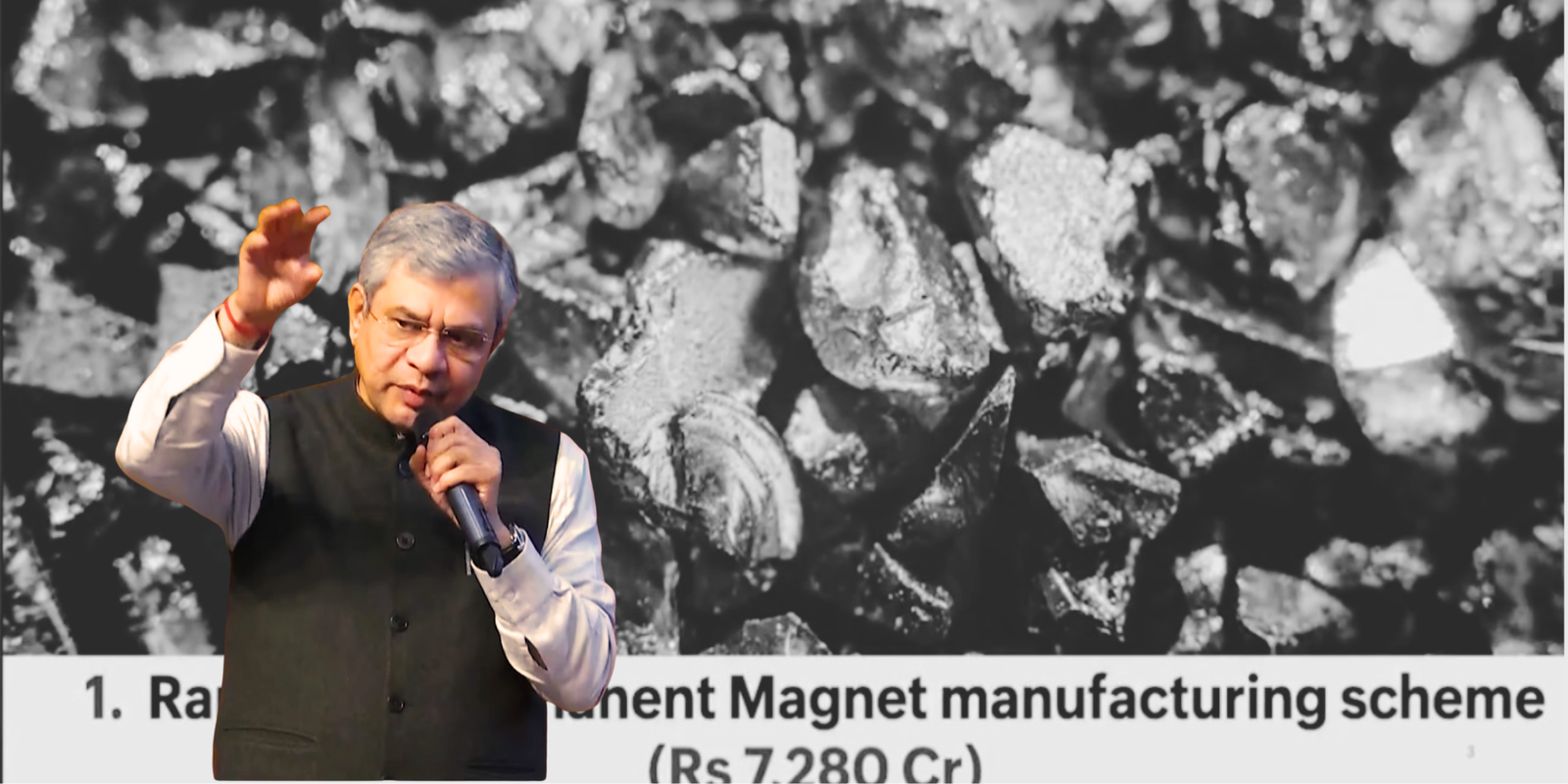
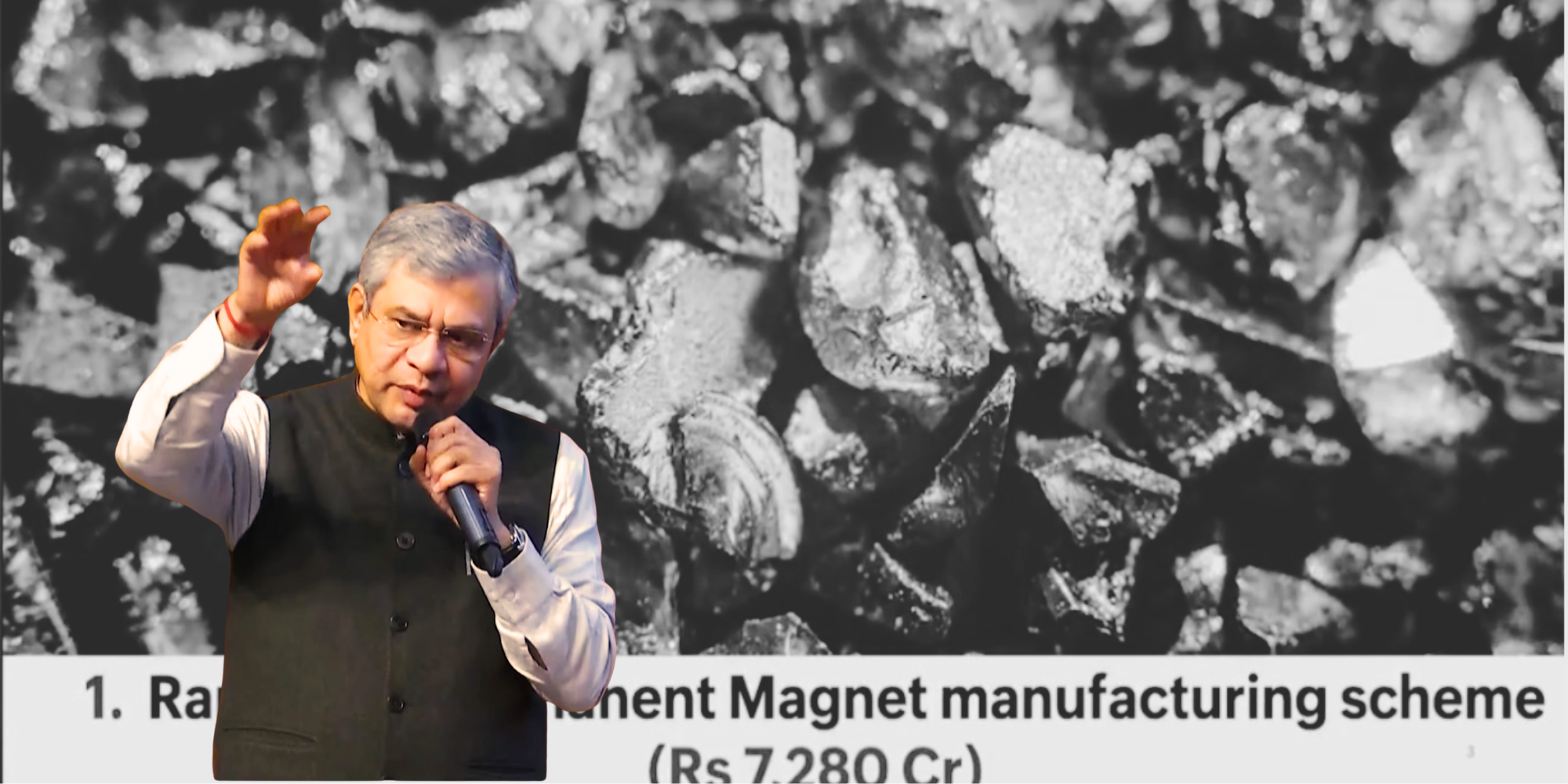
Feature image: Union Minister for Electronics and Information Ashwini Vaishnaw
(With inputs from PTI)
Discover more from News Link360
Subscribe to get the latest posts sent to your email.