


Why intimate partner violence is an under-recognised public health crisis in India
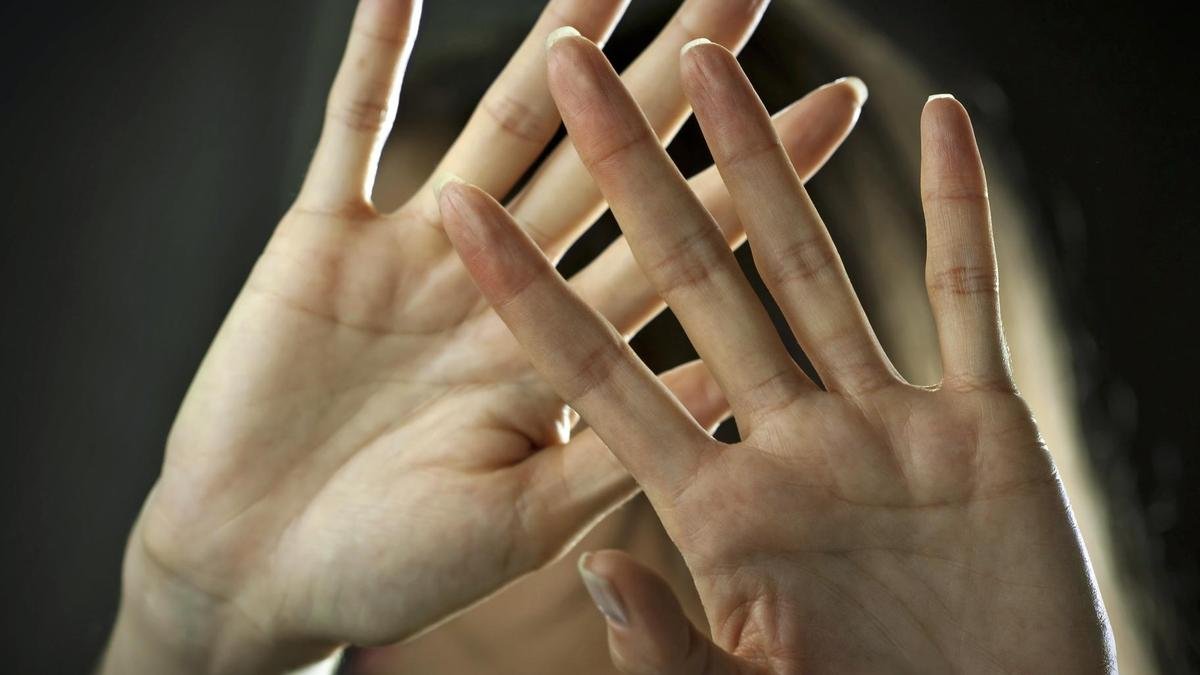
It did not.
Meera next consulted another private doctor, who referred her to a government hospital for specialist care. Over the next three years, Meera shuttled between multiple departments at the same government hospital in Assam—general medicine, cardiology, psychiatry—searching for an explanation for her symptoms. During this period, she developed severe insomnia. Long after her husband and children had fallen asleep, Meera would pace the darkened corridors of her home. The lack of rest left her exhausted and irritable during the day. She began falling behind on household work and sometimes found herself breaking down in tears without knowing why.
Doctors continued to investigate. Her ECGs were normal. Blood tests showed mild anaemia. She was prescribed iron supplements, antacids for gastric discomfort, and eventually sleeping pills to manage what was described as stress. It was only after a particularly severe episode, when Meera collapsed following an intense panic attack and was brought to the emergency department, that someone noticed what was really happening. A junior doctor noticed her flinch when her husband answered questions on her behalf and asked to speak to her alone. What emerged was a long history of physical violence, marital rape, economic control, and threats that she was enduring in her marriage.
Meera was not suffering from an inexplicable collection of symptoms. She was living with untreated post-traumatic stress disorder, and it had taken years for the health system to recognise it.

The burden of violence
Meera’s trajectory through India’s health system mirrors what a recent Lancet analysis now describes as a global, yet under-recognised, public health failure. Drawing on data from the Global Burden of Disease Study 2023, the paper identifies intimate partner violence as a significant and measurable contributor to a wide range of health outcomes, including post-traumatic stress disorder, depression and anxiety, suicide, chronic pain, cardiovascular disease, gastrointestinal disorders, substance use, sexually transmitted infections, and adverse reproductive outcomes.
In health, this burden is measured using disability-adjusted life years, or DALYs—a metric that captures not only deaths, but the years of healthy life lost to illness and disability. Globally, the paper estimates that intimate partner violence costs women 1.85 crore DALYs in 2023—years of life lost to premature death and years lived with disability due to conditions such as depression, PTSD, chronic pain, and reproductive ill-health. According to the paper, the prevalence of this is highest in the South Asian region.
For women of reproductive age in South Asia, the analysis finds that intimate partner violence is a greater risk factor for poor health than high fasting plasma glucose, obesity, smoking, or alcohol use—placing violence among the leading drivers of disability and chronic illness.
This evidence enables a crucial paradigm shift. Domestic violence is no longer a social issue but is a risk factor that impacts health.

Training gaps
Intimate partner violence is an insidious exposure that accumulates over years, shaping mental illness, non-communicable disease, and long-term disability rather than presenting as a single, identifiable event. This reframing also helps explain why violence so often remains invisible within the health system—even to the women living through it.
When asked why she never reported the violence earlier, Meera put it simply: “How would I know this was what was causing all these symptoms? It’s not like he beat me and I came to the hospital with an injury.”
A.K. Jayashree, head, department of community medicine at the Government Medical College in Kannur, Kerala has worked at the intersection of gender and health for several decades now. Dr. Jayashree began her career in the 1980s, volunteering with an autonomous women’s organisation working on gender issues and moved on to working with vulnerable populations such as transgender women and sex workers in the 90s. During this time, she worked with a large number of women who had been subjected to intimate partner violence. But when she entered formal medical education as a teacher in 2009, she was struck by how little of this knowledge had translated into training. What was being taught to medical students neither reflected the realities she had seen on the ground, nor did it take into account evidence generated by decades of research.
Studies show that women come to outpatient departments repeatedly with non-specific complaints that do not resolve – such as chronic pain, tiredness, inability to sleep etc. – but medical students are not taught to look for everyday violence. As a result, as doctors, they are often unprepared for what they encounter in real-world settings: women may arrive at emergency departments after being beaten, accompanied by husbands or in-laws who answer questions on their behalf. Junior doctors may sense something is wrong but lack the training to ask safely, document accurately, or refer appropriately.
What little information does reach medical students is fragmented. “Most of it is confined to forensic medicine, as a legal and evidentiary exercise” Dr. Jayashree says. “It is not taught in clinical subjects that actually shape how doctors practise.”
For Dr. Jayashree, the Lancet analysis underscores an urgent need: to integrate gender and intimate partner violence into the training of all health workers, alongside practical guidance on how to respond when violence is disclosed.

Few hits, many misses
Some efforts are underway. In Kerala, Bhoomika clinics—district-level centres housed within government hospitals—offer counselling, referrals to shelters, legal support, and skill development under the National Health Mission. Yet large numbers of women remain underserved.
“Most women do not want to leave their partners or file police complaints,” Dr. Jayashree says. “They want the violence to stop without their families breaking apart. Our systems are not designed to support that reality.”
Nancy Angeline Gnanaselvam, assistant professor of community medicine at St. John’s Medical College, Bengaluru, says the women most visible to the system are not representative of those living with intimate partner violence. “What we see in crisis centres or one-stop facilities are usually women in extreme distress, often brought by the police after calling helplines or when neighbours report the violence.” she says. “They are just the tip of the iceberg.”
Research by groups such as CEHAT, which is working on gender and health in India, also reveals that most women who receive help through the health system do so after a major crisis event, such as violence that necessitates a visit to the emergency department or a suicide attempt because of the violence.
The much larger, invisible group, she explains, are women who continue to live with their partners and do not want to file complaints or leave their homes. “They come to outpatient departments of hospitals or clinics instead,” she says. “They come with diabetes, hypertension, anxiety, and chronic pain. And we don’t recognise what we are seeing.”
Dr. Nancy argues that intimate partner violence remains poorly understood within medicine because it sits at the uneasy intersection of healthcare, social services, and law enforcement. “Physicians and police often don’t understand why a woman would want to go back to a violent man,” she says. “They are not trained to understand gender, power, and dependence within intimate relationships.”
In her practice, Dr. Nancy has seen women with diabetes and hypertension, disorders that remain uncontrolled despite being given the maximum possible medications, who eventually tell her that they are being subjected to violence at home. “One patient who had heart failure and was on a pacemaker told me, ‘From the day I was married, I have lived hearing my husband scream and shout, I am sure that that has something to do with me getting heart disease’” she recalls.
Yet even when violence is suspected, care pathways frequently collapse.

Stigma, mental healthcare challenges
Referrals to psychiatry or other mental health services are often resisted by families or blocked altogether. The physicians, who are the only people the women have safe access to, receive little training in even basic mental healthcare, let alone trauma-informed care. “So the woman remains in medicine clinics, cardiology clinics, diabetes clinics—treated symptom by symptom, while the cause remains untouched,” says Dr. Nancy.
“These women have enormous visible and invisible scars,” she says. “And no one is trained how to even offer them empathy.”
For Dr. Nancy, this is why reframing intimate partner violence as a public health and chronic disease issue matters. It shifts the focus away from isolated incidents and moral judgment, and toward cumulative exposure, with it being seen for the long-term disability and preventable illnesses it causes. Without that shift, she argues, the health system will continue to manage diabetes, heart disease, anxiety, and depression—while remaining blind to the violence that fuels them.
At this point the official core competency dealing with issues faced by women in the National Medical Council curriculum is only a one-hour lecture, says Dr. Nancy.
Curriculum changes needed
“There are many entry points into the conversation about gender, for example, when discussing the PCPNDT ((Pre-Conception and Pre-Natal Diagnostic Techniques) Act and sex selective abortion, there is potential for conversation as to why sex selective abortions happen in India. When studying nutrition, there is potential to discuss why anaemia is so common in Indian women. But medical education continues to miss these opportunities to have these conversations,” says Dr. Nancy. According to her, gender must be an ongoing conversation brought up again and again in various health contexts, not just in a single lecture. “This needs to make it into the curriculum of nurses, psychologists and other healthcare workers as well,” adds Dr. Jayashree.

Beginning conversations
Last month, in a modest auditorium at the Sree Uthradom Thirunal (SUT) Academy of Medical Sciences in Thiruvananthapuram, Kerala, an unfamiliar conversation took place. For the first time, a panel discussion brought doctors together to talk about intimate partner violence, not through case sheets or diagnostic codes, but through questions the health system has long avoided. What should a doctor notice? What should they ask? And what responsibility does medicine carry when violence shapes a patient’s life?
The discussion did not yet frame violence in the language of chronic disease or disability. But its significance lay elsewhere: in the acknowledgement that domestic violence is not external to healthcare. Several speakers spoke about discomfort, uncertainty, and the absence of training—about not knowing how to ask questions when family members sit beside the patient, or what to do after a disclosure. Others reflected on how often women return with the same complaints and symptoms, without anyone naming the underlying cause.
The conversation was a nod toward to shift that is now happening: moving intimate partner violence out of the margins of emergency care and social work, and into the core of how medicine understands illness, risk, and long-term health.
For women like Meera, this recognition came years too late. But the Thiruvananthapuram panel suggests that something is perhaps beginning to change, not in protocols or textbooks as yet, but in the questions doctors and healthcare workers are starting to ask themselves. If intimate partner violence is to be addressed as a public health issue, those questions—asked in clinics, classrooms, and conferences—may be where the work begins.
(Dr. Christianez Ratna Kiruba is an internal medicine doctor, with a passion for patient rights advocacy. christianezdennis@gmail.com)
Discover more from News Link360
Subscribe to get the latest posts sent to your email.