

What changes for farmers as India issues test rules for tractors powered by batteries
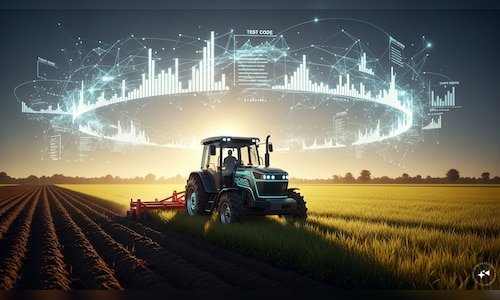
Electric agricultural tractors use electric motors powered by battery packs instead of diesel engines. They support propulsion and field operations. They eliminate tailpipe emissions at farms and reduce exposure to exhaust fumes. They operate with lower noise levels.
They contain fewer moving parts than diesel engines, which reduces maintenance and operating costs. Lower diesel consumption also reduces the use of natural resources linked to fuel production.As the number of electric agricultural tractors grows, the lack of dedicated testing systems creates difficulty in measuring safety, reliability and performance. The Mechanisation & Technology Division of the Ministry of Agriculture & Farmers’ Welfare requested priority work on standards. The Bureau of Indian Standards then developed the new test code to introduce consistent and harmonised procedures.
The drafting process involved manufacturers, testing and certification agencies, academic and research bodies and experts in agricultural engineering and electric mobility.
Participants included representatives from the Ministry of Agriculture & Farmers’ Welfare, ICAR-Central Institute of Agricultural Engineering, Central Farm Machinery Training and Testing Institute, Tractor and Mechanisation Association, Automotive Research Association of India and All India Farmers Alliance.The test code provides common terminology, general guidelines and defined tests. These include PTO power testing, drawbar power testing and testing of belts and pulleys. It also sets procedures for vibration measurement, specification verification and inspection of assemblies and components of electric tractors.
The standard draws technical inputs from IS 5994:2022 and relevant Automotive Industry Standards for electric vehicles that are adapted for agricultural use.
Implementation through approved testing institutes is expected to support wider deployment of electric tractors. The testing framework is designed to encourage innovation in electric farm machinery and to help reduce emissions from agricultural mechanisation.
Test results produced under the procedures will create a scientific basis for assessing performance and safety. The data will also support future acceptance criteria and conformity assessment systems specific to electric tractors. The standard is intended to help manufacturers deliver safe machines and provide farmers greater confidence in product capability.
Notification of the new test code is voluntary. It marks progress in India’s standard-setting approach for new technologies in agriculture and aligns practices with global developments in electric mobility and farm mechanisation.
Separately, credit rating agency ICRA revised its outlook for the tractor sector for FY2026. It now expects wholesale volume growth of 15–17%, compared with an earlier forecast of 8–10%. Wholesale tractor volumes rose 30.1% year-on-year in November 2025. Growth during the first eight months of FY2026 was 19.2%, compared with 7% growth in FY2025.
ICRA cited the reduction of GST on tractors to 5%, which lowered prices by about ₹40,000 to ₹1,00,000 depending on horsepower. The agency also cited the 2025 Southwest Monsoon, which recorded rainfall at 108% of the long-term average. It expects advance purchases ahead of the TREM V emission transition on April 1, 2026.
Discover more from News Link360
Subscribe to get the latest posts sent to your email.