



Inside Varanasi’s Wooden Lacquerware & Toys Craft, Where Heritage Finds a Market
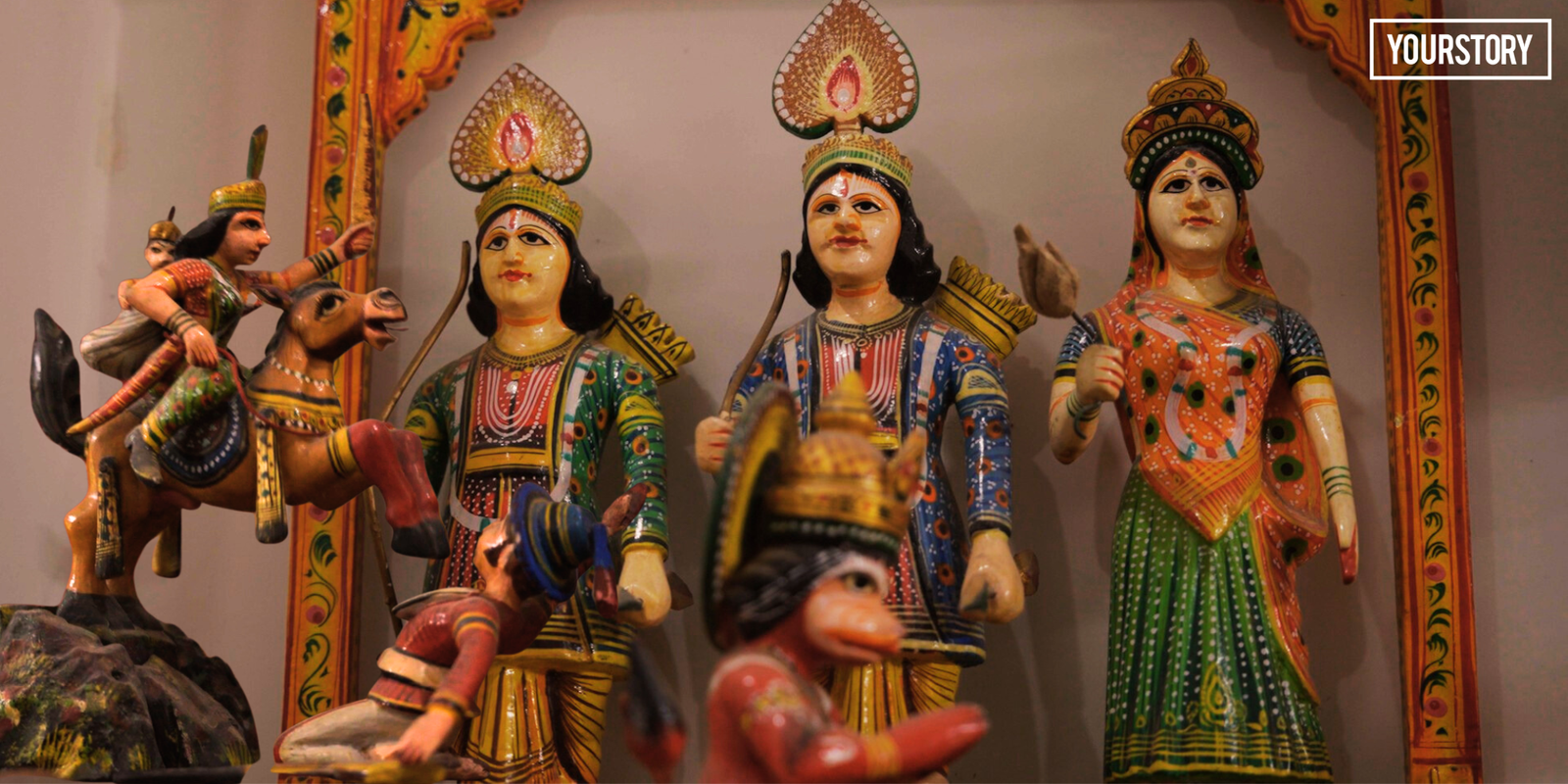
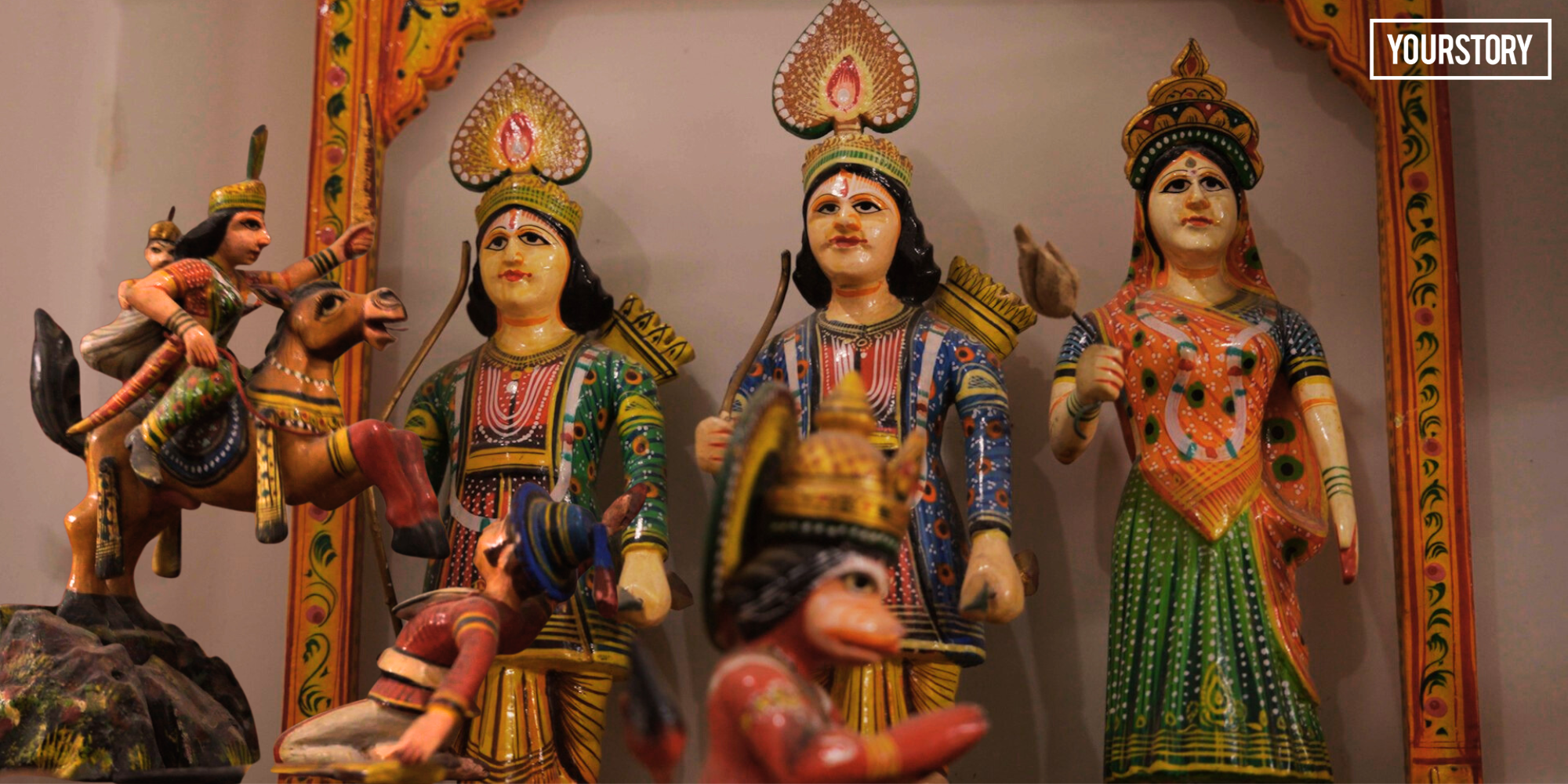

In the older lanes of Varanasi, wooden lacquerware and toys appear in spaces where daily life, ritual, and tradition intersect. A brightly lacquered toy in a household, a handcrafted wooden piece used in worship, or a traditional object made for ceremonial use is rarely treated as decoration alone. Each carries memory, belief, and local aesthetics—shaped carefully by hands trained to work with wood without compromising detail or strength.
This traditional craft aligns with Uttar Pradesh’s One District One Product (ODOP) initiative, which focuses on strengthening district-specific products through training, financial support, and market access. In Varanasi, Wooden Lacquerware and Toys have been officially identified as the district’s ODOP product, bringing renewed visibility to artisans who have sustained this craft for generations.
Omprakash Sharma grew up within this tradition, surrounded by tools, unfinished wooden forms, and the steady rhythm of handwork. Even when the broader ecosystem weakened, his family held on to the belief that the craft was not merely a source of income, but a form of inheritance worth preserving.
Inherited Skill, Fragile Continuity
Sharma belongs to a family of traditional artisans engaged in wooden lacquerware and toy-making in Varanasi. He recalls a time when handcrafted wooden products had steady demand, especially for items connected to rituals, gifting, and everyday use. Over the years, however, machine-made and mass-produced alternatives entered the market—cheaper, faster, and more uniform.
As demand for handwork declined, many artisans moved away from the craft in search of stable livelihoods. By the late 2000s, Sharma says the number of active craftsmen had reduced significantly, and regular orders were uncertain. Yet he chose to stay. For him, leaving the craft felt like letting go of a skill that defined his family’s identity.
The craft itself adapted with time. Earlier, premium woods were commonly used, but as availability declined, artisans identified alternative woods suitable for lacquer application and fine shaping. Sharma explains that these substitutes still allow precision, durability, and the smooth finish that defines Banaras-style wooden products.
From Workshop to Wider Markets
The making process remains largely manual. Wood is sourced through permitted channels, cut and seasoned, and then shaped carefully. Lacquer is applied in layers, often on rotating setups, to achieve uniform colour and finish. Final detailing determines both durability and visual appeal.
Market access improved once Sharma began participating in ODOP-supported exhibitions and craft fairs in cities such as Delhi, Noida, and Lucknow. These platforms connected his work with buyers who value handcrafted quality and are willing to invest in it. Demand has gradually increased, even exceeding supply at times, as rebuilding skilled artisan capacity takes time.
With renewed confidence, Sharma now trains students and aspiring artisans, including fine arts learners. His focus extends beyond technique to patience, discipline, and finishing standards. For him, sustaining the craft matters more than protecting individual orders.
Today, wooden lacquerware and toys from this part of Varanasi are once again gaining recognition. Visitors come to see the process, buyers engage directly with artisans, and handcrafted work is valued for its skill and story. The craft survives not on nostalgia alone, but on visibility, steady demand, and the ability to make heritage relevant in contemporary markets.
Discover more from News Link360
Subscribe to get the latest posts sent to your email.