


Union Minister pledges budget-backed tech boost for Bengal handlooms
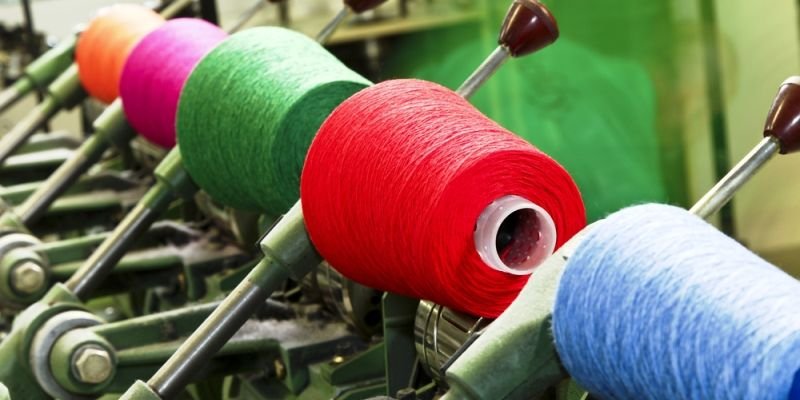

This visit comes on the heels of the Union Budget 2026, where Finance Minister Nirmala Sitharaman unveiled a comprehensive package to revitalise the sector, including the new ‘Textile Expansion and Employment Scheme’ aimed at modernising traditional clusters with capital support for machinery and technology upgradation.
Beginning his visit at Shantipur in Nadia district, the minister interacted with weavers and handloom workers and said the sector would be protected from unfair competition by power looms. The government aims to reinforce this protection through the Budget’s newly announced ‘National Handloom and Handicraft Program’, which will integrate and strengthen existing schemes to provide targeted support to weavers and artisans, ensuring they remain competitive against mass production.
He also announced that school uniforms would be sourced exclusively from handwoven fabric. This move complements the budget’s ‘National Fiber Scheme’, which focuses on achieving self-reliance in natural fibers including silk, wool, and cotton, alongside the ‘Tex-Eco Initiative’ to promote globally competitive and sustainable textiles.
.thumbnailWrapper{
width:6.62rem !important;
}
.alsoReadTitleImage{
min-width: 81px !important;
min-height: 81px !important;
}
.alsoReadMainTitleText{
font-size: 14px !important;
line-height: 20px !important;
}
.alsoReadHeadText{
font-size: 24px !important;
line-height: 20px !important;
}
}

Singh highlighted the significance of GI-tagged sarees such as Shantipuri, Baluchari, and Tangail, and said proposed trade agreements with the United States and the European Union could open up wider export opportunities for Bengal’s artisans. Referring to the Mahatma Gandhi Gram Vikas Yojana, he said efforts were being made to strengthen marketing linkages, while the use of artificial intelligence-based quality sampling could help improve consistency and global competitiveness. These efforts are directly supported by the newly unveiled ‘Mahatma Gandhi Gram Swaraj Initiative’ in the budget, which specifically aims to facilitate global market linkage and branding while streamlining training, skilling, and quality of production for khadi and handlooms.
The minister noted that West Bengal has nearly seven lakh weavers. The critical nature of this workforce is underscored by the Economic Survey 2025-26, which highlights that MSMEs employ over 32.82 crore people across 7.47 crore enterprises—making it the second-largest employer after agriculture—and contribute 31.1% to India’s GDP.
Later, Singh visited Barrackpore and met senior officials of the Central Research Institute for Jute and Allied Fibres (CRIJAF), National Institute of Fashion Technology Extension and Training (NINFET), and Indian Jute Industries’ Research Association (IJIRA) at the CRIJAF campus.
The discussions focused on adopting new technologies within traditional textile ecosystems to enhance productivity, quality, and sustainability without diluting artisanal character.
Officials briefed the minister on ongoing research related to fibre innovation, design development, and climate-resilient practices for handlooms and allied sectors. Shantipur is among the country’s oldest handloom centres, known for its fine cotton sarees, while the institutions in Barrackpore are engaged in research, training, and innovation across jute, handloom, and allied textile segments.
(Along with inputs from PTI)
Discover more from News Link360
Subscribe to get the latest posts sent to your email.