

Ferrari names first EV Luce, reveals interior developed with Jony Ive’s design team | In pics
 1 / 10
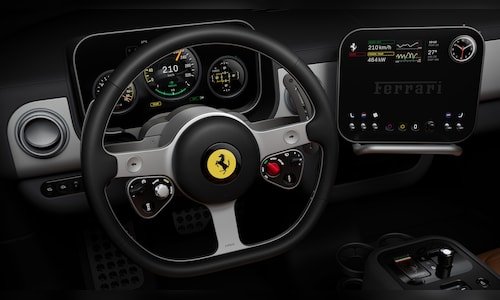
Electric Debut: Ferrari has previewed its first fully electric production model, now named Ferrari Luce (pronounced “Loo-chay”), derived from the Italian word for “light.” The exterior design remains undisclosed until a full reveal is scheduled for May. The company has not announced pricing or a launch date, but confirmed the car will join the regular lineup rather than be offered as a limited series.
 2 / 10
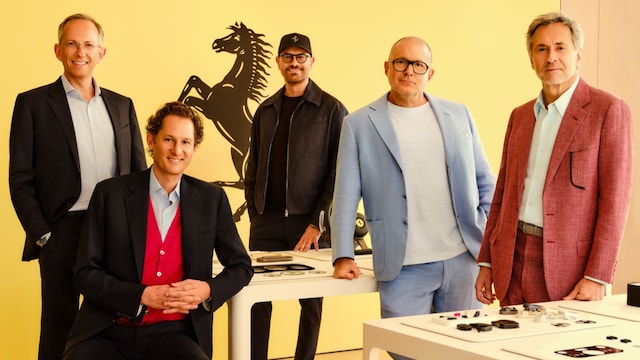
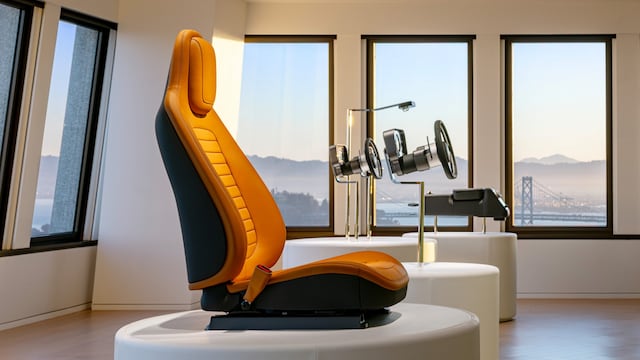
Design Partners: The project was developed in collaboration with LoveFrom, the design studio founded by Jony Ive and Marc Newson. Ferrari said the partnership covered industrial design, materials, and user interface. A joint presentation in San Francisco introduced core interior elements. Ferrari Chairman John Elkann supported the collaboration, while design chief Flavio Manzoni ensured integration with engineering and production constraints.
 3 / 10
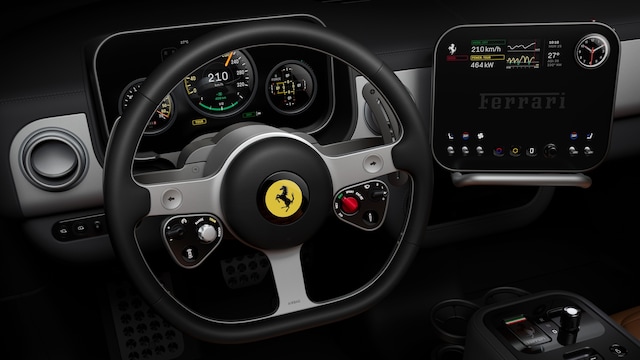
Interface Philosophy: Luce’s cabin avoids the large-screen approach common in many electric vehicles. Ive said electrification does not require fully digital interaction and emphasised mechanical engagement. Essential driving functions rely on physical switches and rotary controls, supported by smaller displays. Ferrari said the layout separates controls from information screens to lower cognitive load and help drivers keep attention on the road.
 4 / 10
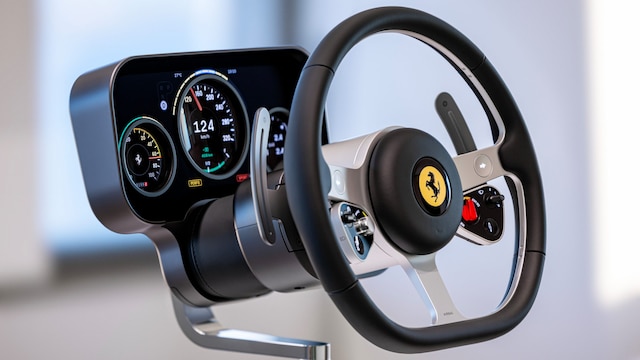
Steering Wheel: The three-spoke steering wheel references Ferrari designs from the 1950s and 1960s and uses exposed aluminium. It is built from 19 CNC-machined components made from 100% recycled alloy and is 400 grams lighter than a standard Ferrari wheel. Two analogue-style control pods sit within thumb reach, arranged in a layout influenced by Formula One cars. Ferrari said more than 20 driver evaluations shaped the mechanical and acoustic feedback of each control.
 5 / 10
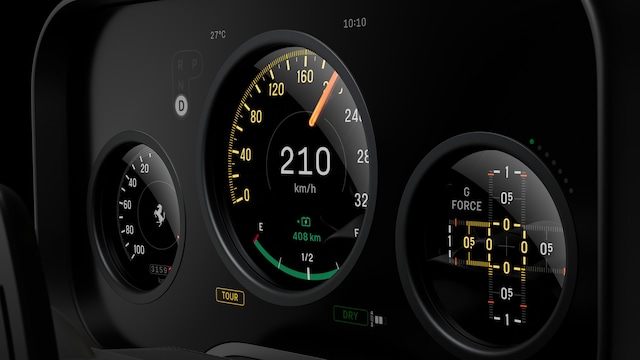
Binnacle Display: The instrument binnacle is mounted on the steering column and moves with steering wheel adjustments, a first for a production Ferrari range. Two overlapping OLED panels supplied by Samsung Display create layered visual depth. Three cutouts in the upper display reveal a second screen beneath glass lenses, bordered by anodised aluminium rings to maintain clarity and contrast.
 6 / 10
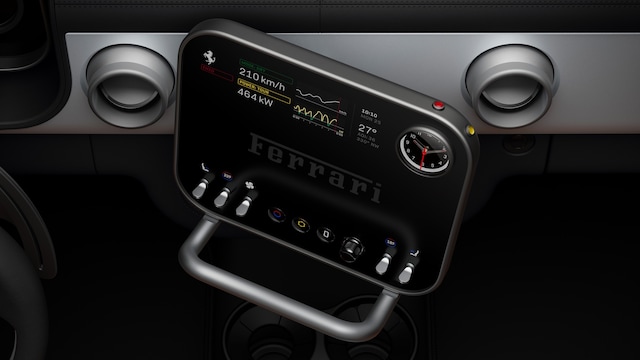
Central Panel: The central control screen is mounted on a ball-and-socket joint so it can tilt toward either occupant. A fixed palm rest supports stable interaction without needing to look down. Integrated into the display is a mechanical multigraph driven by three motors. It can switch between four modes: clock, chronograph, compass, and launch control display, blending mechanical motion with digital data.
 7 / 10
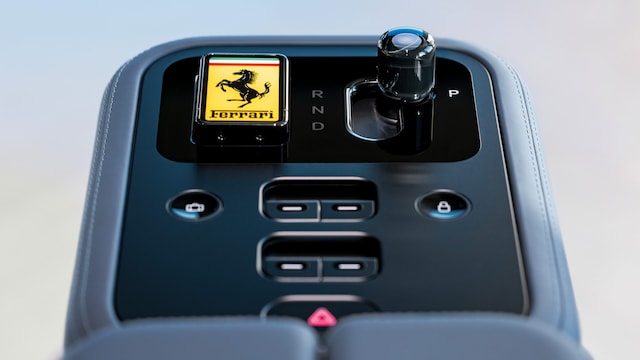
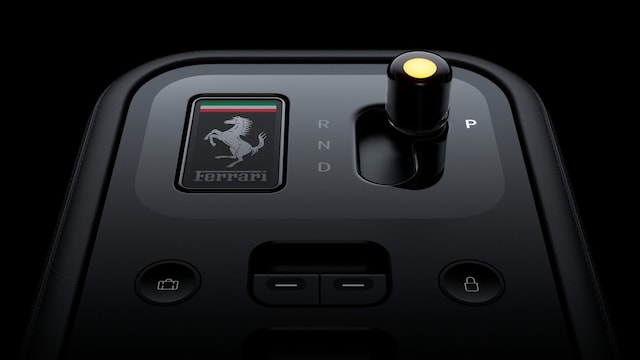
Key Sequence: Starting the car involves a glass key made from Corning Gorilla Glass. The key contains an E Ink display that consumes power only when its image changes. When inserted into its dock on the console, the key shifts from yellow to black, an automotive first. The action triggers lighting across the cabin displays to indicate readiness.
 8 / 10
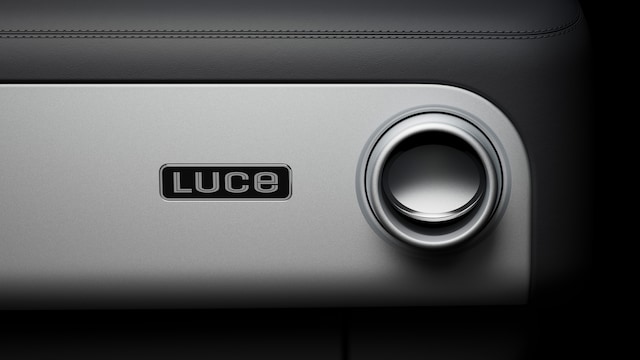
Material Strategy: Aluminium is widely used for structural and visible components. Ferrari said the recycled alloy is precision-machined from solid billets and anodised to increase hardness and surface durability. Gorilla Glass appears on the shifter, control surfaces, binnacle lenses, and console. Laser micro-perforation techniques were used to embed graphics into glass, a manufacturing process not previously used in car interiors.
 9 / 10
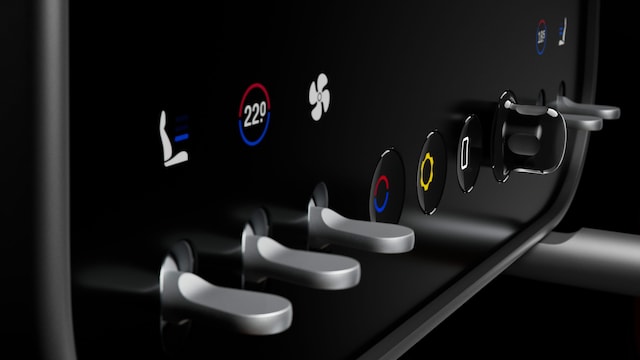
Digital Balance: The display graphics draw from historic Veglia and Jaeger automotive instruments while remaining fully digital underneath. Information is arranged for quick reading, similar to watch dials and aviation gauges. The infotainment system supports Apple CarPlay and Android Auto integration. Screen size is smaller than in many EVs, and climate and seat adjustments remain on dedicated physical switches.
 10 / 10
Future Context: Ferrari said Luce will be available as a standard production model through special order, with delivery times likely extending from months to years. The exterior design and additional specifications will be presented in May. LoveFrom’s automotive work is expected to be limited, as the studio now focuses mainly on projects linked to OpenAI following Ive’s company sale.
Discover more from News Link360
Subscribe to get the latest posts sent to your email.