
Players over performance: Is the cricket ecosystem doing enough to safeguard women cricketers from abuse?
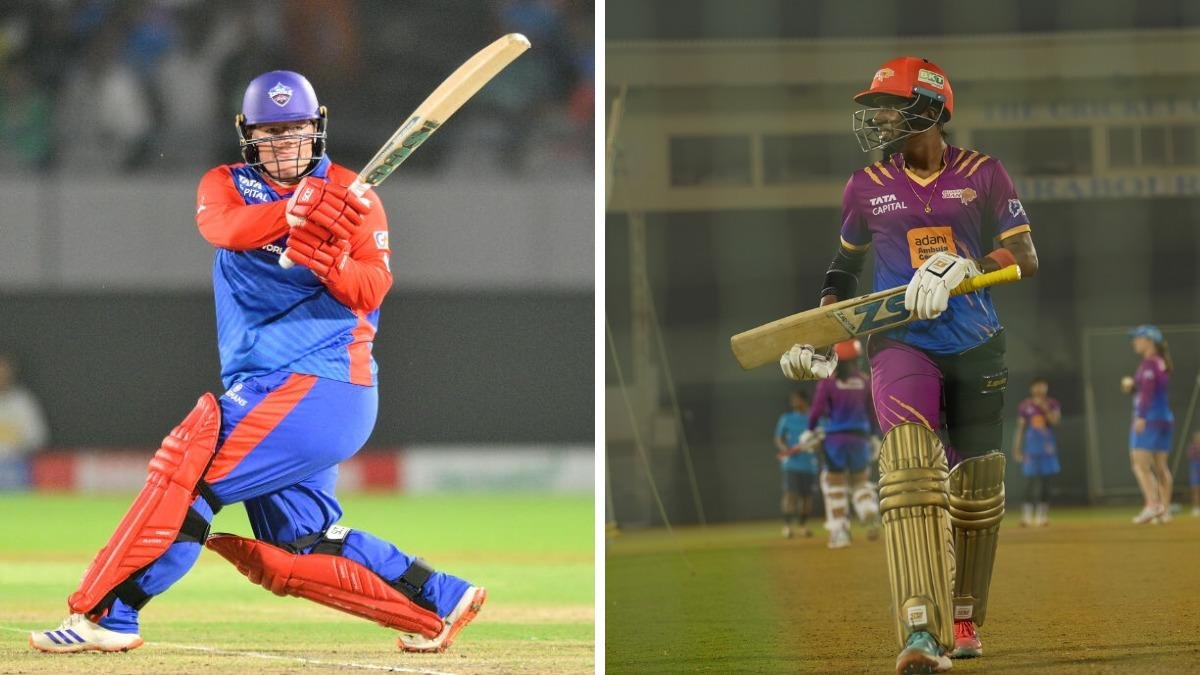
It’s a question that governs much fan engagement surrounding the game globally. India is no different. With the women’s game, which has boomed in India over the last decade, a large part of casual interest has plenty to do with the way players look first before the discussion of any skills come up.
To be fair, the obsession with looks is not gender specific, as is the absolute rejection of anything that looks different from athletic. Former India captain Rohit Sharma has dealt with plenty of unsavoury comments around his weight. Bigger-built players like Rakheem Cornwall, for example, have always found their cricketing prowess spoken about in terms of the number on a scale.
South African-turned-Australian keeper-batter Lizelle Lee’s career has been viewed through this lens for its entirety. Her commendable reflexes with the gloves or her incredible bat swing are not the immediate conversation starters when discussing this explosive opener’s cricketing resume.
In 2022, Lee was one half of a promising Protean opening salvo, the brash big-hitting foil to a young Laura Wolvaardt’s refined textbook strokeplay. She quickly stacked up runs for the Rainbow Nation, becoming its erstwhile top-scorer in white ball cricket, but the scrutiny over her weight pushed her to a shock retirement in 2022.
“I know I don’t look like an athlete, but that doesn’t mean I can’t do my job,” she told the BBC in a revelatory interview shortly after.
Drafted in by the Delhi Capitals for the Women’s Premier League’s 2026 edition, Lee’s presence triggered similar debates with unsavoury comparisons casually thrown around online.
“People around the world don’t always see your struggles. They only see what you look like, but they don’t see the work you’re putting behind all the struggles. They don’t understand how much casual judgement impacts one’s mental health,” Lee told Sportstar.
Lee’s retirement and subsequent move to Australia left her colleagues and fans stunned, especially at a time when it looked like she was peaking, winning an ICC Cricketer of the Year honour in 2021. A fractured relationship with her home board eventually revealed itself, despite a joint statement released by the two parties to address the growing whispers on the right and wrong of South Africa’s fitness clearance metrics.
RELATED | How an injury break, shift at domestic level helped Rajeshwari Gayakwad enjoy cricket again
“The call blindsided me, too,” Lee chuckled. “I didn’t retire to prioritise other opportunities. Retirement made me actively seek other opportunities out,” she said, addressing a common allegation that she picked the franchise map over national colours.
“A lot of things happened behind the scenes. I had a lot of baggage with how everything was about how I looked. I regret sending out the statement with the CSA, because it made them look good in a sense, when I never felt supported by them. There are a lot of things I regret around my retirement, but I don’t regret retiring. I couldn’t have been in a better place. My mental health would have gone down the drain if I had stayed in that team, so things turned out for the better for me.”
| Photo Credit:
Vijay Soneji

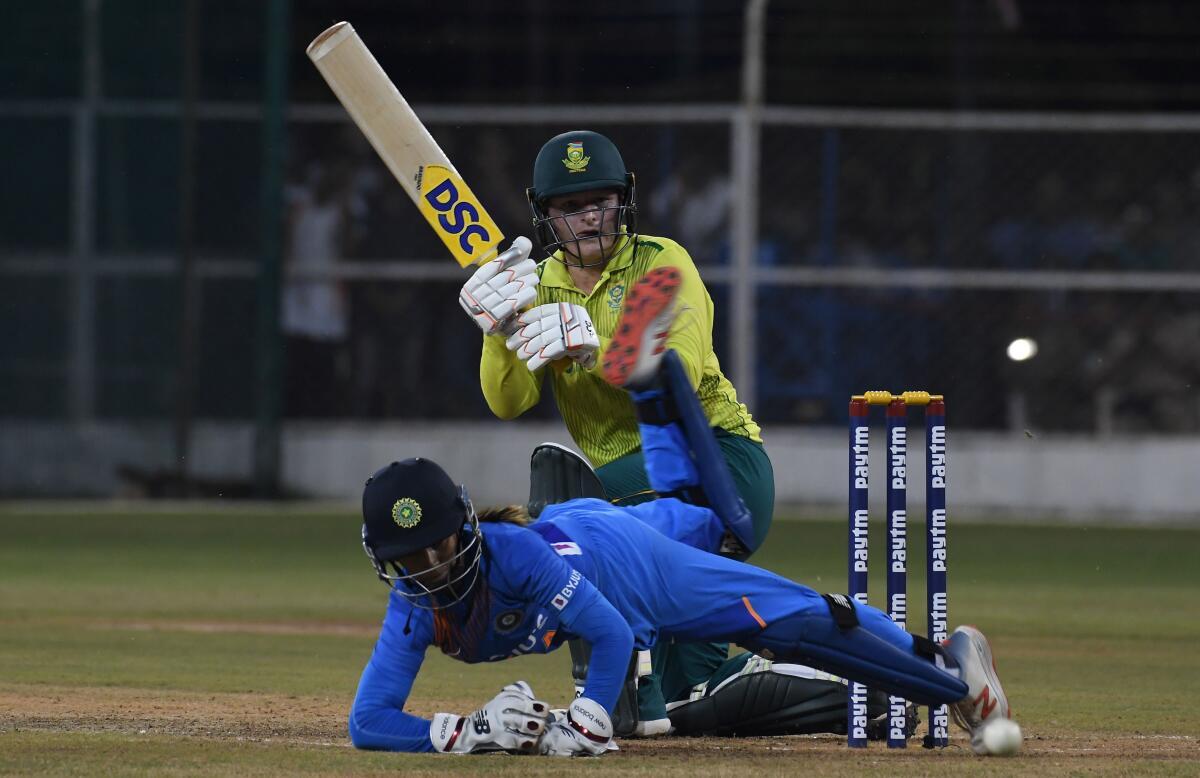
Lizelle Lee was the all-time top scorer for South Africa when she announced a shock retirement in 2022.
| Photo Credit:
Vijay Soneji
Her colleague and close friend, Dane van Niekerk, who was also infamously dropped from the side for failing a fitness test by seconds, and has copped a lot of flak for her fluctuating weight, is one of many people who have found solace in Lee’s adamance to have agency over her choices. It helps that she is being provided resources to deal with the issues surrounding her body image by Cricket Tasmania, her home board in Hobart.
The 33-year-old parent of two, however, hopes she can find the strength to use her platform to advocate better for skill over size.
“I should actually do a bit more, but I think I have to face my demons first. And as soon as I feel comfortable with the way I look, which hopefully happens, I can then actually help other people.”
Alongside the body-shaming, one also spots the odd, casual misgendering. Lee’s androgynous style and short trim, and her sexuality often attract some cruel jeers, even for her gender. Few understand the vitriol and dismissal these postulations carry more than Gujarat Giants pinch hitter Bharti Fulmali.
The comments section of her Instagram profile is filled with people questioning her gender, calling for testosterone checks and slamming her for ‘trying to infiltrate the women’s game being a man’. There is also a garden variety of trans slurs hurled at her, with no verifiable reasons to pose those questions of her.
When this publication asked Bharti about the trolling she faced, a part of her didn’t understand the questions posed, and another had made peace with it. Her experiences now are in stark contrast to her life growing up in a girls’ school, being one of three sisters at home pursuing cricket when opportunities were few and far between.
“When I played in the streets, the boys around me also played along. My neighbours didn’t like it when the boys played with me. If they spotted me, they’d call their kids back and tell them not to play with girls. The mindset was that ladkiyan sirf ghar ghar khelti thi [Girls only play house] . They didn’t want their kids to be influenced by such games. But I continued to play,” Bharti told Sportstar.
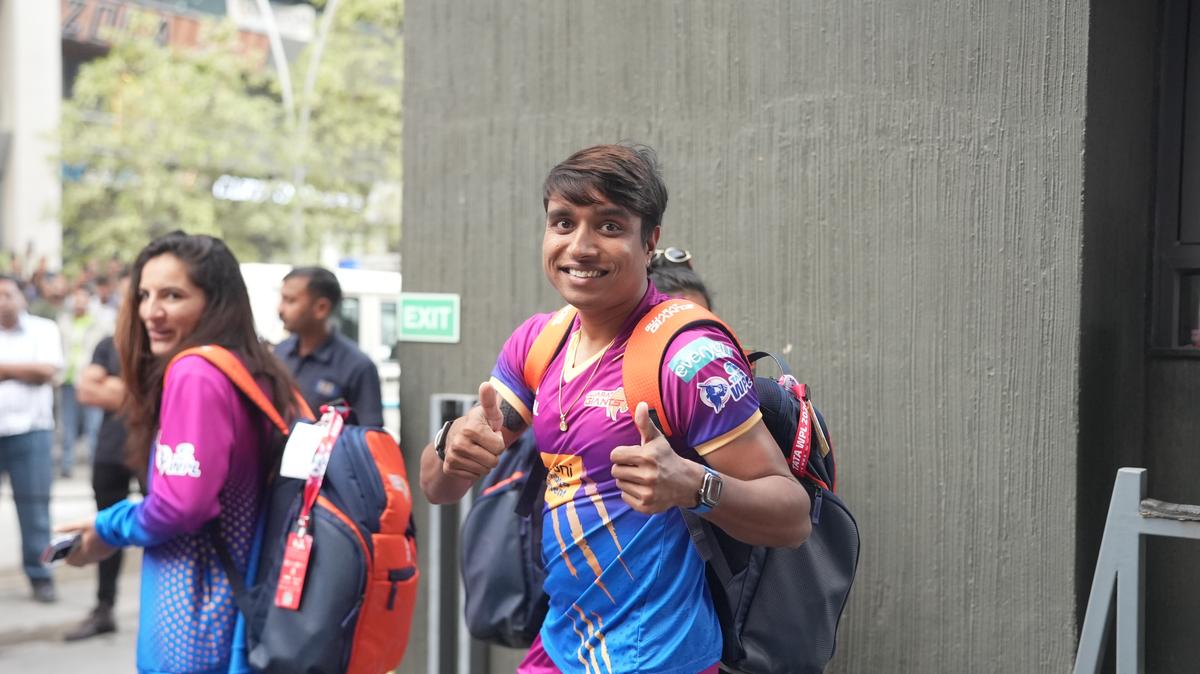
Few understand the vitriol and dismissal of casual misgendering as much as Gujarat Giants pinch-hitter Bharti Fulmali.
| Photo Credit:
SPECIAL ARRANGEMENT
Few understand the vitriol and dismissal of casual misgendering as much as Gujarat Giants pinch-hitter Bharti Fulmali.
| Photo Credit:
SPECIAL ARRANGEMENT
“While playing cricket, I smashed the ball, and it hit someone’s bike mirror. The minute that happened, I fled the scene, as did the other kids. The owner of the bike saw only the boys run, caught one of them and took them to task. That time, he pleaded that it wasn’t his fault but mine. The bike’s owner dismissed the response and said, ‘ Ladkiyan thodi mar sakti hain aise. Tu jhoot bol raha hai [Girls can’t hit the ball like this. You are lying].’ My family and I then went and sorted out the matter and made it clear that girls too can play this sport,” she remembered.
Much like Lee, Bharti sports short hair and prefers clothing that is ‘masculine’. Quite a few athletes do. Bharti, too, remembers taking the call to keep her short when she saw seniors who sported the hairdo.
“I never thought about cutting my hair. But my seniors had shorter hair, which is what tempted me to try. I had long hair till the 1st year of college. I felt bad while cutting, but the change felt good too. I tried it and liked it and it has stuck,” she said, adjusting her hair back.
“People’s job is to be in others’ business. They tell my mom constantly why she’s raising her girl to look like a boy. My mother ignores everything and gives it back when necessary. She always tells people that I am standing on my own two feet and that I have a right to live the way I want. It’s come to a point where the neighbours don’t talk anymore. I can’t control social media. I don’t give space to people who don’t exist in my life or impact how my life goes.”
But the narrative has unfortunately changed. Her own struggle of spending hours practicing with a ball tied to a tree, of her father — a teacher of English and science in Amravati — uncompromisingly supporting her early cricketing career, of her attempts to convert her sisters to cricket nuts, how she found her feet in the Vidarbha outfit and her recent recall to the Indian T20I setup fades away a little in front of the “ yeh ladka hai kya” [Is this a man] jibe.
RELATED | Go for the cheese, not the cat: How Grace Harris shaped RCB’s opening blueprint in WPL 2026
No one escapes this and the pendulum does swing the other way as well. England pacer Lauren Bell had a season to remember in a victorious campaign with Royal Challengers Bengaluru, but a simple web search of the lanky bowler will reveal videos and countless comments on her body, a worrying amount of them sexually suggestive. Ellyse Perry’s accounts have been subjected to this, as has captain Smriti Mandhana. The latter also experienced how Indian audiences still struggle with athletic body types in women in sport when her biceps were trolled for being too manly, social media likening her to Bollywood actor Salman Khan’s look in the 2006 Hindi film Jaan-E-Man. Her teammate and friend Jemimah Rodrigues’ Instagram story congratulating Smriti crossing 4000 T20I runs had a sly retort to the trolls – “She’s my sister! Also, crazy biceps.” Support aside, it only proves that players, however big or small, see, hear and read everything!
In recent years, franchises, tournaments and boards have opened up to the realities of online abuse, fetishisation and the impact they can have on player health, mental and physical.
Gujarat Giants refreshingly dragged all the disturbing comments headed Bharti’s way and addressed them with a chat featuring the player. In a video posted by the franchise, Bharti says, “I feel very bad when people question your looks and personality. I like to know what people say about me, just like anyone else but then I go to the comments section and see so much hate. I talked to my teammates about it and saw that they also go through it. It is normal now.”
But should it be? And what are leagues like the WPL doing about it? These are not isolated incidents to the league, to India or even cricket.
The WPL and the BCCI don’t have any guardrails in place; most cricketing leagues do not. But boards like Cricket Australia and the England and Wales Cricket Board have protocols in place to ensure safe physical and digital spaces for participants across all forms and age levels of cricket. Integrity or safeguarding officers have been appointed to be point people for aggrieved players to seek assistance from.
The ICC took a shot at heightened social media protection when it partnered with online safety technology firm GoBubble ahead of the 2024 Women’s T20 World Cup. The program combined artificial intelligence with human moderation to detect and mute toxic or abusive comments across ICC platforms, teams and player accounts. Data from the tournament revealed that more than 8 million social media comments from the covered pool were scanned, of which 29 per cent were identified as abusive, hateful or spam — an alarming reality check on how widespread online abuse really is in sport.
This corroborates what a four-year study by World Athletics proved, where it was found that 60 per cent of verified online abuse during major tournaments was directed at women, with a significant portion being sexist or sexual in nature.
Outside cricket, the Women’s Tennis Association and the International Olympic Committee are taking the lead on shielding sportspersons from caustic virtual interactions. The WTA, in partnership with the International Tennis Federation (ITF), the All England Lawn Tennis Club (AELTC), and the United States Tennis Association (USTA), launched a proactive monitoring service called Threat Matrix in 2024.
Developed by AI company Signify Group and supported by the investigations team at Quest and the fixated threat specialists, Theseus Risk Management— the Threat Matrix would monitor players’ public-facing social media for abusive and threatening content on X (formerly Twitter), Instagram, YouTube, Facebook and TikTok. Support for those impacted by abuse was also provided.
Lee says, “It doesn’t matter how I look as long as I’m fit enough for games and I score runs, that’s all that matters.” But maybe it’s time for systems to realise that, regardless of performance, players matter more.
Published on Feb 10, 2026
Discover more from News Link360
Subscribe to get the latest posts sent to your email.