


‘Owned by’, not just ‘made in’ India: MoD looks to reset defence buying | External Affairs & Defence Security News
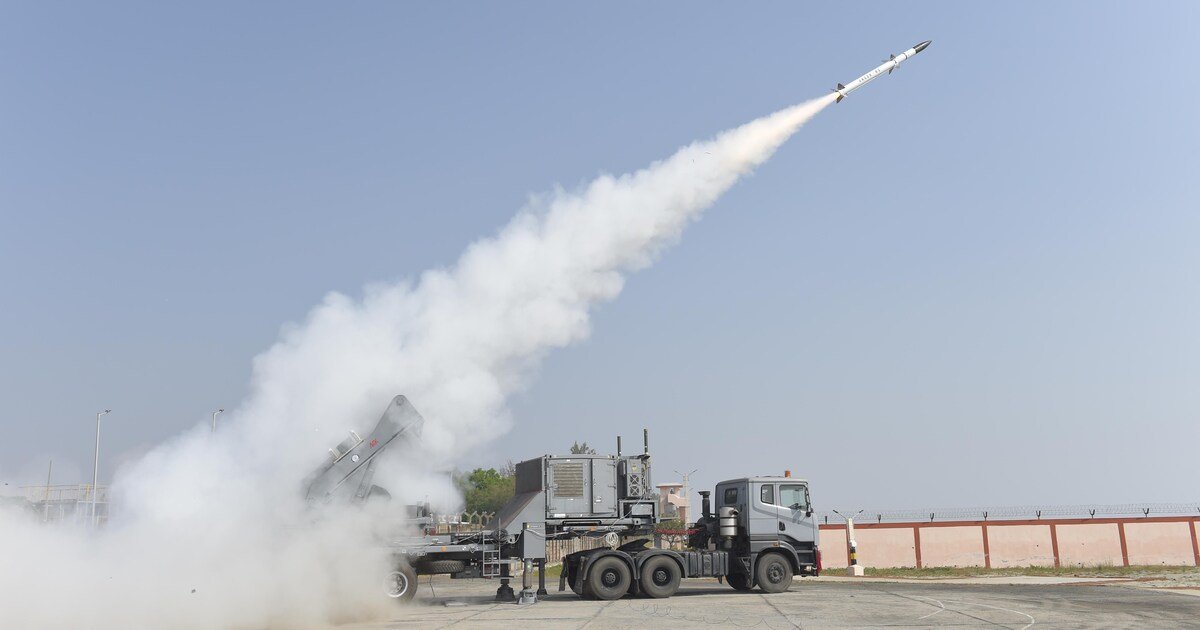
Going forward, India’s effort to build and retain sovereign control over its military capabilities will prioritise co-development and the retention within the country of intellectual property (IP), source codes, critical design data, and the ability to upgrade platforms independently, rather than merely the local manufacture of foreign-origin equipment, according to a draft policy document released by the government late on Tuesday that will govern the procurement of everything from tanks and warships to fighter jets and drones.
“For the next decade, the metric of success is not just ‘Made in India’, but ‘Owned by India’,” said the Draft Defence Acquisition Procedure (DAP) 2026, which the Ministry of Defence (MoD) has released for comments and suggestions from stakeholders. Describing this as a “doctrinal departure” from what it termed the “initial phase of ‘indigenisation’”, the draft document said the earlier approach was defined primarily by transfer of technology (ToT) and localisation of manufacturing — an approach it noted often resulted in dependence on legacy systems. It said the new focus would instead be on positioning India as a design powerhouse of the world.
The deadline for stakeholders to submit their observations is March 3, 2026. The DAP governs and lays down the rules and timelines for the procurement of equipment, platforms and systems under the capital head of expenditure. Once approved, it will replace the DAP 2020 currently in force.
Renewed push for jointness and ‘atmanirbharta’
Calling the next 10 years “the most consequential and decisive decade in independent India’s defence history”, the draft DAP identified “Jointness, Atmanirbharta and Innovation (JAI)” as the keystone of government policy for defence preparedness.
Enhancing jointness — the integrated planning, command and execution of military operations across land, sea, air, space and cyber domains — among the Army, Navy and Air Force is a stated objective of the government. However, the much-anticipated theatre commands are yet to materialise, with differences emerging among the services over how jointness should be operationalised.
The draft document comes nine months after Operation Sindoor — the May 7–10 conflict with Pakistan — during which the services’ ability to conduct joint operations was tested, most visibly in the domain of air defence, where assets from all three services operated together to counter Pakistani missile and drone attacks.
The renewed emphasis on innovation and self-reliance, or atmanirbharta, in defence comes in the wake of Prime Minister Narendra Modi’s explicit remarks during his Independence Day address, in which he said Operation Sindoor underscored the importance of strategic autonomy and indigenous capabilities — including Made-in-India weapons — in decisively countering threats. He also stressed that national security cannot rest on dependence on foreign sources. Notably, the Prime Minister issued a pointed call to Indian innovators and youth to develop jet engines, a long-standing capability gap that has constrained the country’s indigenous defence programmes.
Focus on faster induction of drones and AI capabilities
Identifying the accelerating pace at which weapons and systems are becoming obsolete — rather than the availability of budgetary resources — as the primary challenge for defence acquisition in the foreseeable future, the draft announced the introduction of new “procurement protocols” for fast-evolving systems involving artificial intelligence (AI), quantum computing, autonomous platforms and directed energy weapons (DEWs), as well as for the upgrading of systems through software.
“The rate of technological change in AI, quantum computing, new technology drones and DEWs now outpaces the traditional 2–3-year acquisition cycle,” the document acknowledged, adding that software is as critical to combat capability as hardware. It therefore emphasised that upgrades are an equally important part of acquisition as the equipment itself.
The emphasis on contemporary and future battlefield technologies follows acknowledgements by the Army and the Air Force of the widespread use of AI during Operation Sindoor. In particular, the Army has said that indigenously developed military software applications and AI tools were extensively used to accelerate decision-making and enhance battlefield awareness. The service has also been working to upgrade these capabilities through the development of a military-specific large language model (LLM). The AI tools deployed by the Army — including small language models — were developed domestically and trained using data provided by the service to meet its operational and doctrinal requirements.
The emphasis on autonomous platforms, or drones, also follows developments during Operation Sindoor, which witnessed several military firsts in the subcontinent, including the large-scale use of drone warfare by Pakistan. Pakistani forces employed drone swarms to target Indian civilian and military infrastructure. Indian forces, for their part, used drones and loitering munitions in their initial strikes on terrorist infrastructure in Pakistan, as well as in the subsequent neutralisation of Pakistani air defence systems. Operation Sindoor marked the advent of large-scale kinetic, non-contact warfare in the subcontinent, characterised by combat conducted through long-range projectiles rather than close-range troop engagements.
At least 670 unmanned aerial vehicles — ranging from heavy high-altitude long-endurance drones to vertical take-off systems — are slated to be acquired by the armed forces in the coming years under the 15-year defence modernisation roadmap unveiled in September 2025. In addition, up to 70 radar-evading remotely piloted aircraft are included in the Army’s requirements under the modernisation plan.
Creating civil-military fusion
Acknowledging that the battlefield of the coming decade will be dominated by dual-use technologies — defined as being of civilian origin but adaptable for military use — the document said, “The rigid walls between ‘civilian’ and ‘military’ specifications have crumbled.”
Consequently, it said it would institutionalise “Civil-Military Fusion” — integrated civilian and military sectors that share capabilities and innovation.
The document said it would allow the services “to procure commercial off-the-shelf (COTS) drone swarms, space technologies and cyber-security tools with minimal desirable customisation, to enable the conversion of advanced civil technology into military capability”.
COTS refers to readily available civilian products that can be employed with minimal modification.
The emphasis on integrating civilian and military sectors comes amid the government’s stated aim to build a “dual production” pipeline for defence capabilities, including collaboration between private companies and state-owned defence firms.
Defence acquisition tied to economic growth
The draft also states that the procurement of capital-intensive weapons and systems is “now explicitly linked to the nation’s economic engine”, adding that it will provide the regulatory framework required to drive growth through this route. Setting the aim of aggressively boosting realistically designed and developed Indian equipment, it said this would ensure that national spending “recirculates within the domestic economy”, and would nurture a supply chain ranging from semiconductors to precision forging.
“At the same time, the cutting edge of national defence will be maintained by procuring critical equipment through foreign routes, as well as commencing parallel development of domestic alternatives,” added the draft.
In line with MoD policy, the Union Budget presented earlier this month earmarked Rs 1.39 trillion — 75 per cent of the capital acquisition component of the total defence outlay — for procurement from domestic industry in FY27.
In FY21, the MoD decided that a substantial share of the modernisation budget would be reserved for capital procurement from domestic sources, with a portion of this further set aside for acquisitions from private Indian industry. For FY26 as well, more than Rs 1.11 trillion — again 75 per cent of the modernisation budget — was earmarked at the Budget Estimates stage for domestic procurement. The FY27 allocation under this head represents a 25.2 per cent increase over BE FY26.
The document also commits to supporting the country’s human and industrial capital by matching the needs of the defence forces, facilitating foreign direct investment, and enabling the infusion of high-end technological skill sets through foreign firms operating in India.
An MoD release late on Tuesday said the draft DAP 2026 is intended to accelerate force modernisation, speed up acquisitions, and enable scaled-up production, thereby strengthening the country’s defence ecosystem. The document also places emphasis on boosting defence exports, while reducing dependence on imports. In addition, it proposes easing financial and experience-related eligibility criteria to enable broader industry participation, delegating decision-making to speed up acquisitions, revamping trial and quality-assurance processes, and introducing substantial digitisation and automation across acquisition procedures and processes.
Discover more from News Link360
Subscribe to get the latest posts sent to your email.