

Is chasing better in WPL? Toss trends and venue impact explained
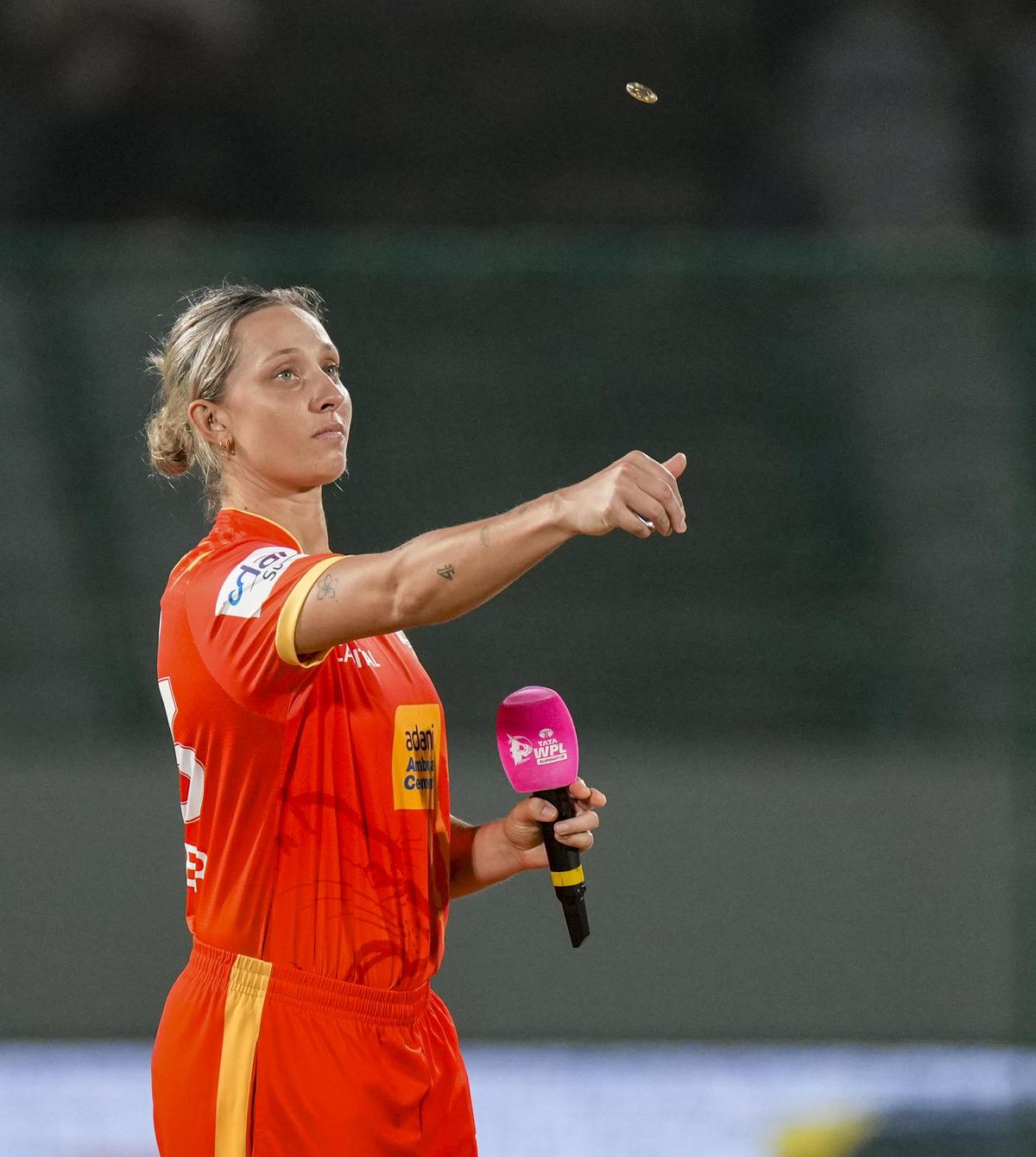
The surprise stemmed from the fact that in choosing to set a total for her opponent, Gardner became the first captain to do so since Meg Lanning for Delhi Capitals against Royal Challengers Bengaluru in the final of the 2024 edition of the tournament. Neither captain that won the toss in the next three games opted to bat first, thus cementing Gardner’s decision as an anomaly across the last two seasons of the WPL.
Across the 2025 and 2026 editions of the tournament, it is the only instance of a captain opting to bat first in 44 games.
The decision made by a team after winning the toss represents the strategy it believes will maximise its chances of winning a given match, and thus, such a ratio so heavily skewed in favour of chasing begs the question: is chasing an obviously better strategy in the WPL?
| Photo Credit:
PTI

In choosing to set a total for Mumbai Indians, Gujarat Giants’ Ashleigh Gardner became the first captain to do so since Meg Lanning for Delhi Capitals against Royal Challengers Bengaluru in the final of the 2024 edition of the tournament.
| Photo Credit:
PTI
Is chasing better?
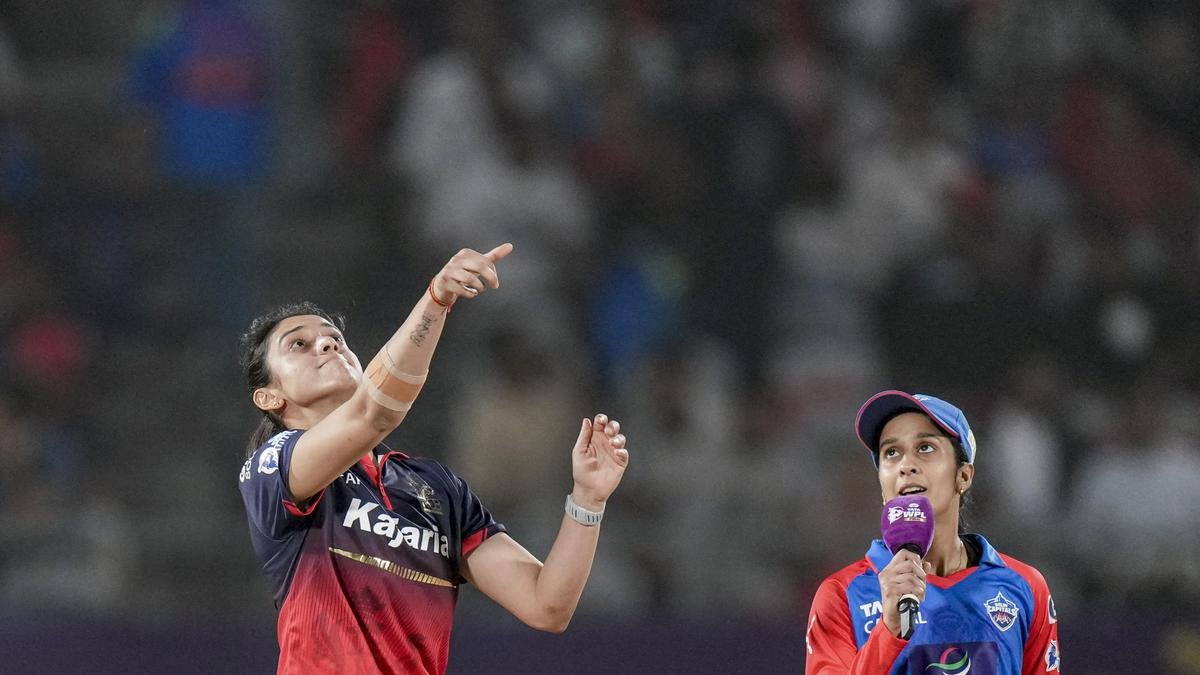
There are a number of reasons why teams tend to prefer chasing — especially in T20 cricket. Speaking after a league-phase game against Delhi Capitals, Smriti Mandhana said, “Chasing a total is a lot easier than setting, because as a batter you don’t always know what’s good enough.”
Aside from simply knowing the equation required for victory, conditions also play a key role. Like most T20 games, a majority of WPL matches are day-night fixtures, meaning that dew can come into the game as it progresses.
So while there is intuitive reasoning to explain a preference to chase, do the numbers bear out a significant advantage towards it?
Across the 88 WPL games that have taken place over four seasons, 53 have been won by the side chasing (one of them via Super Over). Breaking the numbers into two phases — 2023–24 and 2025–26 — highlights the shift. In the latter period, just one captain elected to bat first compared to 43 who chose to chase. The earlier phase was almost evenly split, with 21 decisions to bat and 23 to field. [See Fig. 1 below]
On the field, the picture is far more even. In Period 1, teams batting first won 18 of 44 matches, compared to 26 victories for chasing sides. Period 2 shows only a slight shift, with a 17–27 split in favour of chasers. In other words, the results are nowhere near as dramatic as the swing in toss decisions. [See Fig. 2 below]
Splitting by venue
A venue has a huge role to play in determining a team’s optimal course to victory — a key difference between the WPL and several other major franchise leagues. Rather than teams playing in a home-and-away format, the WPL follows a caravan format where one leg is conducted in one venue before moving to another.
The WPL caravan has been to six different venues: Navi Mumbai, Brabourne Stadium, Bengaluru, Delhi, Lucknow, and Vadodara. Delhi is the only one where sides batting first have won significantly more often.
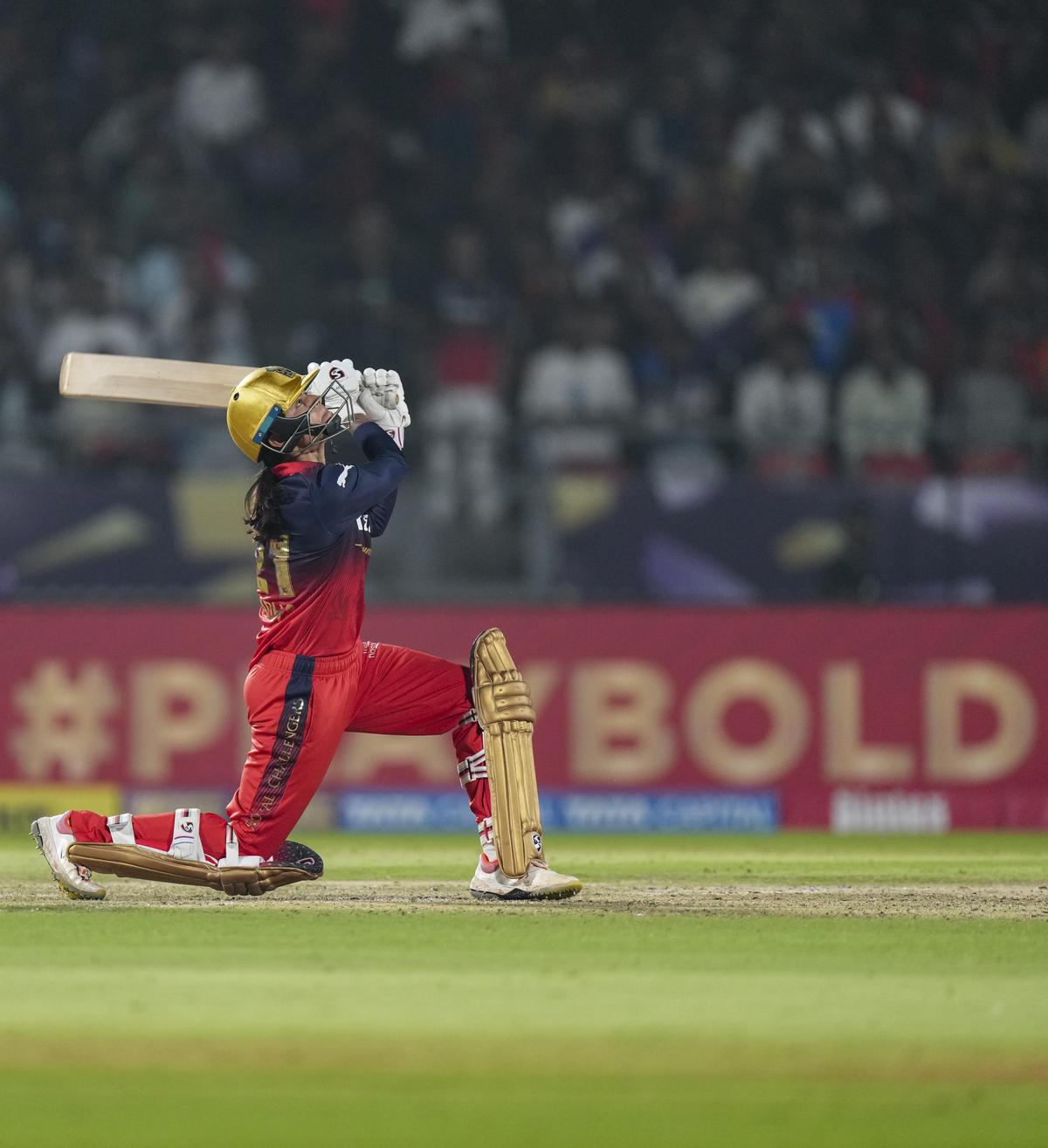
Quickfire impact: Radha Yadav played a crucial cameo to steer RCB over the finish line during its chase in the final.
| Photo Credit:
PTI
Quickfire impact: Radha Yadav played a crucial cameo to steer RCB over the finish line during its chase in the final.
| Photo Credit:
PTI
Of the six, Navi Mumbai, Brabourne Stadium, Bengaluru, and Vadodara have hosted more than one leg of the tournament.
A pattern is visible when looking at these grounds by record. In all four, chasing teams tend to win more in the first leg conducted at them, but that bias narrows significantly in the second leg at three of them.
The only exception, the Chinnaswamy Stadium in Bengaluru, is notorious for being a ground that heavily favours chasing sides. [See Fig. 3 below]
The other three venues also show an interesting pattern in scoring. All three have had an increase in the average first-innings score, but the average winning first-innings score has remained stable (no matches were won batting first in Vadodara in 2025, but the corresponding number in 2026 is well above the overall average, as expected). [See Fig. 4 below]
This perhaps indicates that teams become savvier to conditions and are able to approach setting a total with a more concrete idea of what a winning score would be. This explains why the average winning first-innings score remains relatively steady in comparison to the average score, which has risen sharply.
Familiarity with venues thus appears to take away some of the advantage that comes with chasing. Or perhaps chasing is a more pragmatic approach in new conditions.
Implications for future growth
With the women’s game at an inflection point after India’s ODI World Cup victory, there is an expectation that the WPL will grow too. Speaking to Sportstar, BCCI secretary Devajit Saikia indicated that the league’s expansion was in the plan, saying, “In the coming times, when the number of teams in WPL also increases, the number of venues will also certainly be increased.”
Stadiums like DY Patil, Bengaluru, and Vadodara have also developed a strong regular fan following. As the tournament expands, it remains to be seen whether the BCCI will look to bring the WPL back to these venues or move into new areas. Whether it chooses to do so could have an impact on team strategy, possibly emboldening more teams to follow Gardner and Co.’s approach of backing themselves to set a target.
Published on Feb 11, 2026
Discover more from News Link360
Subscribe to get the latest posts sent to your email.