Episode Transcript
This is a computer-generated transcript. While our team has reviewed it, there may be errors.
Marlena Jackson-Retondo: So just to get us launched into the topic, can you give me a brief and basic explanation of the configuration and function of a school board?
Scott Levy: Sure. So think of the board as a governance body. The board is not supposed to be running the schools day to day. Anytime you see a board member as a person running the school day to day, that’s a problem. They’re there to oversee budget allocation and to think about policy and think about strategic priorities and to ultimately choose a superintendent and then manage the superintendent.
I think it’s safe to say that there are very few people that are doing school board service for the money because it really is a labor of love. Board members come from all walks of life. There’s really no requirements per se, other than you have to be 18 years old in most places. You have to be a citizen and be able to vote and you have to certainly have residency in that community. So there are some restrictions, but otherwise it’s open to anyone.
You don’t need to have a student in the public schools. It could be that their kids attend private school. There aren’t rules around that. And so it’s really meant to be little “d” democracy. It’s whoever the public believes should be in that seat. In a school board, you really don’t have power over who’s serving with you. It’s decided by the public as it should be through the voting process.
Marlena Jackson-Retondo: You state in the introduction of your book that school boards are the vital organ for education decision making. Why do you think that there seems to be this broad lack of awareness or misunderstanding about how a school board might serve the public?
Scott Levy: Well, I’ll tell you a story about when I first won my local election and became a school board member. I was walking down the street in my town and I got stopped by somebody that I knew. And they came up to me and they said, “Oh, congratulations, Scott. I heard you won the school board race. And that’s great because I’m going to be watching you on the web because, you know, the meetings are streamed so that any citizen can watch the meetings.” And I was really excited. I’m like, “wow, somebody actually watches these meetings.” And then he went on to say, yeah, yeah. I’ve been having trouble falling asleep. And so it’s super helpful to watch these meetings, because they’re really boring.
And many board meetings are somewhat routine. And that may be why there’s not a lot of attention on it. You’re going through budget line items, and it’s very technical. But I think, certainly, things changed in 2020 when COVID hit. And there were a lot of extremely important decisions that had to be made, and they had to be made very quickly. And they were decisions that there was a lot of attention over. And so the spotlight started to shine on school board rooms where a lot of these debates were happening. And then ever since 2020, there have been this constant stream of issues that have been adjudicated in boardrooms that have gotten a lot of attention.
So I think now people have more awareness, but having said that, people are, I think, generally focused on the clips that we may see on social media that sometimes have millions of hits where there’s arguments and they’re talking about really contentious cultural issues that divide us. But at the end of the day, if you walk into most school board meetings, whether it’s policy, budget. High level curriculum decisions, you’re focusing on various programs and initiatives. That’s what most of the discussion will be about.
Marlena Jackson-Retondo: That’s the gist that I get. I’ve seen those viral moments online, but when I have clicked into a live stream of a school board meeting, it is probably what most might say is a mundane meeting of a couple folks in the room trying to make decisions. Maybe a couple people show up.
It’s only recent, and when I say recent, recent in American history that school boards have lost some of their power, sometimes due to school reform policy. Can you explain some of that historical significance of this loss of power and where the power that school boards used to hold has now been delegated to?
Scott Levy: Absolutely. It’s so interesting when you look back to early American history, school boards existed and they did absolutely everything. The states would ultimately have power to be responsible for public education, but they delegated authority to school boards to not only govern the schools, but even do the administration work because back in early days there was not even a superintendency.
And now in the days that we’ve seen of the 21st century, to your point, there’s been an incredible shift of power to states, mostly, and to some extent, the federal government. And there’s some really good and legitimate reasons for this.
Think about Brown versus Board of Education, where from a civil rights perspective, the federal judiciary decided to step in and make things right because it wasn’t happening correctly at the local level and there was inequity. Think about the way schools are funded, which historically was property taxes, where in many states there were communities that just simply could not fund the public schools to any sort of a basic level. So in many respects, there were a series of lawsuits that came about that really, you know, demanded that the state step in and be that equilibrating mechanism to fund schools to a level where students are getting a very appropriate public education, regardless of where they live. And so there are a lot of good reasons.
Then there are also probably some more sinister reasons. Education is a very large component of our economy. People care deeply about education. It affects a lot of families. And so certainly governors, legislators at the state level and at the federal level, look at that and say, ooh, maybe I should also be charged with having a role in education. So a lot the power has shifted to state and federal players. So I think we all need to step back and think about the fact of whether or not we agree with the particular approach any state is taking. Is that the right mechanism to have all that happen at the state level?
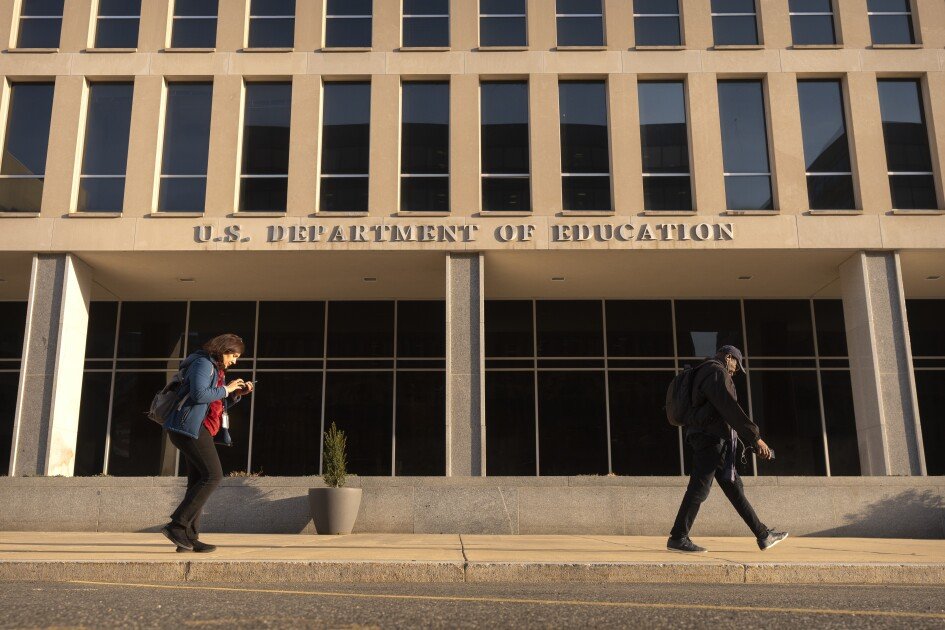
Marlena Jackson-Retondo: I also just wanted to ask you very quickly about the power that school boards hold after the dismantling of the Department of Education.
Scott Levy: I think there’s been a general sense that when certainly the current administration, the Trump administration, they were campaigning, they’re campaigning on pushing a lot of power back to states and localities, which in many respects would be commensurate with my thesis of how local districts should have a degree of autonomy. And boards are really important and can do a lot of good in trying to steer American education in a positive direction.
But I think what we’ve certainly seen over the last bunch of months is a continuation of the fact that the federal government is quite involved. So regardless of what we hear about the Department of Education shrinking or potentially being abolished, we’ve seen examples of where the federal government has certainly exerted power in places that they see something they don’t like. And I think that’s what we’ve seen in many administrations.
Marlena Jackson-Retondo: I wanted to ask about education reform policy and some of the tensions that we see between these big reforms that might happen, one that just always sticks in my mind as common core. What would you say to someone, and I’m talking about voters, who believe that reform policy is the way forward and have kind of lost faith in the school board as an institution.
Scott Levy: The first thing I would say is that school boards are far from perfect. And there are many boards that certainly make decisions that many of us may look at and say are flawed. And I think there’s no perfect system to govern schools. Having said all that, I think in my mind, school boards are the place where governance can happen in a way that involves the community. And also provides a deep understanding of the district itself, because school boards are part of the districts.
At the end of the day, districts are very different in this country and they don’t have the same problems. You may have a district that has enrollment that’s dramatically increasing. You may have a district next door that has declining enrollment. That means incredibly different things in terms of how to manage a budget, how to manage operations, how to manage personnel. You could have a district in the same county that is in the 99th percentile in academic outcomes but has a stress and anxiety issue in their high school. And then the district next door might be below proficiency in math and reading. And you need to think about solutions that are very different in those two schools. And it’s extremely hard, I think, to come up with good one-size-fits-all policies that are gonna solve all our problems. And if you do, inevitably, you’re going to hit a roadblock.
When the local communities aren’t vested in these programs, in these policies, and we see time and time again, Common Core being an example where it backfires. Because I think it’s so important to have people on the ground that are going to be affected be part of the process to come up with, ultimately, the solutions. And so that’s why I keep coming back to the fact that with all of its flaws, school boards are places that I think we should invest in. So if we started to focus our reform attention there, I actually think we could do a lot of good. And the funny thing is that reformers have looked at every place in the universe except for school boards.
Marlena Jackson-Retondo: You brought up something that kind of reminded me of a huge issue that I hear from, and I think a lot of people have heard from educators when it comes to education reform policy is that the experts who are the teachers in the classroom are not being consulted for these massive changes, or they are not been consulted in the ways that, you know, I think most of them would feel is appropriate.
Can you talk a little bit about the partnership that teachers and educators might have with school boards on the granular level where teachers don’t have to remain in this frustrated state of not seeing any change or not seeing any trust in their expertise or professionalism.
Scott Levy: Yes. And I will start by saying that my mom was a kindergarten teacher in public school for over 30 years and I talked to her a lot about what her experience was like when I first became a school board member and ever since then I’ve looked at a lot of the research on teacher attrition and teacher satisfaction which should trouble all of us because the numbers are as we know not what they should be for a profession that’s so noble and and so important. And I think that one of the things that always comes out of studies that are done is the lack of autonomy that teachers feel, to your point, that their expertise isn’t valued, that they don’t have a say over what they’re doing.
And one of things that I talk about in my book is initiative fatigue. And it’s something that I always knew about because corporations have initiative fatigue, but when I got to education and my mom told me about this, I realized it was at a different level. And by the time you get to a classroom, if you think about all of the people that throw initiatives at schools, you have federal initiatives, you have state legislative initiatives, you have governors that come in with initiatives, every state has of course a regulatory body, a state school board in New York State and California, we have the regions, and they have initiatives. Then you have board members and the board as a whole that have initiatives, you have administrators at the centralized level, and then of course you have building administrators. And so that’s true. It’s very suffocating.
And so one of the things I talk about is how, again, if we try to be mindful of getting a better balance between state, federal, and local control, where the local governance entity does have more say over initiative flow, and then you had boards that were thoughtful about having a reasonable number of initiatives at any one time, I think naturally what’s gonna happen is that teachers have a better voice. Because a good board knows that board members are not professional educators and boards have to listen to administrators and teachers in their district. When decisions are made up above, it’s incredibly hard. You might have a committee of a teacher from here and a teacher from there, but we know that it’s not a grassroots effort when a decision’s made at a state or even a national level.
Marlena Jackson-Retondo: Can you explain what it takes to establish and maintain that relationship between local teachers and the school board? What does that look like?
Scott Levy: With teachers in particular, if you think about it, boards often have committees, and committees might have representation of teachers and of administrators from different buildings. That’s one way that there could be a really good dialog. There’s often groups like, for instance, the PTA, where you’ll have teachers, and you’ll have parents together, and board members can be a liaison to that group or present, and update on what’s going on at the district level.
In many districts, there’s a tradition of board members visiting schools once a year. So you get to maybe go into a classroom and see what’s going on. You would never do that every day, but to do that, to get a sense and a flavor for what’s happening in classrooms, that’s an amazing way to do it as well. Some districts have maybe the board president address teachers once a year. And that’s a really interesting and helpful way, I think also to build a relationship. So there are many ways and it’s important. It’s super important.
Marlena Jackson-Retondo: So we just talked about partnership between educators and school boards, and you do say in your book that school boards are a mechanism for parent influence. Can you explain that mechanism, what that might look like coming from a parent who has maybe never voted in a local election, seeing an issue with their school and then becoming involved? What does that pathway look like?
Scott Levy: So one of the things that I did, which I think was the most fun when I was researching for the book was I went back into the archives and I did ask the question, it seems like there are so many scenes around the country of very angry parents really yelling and screaming at school boards, has it always been this way or is this something new? And there’s no doubt what I found when you look back is that there have always been points in history where you’ve seen parent anger come out. And I think there’s a very natural question that underlies all of these battles, which is where is the line between parent rights and government control? And I do think that sometimes we’re very quick to either dismiss or to re-emphasize some parent point that is being espoused. But all of us, if we sat in the room and we polled 10 of us, let’s say, and we said, okay, where is that line? We might delineate that line at a slightly different point.
So if you go back to the early 1900s, and I do this in my book, and it’s quite extraordinary, you could see the same exact language being used by parents at school board meetings saying, you can’t vaccinate my kids. If you vaccinate, my kids, you’re violating my rights and their rights, and you’re evaluating my constitutional rights. And they were doing that over the smallpox vaccine. And during COVID, we saw the same thing around the COVID vaccine. And that’s just one example. And so throughout American history, we’ve had this tension. So I think it’s very natural.
I think the other bit of tension is indoctrination versus education. Where is that line? And so I think we just have to have a little bit of grace in a way. And I think, the best we could do is say that sometimes people are going to be disagreeing on these subjects. And how do we want to resolve them? I think there’s no better way than with full transparency. In your local community. I think the other piece of your question, though, is if I’m a parent and I’m angry about something, what do I do? Start out, if it’s an issue in a classroom, with the teacher. Go to the teacher, have a conversation, and if that doesn’t work and you’re not satisfied, of course you have the right to talk to the principal or talk to the assistant principal. And if you’re still very unsatisfied, then you can bring it up, but you really don’t want to jump to the school board over the backs of many teachers, administrators that then will not have a chance to solve that problem with you first. If it’s an issue about, let’s say policy or budget allocation that clearly falls in the realm of the board, then of course, um, you have every right to go to the board, but you can also call a board member. If you see a board member at a soccer match or in church, you can certainly have discussions about things that are on your mind and air them, and then of course you have that right to be part of the public comment period too.
And the other thing that I would also add which is I think something that you always have to think about when you’re a school board member is If somebody comes to public comment and they express concern about a particular issue You always want to listen. It’s incredibly important to listen and to decide, um, you know whether you understand that viewpoint whether you agree with that viewpoint or not, but you don’t know for sure whether or not that viewpoint is 1% of your community or whether it represents 65% of your community. And I just believe that you have to be in touch with your community in lots of different ways and just have lots of data points so that you do get a sense of what the sentiment is like out there.
Marlena Jackson-Retondo: Also, speaking of parent influence, we’ve seen a lot of what I think would have been referred to as fringe movements of charter schools and homeschooling. We’re seeing that become a lot more mainstream, not just to talk about, but to practice. And obviously, the system of charter schools is becoming heavily influenced by school systems and there is a relationship between school boards. Charter schools, and also homeschooling.
So can you kind of explain some of the influence or partnership that school boards have on those types of systems, and what people and voters can pay attention to when it comes to those educational practices?
Scott Levy: Particularly with charter schools, the rules are different depending on what state you’re in. And sometimes school boards have a very influential role in whether or not a charter school can exist. And in other cases, the school board may have absolutely no power and no say. And really what happens is the charter decision is made more centrally at the state level by maybe the state board or one of the state entities.
I also think that there are a lot of interesting implications when you think about this long term. And I’ll give you one case study that happened in New York that I think could be an interesting microcosm of the situation that can happen in other parts of the country if you fast forward 10, 20 years from now and school choice and vouchers become more commonplace. And it’s actually a district that I attended when I was a kid and now is governed by board, the majority of whom send their kids to private school and it’s created an incredibly complex situation where there is a tremendous rift and rift is an understatement between the public school community and the private school community around the way the public district is being managed. On the one hand these are people that pay taxes and they have every right to, you know, run for school board and they’re winning the elections fair and square. On the other hand, you have individuals that are making decisions about a public school system, where many in the public school community argue are not in the best interest of public school students. And so there’s just incredible amounts of tension. And so you can see this being something that could happen in many communities down the road, if we have many, many more students that are not in the public system, and you might have the preponderance of voters that are in the not public system.
Marlena Jackson-Retondo: I wanted to end on something that maybe is a little bit uplifting and positive and what you hope to see. Who should care about school boards or how should they care?
Scott Levy: So to end on a positive note, I think that one thing that I would think that all listeners may agree with is that when we look at our national politics, regardless of what side you’re on, I think it is clear that we have more polarization than we’ve ever had in recent history. And I do believe that when we look at local school districts, the reason that everybody should care is because they are a mechanism to potentially reduce polarization.
On the one hand, I know we see these scenes of people fighting in boardrooms here, like, how could they reduce polarization? It looks like boardrooms are incredibly polarized. But I would contend that they are the one place where people that have differences of opinion actually come together in person. And because everything is transparent and because local community members have a voice at the microphone, people can actually express their view. And if that view is diametrically different, others have to listen. And there is something incredibly American about that.
And I think that there’s this healing process in the fact that we can unify around what happens in a school board room, which is that people of all walks of life that have very different political beliefs can come express their view and have to be listened to. And maybe, just maybe we can realize that sometimes people with very opposing views from a policy perspective might be both coming from a good place, it’s just different places.
Marlena Jackson-Retondo: This does seem like a giant lesson in civics. I really appreciate your time.
Discover more from News Link360
Subscribe to get the latest posts sent to your email.