
Kumar has been operating the setup for around six months, after returning home and deciding to build an independent practice instead of continuing in salaried roles elsewhere.
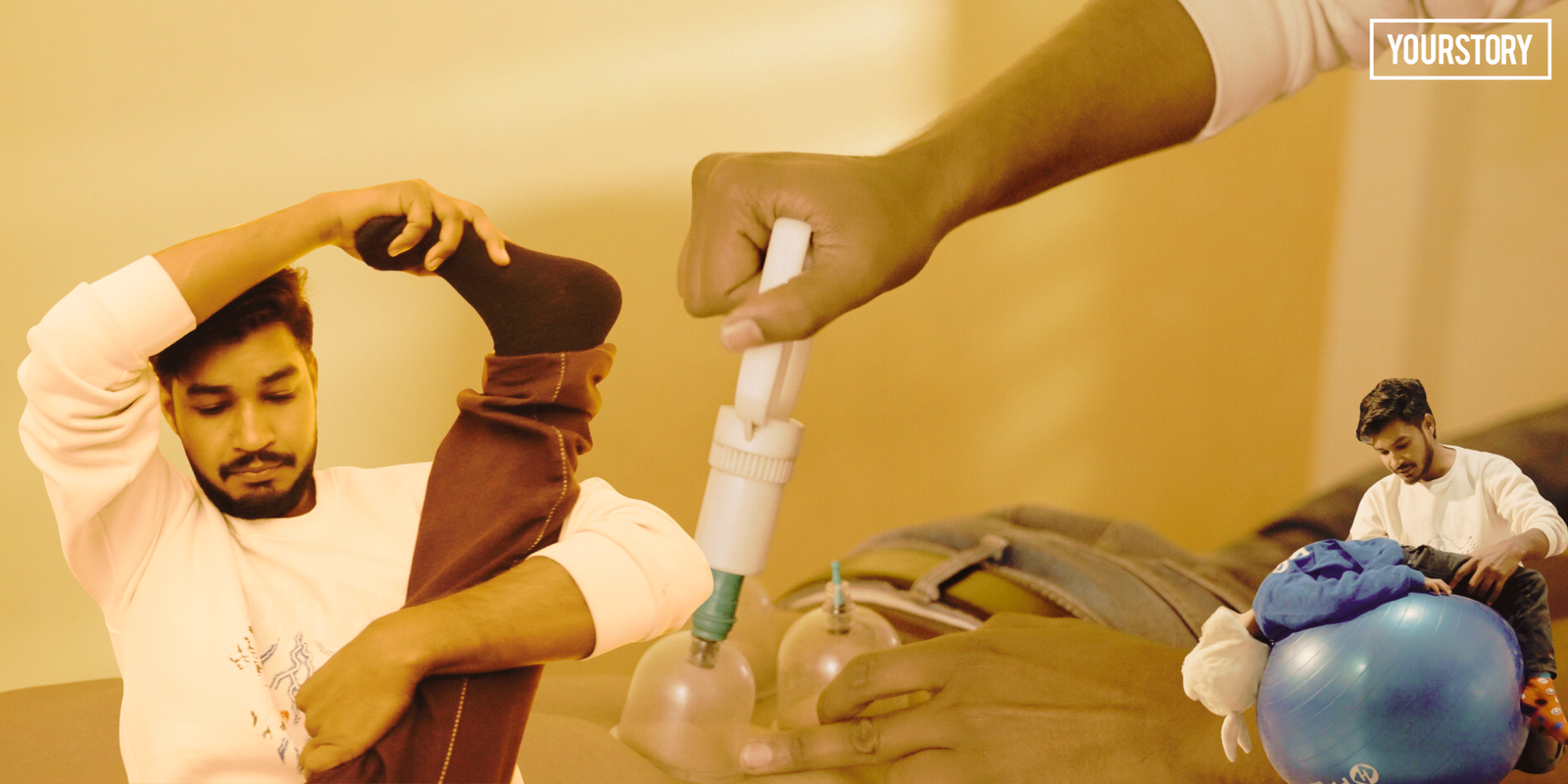
The clinic’s work, in his words, is focused on people who come with persistent pain and movement-related issues. He treats cases such as lower back pain, sciatica, lumbar pain, stiffness, and other orthopaedic and neurological conditions. The sessions typically combine hands-on techniques with electrotherapy support, depending on what the patient is dealing with and how long the problem has continued.
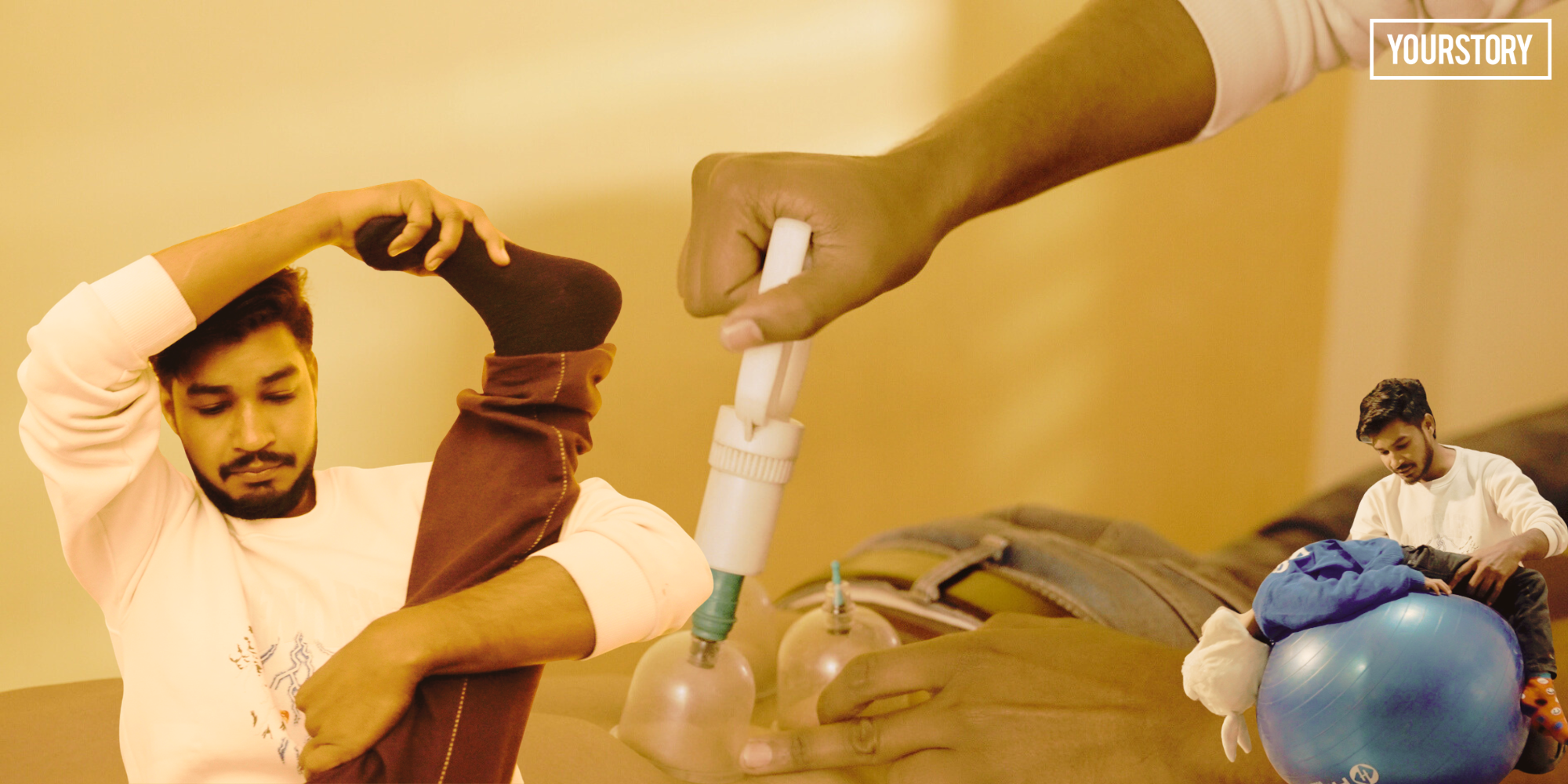
Kumar describes himself as the primary practitioner at the centre, handling the patient consultation and treatment himself. “I do manual therapy as well as electrotherapy and cupping therapy to give the patient relief,” he says, describing the approach as practical and routine-driven rather than specialised in one single technique.
What treatment looks like on the ground
Inside the clinic, Kumar relies on a few core therapy devices and basic physiotherapy infrastructure. He lists ultrasonic therapy, TENS therapy, and MS therapy among the facilities he uses, alongside cupping. The idea, he explains, is to reduce pain, relax muscles, and help patients who have not found relief through medication alone.
He says many visitors come with older, recurring pain that has settled into daily life—something that affects sleep, walking, or work. For such cases, he uses combinations of TENS and ultrasonic therapy, along with manual therapy, to work on stiffness and muscle tightness. The process is not presented as a dramatic transformation, but as steady progress through repeated sessions that slowly bring function back.
Kumar completed a physiotherapy course from Uttar Pradesh University of Medical Sciences in 2020. After that, he spent about two years working in Agra at a physiotherapy and rehabilitation centre, where he says he gained practice exposure before returning home due to financial constraints.
From returning home to setting up a clinic
Back in Mainpuri, he wanted to open his own centre, but says the cost of machines and equipment became an immediate barrier. He invested some of his own savings—around Rs 60,000—yet the clinic still needed additional equipment to run properly.
It was during this period that he came across the Mukhyamantri Yuva Udyami Vikas Abhiyan (CM YUVA) Yojana through social media and applied for support. He says the funds were routed through IDBI Bank, which helped him arrange what he needed to formalise the clinic and expand the setup beyond what his personal savings could cover.
To build awareness locally, Kumar says he placed banners and also created an online listing so people could find the location through the internet. Over time, he began seeing a more regular flow of patients, many arriving through referrals after initial treatments showed improvement.
Today, the clinic gives him a fixed base, a predictable routine, and a sense that his work is finally stabilising after a period of stops and restarts. The earlier years, he suggests, were shaped by trying to manage training, jobs, and money shortages, but the present feels more settled because the clinic now runs as a daily service rather than an uncertain plan.
Discover more from News Link360
Subscribe to get the latest posts sent to your email.