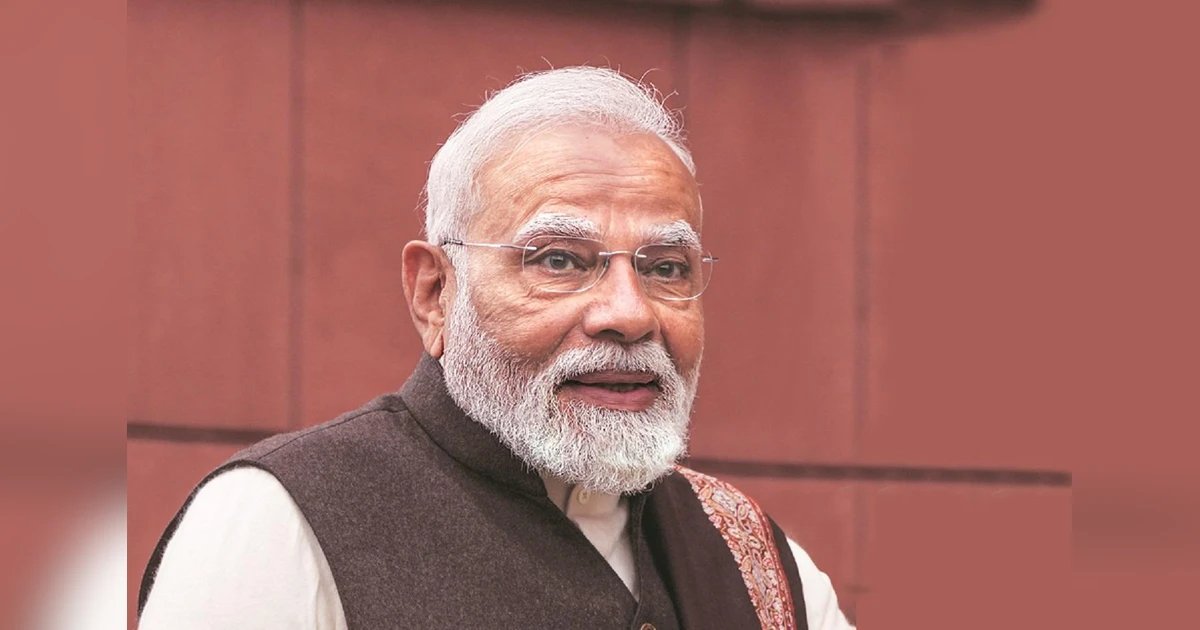
Calling productive spending a hallmark of his government, Prime Minister Narendra Modi on Sunday said the just unveiled Union Budget deliberately avoided short-term populism and instead channelled record capital outlays into infrastructure to drive jobs and sustainable growth.
In an exclusive interview with PTI, Modi said his government has used its years in office to plug “structural gaps left behind by earlier administrations”, pursued bold reforms and laid the foundations for a developed India. He asserted that the latest Budget marks the “next level” of that journey.
Describing the Budget for fiscal year starting April 1 as reflective of his governance approach, Modi said the document “is a good reflection of our governance style and priorities”.
“This Budget represents the next level in this journey, imparting momentum to our ‘Reform Express.’ It is designed to accelerate momentum and prepare our youth for the opportunities of a rapidly changing world,” the prime minister told PTI.
He cited the pre-Budget Economic Survey to state that capital accumulation, labour formalisation, and digital public infrastructure together have elevated India’ potential growth rate to 7 per cent.
“Productive spending has been a hallmark of our government. The high capital expenditure reflects our focus on infrastructure and capital investment, which are strong engines for long-term growth,” he said in the written interview to PTI.
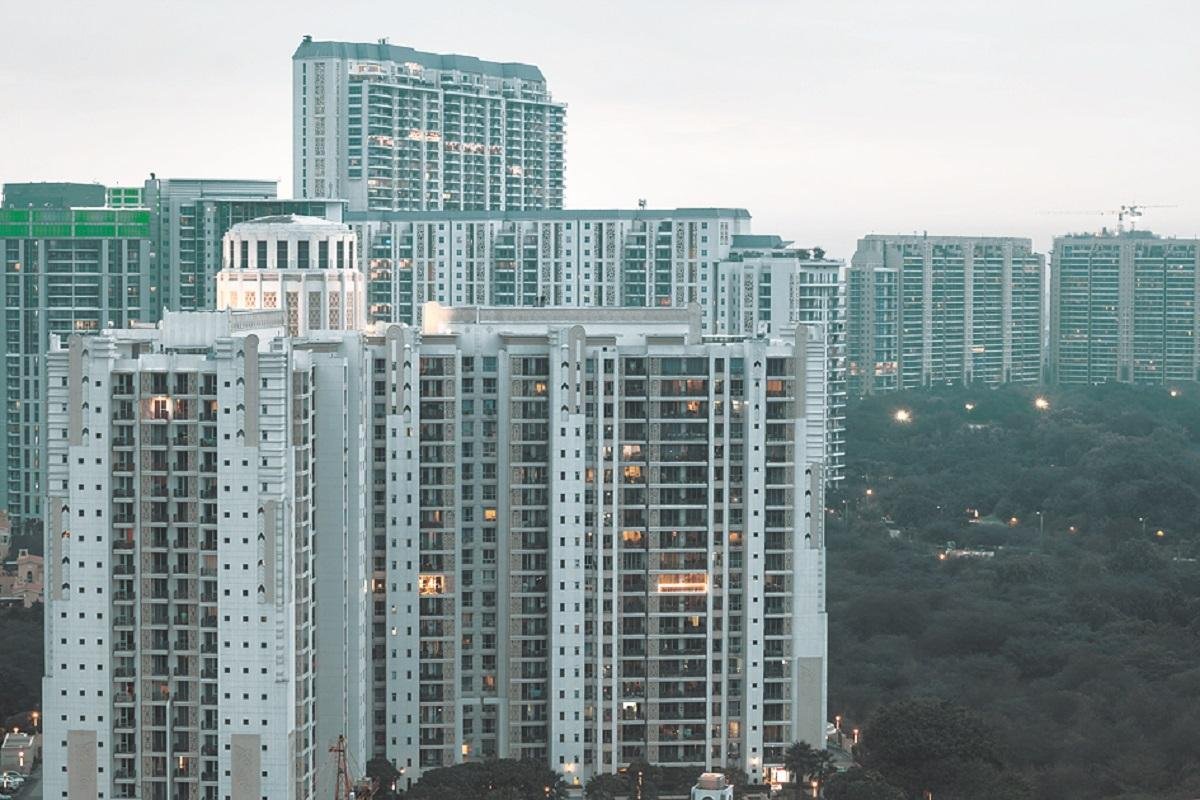
The FY27 Budget sharply scales up capital expenditure to Rs 12.2 lakh crore – a 5-times increase compared to 2013 – as the Modi government reinforces its strategy of prioritising infrastructure creation, logistics expansion and investment in sunrise sectors to drive long-term growth. It lays emphasis on spending on rail, roads, digital and energy infrastructure, alongside measures to ease compliance and improve credit flow as the central lever for job creation and economic momentum.
“This reflects a conscious strategic choice to invest in assets that create productivity, jobs, and future economic capacity rather than short-term populism. This shows that our focus is on improving the quality of life for the people, creating jobs for our youth and advancing the nation’s progress towards Viksit Bharat,” Modi said.
For a long time, the prime minister said, high-quality infrastructure had been neglected, posing a challenge for the people and Indian businesses.
“Broken and outdated infrastructure has no place in a nation that aspires to create a Viksit Bharat,” he said.
“Therefore, we revolutionised the sector with our speed, scale and focus on creating next-gen infrastructure, while upgrading the existing infrastructure. In the last decade or so, India has seen perhaps the most expansive infrastructure-building effort in our history, an unprecedented emphasis on quality! The most important aspect of this has been the way we have created infrastructure with the future in mind.” Highlighting the scale of expansion, he said the number of airports has doubled as orders for thousands of aircraft are placed, number of cities with metro services has more than quadrupled, rural roads and internet connectivity are expanding rapidly, and investments made in the transformational expansion of freight corridors, ports, and coastal connectivity.
On sectoral allocations, he said a capital outlay of almost Rs 3 lakh crore has been made for Indian Railways, with a priority on high-speed connectivity, freight capacity, and passenger safety. Seven new high-speed rail corridors are proposed to be developed to connect major Indian cities, including the South High-Speed Diamond corridor, which will significantly benefit Karnataka, Telangana, Andhra Pradesh, Tamil Nadu, Kerala, and Puducherry.
At the same time, Dedicated Freight Corridors are being expanded to decongest passenger routes and reduce logistics costs for industry.
Allocations for national highways have increased nearly 500 per cent compared to a decade ago.
Highlighting investments in emerging sectors, Modi said investments are being made in sunrise sectors, including biopharma, semiconductors, electronics component manufacturing, rare earth corridors, and chemical parks. “These will provide a new impetus to jobs and investment while strengthening India’s future.” Emphasising governance reforms, the prime minister said, “An important feature of this budget has been our continued stress on trust-based governance. Across sectors, ministries, and processes, we are massively reducing paperwork, decriminalising offences, and reducing compliance requirements. This is because we envisage the state as an enabler, and we trust the citizens. This will have a far deeper impact on people’s lives than the numbers in typical budgets.” Modi said his government had built “an inclusive, tech-driven yet human-centric welfare architecture that reaches the last mile and leaves no one behind,” with nation-building and economic strengthening as its guiding principles.
Recalling his call from the Red Fort – ‘Yahi Samay Hai, Sahi Samay Hai’ (now is the time, the right time) – Modi said the sense of urgency had now become a “national conviction”.
“The ‘now is the time’ sense of purpose that you are alluding to has always been there within us. But today, that sense of urgency has become a national conviction, a whole-of-society resolve,” he said.
Describing India’s positioning in a changing global order, Modi said, “We are living in a post-pandemic world order that is opening new doors for India; countries eager to partner with us in trade and innovation, we have a young and increasingly skilled population; and we are focusing on strong growth accompanied by low inflation and macroeconomic stability.” Framing the Budget in long-term terms, he said the document should not be seen just as Budget 2026. “This is the first budget in the second quarter of the 21st century. This budget consolidates the gains made since 2014 and builds upon them to impart momentum for the next quarter-century.” “Just as the decisions and initiatives taken in the 1920s laid the foundation for independence in 1947, the decisions we are taking now are laying the foundation for Viksit Bharat by 2047,” he added.
Not a ‘now or never’ moment but a ‘we are ready’ moment: PM hails Budget 2026
This year’s Budget was not a ‘now or never moment’ born out of compulsion but a ‘we are ready’ moment born out of preparation and inspiration, Prime Minister Narendra Modi said on Sunday, asserting that it reflects India’s “yearning” to become a developed nation.
In an exclusive interview with PTI, Modi asserted that none of his government’s budgets have been made with an attitude of creating a run-of-the-mill ‘bahi khata’ documents as “that is not our approach”.
Recalling that a few years ago, he had declared from the ramparts of the Red Fort, that ‘Yahi Samay Hai, Sahi Samay Hai”, Modi said a “now is the time” sense of purpose has always been there within his government.
“But today, that sense of urgency has become a national conviction, a whole-of-society resolve. There is a new confidence in our nation,” he said.
“Our national character has revealed itself even in times of different kinds of challenges and we are a bright spot of growth even in difficult global circumstances,” he said.
Asked whether he has determined that India is now ready to launch into the next phase of development toward a moonshot for Viksit Bharat by 2047 and was it a now-or-never situation, Modi said the post-pandemic world order is opening new doors for India with countries eager to partner with it in trade and innovation.
“We have a young and increasingly skilled population; and we are focusing on strong growth accompanied by low inflation and macroeconomic stability. Our youth are creating waves in fields as diverse as space, sports and startups. We have ensured political stability and a reform-oriented policy environment,” the prime minister said.
“And because of these developments, people are seeing this as a historic opportunity for India. Even as these developments were gaining momentum, the nation also witnessed the historic Azadi Ka Amrit Mahotsav, which infused the people with a sense of mission,” he said in a written interview.
Pointing to the the behavioural transformations that have taken root over the last few years, Modi said whether it is cleanliness or any other issue, people know that building a developed nation is not just about infrastructure or economy, but also about social habits.
“So, this is not a ‘now or never’ moment born out of compulsion. It is a ‘we are ready’ moment born out of preparation and inspiration. This Budget reflects this yearning to become a developed nation,” Modi said.
Therefore, this budget should not be seen just as Budget 2026 but as the first budget in the second quarter of the 21st century, he said.
This budget consolidates the gains made since 2014 and builds upon them to impart momentum for the next quarter-century. Just as the decisions and initiatives taken in the 1920s laid the foundation for Independence in 1947, the decisions we are taking now are laying the foundation for Viksit Bharat by 2047,” he asserted.
Modi said none of his government’s budgets have been made with an attitude of creating a run-of-the-mill ‘bahi khata’ documents.
“Because that is not our approach. It is my privilege that people’s blessings have been with me for a long time, and I have served for 25 years as the head of government, first at the state level and now at the national level. If one takes a closer look at my approach in the last 25 years, it becomes clear that our work doesn’t happen in bits and pieces.
“There is a broader strategy, a plan of action and an effective implementation that reflects the ‘whole of the nation’ thinking, continuity of purpose and a long-term vision, progressively unfolding step by step, year after year,” Modi said.
Since 2014, the nation has come to view the Budget as far more than a ledger of numbers, facts, or ad hoc announcements, he said.
Modi asserted that each budget has contained intent, a clear-cut roadmap, and a sequence of actions, each with stated timelines for achieving them. Then we focus on implementation, and in the next Budget, it is taken to the next logical step, he said.
In these years, we have addressed the structural gaps left behind by earlier administrations, undertaken bold structural reforms, expanded opportunities for the poor, empowered our youth, strengthened the role of women and ensured dignity and security for our farmers, he said.
“Along with this, we deployed an inclusive, tech-driven, yet human-centric welfare architecture that reaches the last mile and leaves no one behind,” Modi said.
At every stage, the guiding focus has been nation-building, strengthening the economy and laying the foundations of Viksit Bharat, the prime minister said.
PM Modi lists 3 priorities for next decade: More structural reforms, deepening innovation, simpler governance
Asserting that his government’s “Reform Express” is benefitting common citizens in a big way, Prime Minister Narendra Modi on Sunday said his top three reform priorities for the next decade will be continued structural reforms, deepening innovation and further simplification of governance.
In an interview to PTI, Modi also said that by temperament, he is never satisfied as he believes that public life demands a certain constructive restlessness, a constant urge to do more, to improve faster, to serve better.
He was asked whether he was satisfied with the progress made on the reforms front.
Asked to prioritise three economic reforms for the next decade, Modi said, “Our direction is clear, rather than limiting it to a fixed number.
“First, we will continue structural reforms that improve competitiveness and productivity. Second, we will deepen innovation in technology, manufacturing and services. Third, we will simplify governance further so that citizens and businesses can operate with greater ease and trust,” he said.
Modi said reforms have helped the common citizen, the menace of middlemen has reduced and infrastructure expansion has improved connectivity and cut down logistics costs.
“Often, there is a limited understanding of the word ‘reforms’ as referring only to the economy and industry. But reforms in the social sector are as important.
“Programmes like Aspirational Districts and Aspirational Blocks have transformed lives in areas once neglected as backward. Similarly, the PM-JANMAN scheme identifies those tribal communities that have been particularly disadvantaged and works for their welfare,” the prime minister said.
On the progress made by the “Reform Express”, he said, “I must say that by temperament, I am never fully satisfied. I believe public life demands a certain constructive restlessness, a constant urge to do more, to improve faster, to serve better. So yes, there is always a strong desire to achieve more for our people and take our country forward.” Modi said it is also important to acknowledge the scale of progress achieved in the journey of the “Reform Express”.
“Reform is the commitment of this government, something we have shown in letter and spirit. I am proud to say that we have moved from incremental adjustments to systemic transformation,” he said.
Giving examples, he said the Goods and Services Tax (GST) reform with its two-slab structure has eased the burdens of households, micro, small and medium enterprises (MSMEs) and labour-intensive sectors.
“We have changed the definition of small companies, which has helped reduce compliance costs. The FDI reform, allowing 100 per cent FDI in insurance, has led to better choices for people, especially the middle class,” he said.
The prime minister further said several outdated laws are now history.
“Earlier, there were no ministries specifically focussed on developing crucial sectors, such as skill development, fisheries, cooperatives and AYUSH. We have changed that and now, each of these sectors is thriving.
“For decades, the country waited for labour reforms. It was our government that initiated those, ensuring that workers’ interests are protected and that businesses thrive,” he said.
Modi said India is a digital leader in the world today and it was made possible by a fundamental reform in how the people of the country transact, via the UPI platform.
“For our youngsters, reforms have created an ecosystem where aspiration is supported by opportunity. India has emerged as one of the world’s leading start-up ecosystems. Young innovators today can convert ideas into enterprises with far fewer obstacles than before,” he said.
For MSMEs, which are the backbone of India’s economy, reforms have improved access to credit, simplified tax processes and strengthened integration into global value chains, the prime minister said.
Women to play most important role in creating Viksit Bharat: PM Modi
Prime Minister Narendra Modi on Sunday said women will play the most important role in creating Viksit Bharat and initiatives taken by the government will empower them.
In an exclusive interview with PTI, the prime minister said in the past few years, it has been a matter of pride that Indian women are leading the way in various domains of science and technology.
“Whether it is space or start-ups, they are making a great impact,” he said.
Modi said the welfare of women guided every decision taken by his government and the new initiative to set up girls’ STEM hostels in every district can lead to significant rise in education and innovation among women.
He said the decision to train 1.5 lakh caregivers next year and expand institutions for Allied Health Professionals will formalise care work, which is largely restricted to the informal sector.
The prime minister said the decision to train caregivers will create dignified, certified employment for women and simultaneously strengthen India’s healthcare capacity.
He said this year’s Budget also factored in the new-age sectors of the economy, and through AVGC Content Creator Labs in 15,000 schools and 500 colleges and the establishment of formal creative infrastructure, the government is ensuring that sectors like animation, VFX, gaming and digital content have record levels of women’s participation.
“These are sunrise sectors and women’s participation will make them even more vibrant,” Modi said.
“It is my conviction that women will play the most important role in creating Viksit Bharat,” the prime minister said.
Modi said right from the birth of the girl child to the fulfilment of women’s aspirations, the government has initiatives and reforms that are working for women at every step.
“Whether it is Beti Bachao Beti Padhao, Swachh Bharat, scholarships for girls, PM Awas Yojana, Jal Jeevan Mission, MUDRA or PM Surakshit Matritva Yojana, the flagship schemes of our government are addressing women’s needs and aspirations,” he said.
The prime minister said the government has announced an initiative that will use innovative finance models to support community-owned retail outlets.
“When women control market access, supply chains and retail platforms, they move up the value chain. This directly lowers the barriers of capital access, market access and scale,” he said.
The prime minister said this should be seen alongside the government’s efforts to encourage entrepreneurship among women, such as Self-Help Groups, the MUDRA Yojana and Lakhpati Didis, through which crores of women have become self-reliant.
“This also boosts women’s social status,” Modi said.
He said it is well known that the khadi, village industries, handloom, and handicrafts sectors see significant participation by women.
“The Mahatma Gandhi Gram Swaraj initiative strengthens this sector by providing training, skilling, quality, and market access to people. The consolidation of various existing schemes under a National Handloom and Handicraft Programme will also provide an integrated, focused approach,” the prime minister said.
Discover more from News Link360
Subscribe to get the latest posts sent to your email.