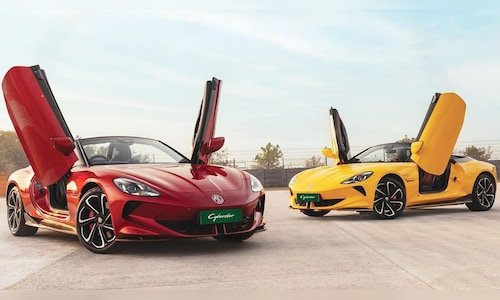
JSW Group joined SAIC in 2024, after which the company shifted its focus toward new-energy vehicles, including electric and plug-in hybrid models, rather than internal combustion engine vehicles.
The Halol facility, with a current capacity of about 110,000 to 120,000 units a year, is operating near full utilisation after retail sales rose about 35% and revenue increased 27% in 2025, compared with overall industry growth of 5% to 6%. The company sold 70,500 vehicles in 2025, up from 61,000 in 2024, led by the Windsor electric vehicle.JSW MG’s share of India’s electric vehicle market increased from less than 10% two years ago to about 30% in 2025, while Tata Motors Passenger Vehicles remains the overall market leader.
The company plans to fund the initial phase of the expansion through internal accruals. “Because we are cash positive,” Mehrotra said, adding that external funding options may be considered later and that “all options are on the table.”
Reuters reported the company has not yet turned profitable, with losses widening to $121 million in the financial year ended March 31, 2025. At that time, it had about $60 million in cash and $344 million in borrowings.
JSW MG said new-energy vehicles will form the majority of its portfolio. “The center of gravity will be on new energy vehicles — 75% to 80% of our business,” Mehrotra said, adding that NEVs will not fall below 75% of the product mix.
The automaker is also increasing local sourcing of components to reduce costs, foreign exchange exposure and dependence on imports and sea freight.
India’s restrictions on Chinese investment since 2020 have constrained the expansion of companies such as SAIC and BYD, though Mehrotra said conditions have improved. “It is better than a couple of years ago but the risk is still there,” he said.
(With input from agencies)
Discover more from News Link360
Subscribe to get the latest posts sent to your email.