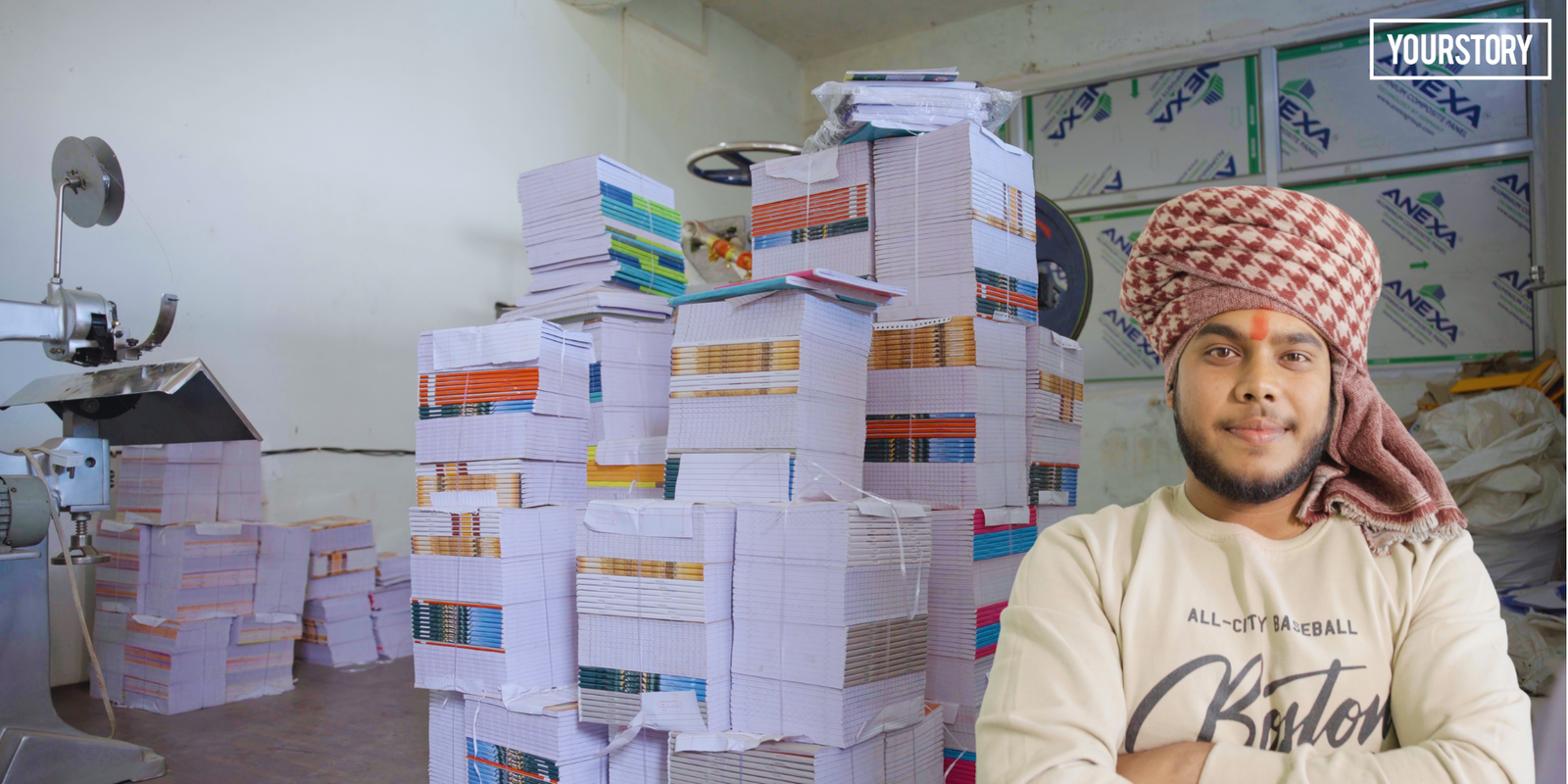
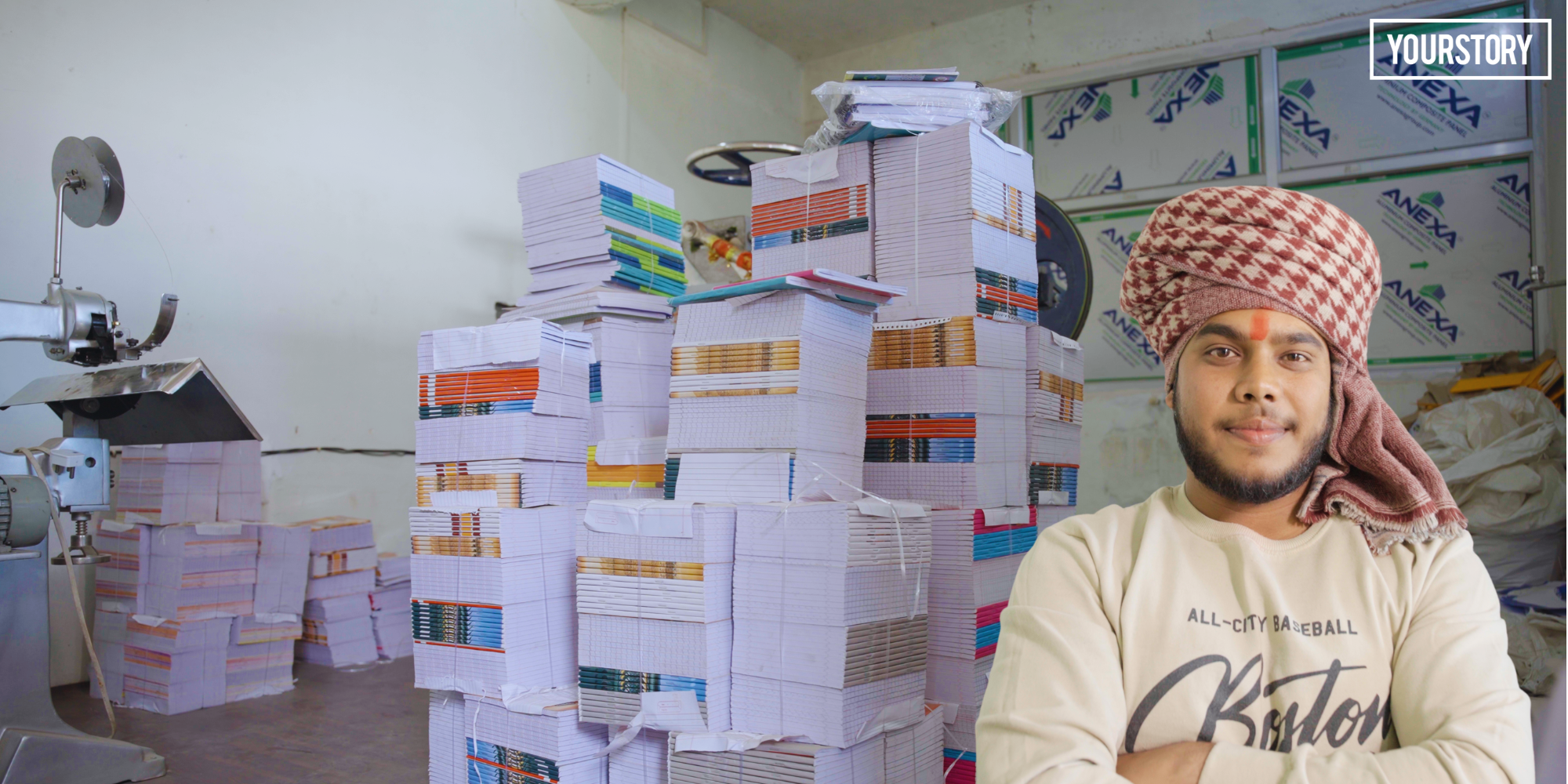

The work, he explains, is simple in idea but manual in execution. Raw material arrives, then the pages and covers are cut, stitched, and bound, and the finished copies are sent out for sale. In his unit, a notebook is not a branded product story; it is a set of steps that must align: paper size, cover fitting, clean stitching, and binding that does not open up after use.
From a gym to a workshop
Singh says he completed his graduation and, before starting this unit, he was running a gym located close to where he now works. The shift began as a suggestion from someone he knew through that gym, a friend from Sitapur who advised him to consider notebook manufacturing as a steadier business idea. Singh describes it as a practical nudge rather than a dramatic turning point, but it challenged him to look at what could be set up locally with limited space and a clear production process.
He decided to start the notebook unit in August 2025. In the early days, the workshop did not run with a full team. He says that, as a small start, the work depended on one artisan, and even that support is seasonal, with workers leaving when demand is low. For now, he manages operations with his brother Vikas Singh and one karigar who handles the cutting, stitching, and binding work alongside them.
Setting up, then waiting for the season
To get the unit running, Singh first focused on equipment and inputs. He brought a machine from Amritsar, set up the workspace, and then arranged the raw material from Lucknow. Once the supply line was in place, the routine became clearer: material arrives, the pages are cut, the bundles are stitched, the copies are bound, and stock is prepared for the market.
He took support through Mukhyamantri Yuva Udyami Vikas Abhiyan (CM YUVA) Yojana after learning about it through local guidance.The loan process included an online application to his bank, followed by a call from the branch, and a discussion on what he intended to set up. He was asked for quotations, and the payment, he says, went directly to the firm named on the quotation rather than to him in cash. “The money didn’t come to me, it went straight to the supplier,” he says.
The challenge now is less about the setup and more about timing. Singh admits he started late in the academic cycle, when demand is nearly satisfied. The result is that he has entered what he calls an off-season, with fewer sales than he had hoped for in the first run.
Still, he frames the present as a stable base rather than a setback, focusing on improving output and preparing for the next cycle. After beginning with a late start and a small team, he is now in the slow months, keeping the unit ready so that, when the season returns, the work can move without hesitation.
Discover more from News Link360
Subscribe to get the latest posts sent to your email.