What is the difference between folk songs and folk ballads? “Folk songs are short, and do not necessarily contain a story. Short ballads are called kurunkathai. And ballads with more than 500 lines are called nedunkathai. Some have 30,000 lines. Most ballads, except some kummi ballads, are performed for an audience,” elaborates Ramanathan.
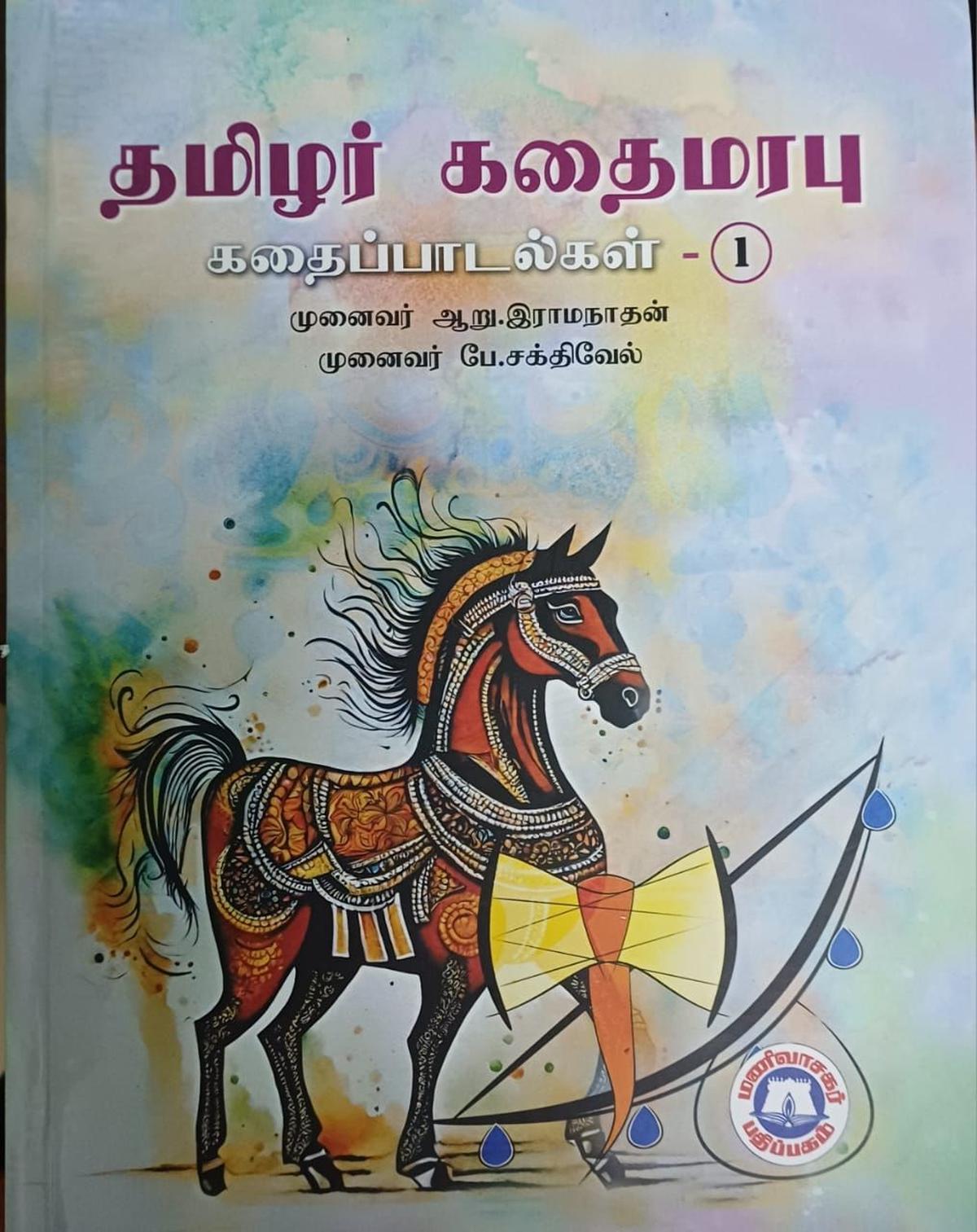
The book Tamizhar Kathai Marabu- Kathai padalgal is a compilation of all Tamil folk ballads by Prof. Ramanathan.
| Photo Credit:
Special Arrangement
Temple worship has kept alive the ballad tradition through villuppattu. “Villupattu ballads were mostly about temple deities. They began to be written down sometime in the 18th century, and in one village I found 18 copies of the Sudalai Madan ballad.”
“In the Kongu region, ballads are presented to the accompaniment of the percussion instrument udukkai. Kaniyan koothu artistes of Tirunelveli hold more than 35 ballads in their memory. In areas around Tiruchi, ballads are presented to the accompaniment of pambai. Therukkoothu, which has a significant ballad repertoire, is now performed mostly in Chennai, Chingleput, Tiruvannamalai, Dharmapuri, Salem, Villupuram and Cuddalore. But there was a time when it was common in the Southern districts of Tamil Nadu too,” says Ramanathan.
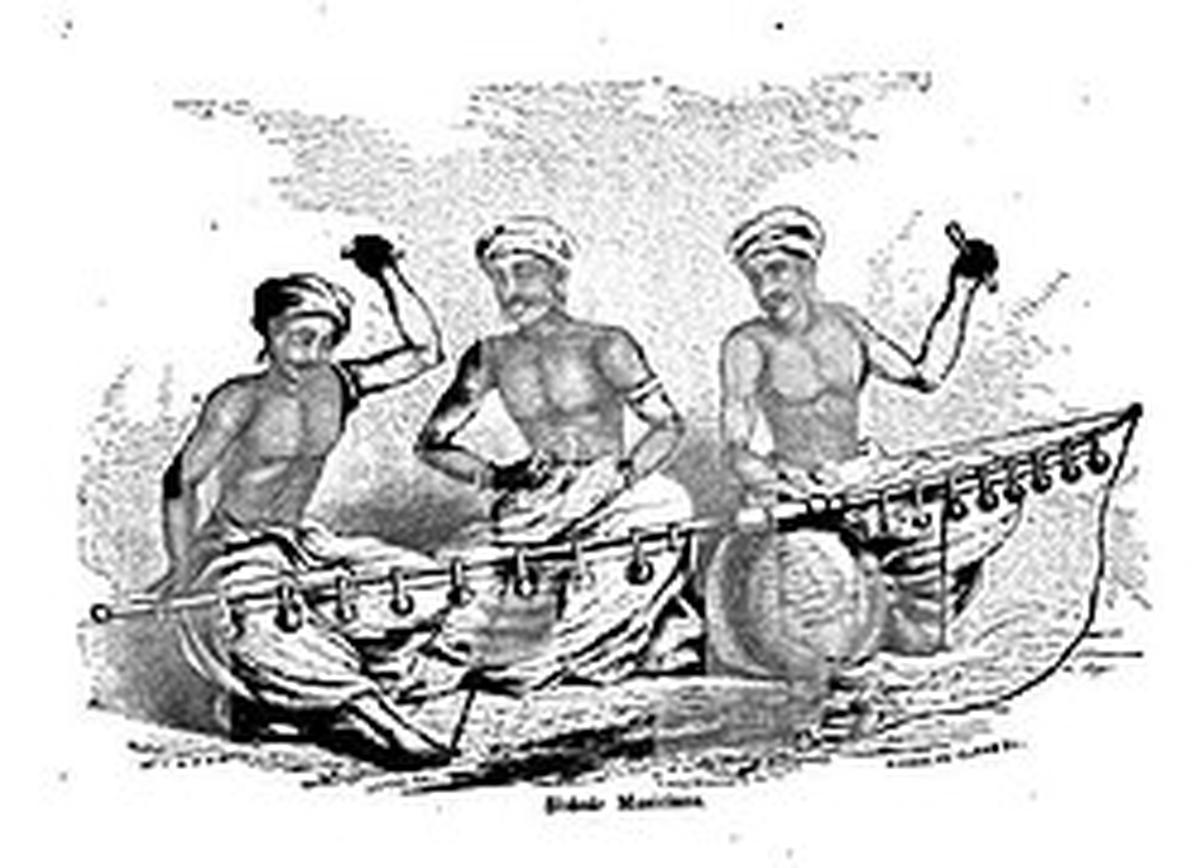
Temple worship has kept alive the ballad tradition through villuppattu, one of the ancient forms of oral storytelling interspersed with music.
| Photo Credit:
Courtesy: Wikipedia
At a time when newspapers were not easily available in villages, ballads informed people of disasters like train accidents, fires, murder and suicide. “Tappe ( a percussion instrument ) was played when such ballads were presented. Often these ballads were printed and sold where there was a large gathering of people,” he adds.
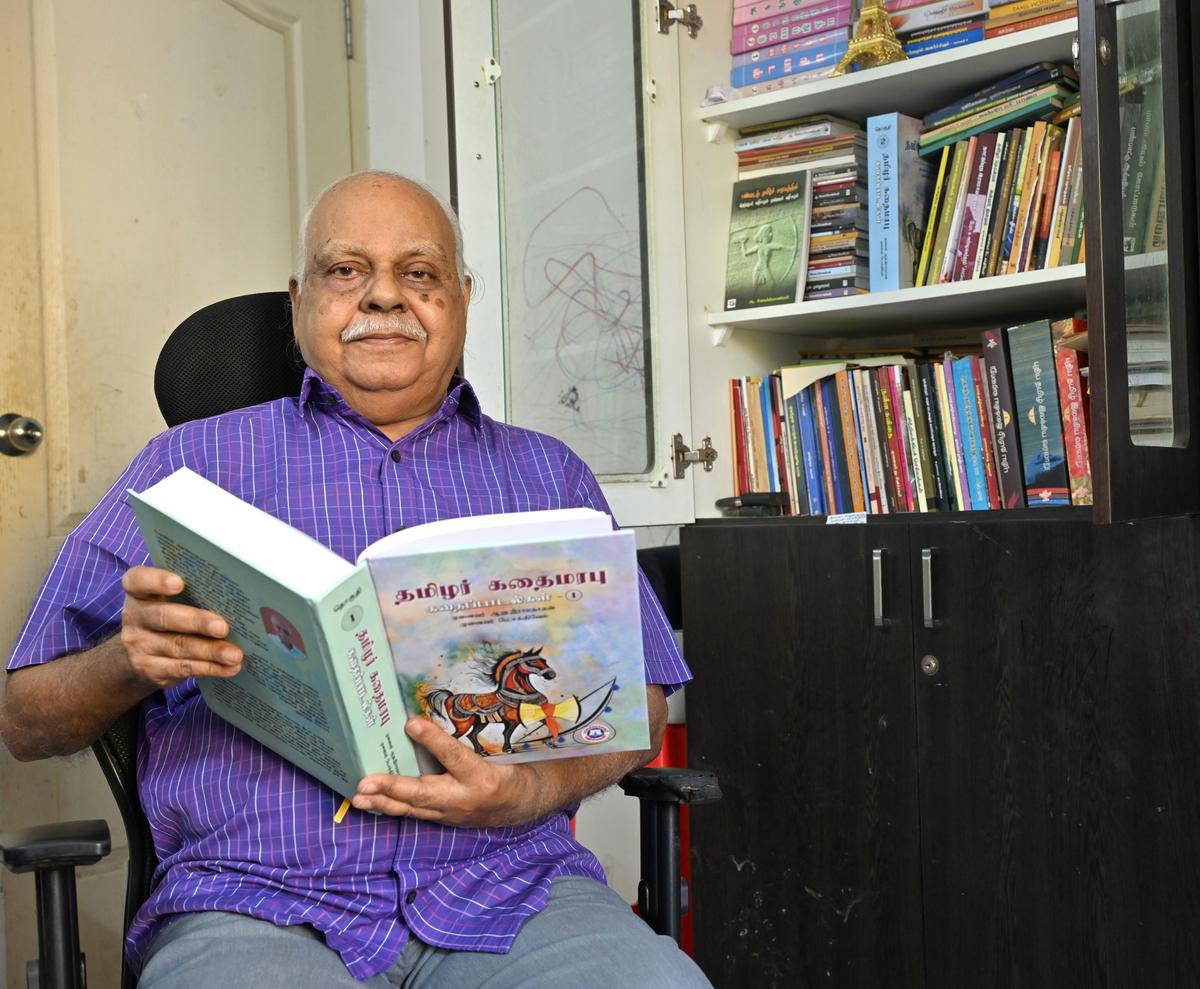
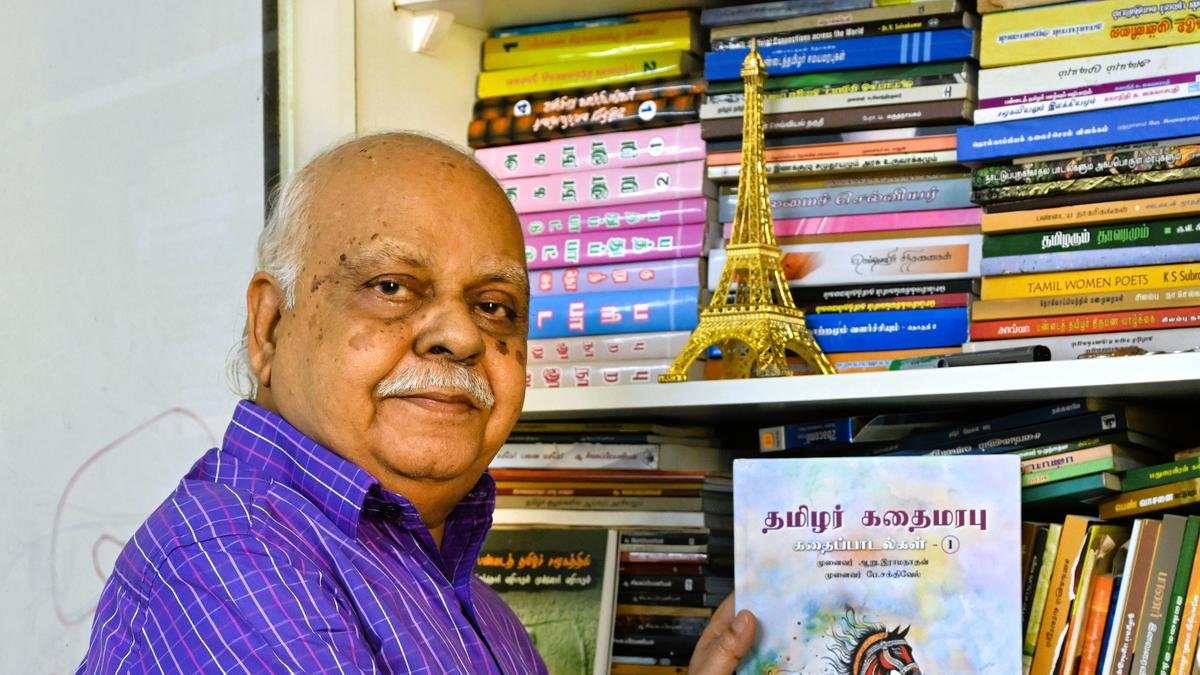
Prof. Aru Ramanathan has authored more than 55 books on Tamil folk traditions.
| Photo Credit:
R. Ravindran
When did ballads originate? “Scholar Vanamamalai says folk ballads began in the 14th century. But most were written from the 16th to early 20th century. Ramappayyan Ammanai was, perhaps, the earliest to be written. Ramappayyan’s time was 1623 – 1659 CE. Ramayana, Mahabharata ballads must be earlier, but we are unable to fix a date for them. The first printed ballads were Chithiraputhira Nayanar Kathai and Amaravati Kathai, published in 1868 by Kondalakan Pulavar. Till 1900, at least 65 ballads were published.”
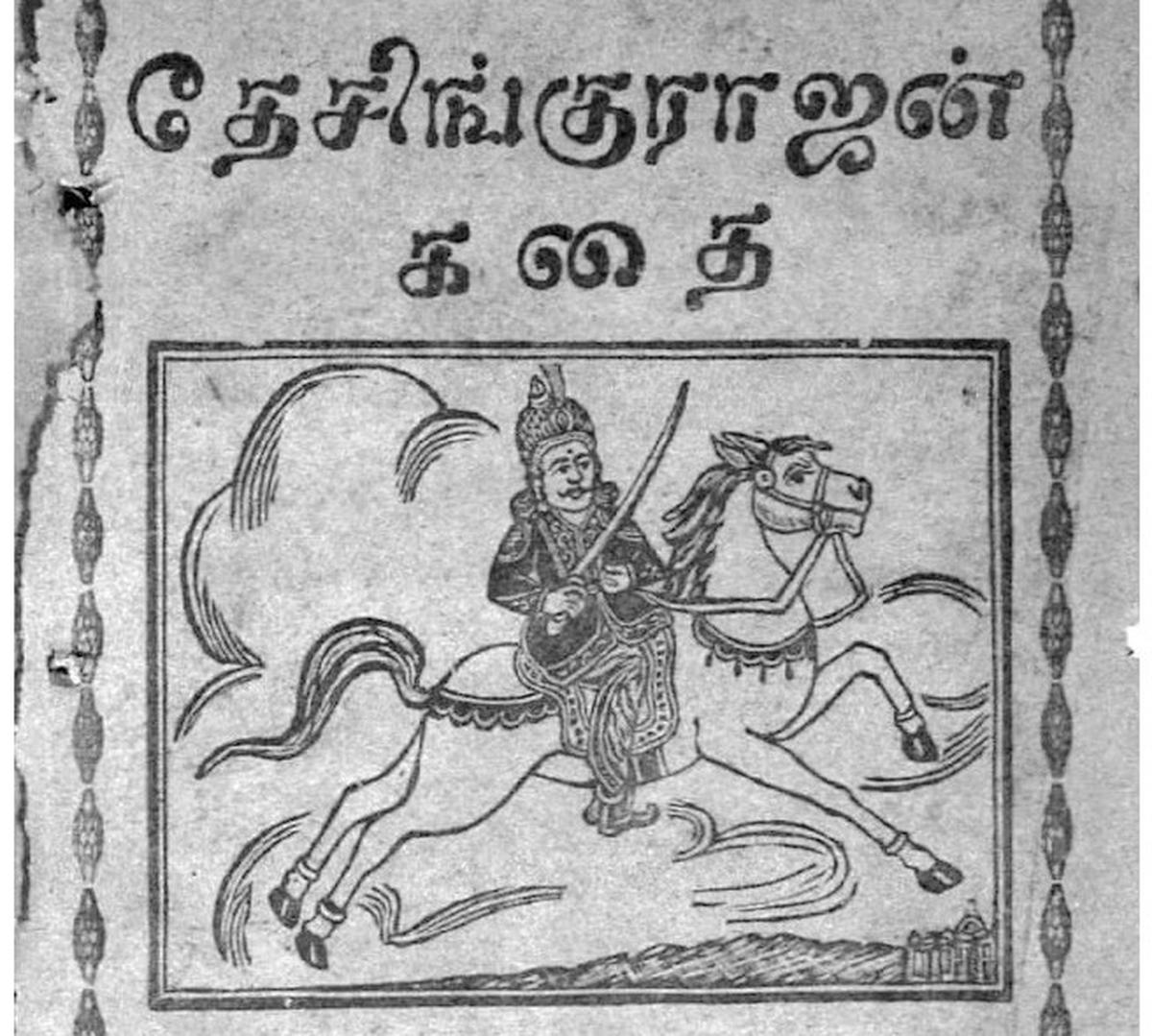
A particular rhythm was used to convey the idea of a ballad. In Desingurajan Kathai, the meter suggesting the galloping of a horse was used.
| Photo Credit:
Special Arrangement
Was any particular meter used for the verses? “Ballad writers used meters that would convey the core idea of a ballad. In Desingurajan Kathai, the meter suggests the galloping of a horse, which is apt, since the ballad is about Desingu’s heroism on the battlefield.”
Ramanathan points out that the ballad Vellaikkaran Kathai, shows the writer’s knowledge of geography, besides many other subjects. In Vellaikkaran Kathai, a Britisher (Parangidurai) asks carpenters to build a ship for him. For the flag post, he chooses a tree in which Senkidaikkaran resides, thanks to a boon from Shiva. The ship is built in London and begins its journey from Dover Port reaching Kayankulam in Kerala, where it is loaded with various things. But as it proceeds on its return journey, Senkidaikkaran takes the form of an eagle, shakes the ship, and overturns it. All Englishmen on board die, and with the grace of Senkidaikkaaran they become gods.
“The ballad must have been written after 1869, because it mentions the Suez canal, which was opened in 1869. The ballad mentions 79 places that the ship visits such as Corsica, Sicily, Naples, Greece, Cyprus and Beirut. This ballad was written by Sivan Anainja Perumal Nadar’s son Muthayya Nadar of Pooviyoor, which is close to Kanyakumari. Folklorist A.N. Perumal records that even today, offerings are made in Pooviyoor to Senkidaikkaaran and then to Vellaikaara sami (the Britishers on board the ship), showing that the ballad was not entirely imaginary. During worship, a man dances, peering through an imaginary telescope. He speaks a few sentences in English and mimics the shooting of the eagle. This work tells us that the wood of trees such as manjanathi, maamarudhu, teak, sandal, karunaangu, punnai, kaariluppai and vennaangu were used for building ships.”
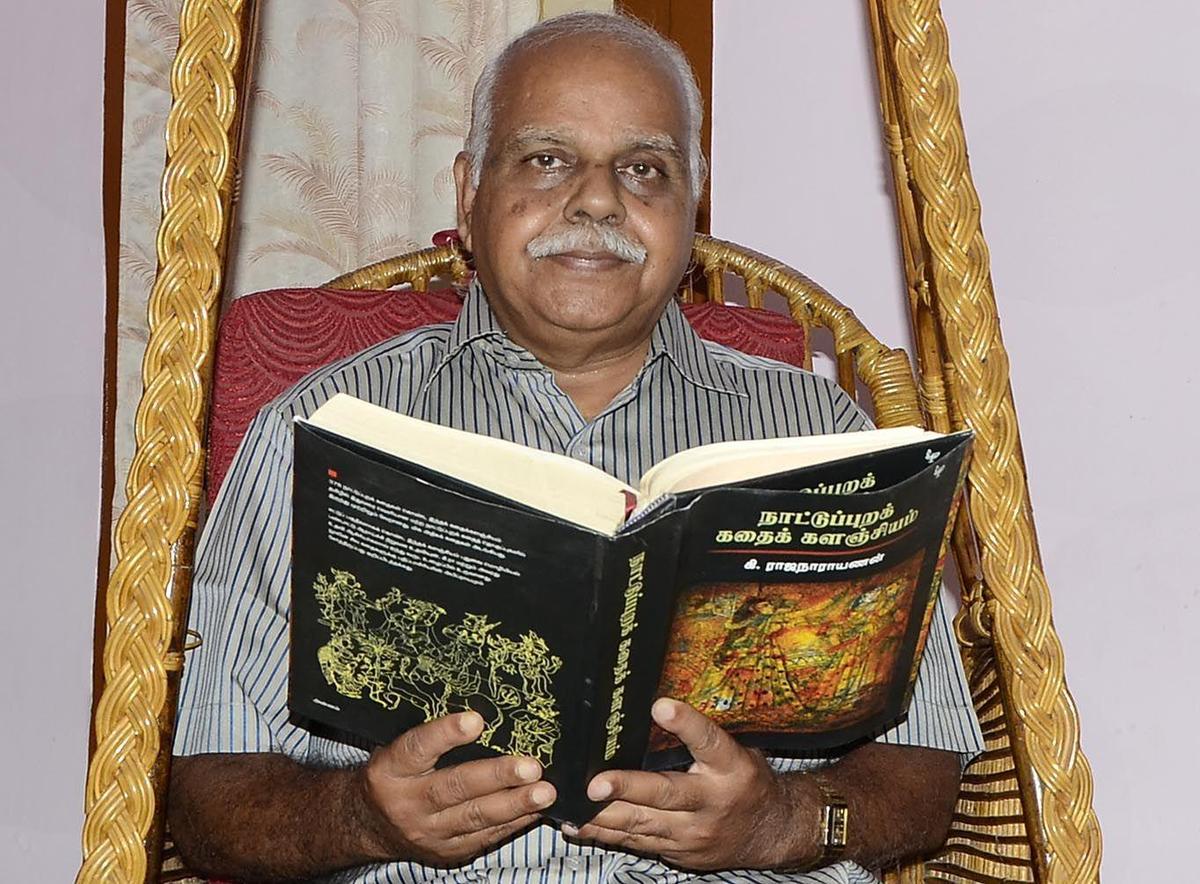
Prof. Aru Ramanathan, a researcher in folk songs and tradition, was the former head of the Department of Folklore, Tamil University, Thanjavur.
| Photo Credit:
B. Velankanni Raj
Through ballads we learn that in some instances women, defying tradition, performed funeral rites for dead relatives. Some ballads show us how certain customs continued over the centuries. In Purananuru (verse 249), a widow covers the ground with cowdung paste, and then offers pinda for her dead husband. In the folk ballad Kuruvi paattu, the female kuruvi also covers the ground with cow dung paste before offering pinda to its departed partner. “So we find a Sangam era practice continuing for many centuries later ,” says Ramanathan.
While studying the origin of folk deities, Ramanathan found that there were more temples for goddesses than male gods, because more women died of suicide or were killed. The perpetrators of injustice against women were afraid that the dead women would take revenge on them, and so promptly deified them as a form of atonement!
“Ballads are a good source of history,” says Ramanathan. He points out that British records such as Colonel Wells’ memoirs, and Tinnevelly Gazetteer portrayed Kattabomman as a negative character. After Kattabomman’s death, Britishers demolished his fort and exiled his family. Panchalankurichi, where he had ruled, was shown in maps as wasteland (paazh nilam). But Kattabomman could not be erased from the minds of the people. Stories and songs about Kattabomman were sung, and koothus about him were enacted across South Tamil Nadu. “The ballads about Kattabomman give us his side of the story and must be included when the history of that period is recorded.”
We learn from ballads that children began studying at the age of five or seven, and get details about what subjects were taught. Eenamuthu Pandian Kathai says that when Eenamuthu was nine, he was taught difficult mathematics problems (kodiya kanakkugal). He completed his education when he was thirteen. Paramasivasivanu Pandiar Kathai tells us that at age seven a girl studied multiplication tables. From Pennarasiyar Kathai, we gather that girls were given military training too.
Ballads show us that words from other languages made their way into Tamil. Ramanathan says that kullaara in kullaara vandi (covered cart) probably came from the Sanskrit word kulaaya meaning cage. Savurusangi is the Tamilisation of the Urdu Jabarjangi meaning small cannon.
Published – February 20, 2026 01:33 pm IST
Discover more from News Link360
Subscribe to get the latest posts sent to your email.