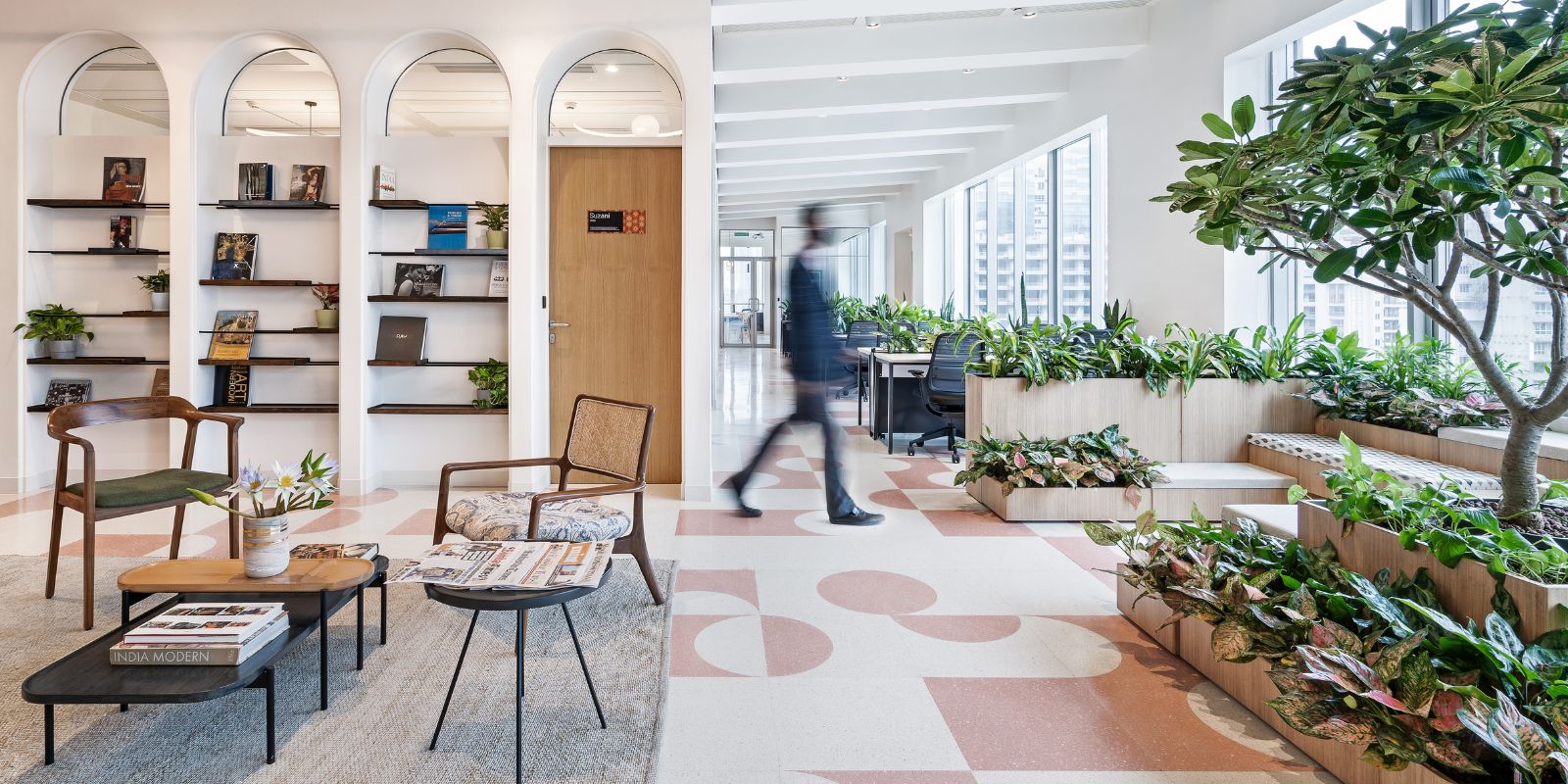

Dextrus emerged in response to this gap. “Offices had become a commodity and were missing the point. What we saw was a soul gap with offices being too sterile or too kitsch. We felt the need to create a high-quality office space that people would love coming to and getting to work,” says Founder and CEO Robin Chhabra.
Having previously worked at international architecture practices, Chhabra set out to bring the discipline of architectural thinking into the flexibility of coworking. “It was important for Dextrus to be a beautiful space, highly functional while bringing a distinct Indian identity to contemporary office design.”
Design as a performance tool, not a cosmetic layer
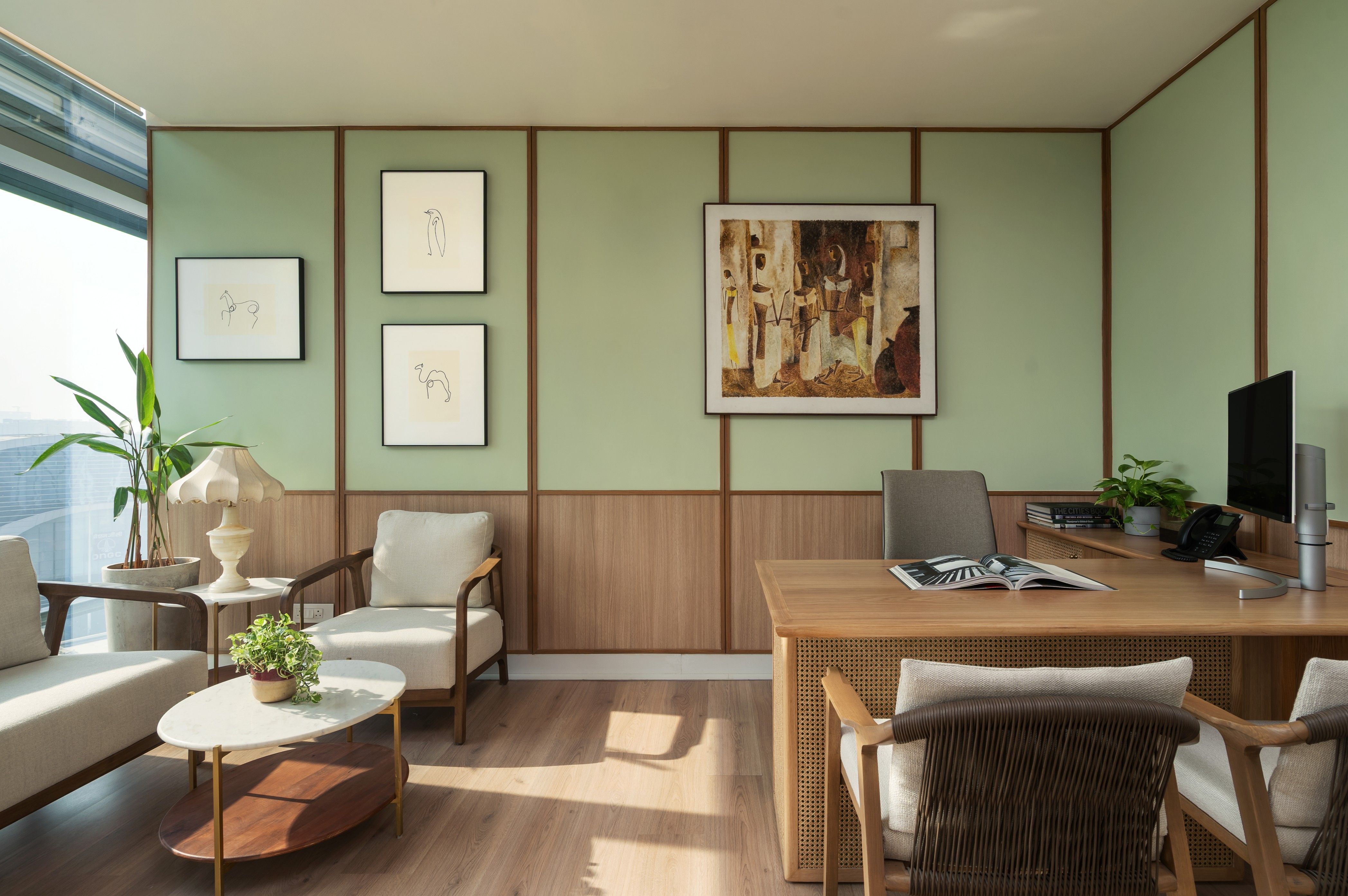
At Dextrus, design is viewed as a cognitive performance tool. Poor lighting, bad acoustics, and cluttered layouts quietly tax the brain throughout the day. “While aesthetics are important, we also spend a lot of time working on the ‘boring’ details: rubber gaskets to help reduce sound travel between spaces, plants to enhance the ambience, and efficient planning of AC ducts are some examples. The details are often the things that make the difference,” Chhabra explains.
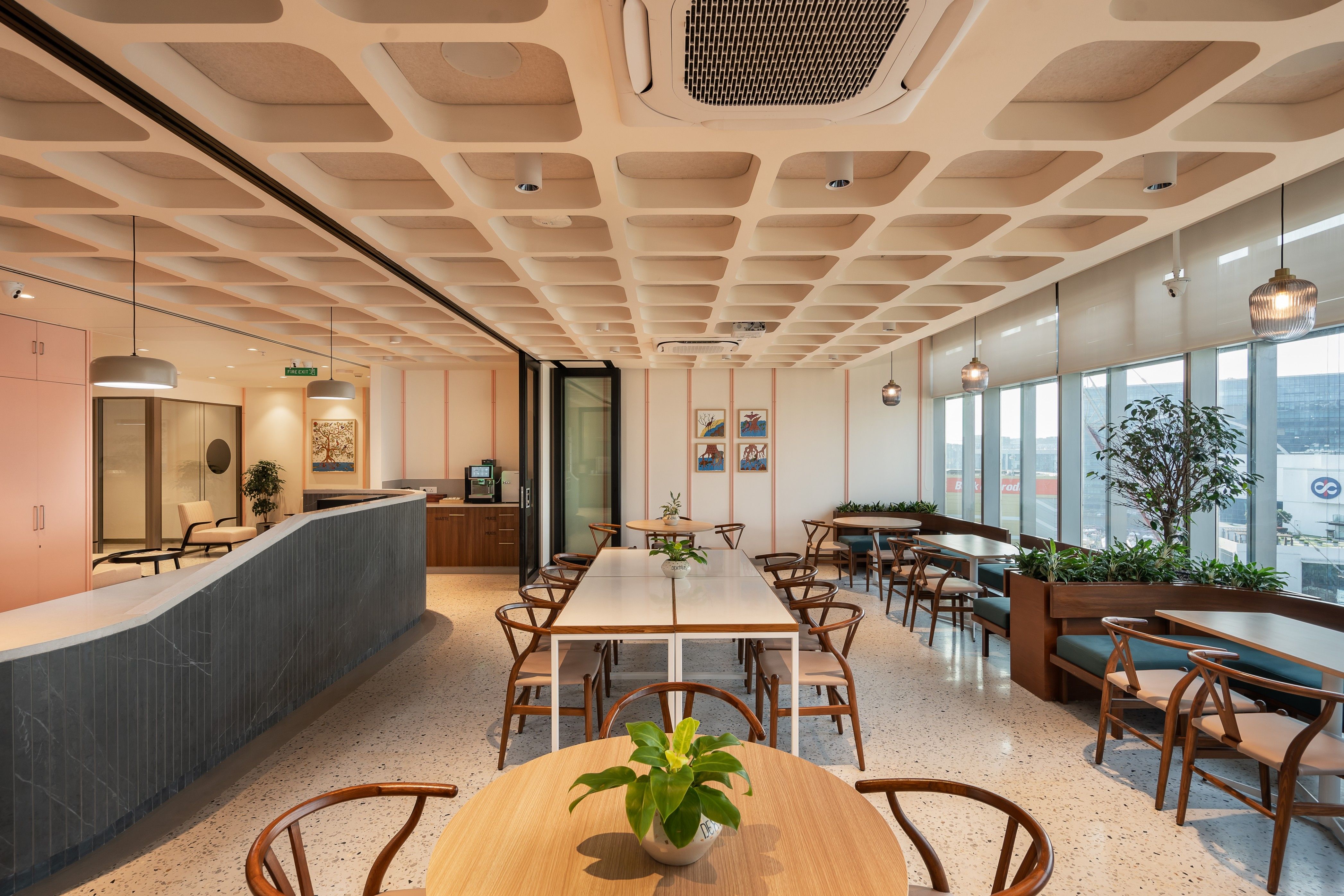
Dextrus chooses its properties carefully; the natural design of the building floor plate and its relationship to the elements are the first major focus point to help unlock the true embedded potential in the property. Internal space design has to juggle multiple factors such as types of spaces, proportions, right desk to common space ratios, movement of people, natural light, etc., to help arrive at the right office space. “Infrastructure design that includes aspects like lighting, landscape, and artworks is approached as necessities in the design process. These deliberate interventions are meant to shape how people think, feel, and work,” he says.
The company is cautious about widely accepted trends. Open-plan layouts, for instance, are often adopted as shortcuts to collaboration. Dextrus believes that without context, such openness can backfire. When privacy is removed entirely, stress levels rise, and meaningful interaction often declines. Collaboration cannot be forced by removing walls. It requires giving people autonomy to move between focused and social environments.
Bringing the Indian touch to design
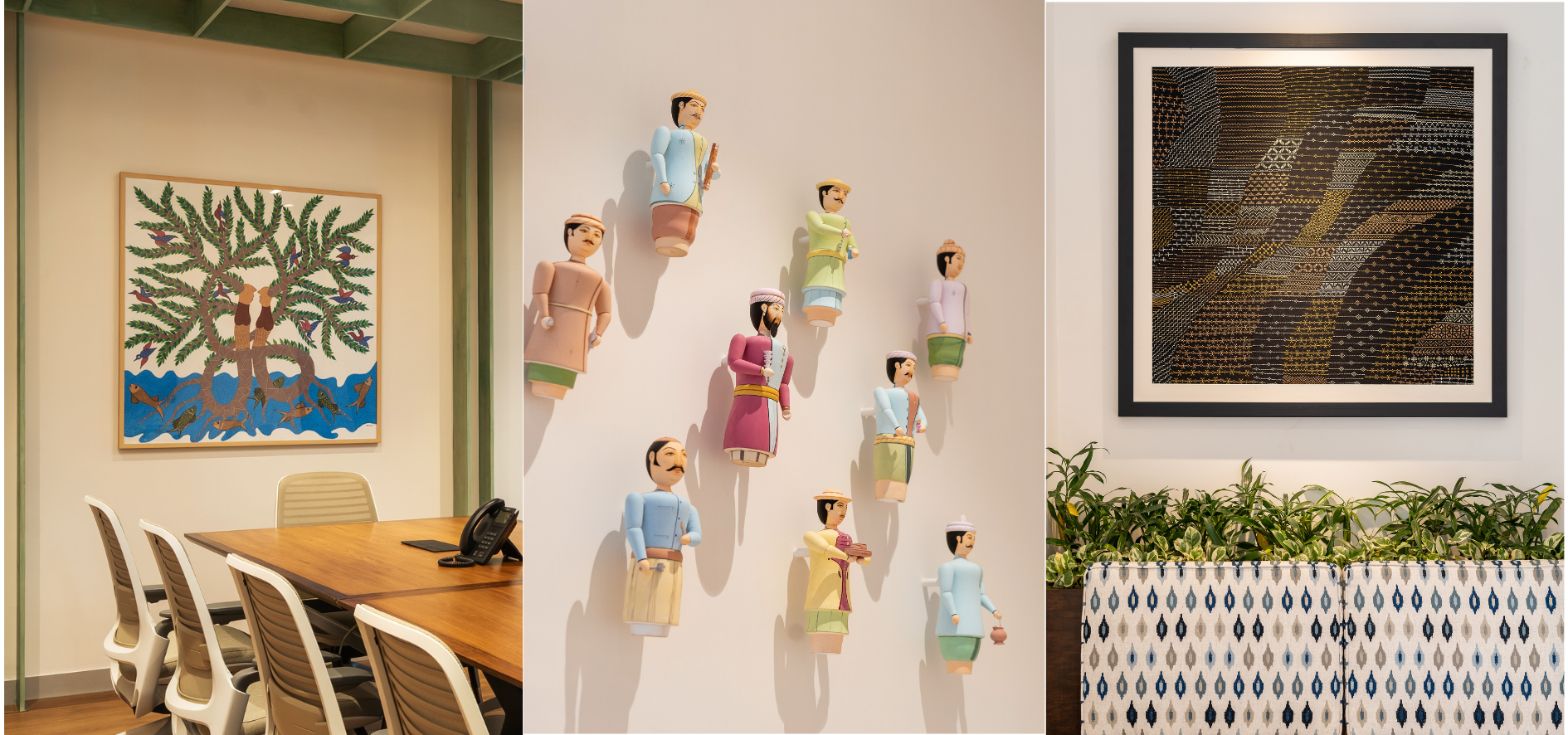
Every Dextrus center is shaped by its surrounding context and uses Indian talent to bring a distinct identity. At Lower Parel, given the area’s cotton mill history, Dextrus worked with artists to create embroidered fabric art that adorns the space, paying homage to the textile heritage that once defined the neighborhood. At Crescenzo BKC, the focus is on work itself, with a striking ‘Dolls of Work’ sculpture serving as a centerpiece that celebrates the act of creation and labor. Meanwhile, at One BKC, Dextrus collaborated with local artisans to create Gond art themed around the mangrove past of BKC, adding vibrant pops of color throughout the space.
“This effort brings the heart into the office space, an invisible element that one cannot replicate. It gets embedded in the feeling a space emanates and plays a role in our subconscious sensibilities,” he says. In the end, Dextrus spaces help people feel grounded and comfortable in their home away from home.
The value of invisible infrastructure
Some of the most critical design decisions at Dextrus are the least visible. Acoustics, air quality, and mechanical systems rarely make it into marketing conversations, but their absence is felt immediately. Fatigue, distraction, and discomfort are often symptoms of neglected infrastructure.
Dextrus has prioritized these systems from the beginning. Materials are chosen to age well over a decade. Infrastructure is built with excess capacity so clients can scale teams or technology without structural overhauls. High-spec acoustic planning ensures sound privacy, while robust MEP systems support long workdays consistently. The company views infrastructure as an investment in human durability.
Focus on the right target audience
Dextrus works extensively with enterprise and MNC clients on long-term contracts. Welspun ONE, Kotak Mahindra Bank, Sumitomo, Adani Connex, Harvard Business School, British Council, and Rabobank are some of their key long-term clients.
The designed ecosystem gives enterprises design autonomy inside their private areas as well as dedicated and separate entries; access to common spaces, meanwhile, retains a consistent Dextrus identity. Chhabra says, “At Dextrus, we keep flexibility at the core of all our business ideas and decisions. Our enterprise solutions offer the flexibility of owning a workspace while enjoying the benefits of a shared workspace at their convenience, and hence, it is a win-win for our clients.”
Choosing restraint in a market obsessed with scale
While much of the coworking industry pursued aggressive expansion, Dextrus consciously stepped away from a growth-at-all-costs mindset. Rapid scale, the company believes, often dilutes brand experience and turns a boutique offering into a transactional one.
Dextrus chose to focus on depth of service over breadth of footprint. It avoided aggressive price competition. Fiscal discipline became central to brand stability, allowing each center to remain unit-level profitable and resilient across market cycles. Quality environments tend to attract businesses seeking stability, reinforcing the idea that premium experiences act as a natural hedge during downturns.
A quieter definition of success
Looking ahead, expansion will not compromise core principles. Design, function, and people-first hospitality standards remain non-negotiable. Long-term success is defined not by footprint alone, but by architectural relevance and the ability to create spaces that remain functional and meaningful years into the future.
“With Dextrus, we aim to be the gold standard for office space as a service. It’s our responsibility and priority to think about all aspects of the design, operations, and the service quotient so that our clients do not have to worry about it,” Chhabra explains.
At its core, Dextrus is guided by a single belief: the environment we inhabit determines the quality of our output. When people say, “This is my office”, the company hopes they are expressing professional pride and a sense that their workspace is a silent partner in their success.
Discover more from News Link360
Subscribe to get the latest posts sent to your email.