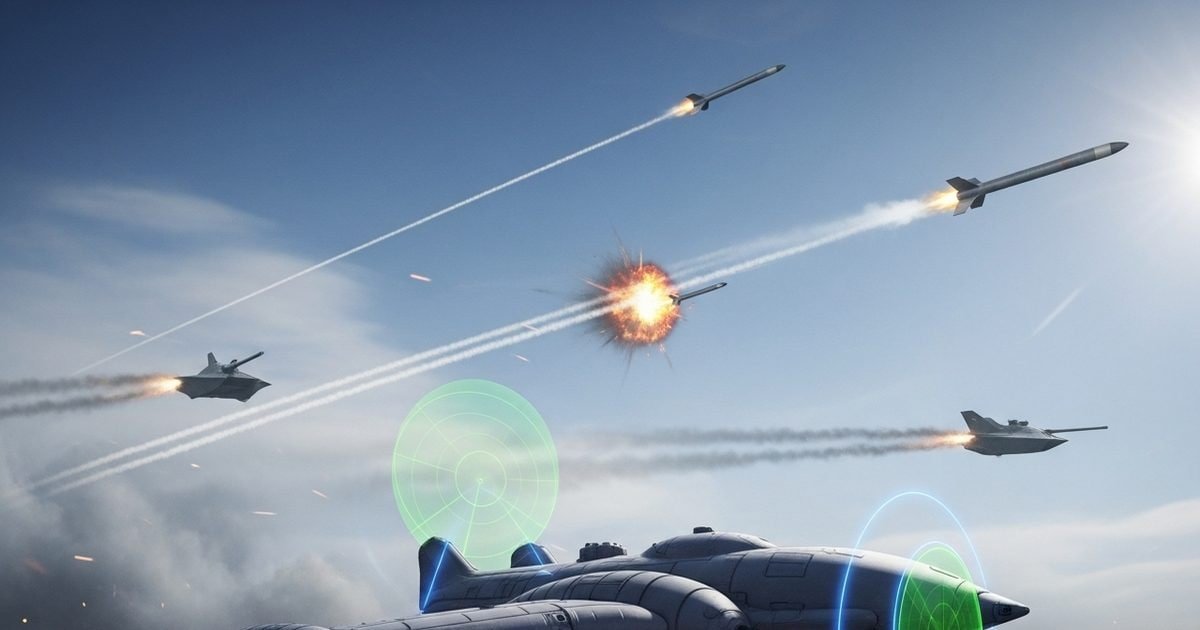
Decoy Technology is taking this war to a different level. Decoy means ‘deception’ or ‘fake target’. Actually, this is one thing which confuses the enemy. Radar, sensors or soldiers think that the same ‘camouflage’ is the real threat, but the real threat is coming from somewhere else. For example, each missile of Israel’s ‘Iron Dome’ costs Rs 50-80 lakh. But a cheap drone decoy from Iran for just 15-20 thousand! If Iran sends 10 such fake drones, Israel will have to fire 10 missiles to destroy them. This means a total loss of Rs 8 crore, whereas Iran’s expenditure will be only Rs 2 lakh. This technology is used to exhaust the enemy mentally and economically.
Four main forms of decoy
Decoy technology is making war a ‘game of deception’, where expensive weapons are wasted by confusing the enemy. These four main forms – missile, drone, naval and electronic, not only exhaust the defense system but also cause economic loss. Decoys were also used in the Second World War. Enemies were deceived by making fake tanks, but these technologies have become more deadly with modern sensors and AI.
1. Missile Decoy: Real-Like Illusion on Radar
Missile decoys are fake warheads or submunitions that look exactly like real missiles on radar, but contain no explosives. Their purpose is to distract the enemy’s anti-missile systems (such as interceptors). Launch 10-20 decoys with a real missile, then the enemy has to target all of them. As a result, their expensive missiles become useless and the real attack may succeed.
These decoys are often made of radar-reflective materials, which back scatter radar signals. Talking about Iran-Israel, Iran’s Fatah-2 hypersonic missile releases decoy submunitions on the way, which confuses Israel’s arrow system. Recently, Iran reportedly created fake decoys by painting them on helicopters, thereby ruining Israel’s expensive missiles. Iran also uses fake launchers and infrared camouflage to hide ballistic missiles, which deceive satellite surveillance. In the April 2024 attack, Iran used drones as decoys to expose Israel’s weaknesses.
2. Drone decoys: Inexpensive ‘flying nets’ that wake up radar
Drone decoys are small, inexpensive, mass-produced drones that are deployed to “dissuade” enemy air defense radars. As soon as this radar is activated, these drone decoys themselves become targets, which makes the real attack easier. Their price is so low that they can be launched in hundreds. For example, Iran’s Shahed-136 drones, which work to destroy Iron Dome.
In detail, these drones are often ‘loitering’ (hovering), which keep roaming in the sky and lure the enemy. In the Ukraine-Russia war, Ukraine used inflatable decoy drones, which look like bouncy castles and caused millions of dollars in damage to Russian missiles. Russia also sends decoy drones to find the location of Ukraine’s anti-air defense.
Drones like Iran’s Mohajir-6 activate the radar, then an anti-radiation missile shoots them down. China has developed flying wing drones, which launch swarm decoys to distract enemy ships. These decoys not only exhaust the defense but also reveal the enemy’s position.
3. Naval Decoy: ‘Fake Fleet’ in maritime warfare
Naval decoys are deceptions used at sea, such as inflatable fake ships or boats that look like real fleets on radar. Enemy anti-ship missiles target these, while the real ships remain safe. These are made of materials that are easily visible on radar, and often come with chaff (metal strips) or flares.
These decoys are part of ‘area denial’ tactics, such as Iran’s use in the Strait of Hormuz. The US Navy’s AN/SLQ-49 Chaff Beau decoy system confuses radar. Nulka decoys are launched from ships and distract the missiles for several minutes. Iran networks them with fast boats and mines, which can stop American aircraft carriers.
4. Electronic Decoy: Trap of Invisible Signal
Electronic decoy is a different level of trickery. There is no physical object in these, just fake electronic signals, such as radar waves, radio emissions or infrared signatures. These mislead the enemy’s sensors without showing anything. For example, misdirecting a drone by GPS spoofing.
These four forms together make war a ‘field of deception’, where the winner is the one who can create the best deception. Countries like Iran are tiring out rich enemies with cheap decoys.
Discover more from News Link360
Subscribe to get the latest posts sent to your email.