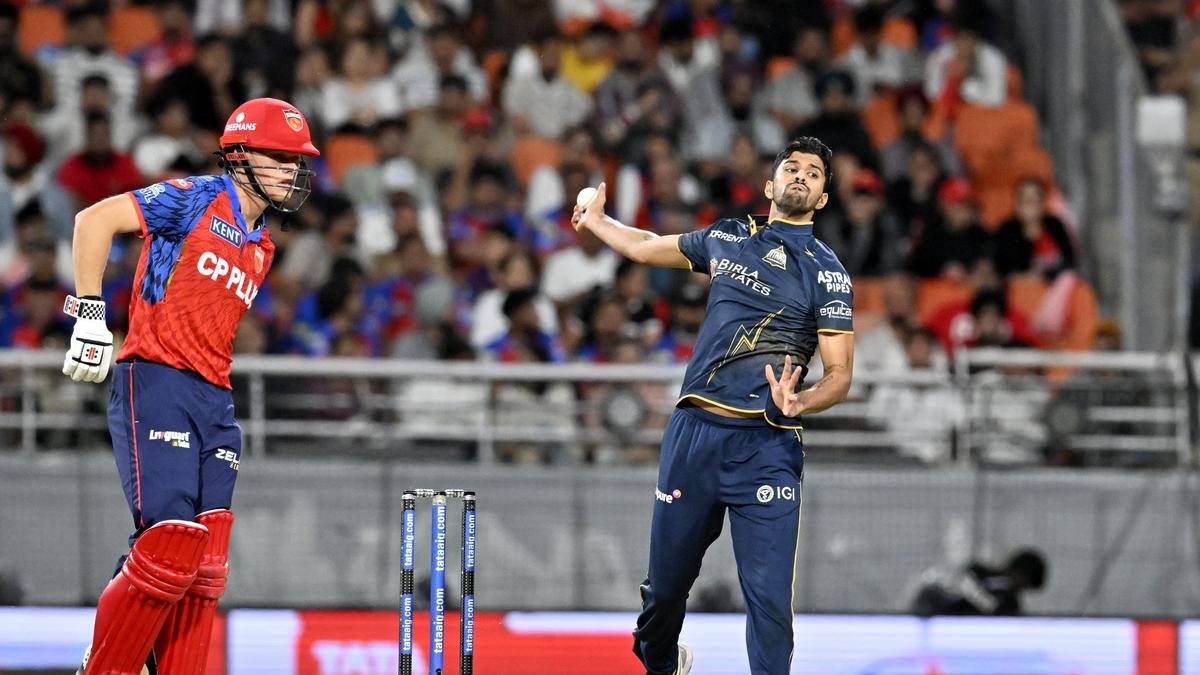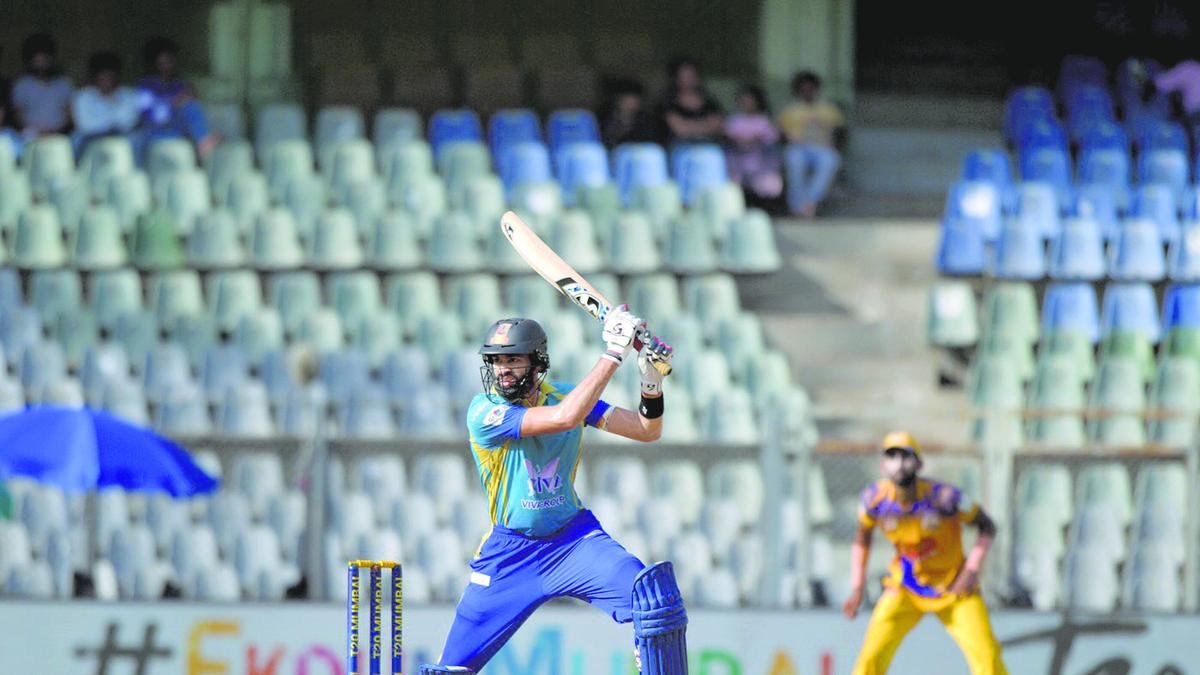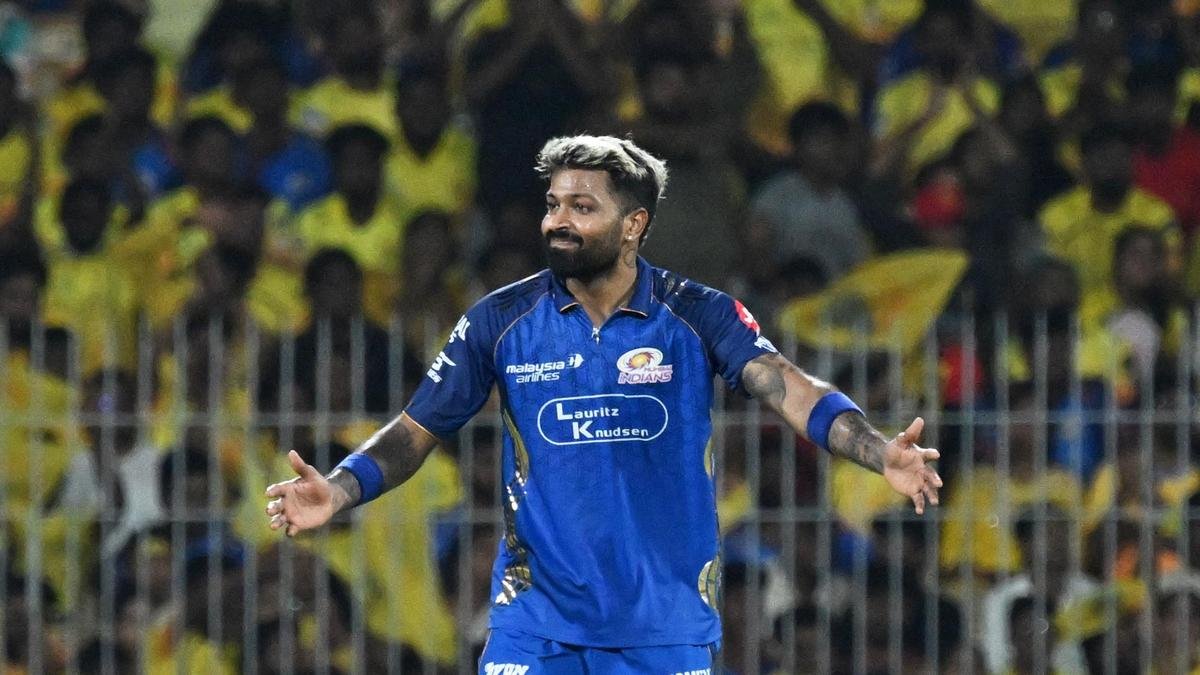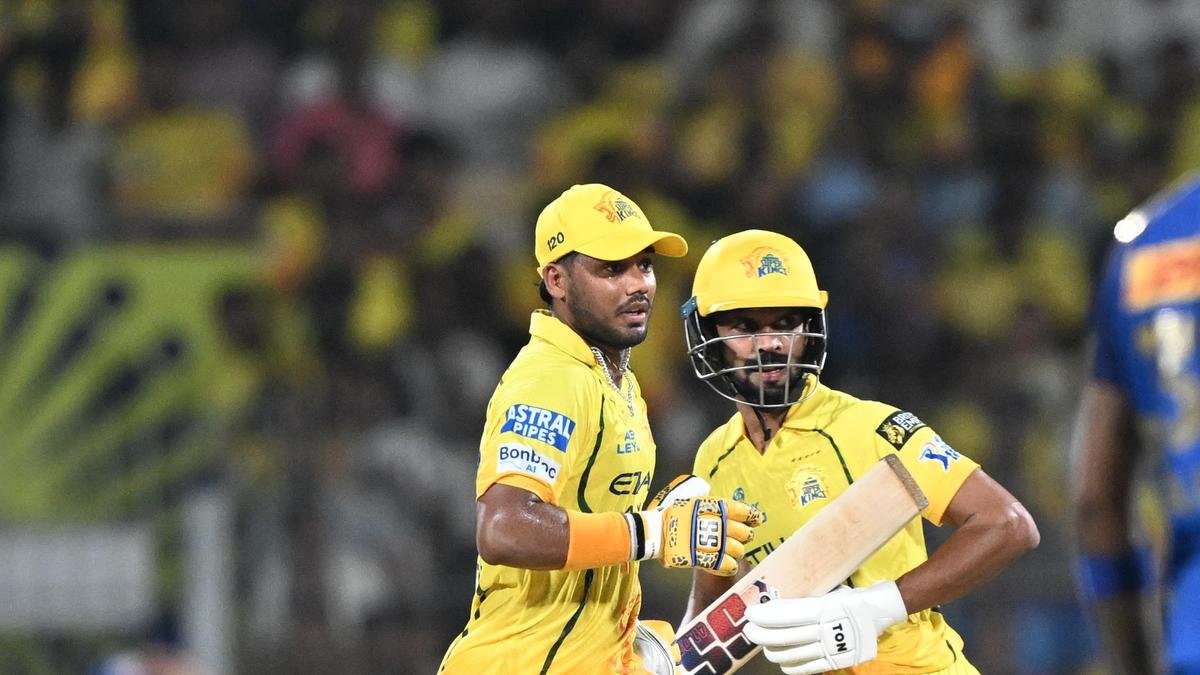
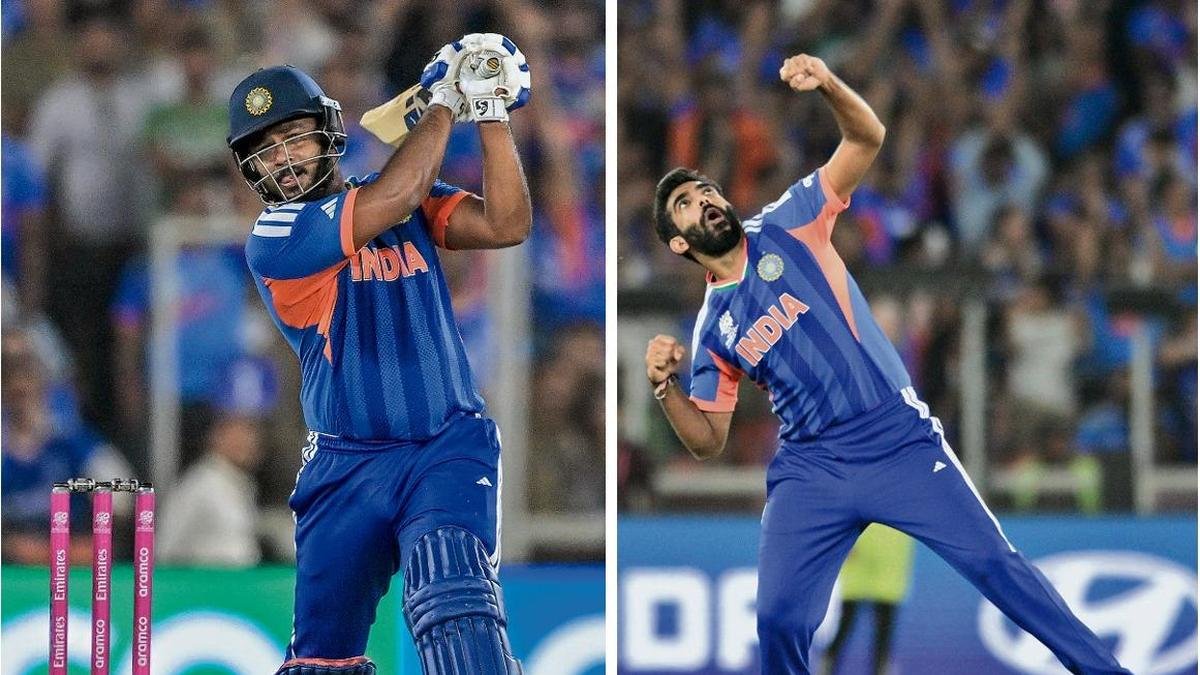
Sportstar’s Team of the Tournament reflects that variety. Led by New Zealand’s Mitchell Santner, this side captures the players who shaped the narrative of the T20 World Cup 2026.
1) Sanju Samson (India) – Wicketkeeper
Sanju Samson arrived late but left the deepest imprint on India’s run to a second successive T20 World Cup title. Brought back into the XI after a lean run of scores, he produced three defining knocks in succession: an unbeaten 97 against West Indies in the Super Eights decider, followed by 89 against England in the semifinal and another 89 against New Zealand in the final. The unbeaten 97 anchored a tense chase of 196, while his 89 against England set up India’s 251, which it defended by seven runs to reach the final. In the title clash, Samson’s fluent 89 propelled India to a record 255 for 5. He was named Player of the Match in the first two games and finished with the Player of the Tournament award. From just five innings, Samson amassed 321 runs, ending third among the tournament’s highest run-scorers.
Innings – 5, Runs – 321, Highest – 97 not out, Average – 80.25, Strike Rate – 199.37, 50s – 3, 4s – 27, 6s – 24
2) Sahibzada Farhan (Pakistan)
Pakistan opener Sahibzada Farhan finished as the highest run-scorer of the tournament, amassing 383 runs in six innings, including two centuries: 100 not out against Namibia and 100 against Sri Lanka. Farhan not only gave Pakistan brisk starts, striking at over 157 in the PowerPlay, but also steered the innings through the middle overs to anchor the batting effort. While his unbeaten century overwhelmed Namibia, his hundred against Sri Lanka helped Pakistan clinch the game by five runs, though the team could not qualify for the semifinals due to a poor Net Run Rate.
Innings – 6, Runs – 383, Highest – 100 not out, Average – 76.60, Strike Rate – 160.25, 100s – 2, 50s – 2, 4s – 37, 6s – 18
3) Ishan Kishan (India)
Ishan Kishan lived up to his ‘pocket dynamo’ tag with a blistering campaign, scoring 317 runs in nine innings at an average of 35.22 and a strike rate of 193.29. He began the tournament as an opener before shifting to No. 3 after Sanju Samson returned to India’s playing XI, adapting seamlessly to the role. Kishan was particularly destructive during the PowerPlay, striking at 170-plus in the first six overs. His 77 off 40 balls on a testing pitch at Colombo’s R. Premadasa Stadium proved decisive in India’s clash with Pakistan, where the next best score was 44 by Usman Khan. He saved one of his sharpest bursts for the final, smashing 54 off 25 balls to propel India to 255 for 5 against New Zealand in Ahmedabad, the highest total ever recorded by a team in a knockout or playoff match in T20Is.
Innings – 9, Runs – 317, Highest – 77, Average – 35.22, Strike Rate – 193.29, 50s – 3, 4s – 33, 6s – 18
4) Shimron Hetmyer (West Indies)
Few middle-order batters were as destructive as Shimron Hetmyer in this tournament. The West Indian struck the third-most sixes, 19, in seven innings. Hetmyer was central to West Indies’ batting effort in the middle overs, striking at over 190 in that phase, the highest among batters who faced at least 75 balls between overs 7 and 15. His best came against Zimbabwe, where he scored 85 off just 34 balls, including seven sixes and as many fours, setting up a thumping 107-run victory.
Innings – 7, Runs – 248, Highest – 85, Average – 41.33, Strike Rate – 186.46, 50s – 2, 4s – 16, 6s – 19
5) Sikandar Raza (Zimbabwe)
Zimbabwe captain Sikandar Raza carried his team’s batting through the middle overs, striking at 170 and being dismissed only once in 70 deliveries. He produced several useful cameos during the tournament, with his best coming in his teasm’s final game against South Africa, where he hammered 73 off just 43 balls. In that match, Raza also picked up three wickets for 29 runs, underlining his value with off-spin. In total, he claimed five wickets in the competition while keeping things tight with the ball.
Bat: Innings – 6, Runs – 206, Highest – 73, Average – 51.50, Strike Rate – 164.80, 50s – 1, 4s – 17, 6s – 13
Bowl: Innings – 6, Wickets – 5, Best – 3/29, Economy Rate – 9, Average – 36
6) Will Jacks (England)
Will Jacks played a key all-round role for England across departments. Batting in the lower middle order, Jacks smashed 226 runs in eight innings at a strike rate of 176.56 and an average of over 56. With the ball, he picked up nine wickets with his off-spin, operating across different phases of play. His best display came in England’s narrow four-wicket win over New Zealand. In that match, he first took two wickets for just 23 runs in his full quota before playing an unbeaten 18-ball 32 to finish the game with three balls to spare.
Bat: Innings – 8, Runs – 226, Highest – 56 not out, Average 56.60, Strike Rate – 176.56, 50s – 1, 4s – 18, 6s – 14
Bowl: Innings – 7, Wickets – 9, Best – 3/22, Economy Rate – 9.75, Average – 21.66
7) Shivam Dube (India)
Operating in the shadow of several high-profile Indian stars, Shivam Dube quietly produced one of the tournament’s most influential supporting acts. The batting all-rounder delivered a series of timely cameos, often arriving in the latter half of the innings and taking on the spinners who dominated the competition. His impact is best understood through the situations he walked into. Against Pakistan, he struck a brisk 27 off 17 balls after India had lost back-to-back wickets in the 15th over. Against the Netherlands, he rescued the innings with 66 off 31 after India had slipped to 69 for 3 in nine overs. In the semifinal, he hammered 43 off 25, including 22 off just eight balls from Adil Rashid, who conceded only 19 from his other 16 deliveries. Dube signed off with a barnstorming eight-ball 26 to buttress India’s record 255 for 5 in the final.
Bat: Innings – 9, Runs – 235, Highest – 66, Average – 39.16, Strike Rate – 169.06, 50s – 1, 4s – 15, 6s – 17
Bowl: Innings – 5, Wickets – 5, Best – 2/35, Economy Rate – 14.12, Average – 29.20
8) Mitchell Santner (New Zealand) – Captain
Mitchell Santner played the understated role of tying down one end with his left-arm orthodox spin. Santner finished with an economy rate of 6.60. While he picked up only two wickets, his control created pressure from one end and allowed other bowlers to attack. Santner also contributed with the bat, including a crucial 47 against Sri Lanka that helped New Zealand recover to 168 for seven from 84 for six. He also finished with figures of one for 19 in his four overs as the Kiwis won that game by 61 runs.
Innings – 8, Wickets – 2, Best – 1/19, Economy Rate – 6.60, Average – 84
9) Lungi Ngidi (South Africa)
Lungi Ngidi was at his innovative best, finishing with 12 wickets while conceding just 7.19 runs an over. He displayed impressive control in disguising his slower-ball variations with his stock delivery, keeping batters uncertain about the pace of the ball. Ngidi began his tournament with figures of four for 31 against Canada and followed it up with a three-wicket haul against Afghanistan. Against the West Indies, he once again picked three key wickets in South Africa’s comfortable nine-wicket win in the Super Eights.
Innings – 7, Wickets – 12, Best – 4/31, Economy Rate – 7.19, Average – 15.58
10) Jasprit Bumrah (India)
There is little need to explain Jasprit Bumrah’s presence in this team. India’s spearhead finished the tournament with 14 wickets in eight matches at an average of 12.42 and an economy rate of 6.21, once again underlining why he remains one of the most reliable fast bowlers in T20 cricket.
Bumrah’s craft was evident throughout the campaign. His yorkers, dipping deliveries and well-disguised slower balls repeatedly forced batters to curb their aggression. In the semifinal against England, with momentum slipping away, Bumrah responded with six consecutive yorkers to wrest control back for India. Earlier in the tournament, against Pakistan, he dismantled the top order in a single over with a superb burst with the new ball. He capped the campaign with four wickets in the final, maintaining an economy rate under seven across all three phases.
Innings – 8, Wickets – 14, Best – 4/15, Economy Rate – 6.21, Average – 12.42
11) Blessing Muzarabani (Zimbabwe)
The six-foot-eight fast bowler was the backbone of Zimbabwe’s bowling attack. Blessing Muzarabani began his tournament with two consecutive Player of the Match awards: a three-for against Oman, followed by four for 17 to beat Australia by 23 runs. He then picked up two wickets in Zimbabwe’s win over Sri Lanka, which eventually sealed his team’s place in the Super Eights. His effective use of the new ball and ability to exploit his high release point made him one of the standout performers as he finished with 13 wickets in six games.
Innings – 6, Wickets – 13, Best – 4/17, Economy Rate – 7.88, Average – 14.46
Published on Mar 09, 2026
Discover more from News Link360
Subscribe to get the latest posts sent to your email.