
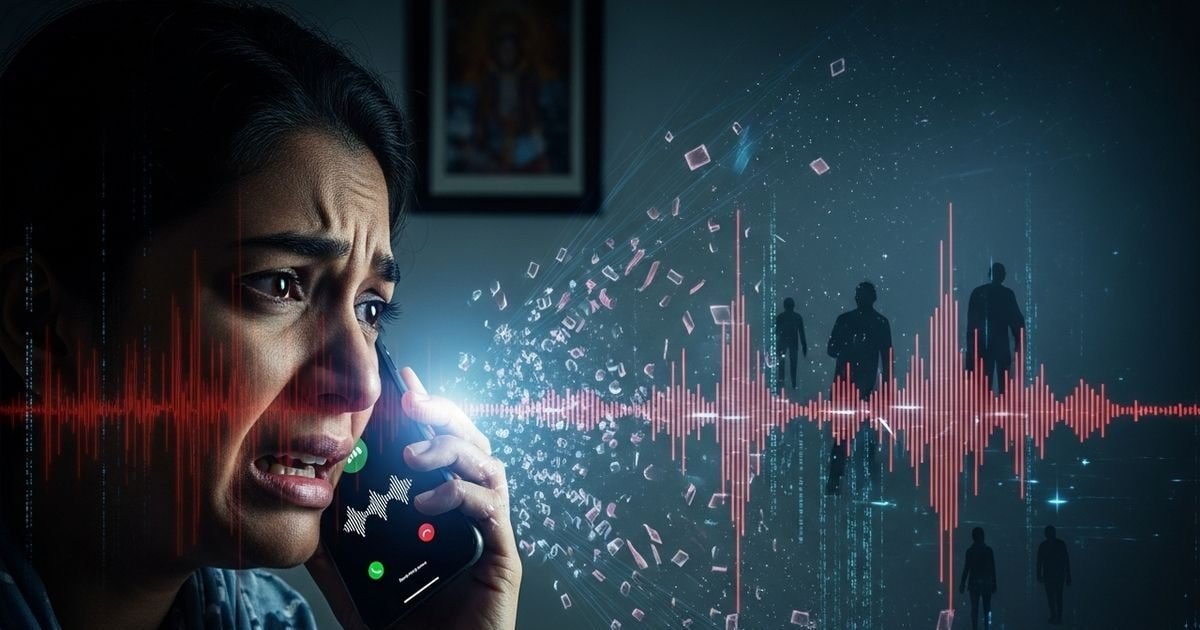
Later it came to light that the daughter was safe at home. This is not just a story, but the reality of the rapidly spreading AI voice cloning scam in India, where scammers do emotional blackmail by imitating the voice of the family.
What is AI Voice Cloning?
How does AI voice cloning work? Scammers steal videos/audios of you or your loved ones from Facebook, Instagram or WhatsApp. With advanced AI tools, voices can be cloned in just 3-5 seconds. Then by calling from unknown numbers they create stories like ‘accident’, ‘kidnap’ or ‘jail’. Such scams are increasing very fast in India. AI fraud has increased by 40% in cyber crime reports in 2025.
In this, women and the elderly are the most targeted because they are emotionally vulnerable. Even in the US, people aged 60+ are expected to lose $4.9 billion to such scams in 2024, and cases among elderly women have also increased in India, such as a Florida mother who lost $15,000 to an AI clone voice.
Even a woman in Arizona thought her daughter was kidnapped, but it was an AI trick.
FBI warns that ‘believability’ of AI scams has increased. Therefore, it is important that we take special care of our own and each other’s safety.
- Safety Guide for Women and Elderly:
First, create a family code word – a secret word that only the family knows. Ask on suspicious call, if answer is wrong then scam. - Second, verify the caller – disconnect the call and call back your loved one’s original number. Never send money on ’emergency’ calls from unknown numbers.
- Third, Detect AI: Ask awkward questions like ‘What was our last dinner?’ Alert if answer hesitant or wrong.
- Fourth, social media privacy: Do not share voice clips publicly, keep the profile private.
- Fifth, never give bank details over the phone – do not share UPI PIN, OTP or CVV. If scammed, immediately report to police or cyber cell (1930). Use apps like McAfee or Truecaller that have AI scam detection.
These scams not only steal money but also affect mental health. Women and elderly people live alone at home, hence family support is necessary. Prevention is possible with awareness, because the smarter the AI, the more careful it is necessary to be.
Discover more from News Link360
Subscribe to get the latest posts sent to your email.