
Beyond electoral arithmetic, the development indicates the rise of a new political and governance discourse tentatively identifiable as ‘Neo-Dravidianism’. This framework attempts to combine the social justice foundations of the classical Dravidian movement with contemporary themes such as digital political mobilisation, inclusive secularism, welfare modernisation, and governance-driven federalism.
The post-poll support extended to the TVK by parties across ideological lines — including the Congress, the Viduthalai Chiruthaigal Katchi (VCK), the Left parties, and the Indian Union Muslim League—suggests that the electoral outcome is being interpreted within broader constitutional and governance considerations rather than conventional coalition politics alone.
Historical and ideological context
The origins of the Dravidian movement are deeply connected to the social reform movements of the early 20th century. Periyar E.V. Ramasamy’s Self-Respect Movement challenged caste hierarchy, social exclusion, and religious orthodoxy through rationalist and anti-discriminatory principles. C.N. Annadurai subsequently transformed these ideas into an electoral and administrative framework through the formation of the DMK.
A fundamental distinction existed between Periyar and Annadurai regarding political participation. While Periyar remained sceptical of electoral structures and institutional compromises, Annadurai viewed democratic participation and state power as instruments for social reform.
Neo-Dravidianism appears to function as a synthesis of these historical traditions. It retains the social justice orientation of the Dravidian movement while reframing secularism, welfare delivery, and identity politics within a more inclusive and technologically connected governance model.
The framework also aligns itself with broader Indian reformist traditions associated with Raja Rammohan Roy, Ishwar Chandra Vidyasagar, Jyotirao Phule, Justice M.G. Ranade, Gopal Hari Deshmukh, Bhimrao R. Ambedkar, Narayana Guru and M.C. Raja, thereby positioning Tamil Nadu’s political transformation within a larger constitutional and social reform continuum.
The 2026 electoral realignment
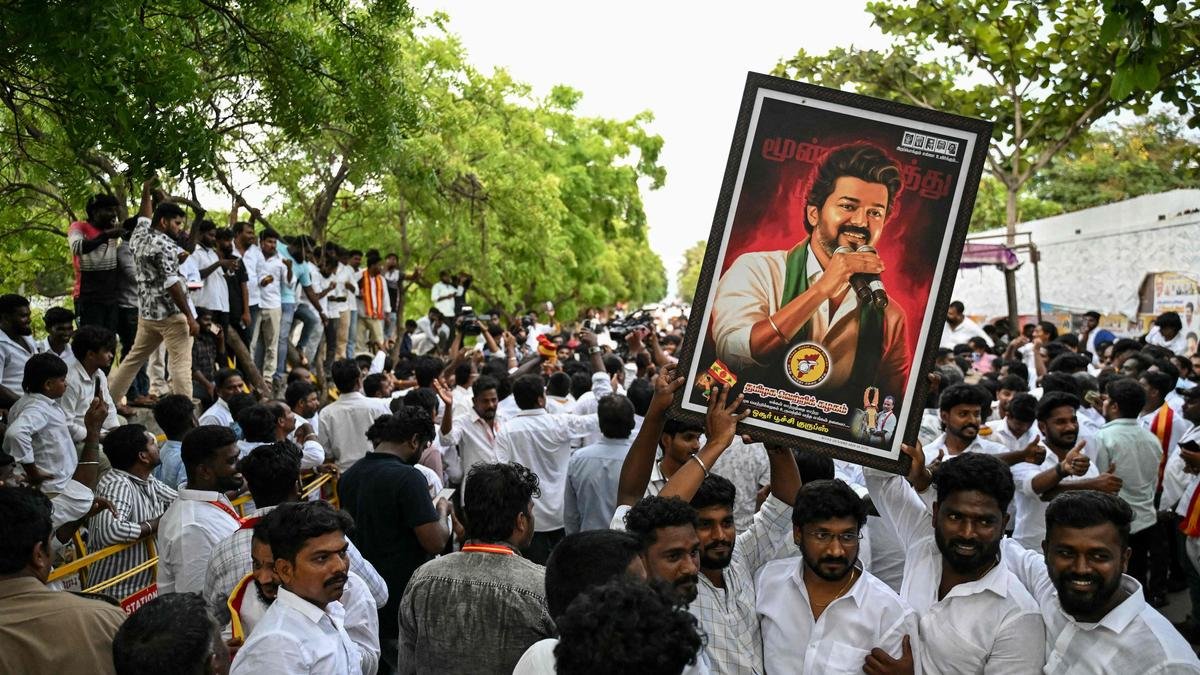
The 2026 election reflected high levels of voter participation, digitally coordinated grassroots engagement, and increased youth mobilisation. The campaign strategies adopted by the TVK differed significantly from traditional cadre-based political mobilisation. Electoral participation was reframed as a disciplined civic exercise rather than a purely transactional political process, while campaign communication increasingly relied upon localised discussion groups, volunteer-driven outreach, and peer-based political conversations. Diaspora networks, IT professionals, and digitally active youth communities played a substantial role through online engagement platforms, opinion polling tools, and coordinated social media communication. Political outreach increasingly adopted professionally organised mass events integrating technology, crowd management systems, and symbolic civic participation. The campaign also demonstrated exemplary road shows of scale, extensive people participation, and a convivial public atmosphere, with minimal dependence on conventional meetings and speeches. These developments indicate a transition from traditional personality-centric electoral mobilisation toward digitally networked and decentralised political participation models.
TVK leader/founder C. Joseph Vijay — now the Chief Minister of Tamil Nadu — emerged as a silent yet influential political force within the virtual and cyber sphere from the very beginning of the campaign, demonstrating characteristics of a modern electioneering strategist with strong digital outreach capabilities. The rapid rise of organised digital volunteerism and highly active online supporters created what may be described as a sustained political mobilisation wave around the TVK. This paradigm shift appears to have been driven primarily by young voters, middle-aged citizens, women, and even first-time politically aware youth within families. Supporters functioned as highly decentralised force multipliers, generating cascading political influence across communities and social networks, while simultaneously countering competing narratives and reducing the obstructive impact of entrenched political structures. The resulting shift reflected a growing public inclination to move away from conventional Dravidian party alignments towards the emerging and inclusive Neo-Dravidian positioning of the TVK. Evidence suggests that the TVK was able to attract segments of support from several established political formations including the AIADMK, the VCK, the Pattali Makkal Katchi, the Desiya Murpokku Dravida Kazhagam, the Marumalarchi Dravida Munnetra Kazhagam, Naam Tamilar Katchi, Left parties, the Congress, Muslim League constituencies, Christian groups, minorities, and even sections traditionally associated with the DMK.
This transition appears to have been significantly influenced by youth participation, women’s active engagement, and highly coordinated electoral micromanagement led by political strategist John Arokiasamy and virtual campaign teams. Booth Level Agents (BLAs) and frontline volunteers reportedly played an effective organisational role during polling, while the Election Commission of India, the Tamil Nadu Police, and Revenue administration ensured that polling was conducted without major law-and-order disturbances. The electoral environment was further shaped by anti-incumbency sentiments against traditional Dravidian alliances, dissatisfaction with coalition arrangements, concerns regarding parliamentary delimitation debates, and perceptions of ideological stagnation within older Dravidian politics. In fact, combining the Delimitation of Parliamentary Constituencies Act with the Women’s Reservation Act proved detrimental to the AIADMK, as its alliance partner the Bharatiya Janata Party had brought this before Parliament during the height of electioneering in Tamil Nadu. This move failed to give mileage to the DMK. Of course, it eroded 3% to 5% of the AIADMK votes. These might have gone to the TVK. In contrast, the TVK’s inclusive NeoDravidian approach projected itself as a more adaptive and socially broad-based political framework. Certain instances of visible reluctance among sections of traditional party cadres during campaign mobilisation further indicated emerging ideological fatigue within older political structures. At the same time, the electoral outcome did not represent a unilateral landslide victory but rather a split mandate that reinforced the importance of inclusive, secular, socially and economically justifiable democratic governance as envisioned in the Preamble to the Constitution of India. The support extended by parties such as the Congress, the VCK, Left formations, and Muslim League within the broader political platform underscored the continuing relevance of coalition-based constitutional democracy.
Neo-Dravidianism as a governance framework
The emerging Neo-Dravidian framework appears to prioritise governance-oriented themes alongside traditional social justice politics. The emphasis is increasingly placed on administrative delivery mechanisms, welfare targeting, digital governance systems, and federal negotiation capacity. The framework promotes inclusive secularism through the accommodation of multiple faith identities within a constitutional framework without explicit religious dominance. It also emphasises welfare modernisation through targeted welfare mechanisms focusing on women, youth and economically vulnerable populations, while advocating Artificial Intelligence-enabled governance discussions, digital transparency, and technology-driven administrative reforms. The framework further rearticulates state autonomy within cooperative and constitutional federalism and places increased emphasis on transparency, accountability, and governance credibility. Public political engagement has also evolved through symbolic gestures such as gifting, crowd interaction, direct connection with the public, cycling outreach campaigns, carrying children on shoulders during public interactions, and greeting newly married couples, thereby reinforcing emotional and cultural proximity between leadership and citizens. This evolving framework reflects broader global political trends in which regional movements increasingly integrate identity politics with governance efficiency and digital public engagement.
Administrative and constitutional implications
The electoral developments in Tamil Nadu carry broader implications for Indian federal democracy and administrative governance.
First, the election demonstrates the continued adaptability of regional political traditions within India’s constitutional structure. Rather than declining, regional ideological frameworks appear capable of reinvention through technology, youth participation, and issue-based governance.
Second, the developments reinforce the importance of cooperative federalism. The discourse surrounding fiscal autonomy, welfare implementation, language policy, and Centre-State relations may increasingly shape future political negotiations.
Third, the emergence of digitally coordinated political movements may require new administrative approaches relating to public communication, misinformation management, electoral transparency, and governance responsiveness.
Finally, the electoral outcome highlights the importance of institutional neutrality and constitutional continuity. Democratic legitimacy ultimately depends upon the impartial functioning of constitutional authorities, electoral systems, and governance institutions.
The broader political transition also appears to symbolically represent the gradual erosion of quasi-feudal political and social structures that had increasingly permeated sections of the public sphere since the 1970s. The elevation of individuals from modest socio-economic backgrounds, including the appointment of a young woman from a humble background to ministerial office, has been interpreted by supporters as indicative of a new phase in democratic social mobility and participatory governance. Such developments reinforce the constitutional aspiration that representative institutions must remain deeply responsive to public sentiment and democratic legitimacy. In this context, the principle of ‘Vox Populi’, the voice of the people resonating within legislative institutions such as ‘Vox Dei’, as a reflection of collective democratic will assumes renewed political significance.
Challenges and governance risks
Despite the transformative potential of the emerging political framework, several governance challenges remain significant. Expanding welfare commitments may create long-term fiscal pressures requiring prudent economic management and institutional discipline. Large-scale governance reforms will also depend upon strong bureaucratic coordination, administrative adaptability, and sustained implementation capacity. Simultaneously, technology-driven political mobilisation carries the risk of misinformation ecosystems, digital polarisation, and social fragmentation if not institutionally regulated with transparency and accountability safeguards. The durability of coalition-based support structures will require continuous consensus-building mechanisms to ensure governance continuity and political stability. Moreover, periods of rapid political transition often generate heightened public expectations that may exceed the pace of administrative delivery. Addressing these challenges will therefore require a calibrated balance between political legitimacy, constitutional stability, fiscal prudence, and professional administrative governance.
The 2026 Tamil Nadu Assembly election represents more than a routine democratic transition. It indicates the possible emergence of a new phase within the evolution of Dravidian politics — one that combines social justice, digital political communication, welfare governance, and constitutional federalism. Whether NeoDravidianism ultimately evolves into a durable governance framework will depend upon its administrative performance, institutional accountability, fiscal sustainability, and capacity for inclusive development. Nevertheless, the electoral developments underscore an important democratic reality: regional political traditions within India remain dynamic, adaptive, and capable of institutional transformation in response to changing social, technological, and governance conditions. In this context, the Tamil Nadu experience may increasingly be studied not merely as a State-level political event, but as an evolving case study in democratic adaptation, federal negotiation, and governance modernisation within the Indian constitutional framework.
N. Baskaran is former Additional Director, Tamil Nadu Police Academy
Discover more from News Link360
Subscribe to get the latest posts sent to your email.