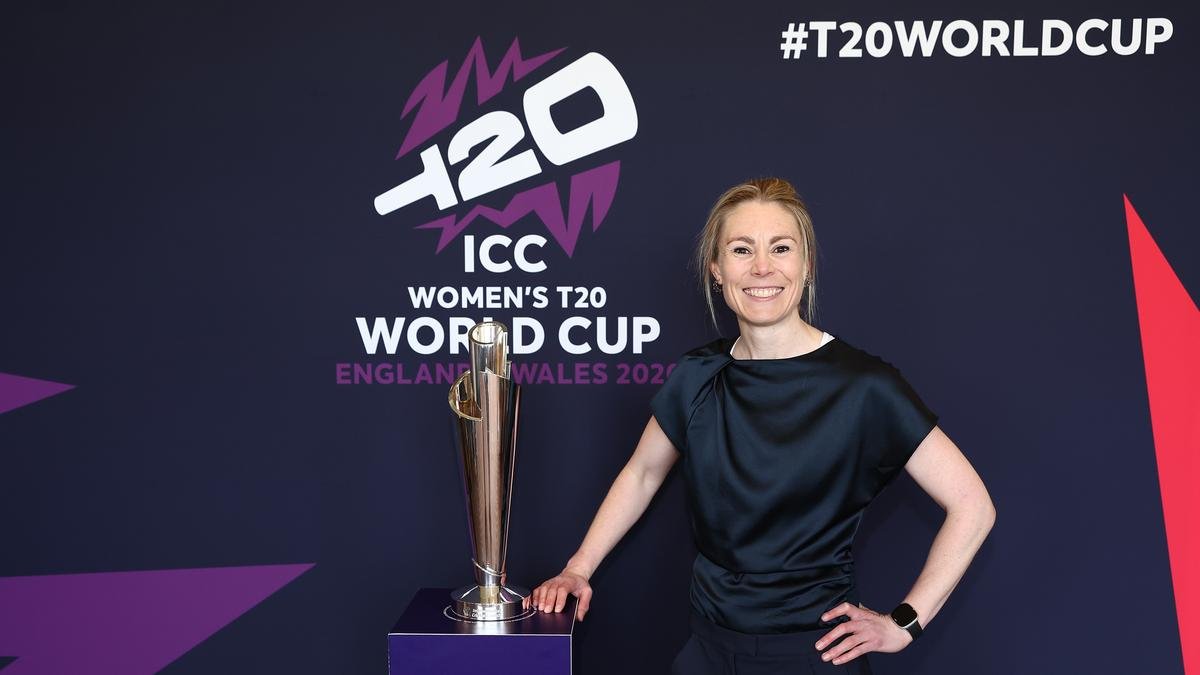
In 2013, after a string of media and administrative jobs in the domestic cricket space, Barrett-Wild began her career at the ECB as a media manager. In the decade that has passed, she has had a ringside view of the evolution of the women’s game, working around key milestones like the 2017 Women’s ODI World Cup, the ECB’s policy changes to professionalise the women’s game, its directives on equal pay, and the revamping of the domestic structure, to name a few.
As she waits to maximise on the platform of a home World Cup to push the ecosystem a notch higher in participation and economic viability, Barrett-Wild, in an exclusive interview with Sportstar, underlines the value of The Hundred, why mistakes after the 2017 World Cup win shouldn’t be repeated, and much more. Excerpts:
ALSO READ | Summer of reckoning: The story of the Women’s T20 World Cup
Q: Before you took charge of the T20 World Cup, you were at the helm at The Hundred and spearheaded what ended up being a transformational endeavour for the women’s game in England. What were some of the broader visions you began with that have endured into this global event?
A: I was fortunate to be involved with The Hundred pretty much from its inception back in 2018 until it launched in 2021. From the outset, the premise was about throwing cricket’s doors open to more people, especially families and young people, and making the sport as accessible as possible. A really key component is the opportunity to reimagine what cricket is and who it’s for.
As a format, it involves 100 balls; it’s quick and perhaps takes less time. One barrier of entry — time — is addressed right there for a fan. Moreover, the co-presentation of the men’s and women’s games from the start made the property unique and was baked into the competition’s DNA, as opposed to the women’s competition being rolled on subsequently, as has been what we find historically. It helped us create this enormous platform and scale for women’s cricket and has been hugely transformative. It’s taken at least 10 years off the growth curve.
We see it with the attendance coming through and the reach on broadcast and digital, too. The Hundred wasn’t universally liked or accepted from the start, but everyone agrees it has overdelivered on the objectives we set for women’s cricket.
It has accelerated professionalism in this vertical. Take Tilly Corteen-Coleman, for instance, who just made her debut against India. She came through the domestic structure and then The Hundred as a 16-year-old and now finds herself in the World Cup squad. She’s only ever known professionalism and the level of infrastructure, coaching inputs, and opportunity to play high-pressure games and to play alongside some of the best in the world.

| Photo Credit:
Getty Images

With a high-value contract in The Hundred and major tournament experience under her belt before turning 19, Tilly Corteen-Coleman has benefited from England cricket’s age of professionalism.
| Photo Credit:
Getty Images
In the global ecosystem, the Women’s Big Bash League is in double-digit editions and was the pioneer. The Hundred came off the back of that (and the Kia Super League before that), and then came the Women’s Premier League. The impact of it is there for everyone to see in the quality of Indian players in the first T20I (between India and England) at Chelmsford.
The Hundred has created an incredible platform for the Women’s T20 World Cup this summer to make sure we’re going in with a real opportunity as a standalone women’s event to get the eyeballs on the vertical. The right time to host this tournament here is off the back of five years of The Hundred because of the fanbase we have who are getting used to watching women’s cricket.
Even with the venues, if you look at the 2017 ODI World Cup, which England won – Derby, Leicester, Bristol, and Taunton, and then the final at Lord’s – were mostly smaller venues. There were some brilliant fixtures, but they were at smaller venues before the final at Lord’s. That game selling out was the first moment of realisation of how big the women’s game could be here. We’ve been building on that ever since. We now have seven big venues this summer and ambitious audience targets to go with it.
I think the quality of the World Cup is going to be the best we’ve ever seen.
Q: The Hundred co-platforming the men’s and women’s game is directly opposite to the ICC’s decision to split the men’s and women’s T20 World Cups in 2018? Is that a note for how domestic and global growth strategies should be?
A: I think so. The Hundred is all about reaching new audiences across England and Wales, and is specific to that region. We debated the double headers a lot because the premise of The Hundred is that it’s shorter, but you’re selling two games back to back as one entity, which makes it longer. It works for us here because of the gender balance presentation associated with it.
In international cricket, a conscious decision was made to separate them and create standalone value for the women’s game. That excites us because it’s the next step – driving commercial value for women’s cricket that is not just bundled in with the men. It’s important to see if you can have both (these strategies).

Barrett-Wild notes that this model “shaved at least 10 years off the growth curve” for women’s cricket. It created a highly sophisticated fanbase of “cricket converts”—bringing in a younger, more gender-balanced crowd.
| Photo Credit:
Getty Images
Barrett-Wild notes that this model “shaved at least 10 years off the growth curve” for women’s cricket. It created a highly sophisticated fanbase of “cricket converts”—bringing in a younger, more gender-balanced crowd.
| Photo Credit:
Getty Images
The standalone nature allows the game to breathe and have its own identity. The two verticals are not entirely different. They’re still cricket! But the nuances vary, and it’s something we want to shine a light on this summer. We have many data points to use in our outreach material. For example, the women’s game is projected to have a higher percentage of deliveries going on to hit the stumps, a greater percentage of bowled and LBW dismissals compared to the men’s game. There’s another study that shows that female batters tend to find the gaps better, even if the power element has gone up in the vertical.
It all points to greater bases beneath teams and stronger domestic structures. The standalone element of the tournament is important because we can then tell the story of the women’s game and what makes it unique in its own right. The ICC is also rolling out some changes to its broadcasting setups to make the documentation quality better. It’s going to allow us to demonstrate how brilliant this sport is. The core branding of the tournament has been to make the women’s game mainstream.
So, whether the verticals co-present or you see standalone events depends entirely on your stated objectives.
Q: You started with the England and Wales Cricket Board in 2014. Looking back, was this scale of growth of the game anticipated?
A: It’s been unbelievable. The game is almost unrecognisable. The first wave of professional contracts came up here in 2014. We then had the Kia Super League, which was probably a bit before its time, the original franchise-type tournament England and Wales had, and this might sound crass, but before anyone really cared.

Heather Knight led the team to victory in front of a sold-out, packed crowd at Lord’s. It was a true “light bulb” moment that made the ECB realize exactly how massive the audience potential for the women’s game could be.
| Photo Credit:
Getty Images
Heather Knight led the team to victory in front of a sold-out, packed crowd at Lord’s. It was a true “light bulb” moment that made the ECB realize exactly how massive the audience potential for the women’s game could be.
| Photo Credit:
Getty Images
Then, the high of the 2017 World Cup came along, which was a light bulb moment for the game here. We realised a different kind of audience was coming through. For the 2026 edition, we know that around 36 per cent of our ticket buyers are female, compared to an England men’s fixture where that proportion stands at 18 per cent. A different demographic and a slightly younger demographic has come towards the sport.
The 2017 World Cup pushed us to write our Transform Women and Girls Cricket Action Plan. Off the back of that, full professionalism of the domestic structure came along in 2020 and The Hundred came in 2021.
The professional contracts in 2014 weren’t worth an awful lot. But today, someone like Nat Sciver-Brunt, across all her earning opportunities plus endorsements and such, could in all likelihood make a million pounds.
It is a testament to the commitment of governing bodies like the ECB, Cricket Australia, BCCI is leading the way at the moment in terms of investment and the revenue curve. So when I look back, I do so with a lot of pride.
ALSO READ | Players over performance: Is the cricket ecosystem doing enough to safeguard women cricketers from abuse
Q: As an organiser, how do you prioritise your target demographic? Do you want to focus on women coming into consume women’s sports, or do you want everybody to come in?
A: The thought that women’s sports are just for women is almost like a myth. It’s definitely not how we have approached our audience segmentation. That’s probably one of the shifts that’s happened post 2017, actually. Our audience segmentation exercise has been very sophisticated this time around. We have names assigned for tiers of fans engaging with the tournaments, and we’ve given them name tags. We have one called devotees, who basically follow anything. Men’s cricket, women’s cricket, T20. All format fans will follow regardless of type. Then we have cricket converts, ones who have come in via The Hundred. And then we have the bandwagoners – the casual fans who discover the game during big events. This informs our digital marketing, our content work, and our engagement with the media, too.
Staying with that, our plan for this World Cup isn’t to make it pink and pretty. It’s just a world-class sporting spectacle, and it’s not just for women or just for men. We want to convert our core audience into falling in love with the women’s game.
Q: The casual fans who discover the game, how do you convert them into long-term enthusiasts within the fold? How does one plan to ensure an exercise like this isn’t a flash in the pan?
A: It’s tricky. In a world where we’ve just got more and more things competing for our attention, it is harder by the day to really embed fandom. The growth of women’s cricket in India is a juggernaut for the whole industry. It normalised women playing sport on the big stage, and the power India brings with scale is very important.
For us, this was a lesson learnt from 2017. Once we created that demand, how do we convert it into long-term change? We need to capitalise on the visibility, that short window. So really, tell the stories of who the players are. Create a high-quality tournament that those engaging with will want to revisit. One of our big objectives is to make iconic heroes of the players this summer because we want to introduce them to the world, and for the world to fall in love with them.
One of our key performance indicators is targets for attendance. We’re looking at 250,000-270,000 attendees this summer. We want to manage at least a 36 per cent retention at England Women’s internationals next year and strategise towards keeping them coming back and making them stick.

“We definitely weren’t ready in 2017, like we maybe were with football and rugby. We didn’t have the immediacy and the infrastructure,” says Barrett-Wild.
| Photo Credit:
Getty Images
“We definitely weren’t ready in 2017, like we maybe were with football and rugby. We didn’t have the immediacy and the infrastructure,” says Barrett-Wild.
| Photo Credit:
Getty Images
The other bit is, once demand is created, supply needs to be optimised. This was a big lesson from 2017. England won the World Cup at Lord’s. Heather Knight lifted the trophy in front of a big crowd, and then England didn’t play another fixture that summer, and there was no property like The Hundred. Straight away, it just all fell off a cliff. Action returned a year later, by which time the window is gone.
This summer, straight after the final at Lord’s on July 5, we have the Test match against India starting on July 10. Different format, but big fixture. Ticket sales are already progressing encouragingly for that one. It will be a big showcase and an iconic one, given it will be the first-ever women’s Test to be hosted by the venue.
“Just over a decade ago, in 2014, England Women had an average attendance of just over 1,500. Less than 12% of cricket clubs nationwide had a women’s and/or girls’ section. And we didn’t have any female professional cricketers in this country.
Since then, we’ve seen exponential growth in all areas. From a sold-out final in the ICC Women’s (50-Over) Cricket World Cup here at Lord’s in 2017, to The Hundred attracting over a million fans through the gates to watch the women’s competition in its first four years, the Women’s Ashes reaching over 120,000 attendances in 2023, and the recent professionalisation of our women’s domestic structure. Women’s cricket is on an accelerated growth curve in this country and, indeed, around the world.”England Cricket Board vision statement for Women’s Cricket ahead of the 2026 World Cup
We then have the Women’s Domestic T20 Finals – the Vitality Blast. That’s on July 17 at The Oval, and then we have The Hundred from July 21. So, here you have the opportunity of discovery in the World Cup and the chance to stay with those players after the global event and deepen the connection with them.
One of the questions I keep getting asked is how important England winning the World Cup is to the success of the tournament. I am English, so of course. But besides that, we’ve seen the wave the Euros triumph brought with the Lionesses in 2022. We saw that with the Red Roses and the Rugby World Cup last year, too. A home team winning on home soil helps. India experienced that last year. We definitely weren’t ready in 2017, like we maybe were with football and rugby. We didn’t have the immediacy and the infrastructure. We’ve got The Hundred ready to go, regardless of who wins.
It’s not an exact science. Women’s sports are still young in professional maturity. One of the things I reiterate in board meetings is patience because it will take time. There is a massive cultural and societal shift that definitely needs to happen around how people view and engage with women’s sports. Another data point that came up while formulating campaigns for the T20 World Cup is how 40 per cent of UK sports fans still view cricket as a sport primarily for men and boys. Sixty per cent; there is a gap there. We want to close that gap by at least six per cent through visibility, through normalising women’s cricket being played in these big stadia in front of big fan bases at home and around the world.
Stadium upgrades ahead of 2026 T20 World Cup
Old Trafford,had 63 female toilets in 2025. The ECB plans to put 114 in place for the World Cup, including a new permanent block and additional dedicated temporary female wash and changes.
Gloucestershire County Cricket Board signed off on a multi-million-pound training facility improvement project to create world class facilities for women’s cricket at the Bristol County Ground, one of the seven host venues.
Q: Were any venues scheduled for an upgrade? What tweaks have venues undertaken for this tournament?
A: Bristol has invested several million pounds in converting their changing facilities. The city hosts a few doubleheaders, and the venue didn’t have world-class changing rooms. So they built two to add two to the existing pair. Lancashire has poured some investment into Old Trafford.
We know that while 36 per cent of ticket purchases are by females, it’ll probably end up being at least a 50-50 gender split in terms of people who actually come. When they do, venues often don’t have enough female washrooms. Lancashire and Old Trafford had to double the number of female loos.
We’re also working on the recreational game. We have a £5 million pot, which is our county grants funding pot, which is for facilities in the grassroots. This year, to celebrate and to maximise the opportunity of the Women’s T20 World Cup, that entire £5 million pot has been dedicated to facility improvement and infrastructure improvement for women and girls.
It all comes down to culture and people believing in something. As a critical mass of people, we need to believe that cricket is a sport for men and women, boys and girls and that has to come from the grassroots. We want to normalise that with women’s cricket activations in clubs around the country.
Q: The last few editions of the World Cup have also been specifically looking at online abuse on the priority list of things to tackle…?
A: The ICC’s existing platform (GoBubble) is being actively used, is my understanding. All of the teams, before the start of the tournament, will have their safeguarding education, and it’s not just anti-corruption there but also resources to guard against abuse and support thereafter. We’re trying to replicate ICC’s guardrails in our domestic structures too. There is a significant increase in the level of abuse directed at our female players, even in the amateur tiers. The UK government, through the Department for Culture, Media and Sport, has also rolled out a women’s sport task force. This was the opening topic of their meeting last year, which was around the Women’s Rugby World Cup, where solutions were sought on how to tackle this as an industry.
ALSO READ | South Africa and the pull of unfinished business
Q: Logistically, the West Asia crisis is ongoing and has thrown up resource challenges around the world. What fall-backs and contingencies does the ECB have?
A: Oh yes, the conflict got added to our risk registry. We’ve done as much planning and proactive thinking as we can around it. One of the big concerns was the arrival of teams into the country on time. We’ve been fortunate. With the qualification of Ireland and Scotland, we have a few series happening around here now, which means teams have arrived nice and early.
We’ve been talking to the various government departments about the availability of fuel. One of the things we mulled over was the transport of 12 teams across seven venues. We have our government contacts who are working with us, have contingencies in place. This is all part of planning a major global tournament. There are things you can plan for and there are things so far out of your control.
Q: You also advocate for bringing more women into leadership roles. What gaps still exist in in that endeavour?
A: There is still a significant female leadership gap in cricket. There are certain things that we can do and mandate from a governance perspective within the professional game. So we have, for example, board diversity targets. All our professional county clubs need to have qa minimum of 40 per cent female board members. What that has not transitioned to just yet is female chairpersons. We have one female chair, Tracey Orr at Warwickshire, who is brilliant. At the executive level, we have only one female chief executive within our professional constructs at the moment. So there is a clear divide there.
Personally, I have been fortunate to ride the wave of growth of the women’s game during my own leadership journey. In 2014, I wouldn’t have imagined I’d be leading the delivery of this World Cup. I’m driven by personal purpose to create a better landscape than the one I experienced growing up. I was fortunate that the club I played in had systems that looked after me well and never made me feel different, even though I was the only girl in those environments.
Cricket is still not 50-50 gender balanced. It’s still a 30-70 or a 40-60. I have two children, a girl and a boy. It has been a personal objective to create those pathways and opportunities for Eden as much as for Ben. Personally, I quite like the fight, the hustle, going into board rooms and demanding better and more. It’s not all been plain sailing. We’ve been in a fortunate position to be able to over-invest in the women’s game, which I appreciate, even if it’s taken some persuasion. Not all member nations in the world have that space.
I’ve also been very lucky that there have been some brilliant women before me. Claire Connor is one of them, a huge role model since my playing days. I had a poster of hers on my wall at home growing up. Now, we’re watching cricket together as exes. We’ve had pockets of role models. The next big step is that we need a deluge of them. Where the game is now will start giving us that.
When you start seeing some of the senior players moving on from their playing days and hanging up their spikes, you’ll start seeing them coming through, whether it’s in a coaching capacity, such as Sarah Taylor, who’s just been given an opportunity as fielding coach with the England men’s team, which is massive, or someone like Anya Shrubsole who is heavily involved in The Hundred.
So while there is a gap that needs to be plugged, I do think there will be a more primed conveyor belt of women coming through. The more we have women actually playing cricket at every level, the more female leaders you will have.
Around Women’s Day, we had a brilliant conference on creating opportunities for female leadership in Nottingham. We had around 150 women there. But it shouldn’t stop at that. The long-term element to that is, by 2027-28, we want to see women as chairs within the grassroots and not just have them sitting in committees or being voluntary managers. We have the perfect platform and all the key ingredients, and the willingness. It’s all about the execution now.
Published on Jun 05, 2026
Discover more from News Link360
Subscribe to get the latest posts sent to your email.