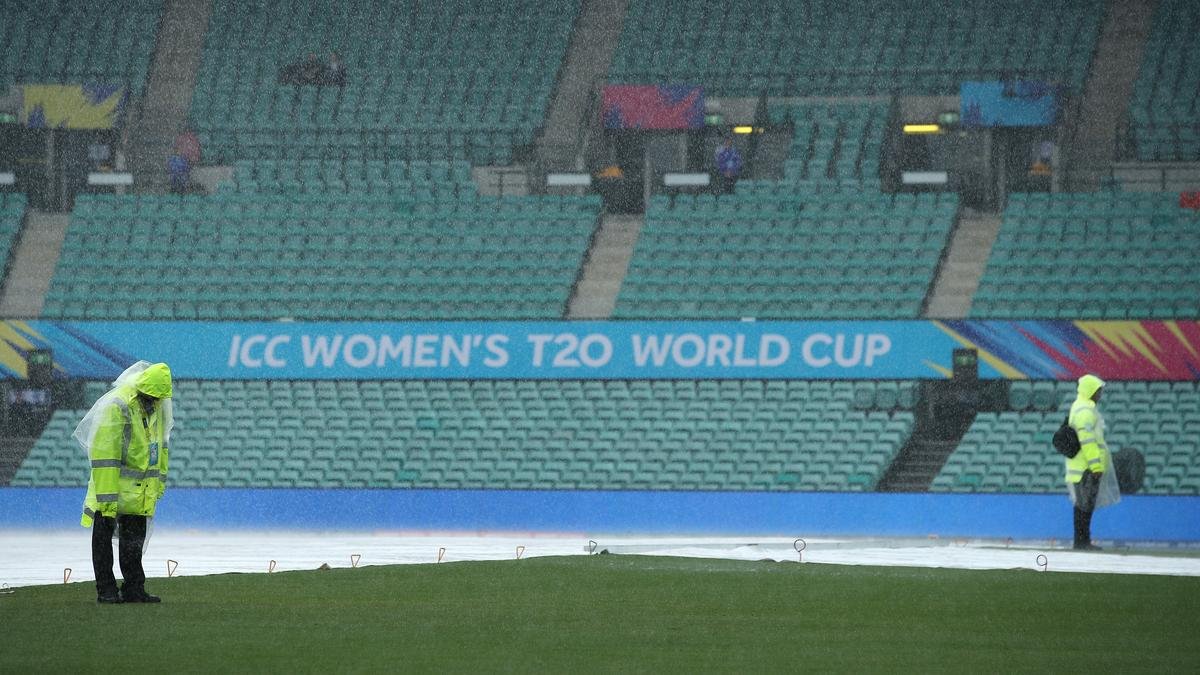
Even before the first ball is bowled, however, one familiar concern looms over the event: rain.
Several warm-up matches have already been disrupted by poor weather. At Lord’s, which will host the final, the ongoing men’s Test between England and New Zealand lost almost an entire day to rain, serving as an early reminder of the challenges teams could face over the coming weeks.
Weather interruptions are hardly a new problem for major tournaments in England and Wales. The 2019 Men’s ODI World Cup, the last ICC event held there, saw six matches abandoned without a result, while several others were shortened.
Nor is this an issue unique to England. Rain has frequently influenced the outcome and rhythm of global tournaments. Of the eight World Cups held over the past decade, five T20 editions and three ODI tournaments, only one, the 2024 Women’s T20 World Cup in the UAE, was completed without a single match being shortened or washed out.
With another English summer underway, the weather could once again prove to be an influential, if unwelcome, participant in a World Cup.
The 2024 Women’s ODI World Cup in India and Sri Lanka was among the hardest hit by weather disruptions. The late decision to shift part of the tournament to Sri Lanka resulted in matches being scheduled during the monsoon, leading to several washouts.
No team felt the impact more acutely than New Zealand. The White Ferns missed out on a semifinal place by three points after consecutive matches against Sri Lanka and Pakistan were abandoned without a result.
The frustration prompted captain Sophie Devine to question whether future tournaments could be scheduled with greater flexibility around predictable weather patterns.
“It’s extremely frustrating. You wait four years for a World Cup, and to have to suffer through the rain,” Devine said. “We have seen the rain come in the evening, so play at 10 or 11 AM. For the game to be scuppered is a real shame.”
If the 2024 tournament highlighted the effect of rain on the group stage, the 2020 Women’s T20 World Cup in Australia demonstrated how it can shape the knockout rounds.
England reached the semifinals after finishing second in its group, only for its clash against India to be washed out. With no reserve day in place, India progressed to the final by virtue of topping its group, ending England’s campaign without a ball being bowled.
“It’s gutting,” England captain Heather Knight said afterwards. “You put in a lot of hard work. There’s not a lot we can do about it.”
India captain Harmanpreet Kaur, meanwhile, said her side had approached the tournament knowing that finishing top of the group could prove decisive if rain intervened. “These are the rules. We can’t help it,” she said after the semifinal was abandoned.
The other semifinal, between Australia and South Africa, was also affected by rain, with South Africa’s chase reduced to 13 overs.
The likelihood of a repeat in 2026 is significantly lower thanks to the introduction of reserve days for the semifinals. Yet the lessons of previous tournaments remain relevant. In a World Cup, weather can be as influential as form, fitness or tactics, making it another variable teams must account for as they pursue the trophy.
Published on Jun 08, 2026
Discover more from News Link360
Subscribe to get the latest posts sent to your email.