Ajay Kumar Verma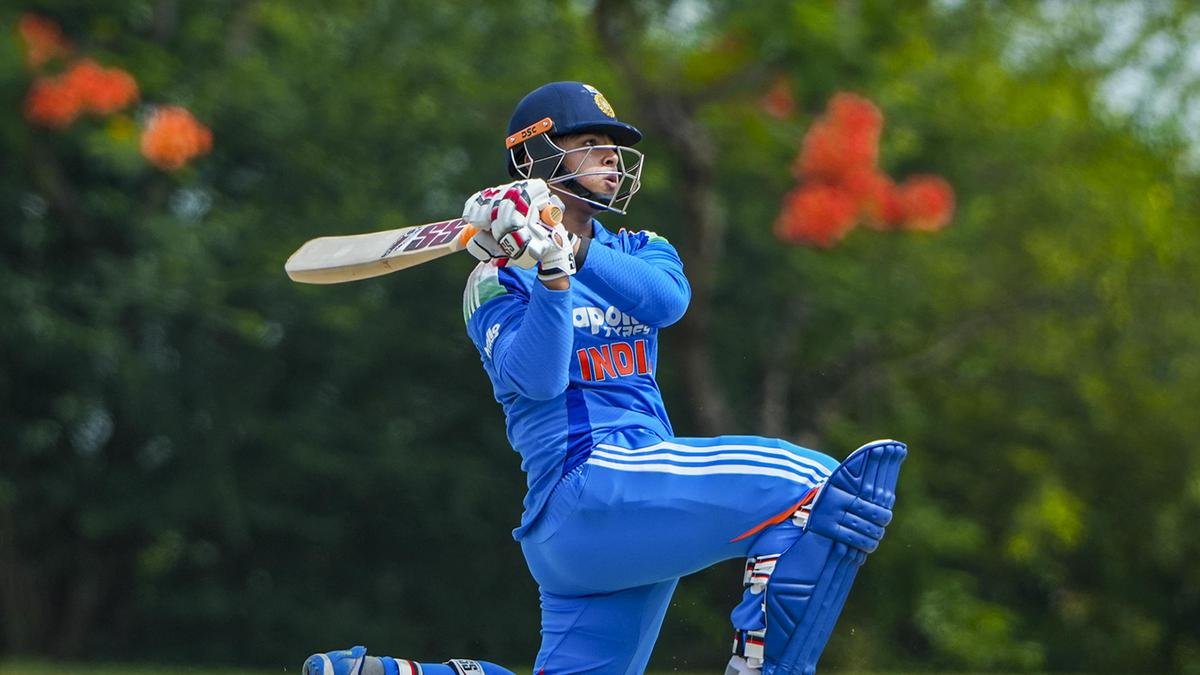
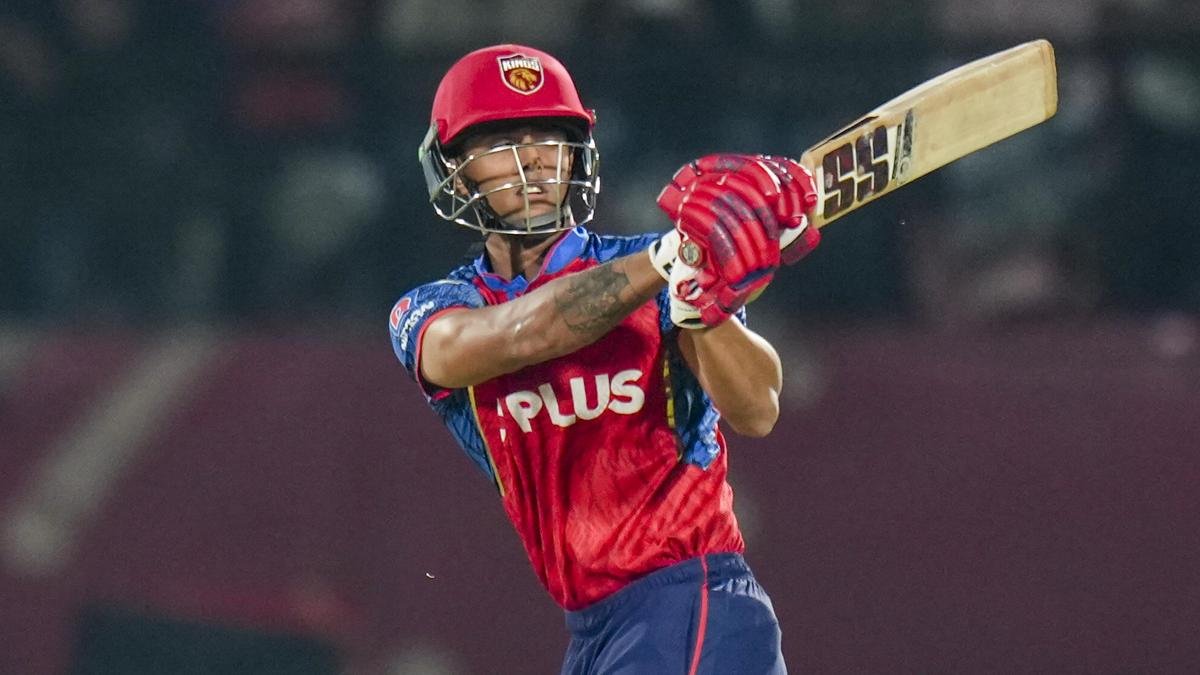
At 15, he has gone from being one of India’s brightest prospects to one of the most closely watched young cricketers in the country. But before flying to Ireland and England with India’s senior men’s squad for the white-ball series, Sooryavanshi has faced his first significant setback.
In the ongoing Tri-Nation tournament in Dambulla, Sri Lanka, the left-hander has shown flashes of promise but has yet to convert his starts into substantial scores for India A. A couple of days earlier, he found himself in the spotlight for reasons beyond his batting after a heated exchange with Sri Lankan players during a tense group-stage clash, which eventually ended in a dramatic Super Over.
For mental conditioning coach Paddy Upton, who has worked with India’s 2011 World Cup-winning cricket team and the country’s Olympic medal-winning hockey team, such moments are simply part of every young athlete’s journey.
The bigger question, he believes, is not whether Sooryavanshi can handle success on the field, but whether he can navigate the scrutiny, noise and expectations that accompany it.
“For me, in terms of his on-field performance, as was repeatedly demonstrated in IPL, he’s got the right mindset to deliver on-field performance and even in the big moments. That’s pretty clear,” Upton told Sportstar.
“Secondly, it’s important to give a dose of reality that nobody continues on a hot run of form. He’s had a seriously hot run of form in IPL. It’s almost impossible to expect that to continue. So, if I were around, I would work with him to expect a few low scores, some failure, some results not going his way,” Upton said, adding: “It’s absolutely normal and to be expected. And there’s no way anything different to that is going to happen.”
“It’s just a case of, when he does have a low run of form, how long does it last? How much does he get attached to it and how soon does he come out of it? And that’s up to him, to a large degree…,” he added.
For Upton, however, the real challenge lies away from the middle. The scrutiny that comes with sudden fame, he believes, will test Sooryavanshi far more than any bowler can.
“His single biggest challenge, I believe, is how he manages the external noise away from the playing arena. And I can tell you, some of the mentally strongest, some of the best athletes in the world, who’ve got significant experience, still get derailed by external noise, external expectations, external judgement,” Upton said.
“Whether it’s from fans, the media, sponsors, team owners, parents, coaches or teammates. And that’s going to be his single biggest challenge, to manage that noise, which is something that will be foreign to him. It’s not something that he’s ever faced before,” he added.
“We’ve seen enough quickly rising young superstars in India over the last 5-6 years, who’ve had a great IPL and who’ve been labelled as the next Sachin Tendulkar or the next Virat Kohli or the next MS Dhoni. And the majority of them, we don’t see them anymore. They’ve just sort of returned to the ranks of the rest of the international IPL cricketers. And often, that is them getting caught up in the external noise, getting caught up in the expectations,” the seasoned mental-conditioning expert noted.
“And my big question was, would be, I wonder who is working with him around that? Because that’s one thing players have identified over and over in sport is helping someone deal with sudden fame, or with fame…”
Fame, Upton warned, often brings another challenge: the people it attracts.
“What happens with young superstars like this is that so many people crowd around them and want a piece of the action, and want to be seen to be part of his entourage. So he is going to get surrounded by a lot of people who don’t actually have his best interests at heart. They’ve got their own public visibility and ego and their own self-image at the front and centre,” Upton said.
“And I’m sorry there’s no 15-year-old who’s able to distinguish ‘who is genuinely here to help me’, and ‘who is here just to ride on my coattails of fame for a short while’,” he said, adding: “And those people often become the deadwood that hold people down…”
Upton, who has also worked as head coach of IPL franchises, was equally measured when discussing Sooryavanshi’s recent disciplinary issues, arguing that what matters most is how the teenager responds to the episode in Dambulla.
“Listen, everyone can make mistakes. You know, he’s made a mistake by reacting as he did. It’s just hard, you know, I would be guessing what’s going on for him, what stress, pressure, anxiety is going on for him that gets him to react as he did.
“It is important to know who is guiding him to recover from this, learn from it, because what’s going to happen going forward, I have no doubt that a lot of opposition, particularly, the more aggressive oppositions, are going to provoke him, because they’ve seen the way he’s responded or reacted. So he will be provoked now,” he added.
Having worked with athletes around the world, Upton believes sport is often ill-equipped to help young stars deal with sudden fame.
“And too often, kids fall off the wagon because they aren’t able to handle the brightness of the limelight,” he said.
If there is one conversation Upton would prioritise before Sooryavanshi takes the next step in his career, it would be about preparing him for the inevitability of failure.
“One of the first things I would do is prepare him for failure. To say there’s a good chance that in your first two or three innings, you don’t score runs. What is that going to feel like? What’s that going to look like? What’s that experience going to be like? And how are you going to manage yourself?
“So one of the key things is to prepare him for failure. That’s going to come, whether it comes now or later, it’s going to come,” he said.
“The failure is not going to be the problem. It’s how does he manage himself around the failure and how does he manage himself around all the criticism and the noise and the stories that are going to come out when he inevitably has a run of form. So, I would prepare him for the worst and very often that’s, you know, that’s a very good starting point,” he said.
When 16-year-old Sachin Tendulkar travelled to Pakistan for his India debut in 1989, elder brother Ajit was by his side, helping him navigate the biggest moment of his young cricketing life.
As Sooryavanshi prepares for his maiden series with India’s senior men’s team in Ireland and England, the BCCI has allowed his parents to accompany him on tour. Given his age, the Board felt the presence of his family would help him adapt to the demands of international cricket and life on the road.
Upton, however, believes the answer is not always straightforward.
“It’s a delicate balance, to be honest. The reality is, more often than not, Indian parents are overbearing and overly controlling,” Upton said.
“I’ve worked with a number of Indian professional athletes across different sports, whose parents want to hold on too much and continue to treat them as a child. The parent has invested so much time, money and effort in getting them to become an international superstar. And the parent feels that this is my time now to shine, because of all the work I’ve put in,” Upton explained.
Too few parents, according to him, know when to step back and allow the child to become their own person.
“It’s a very, very delicate balance,” he said.
He will soon launch a course for parents on how to manage kids around their sports participation.
“Because it is such a global problem across all countries, from school through to international sport,” he said.
“And there is very little information available to actually coach parents how to support their child and not undermine them. My experience is that Indian parents, particularly Indian fathers, are just way too overbearing. Children often don’t feel safe and secure enough to tell their parents that actually they’re more of a hindrance than a help,” Upton said.
“So they just suck it up and go along with it. And then the parents’ energy actually ends up being something that the child has to manage. And they’ve got enough pressure playing international sports to have to also manage a parent…”
Published on Jun 18, 2026
Discover more from News Link360
Subscribe to get the latest posts sent to your email.