Ajay Kumar Verma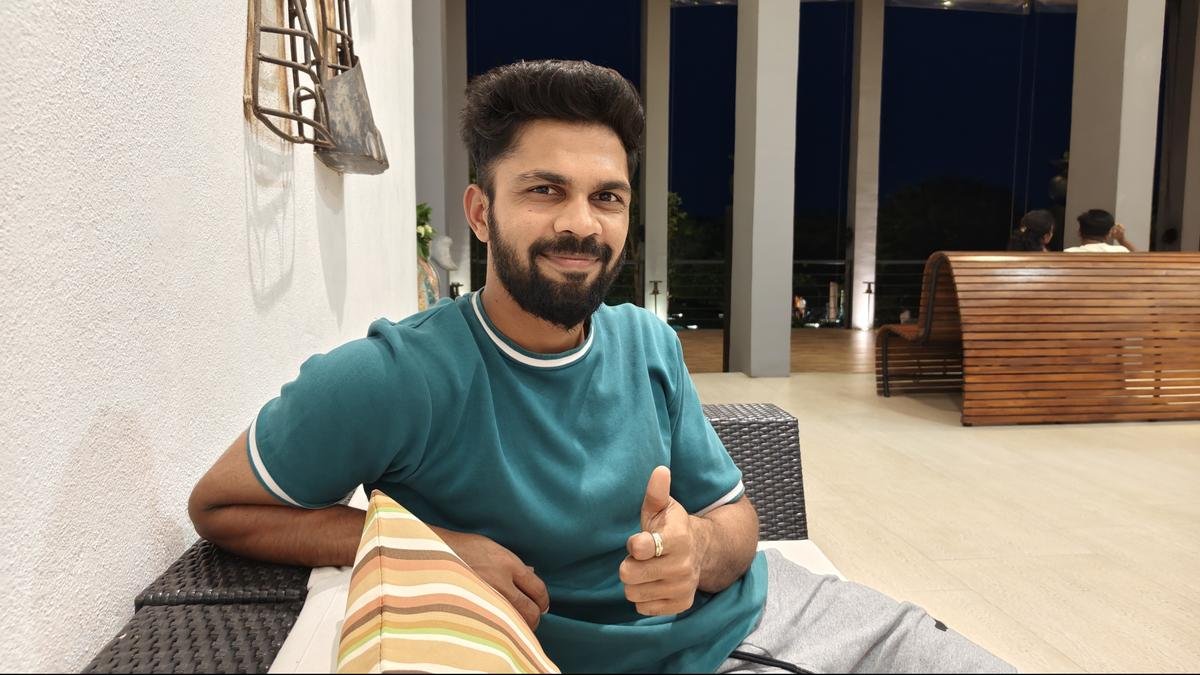
At a time when every performance is dissected and every omission sparks debate, Gaikwad continues to view the game through a different lens. Rather than dwelling on missed opportunities or competition for places, he prefers to focus on the next chance to make an impact. It is an outlook that has helped him navigate a career filled with both rewards and setbacks.
The last few months have been another reminder of that resilience. Returning to List-A cricket after the IPL 2026, Gaikwad was among the standout performers in the India-A Tri-Nation Series in Sri Lanka. He finished among the leading run-scorers with 274 runs, including a sublime century, playing a pivotal role in India’s title-winning campaign that culminated in a victory over Sri Lanka-A in the final.
Those who have watched him closely over the years would not be surprised. Elegance has always been a part of Gaikwad’s batting, but beneath that effortless strokeplay lies a cricketer who has quietly learnt to absorb disappointment, adapt to changing roles and keep moving forward.
ALSO READ: Aravinda de Silva: Test cricket can thrive if its biggest rivalries are sold better
In this exclusive conversation with Sportstar, Gaikwad reflects on dealing with injuries, handling the pressures of captaincy, the leadership lessons he has picked up from MS Dhoni, the challenges of being a three-format player and why simplicity remains central to his cricketing philosophy.
He also has a message for Chennai Super Kings supporters, urging them to continue backing the franchise through the difficult phases as passionately as they celebrate the good times.
You’ve had to be patient for opportunities at the highest level. How have you handled that phase of your career?
Not really challenging. I have a different perspective to this. I feel the IPL itself is a big tournament to be part of. Obviously, to get to play that and also to play a series here as well is always an opportunity.
Every match that you play at a higher level is an opportunity to go somewhere. Even if you are playing for India, it is an opportunity to stay in the team, try and score and make your case as strong and as consistent as possible.
That’s my perspective and that’s how I look at it. As I said, it is an opportunity for me and that is how I have been looking at it.
Injuries have interrupted your progress at different stages. How have those setbacks shaped you?
Injuries are something that do halt your progress, but they are also not really controllable. Every sportsperson goes through them. Some have very few injuries, some have a lot. I think I am somewhere in the middle.
From my side, I try to do as much as possible to stay fit.
As for coming back from injuries and setbacks, it becomes a hunger-driven process. The more time you are out, the more you want to get back on the field, score runs and play for the teams you were representing. That hunger grows.
When you get back, you have to keep all those days in mind when you missed cricket because of certain things. That is where the motivation comes from.
While recovering from injuries, how do you deal with the uncertainty that comes with Indian cricket’s intense competition?
I have a slightly different perspective. I don’t see myself competing with anyone. Whoever the 15 players are that are representing India in an ongoing series or a World Cup are there because they are the best ones. It is for others to compare and say who is better, who is in form and who is not.
For me, it is about respecting the decision and respecting the players who are playing there as well.
As long as I am playing at a high level, getting opportunities and getting chances to prove myself again and again, I am happy to do it. That’s how I look at it.
You’ve spent years alongside MS Dhoni and now captain Chennai Super Kings. What are the biggest leadership lessons you’ve learned from him?
One thing I have learnt from him is trying to keep things very simple and not complicate a lot.
Sometimes, as a responsible player in the team, you tend to overthink decisions. You think about all the ifs and buts. With him, I feel he keeps things really simple. He lets things flow as it is and then arrives at a conclusion.
That simplicity is something he has carried throughout the years. There are also a lot of results that have backed that process.
For me, it is about balancing that with my own thought process and trying to understand how I can help the team win. Results are something which is definitely needed in any team, so you try and get into that thought process in terms of how you can help the team. It’s about implementing the plans.
Leading a franchise like CSK brings a different level of scrutiny and expectation. What have the last two seasons taught you?
More than being the captain of CSK, I feel even as a player, if you don’t make the playoffs, you are disappointed. Every player who plays the IPL is disappointed when that happens.
I have been through a journey with CSK where we were runners-up, then we didn’t qualify, then we won the IPL, then again we didn’t qualify and then we won it again. So I have tasted success and I have also seen the rock-bottom phases.

| Photo Credit:
VIJAY SONEJI

Ruturaj Gaikwad took over from MS Dhoni as Chennai Super Kings captain.
| Photo Credit:
VIJAY SONEJI
The last two years haven’t gone the way everyone expected. But you have to understand certain dynamics and factors that affect a season. Even in 2025, me being captain and missing more than half the tournament was definitely a setback. Last year too, we had four or five players from our playing XII miss almost half the tournament.
Even if you look at the successful teams like RCB, if you take away three or four major players, it is definitely going to have an impact. Those are factors a lot of people don’t take into consideration. It is a results-driven tournament and everyone expects CSK to do well every year because that’s what the franchise has done for 15 or 16 seasons.
But there will always be phases where things don’t go your way. You learn from them and try to improve. Compared to 2025, I felt we had a much better season in 2026. There will be more improvements going into next year.
You’ve always been associated with timing and elegance. How challenging is it to be a three-format player in modern cricket?
It is challenging. I almost played the entire domestic season last year and a lot of red-ball cricket as well.
From the fifth IPL game I played in 2025 to the first game of IPL 2026, I had played just one T20 during that period. It makes a difference when you spend a lot of time playing a particular format.
Generally, the best T20 players play a lot of that format and have a lot of matches under their belt. So it is a difficult shift.
But as a three-format player, it is a privilege to be part of every squad and every format. As long as I feel I am ready to compete in all three formats, it is about adjusting and adapting to what each format requires.
T20 cricket is evolving. One-day cricket is changing as well. You have to evolve with it.
How do you manage those transitions between formats?
Each format has different basics that are required. I just try to focus more on those basics before moving into a particular format.
The longer the format, the more time you have. That time allows you to think and adapt to situations. The shorter the format, the less time you have and instincts take over.

Gaikwad is a three-format player, and has most recently been a part of the ODI side.
| Photo Credit:
RAGU R
Gaikwad is a three-format player, and has most recently been a part of the ODI side.
| Photo Credit:
RAGU R
It is about finding the balance and trying to be pre-meditative as much as possible.
Test cricket has its own challenges because of conditions and situations. It is about preparing for the tour, understanding the conditions and figuring out what the game demands.
Has the IPL redefined batting, especially in terms of risk-taking?
It is exciting. When you see these kinds of scores in Powerplay, it is exciting as a batter. As a bowler, it might be a little different. It is always good to have runs on board, irrespective of the format you are playing. That’s what is needed, because runs ultimately determine the fate of a match.
While it is exciting as a batter, there’s undoubtedly a bit of imbalance between the bat and the ball. Batting has become slightly easier with things like the Impact Player rule.
Has captaincy changed you as a batter?
Not really has changed in terms of batting. Whether I am captain or not, I don’t think there is any major change in my mindset or approach. I don’t see much difference in my batting as captain and as a player.
What keeps you motivated after everything you’ve achieved?
There has been a lot of success throughout these years. I never thought I would even play Ranji Trophy. Once I started playing Ranji Trophy, everything that came after that was beyond what I had imagined.
Playing for India, captaining CSK, scoring the runs that I have scored — these were things I never thought I would achieve when I started out. That is what keeps driving me. Everything beyond playing Ranji Trophy has felt like a success.
Do you set long-term or short-term goals?
Not really. I don’t like setting goals. Throughout this journey, life has surprised me in many ways that I never thought of. So I prefer to keep it simple and not complicate things too much.
A message for CSK fans?
Just be patient. We have seen some of the best days over the last 14 or 15 years. We still believe we are one of the best franchises in the IPL.
There will be ups and downs. Supporting every player who represents CSK is important. Every player who plays for CSK feels something special about representing the franchise. Everyone wants to do a little more for the team.
Sometimes things don’t work out the way we want them to. But all the players are working hard to get the team where the fans want to see it. Hopefully, we will get there.
You’ve batted in different positions for India. How difficult is that adjustment?
I don’t think moving down the order is as difficult as people think. When you open the batting, if you score a hundred or a big score, you usually bat through most of the innings anyway. So you understand different phases of the game.
The bigger challenge, in my opinion, is when a middle-order batter suddenly has to open. Then you are facing the premium bowlers with a new ball from both ends. That is a tougher adjustment. Moving down the order is not as difficult.
Published on Jun 23, 2026
Discover more from News Link360
Subscribe to get the latest posts sent to your email.