Ajay Kumar Verma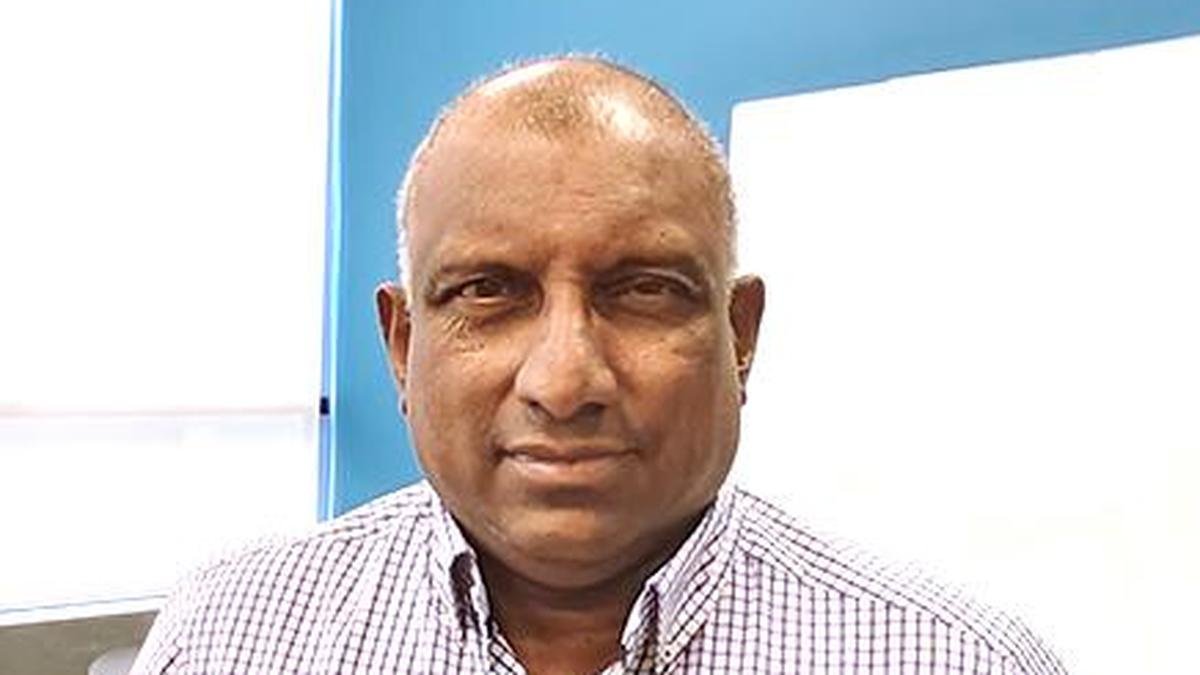
30 years after helping Sri Lanka lift the 1996 World Cup, Aravinda de Silva’s days are no longer dictated by nets, team meetings or match schedules. The former batting great is now immersed in the corporate world, balancing deals, mergers, deadlines and new ventures.
Yet, the moment the conversation turns to cricket, the boardroom boss gives way to the cricketer. The eyes light up, the smile broadens and memories begin to flow. For a few minutes, Colombo’s rain, the meeting agenda and the demands of business fade into the background as de Silva revisits the game that made him a national icon.
30 years after Sri Lanka’s 1996 World Cup triumph, how do you look back at that moment and the state of Sri Lankan cricket today?
Well, we have continued to do well since 1996. It’s unfortunate that we haven’t won another 50-over World Cup since. But I think we had enough talent and the kind of combinations which was, I think, competitive and good enough to win another World Cup.
So unfortunately, in 2007 and 2011, we came pretty close to doing so, and talent-wise, I still don’t see any issue. It’s just that the players and the administrators will have to start looking at how the game is moving forward, changing at a rapid pace and to keep up with all that.
It needs to have that kind of vision to make sure that we align with the modern-day requirement and look at doing things towards achieving that goal.
India has moved ahead of most of its Asian rivals. Do finances play the biggest role in that gap?
Unfortunately, sport is all about finances as well. The kind of finances required nowadays to develop any sport is substantial.
Unless you are able to generate that kind of finances to develop the necessary support services — when it comes to human resources, research and all that — I think that’s where I see the difference.
Financially, most countries that are strong have been able to dominate the sport.
So, in a way, I think it’s an unfair situation around the world. But that’s why I said unless you align with the requirements of the modern-day sport, things are going to get tougher.
That’s why, when I started off, I mentioned that we need to really look at how sport is being approached in other parts of the world by the countries competing with us. We have to be up there. Otherwise, we are going to pay the price.

| Photo Credit:
THE HINDU ARCHIVES

People now look at sport more commercially rather than as a sport which, before our time and maybe to a certain extent during our time, was played more through passion than anything else — Aravinda de Silva
| Photo Credit:
THE HINDU ARCHIVES
Test cricket continues to face challenges from franchise leagues. How can the format survive?
I think it’s something that is changing around the world. So you have to do whatever it takes. If you want to promote something, it’s about how you promote it. And if something is dying, you have to revive it and look at new ways of reviving it.
I think having specialised series like The Ashes and the Border-Gavaskar Trophy gives special attention to those contests. I think you’ve got to start playing more bilateral series like that, which will help keep certain countries interested.
If you play a series of Test matches today between India and Pakistan (even at neutral venues), do you mean to say there won’t be interest? There will be an enormous amount of interest. It is how you create that battle.
The other thing is there’s so much franchise cricket happening around the world. It’s like soccer. People representing their countries have become that much less involved compared to being part of the franchise framework.
Sport overall has changed. People now look at it more commercially rather than as a sport which, before our time and maybe to a certain extent during our time, was played more through passion than anything else.
But when things are changing, you’ve got to change with the times.
That’s why I feel Test cricket can also be promoted like the Grand Slam tennis tournaments. You play certain series at specific times, have serious prize money and participation fees.
In India, Test cricket has not suffered. As far as I am concerned, you will still get crowds when India play cricket. I think, for the players, it is something mandatory and important to be part of, despite playing other formats.
Hats off to the Indian board (BCCI) for creating that sort of atmosphere and culture that keeps them respecting Test cricket. Though there is so much franchise cricket and so many IPL opportunities, it still seems as if most cricketers, whether they like it or not, know that India has made it very clear that Test cricket has to be played and that it is an important part of their commitment.
I think that should be done around the world. The boards together can do that, and I feel that is how you could change the fate of Test cricket.
Do you think there is now an overkill of cricket?
It’s yes and no.
Maybe, for a cricketer, it’s better to have more cricket because careers are short. We played for 20 years. Sachin probably played for 20-odd years.
If you look at Sachin and Virat, Virat probably would have played for fewer years but almost the same number of matches. If you look at Sri Lanka, I played for 20-odd years, while the others probably played for about 15 years, but they have gone way beyond the number of matches we played.
So, in a way, it is good because, when you are in form, you just keep playing cricket and that becomes part of your life. It is like doing a job for 15 or 20 years and then moving on.
But from a spectator’s point of view, it does become an overkill because if you miss something today, you know there is something tomorrow to watch. Unlike those days, if you missed a series, you missed it for good.
Now technology has changed all that. You can always go back and watch games later. So, because of that, it seems as if there is an overkill. But I think people who are interested in the sport still keep watching.”

I will put Shane Warne at the top there as a bowler and a competitor — Aravinda de Silva
| Photo Credit:
VV KRISHNAN
I will put Shane Warne at the top there as a bowler and a competitor — Aravinda de Silva
| Photo Credit:
VV KRISHNAN
You were part of a team that changed white-ball cricket. When you see someone like Vaibhav Sooryavanshi, what do you make of such fearless young talents?
I think the shorter format allows these youngsters to come out and express themselves. It helps because you really allow these youngsters to play carefree cricket. And I think that is what sport is all about.
During our time, that’s one thing I always followed and told myself. Though there was a lot of criticism every time I got out playing a rash shot, I wanted to be positive and take on a challenge.
My idol was Viv Richards. I always wanted to emulate him every time I walked out to bat.
Sanath (Jayasuriya) and Kalu (Romesh Kaluwitharana) were the same. The team’s focus was to let them go out there and play their natural game, not even worry about getting out in the first two deliveries of a match, giving them the freedom to play naturally up to the 15th over. That’s why I always feel Sri Lanka should charge a royalty from the IPL for introducing that format (laughs).
It’s an extended version of that first 15-over approach and how those two changed the entire momentum of one-day cricket.
Basically, it is more than anything the approach. That approach showed a fair bit of entertainment, and it carried on into a tournament structure where T20 gives a glimpse of what you would see in the first 15 overs of a 50-over game.
Worldwide, things have changed. Players don’t necessarily come through the traditional First-Class structure anymore. Funding comes through franchise cricket.
So, it is very important to have a good structured franchise model for every country to make sure that players are encouraged and brought through that process. The countries doing that are the successful ones right now.
Sooryavanshi is only 15. How should a generational talent be handled?
India has got that capability and they’ve done it well over the years. If you look at someone like Virat (Kohli), who at a very young age did very well, he was a confident individual. I was handling Sri Lanka’s Under-19 team as a consultant coach at the time.
The amount of confidence he had in himself and how he performed in that World Cup final, how he took responsibility — when you see those kinds of characters, you know they are going to be the future of their country’s cricket.
But as you say, the grounding is very important and the foundation. That is the stage where you have to catch them and really start guiding them properly.
Some of them along the way you might lose because it is always up to the individual, but there are enough people around to advise and support. As long as those people are the right people, they will be guided properly.
One thing I have noticed is that these kids out of India are quite confident and smart. Sometimes overly confident and arrogant, but around some of the seniors and older players, they have a fair amount of respect and they take advice.
As long as they have the willingness to learn and be humble, they can be arrogant on the field. Confidence and self-belief have to be there. But there are one or two things which are important as a human being.
If those are maintained and controlled at an important level through people whom they respect and listen to, I think they will have a long successful career.
Who you are listening to and taking advice from is very important.

It’s not an easy thing to get a team together — Aravinda de Silva.
| Photo Credit:
Getty Images
It’s not an easy thing to get a team together — Aravinda de Silva.
| Photo Credit:
Getty Images
The 1996 team faced criticism and hostility, particularly during tours of Australia and New Zealand. Did those experiences strengthen the group?
Yeah, to a certain extent, players became that much stronger. They went through a lot of criticism and it bonded the teammates together and brought an unbreakable unity among the team, which was very strong.
I think that’s also one of the key reasons for us to be successful.
It’s not an easy thing to get a team together. So all credit to Arjuna (Ranatunga) for being able to bring everyone together as one unit and being that strong individual whom everyone had respect for.
I think that really changed the mindset of the players. And Dav Whatmore and Alex Kountouris also deserve credit. Dav brought in the best of the youngsters and gave them the belief and confidence they required, while Alex brought everyone’s fitness levels to a standard that made a huge difference compared to other teams.
With the advancements in technology and analytics, do you think Muttiah Muralitharan would have been so successful in today’s game?
He would have succeeded anyway, and I think he was a freak and did extremely well. But I think the Indians were one team, and the Pakistanis, the experienced players, who really handled him very well. But apart from those two, when the younger generation came, they really still couldn’t handle him. Even Pakistan and India, both teams really struggled once the old brigade left.
So it was a case of basically understanding Murali and facing him more often.
I think with the modern-day game, maybe the players would have found more ways of analysing how to play him. But still, for all that, I think he would have had a better chance of getting more wickets with the third umpire also coming into play and being able to review some of the decisions.
I think now with technology, his chance of getting more LBWs would have been that much greater because a lot of the players used their pad during that time to overcome the kind of turn he used to produce.
So, I guess I would have thought that he still would have been a tough bowler to handle.
You had some memorable battles with Shane Warne. How do you look back at that rivalry?
Well, I think I have a lot of respect for him as a bowler. He bowled in tougher conditions than Murali, to be fair. He bowled on a lot of good wickets in Australia and, to be able to get to the number of wickets he did at the end of the career, was an amazing achievement.
So, I think I will put him at the top there as a bowler and a competitor.
But I’ve had an enormous number of meetings with him and, actually, we went out together a few months before his demise. We met in London.
So as a friend, he’s been a really close friend. It was all unfortunate.
I must say all these Australians, especially the players from Victoria, played against me when I played a season for a local club. We used to go on Cricket Victoria’s promotional coaching clinics together and had a lot of fun.
Though they were very tough on the field, once I got to know them during my stint in Melbourne, I understood their mentality. They’re very, very friendly off the field. Once you get to know them, they become that much more interesting company.
So I’ve had a lot of friendships which I still cherish and, of course, on the field they were among the hardest and toughest competitors. I accept that and I appreciate that because that is what brought the best out of me also.
I think with Imran it was the same. Pakistan.
So, Australia and Pakistan were the two sides which I thought were the most arrogant and toughest teams, with some of the best bowlers. If you even look at my record, I would have performed better against those teams because I had the same approach towards them.
But outside the game, we have been very, very close friends.

Muttiah Muralitharan still would have been a tough bowler to handle — Aravinda de Silva
| Photo Credit:
VV KRISHNAN
Muttiah Muralitharan still would have been a tough bowler to handle — Aravinda de Silva
| Photo Credit:
VV KRISHNAN
India has increasingly relied on home-grown coaches, while Sri Lanka has again turned to an overseas coach. Why do you think that is? And what, according to you, is the biggest challenge facing cricket today?
Developing human resources, as I said, is very important. It takes a lot of time and structure. Of course, it costs money. Good resources will cost large sums of money.
So for some reason, I don’t know, maybe Sri Lanka feels that Sri Lankan knowledge is not as valuable as foreign knowledge. So probably they treat these two knowledge bases with a different financial value.
I guess, to a certain extent, India did the same.
But now that they have developed the infrastructure and the knowledge base, they have realised that their knowledge base is far greater than any other country.
It’s like a university system. Why would Indian students go to the US to study? It’s to get themselves educated with the modern-day requirements of the education system and then they come back with that knowledge and implement the same thing in India. It becomes a huge upside and an opportunity.
Now, maybe from the US, they are looking at setting up educational institutions in India because they see these young people who are willing to learn here. That’s the market, so they will come and probably set it up.
What is happening is that knowledge base is now coming back to India. That is what has enhanced the capabilities.
Similarly, Australia, when they were one of the strongest teams to reckon with, had a lot of new theory and technology which they used from US baseball.
You always go to a place where things are better in research and development, then use that to develop your sport.
It is the same to develop your businesses or anything else. The same principle applies to sport.
That’s why I said it needs an overall revamp for people to understand that.
Research is awesome because that’s something I really enjoy doing. Even today you learn every day.
I watch a game today, I learn. I see how the psychology works on most of these players — not only cricket but tennis and other sports. It’s interesting.
But I think for someone to get into that space, if there is no scope or no future, they don’t look at it very much.
That’s probably the reason.
You were involved with coaching Sri Lankan teams for a while, but now, we don’t see you there. Do you miss coaching?
That is because I wanted to give something back to Sri Lanka to help some of the junior cricketers.
After that, it was only during a few World Cup preparations. I worked with the Under-19 team as a consultant for about three or four World Cups.
No, I don’t miss coaching. I have enough to keep me occupied.
Since I was a kid, I was always keen on mergers and acquisitions. That’s something I like. So, this is what I really enjoy doing now.
Published on Jun 27, 2026
Discover more from News Link360
Subscribe to get the latest posts sent to your email.