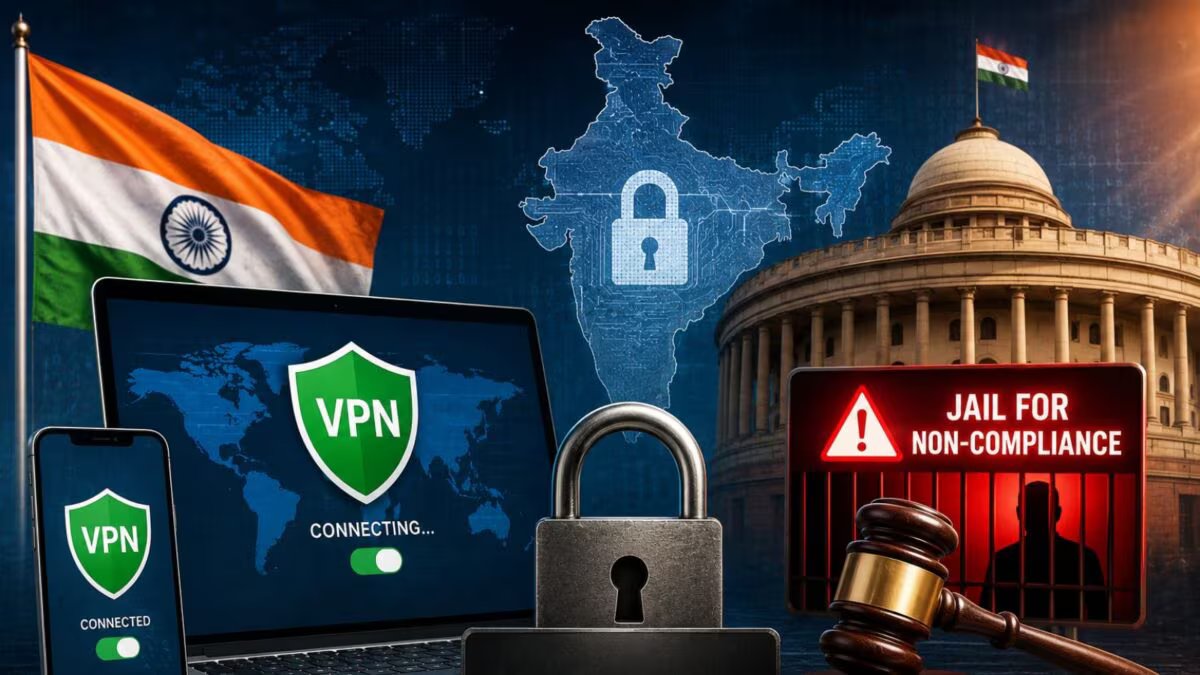
In recent years, there has been a huge increase in content blocking orders in India regarding online security. While more than 12,000 blocking orders were issued in the year 2024, this figure doubled to 24,000 in 2025. But, blocked websites or social media platforms are being accessed through VPN. Keeping this in view, the government has now made preparations to crack down on VPN providers.


VPN hides the real IP address of the user.
New Delhi. There is big news for those using Virtual Private Network (VPN) services in India and the companies providing it. The central government has now made preparations to tighten the reins of VPN companies. According to a report by Indian Express, the government is preparing a strict legal framework under which foreign VPN companies will not only have to open their permanent offices in India but will also have to appoint local compliance officers. If companies refuse to follow the rules and instructions of the government, their executives in India may have to face jail.
The reason for the strictness on VPN companies is non-compliance of government orders by these companies. In the year 2022, the Indian Computer Emergency Response Team (CERT-In) had issued a directive. Under this, it was made mandatory for VPN companies to keep sensitive data like name, email ID, mobile number and IP address of their users safe for 5 years. But, big companies like ExpressVPN, NordVPN, Proton VPN and Surfshark opposed this and removed their physical servers from India.
How does VPN work?
VPN hides the user’s real IP address and routes Internet traffic through servers in another country. This makes it seem that the user is accessing the internet not in India but in some other country. Due to this bypass technology, even things blocked by the government can be easily opened in India.
VPN becomes a sneaky way to watch blocked content
In recent times, it has been seen that people are using VPN extensively to access those websites, apps and online content which have been blocked by the government in India. This year, before the NEET-UG re-test, the government had temporarily blocked Telegram. During that time, ProtonVPN General Manager David Peterson had revealed that there was a sudden jump of more than 120% in the registrations of their VPN app from India. Later, the government blocked both his post and his X account in India.
Discover more from News Link360
Subscribe to get the latest posts sent to your email.