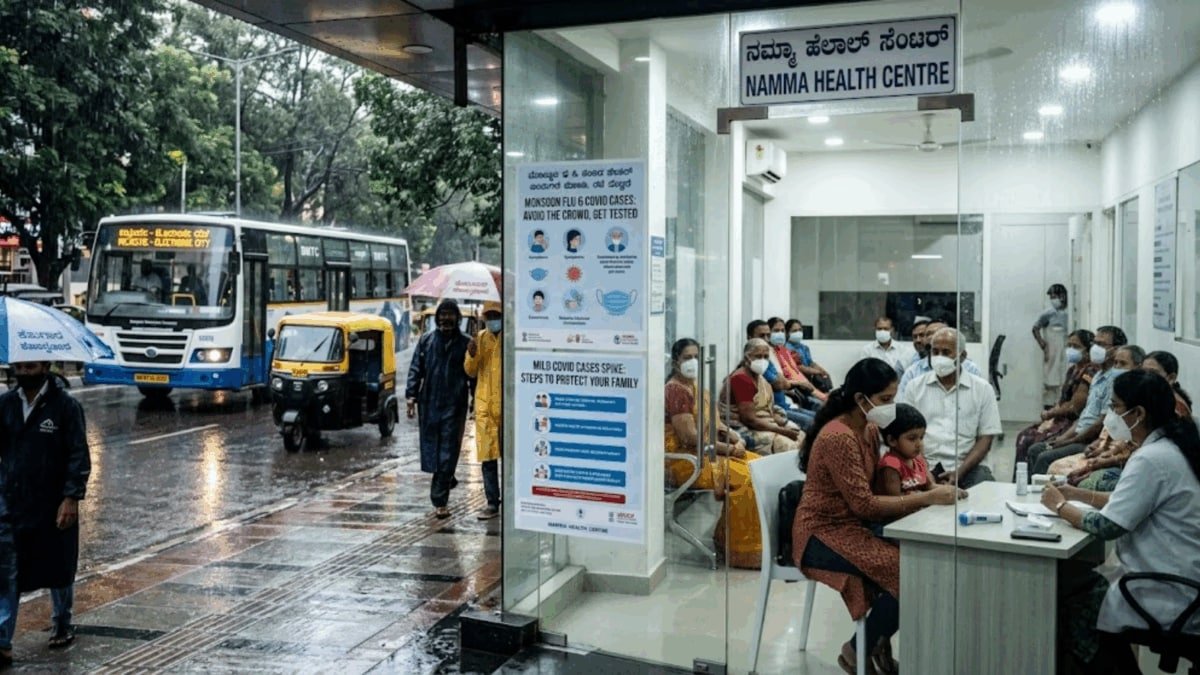
The circulating JN.1 variant of COVID-19 is causing mild symptoms similar to earlier Omicron strains, with very few cases requiring hospitalization.




Common symptoms of influenza and mild COVID-19 include fever, runny or blocked nose, sore throat, persistent cough, body aches, fatigue, and headache. (Representational Image: AI)
Bengaluru is experiencing a seasonal rise in respiratory infections, with hospitals reporting an increase in both influenza and mild COVID-19 cases. Doctors note that Influenza A strains, particularly H1N1 and H3N2, are currently causing more infections than COVID-19. The surge is typical during the monsoon season due to fluctuating weather, increased humidity, and more indoor gatherings.
While most patients are recovering with supportive care at home, vulnerable groups such as the elderly, immunocompromised individuals, and those with chronic conditions remain at higher risk of complications. Health experts emphasize that the current situation does not indicate a major outbreak but reflects seasonal patterns.
The circulating JN.1 variant of COVID-19 is causing mild symptoms similar to earlier Omicron strains, with very few cases requiring hospitalization. Doctors advise caution but reassure the public that the situation is under control with timely medical attention.

What Are the Common Symptoms to Watch For?
Common symptoms of influenza and mild COVID-19 include fever, runny or blocked nose, sore throat, persistent cough, body aches, fatigue, and headache. Most cases resolve with rest, hydration, and over-the-counter symptom relief.
Who Is at Higher Risk Of Flu And Covid In Bengaluru
Elderly individuals, pregnant women, young children, and people with underlying conditions like diabetes, asthma, heart disease, or weakened immunity are more vulnerable. These groups should seek medical care early if symptoms appear.
What Precautions You Must Take
Simple preventive steps include frequent handwashing, covering the mouth while coughing or sneezing, wearing masks in crowded indoor spaces, staying home when sick, and ensuring high-risk individuals are up to date with flu and COVID-19 vaccinations.
To protect yourself and your family during this seasonal spike, practice the following:
- Frequent handwashing with soap and water, especially after touching common surfaces.
- Always cover your mouth and nose with a tissue or elbow when coughing or sneezing.
- Wear a mask in crowded indoor places like offices, public transport, or markets.
- Avoid touching your face frequently and maintain physical distance where possible.
- Stay home if you feel unwell to prevent spreading the infection.
- Ensure good ventilation in your home and workplace.
- High-risk individuals should get their annual flu vaccine and stay up to date with COVID-19 boosters.
- Limit close contact with people showing respiratory symptoms.

When Should You See a Doctor?
Seek immediate medical help if you experience difficulty breathing, chest pain, high fever lasting over three days, persistent vomiting, confusion, or worsening symptoms. Early consultation is especially important for vulnerable populations.
Doctors across major hospitals in Bengaluru, including KIMS, Aster RV, and Sakra World Hospital, have observed 10 to 15 influenza cases daily in recent weeks. The reopening of schools has also contributed to the spread, as children often bring viruses home to family members.
What Patients Must Know
Patients should understand that most influenza and mild COVID-19 cases are self-limiting and recover with rest, plenty of fluids, and symptom management. However, do not self-medicate with antibiotics as these are viral infections.
Monitor symptoms closely, seek immediate medical help if you develop breathing difficulty, persistent high fever, chest pain, confusion, or bluish lips. Those with comorbidities must consult a doctor early.
Children and elderly family members need extra care as they can transmit viruses easily. Testing is usually reserved for severe cases. Follow your doctor’s advice strictly and complete the recommended isolation period to protect others.
Health authorities continue to monitor the situation closely. While COVID-19 is now considered endemic with occasional localized increases, experts stress that following basic hygiene practices and seeking timely care can effectively manage the current seasonal rise in respiratory illnesses.
Discover more from News Link360
Subscribe to get the latest posts sent to your email.