Sanju Samson had just vacated his place in the XI for 15-year-old Vaibhav Sooryavanshi, whose debut had understandably become the evening’s biggest talking point.
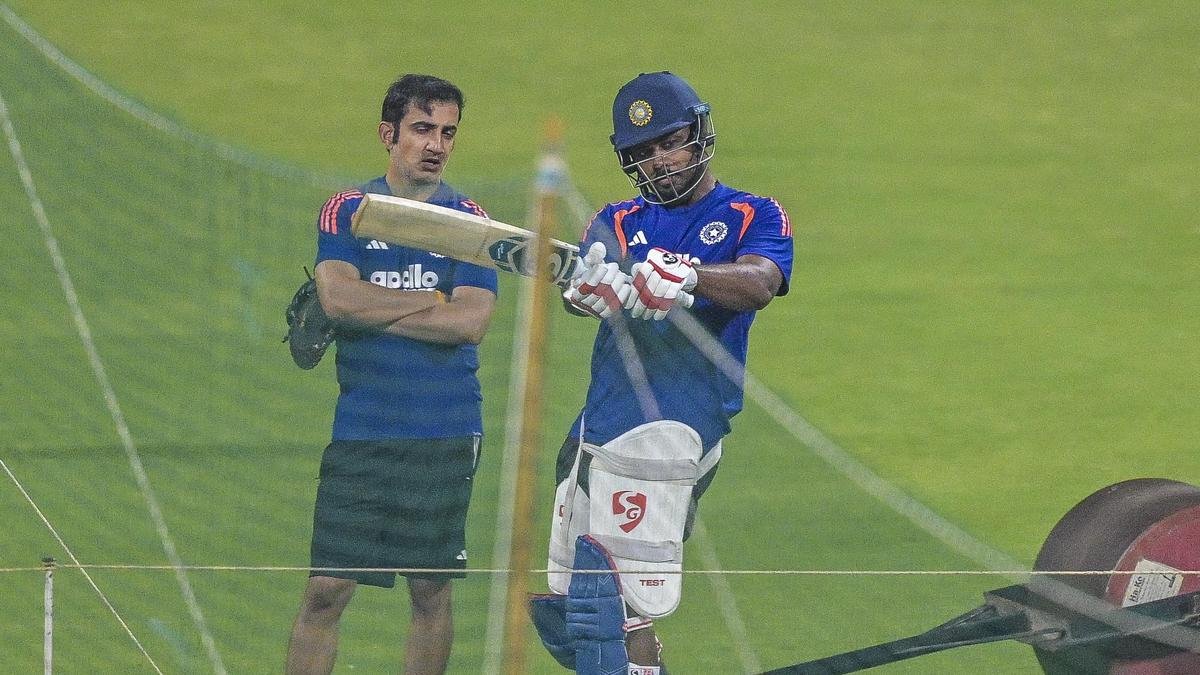
On the sidelines, head coach Gautam Gambhir walked up to Sanju and the two were engrossed in a long conversation. The India head coach spoke animatedly, repeatedly gesturing with his hands, while Sanju listened quietly before responding with a nod.
It was impossible to know what was being said, but the body language suggested reassurance rather than disappointment. Sanju wasn’t a fringe cricketer making way for a tactical change. He was one of the senior members of India’s T20I set-up, a batter who had played a key role in India’s T20 World Cup triumph earlier this year.
Those images assumed greater significance a couple of days later.
When the selectors announced India’s squad for the five-match T20I series against Zimbabwe on Monday, Sanju’s name was missing.
ALSO READ | India squad for Zimbabwe tour: Sanju Samson dropped; Prabhsimran Singh earns maiden call-up
While the unofficial explanation circulated by sections of the fraternity was that he had been rested, the omission made him the second player from India’s World Cup-winning squad to lose his place after captain Suryakumar Yadav, underlining the pace at which India’s T20 overhaul is gathering momentum.
Sanju endured a lean white-ball tour of England, scoring just six runs in three innings before making way for Sooryavanshi. His 2026 Indian Premier League (IPL) campaign, too, lacked consistency, even though he finished with 477 runs in 14 matches for Chennai Super Kings at an average of 43.36 and a strike rate of 165.63, including two hundreds and a half-century.
Yet, those numbers tell only part of the story.
Since being handed a regular role at the top of the order, Sanju had finally begun to justify the faith successive team managements had invested in him.
In February and March, he struck three successive half-centuries to help India lift the T20 World Cup and finished as the Player of the Tournament.
Those weren’t merely impressive numbers. They reflected a batter who had evolved.
Few Indian cricketers have travelled a longer road to establish themselves in international cricket. Since making his debut more than a decade ago, Sanju’s career has unfolded in cycles of opportunity and interruption. Fierce competition for places and fluctuating form repeatedly pushed him to the margins before another comeback beckoned.
For years, the conversation revolved around unrealised potential. Over the last two seasons, that narrative finally appeared to change.

| Photo Credit:
EMMANUAL YOGINI

In February and March, he struck three successive half-centuries to help India lift the T20 World Cup and finished as the Player of the Tournament.
| Photo Credit:
EMMANUAL YOGINI
The transformation was visible not just in the numbers but in his method. The naturally gifted stroke-maker learnt to pace an innings, absorb pressure when required, and still maintain the tempo modern T20 cricket demands. That maturity was evident in the IPL before carrying over to the international stage, where he evolved into a dependable top-order batter rather than merely an explosive option.
That journey culminated in India’s successful T20 World Cup campaign.
While others inevitably occupied the spotlight, Samson’s contributions brought balance to a batting order that had finally settled into clearly defined roles. It seemed, at last, that he had escaped the endless cycle of having to prove himself every series.
That’s why the timing of this omission feels significant.
India’s selection philosophy has understandably shifted towards succession planning. Sooryavanshi’s emergence has accelerated that process, while Yashasvi Jaiswal, Abhishek Sharma, Tilak Varma, B. Sai Sudharsan, Ruturaj Gaikwad and Ishan Kishan continue to compete for limited batting spots. The depth is unprecedented and, unlike previous generations, selectors are rarely short of alternatives.
Depth, however, also changes the definition of security.
In earlier eras, established players often received longer runs because replacements were scarce. Today’s talent pool ensures every lean patch is accompanied by another compelling candidate. Bilateral series and IPL performances have compressed selection cycles, leaving little room for prolonged backing.
ALSO READ | India’s road to 2028 T20 World Cup begins with Shreyas Iyer, Sooryavanshi and a new vision
There is undeniable logic to that approach. India is already building towards the next T20 World Cup and identifying the next generation cannot wait indefinitely.
But international teams are rarely built on promise alone.
The strongest white-ball sides have generally balanced transition with continuity, allowing proven performers enough time to ride out inevitable dips in form. Temporary slumps are an occupational hazard in T20 cricket, where margins are thinner than in any other format.
Sanju’s last few innings strengthened the selectors’ case. His body of work over the previous year, however, makes an equally persuasive argument in the opposite direction.
Whether this omission proves temporary or permanent will become clearer over the coming months. The conversation between Gambhir and Sanju at Old Trafford may yet assume greater significance if the team management continues to see him as part of its larger plans.
Indian cricket’s talent pipeline has never been richer. The challenge for the selectors is no longer identifying the next star, but ensuring that the pursuit of tomorrow does not come at the cost of players who have already shown they can deliver on the biggest stage.
That balance, perhaps, will define India’s T20I future as much as the abundance of talent itself.
Published on Jul 06, 2026
Discover more from News Link360
Subscribe to get the latest posts sent to your email.