by Alimat Aliyeva
China is rapidly advancing its lunar exploration program and is
expected to eventually send taikonauts to the Moon,
AzerNEWS reports.
This statement was made by Jared Isaacman, head of the U.S.
National Aeronautics and Space Administration (NASA), during an
appearance on Face the Nation with Margaret Brennan on CBS.
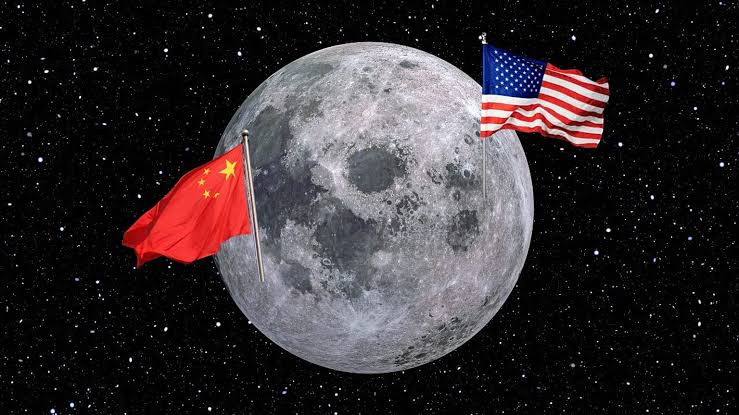
According to him, the United States and China are now in a new
phase of space competition, particularly in preparations for future
crewed lunar missions. The central question, he said, is which
country will successfully return humans to the Moon first.
“Of course, we are in a space race right now, and China is
moving at an incredible speed. There is no doubt that Chinese
taikonauts will land on the Moon. The real question is whether the
U.S. will get back there before they do,” Isaacman said.
He also emphasized that this competition is not just symbolic,
but could shape the future of space exploration, resource
utilization on the Moon, and even long-term human presence beyond
Earth.
Meanwhile, Carlos Garcia-Galan, head of NASA’s lunar base
program, recently expressed concerns about the United States’
readiness for upcoming crewed lunar missions. The schedule for
NASA’s Artemis program has already shifted several times: the
planned 2027 landing under Artemis III has been delayed to 2028,
which is now expected to occur under Artemis IV.
NASA currently aims to establish a sustainable lunar presence
step by step. By 2029, the agency hopes to provide astronauts with
regular access to the lunar surface for scientific research and
technology testing. Later, the goal is to begin building basic
infrastructure for a permanent lunar base. By around 2032, NASA
envisions maintaining a continuous human presence on the Moon.
Interestingly, analysts note that this renewed “space race”
differs significantly from the Cold War era. Today’s competition is
not only about national prestige, but also about strategic
resources such as lunar water ice, which could be used for fuel
production, and about establishing early infrastructure for future
missions to Mars. In this sense, the Moon is increasingly seen not
as a destination, but as a stepping stone for deep space
exploration.
Discover more from News Link360
Subscribe to get the latest posts sent to your email.