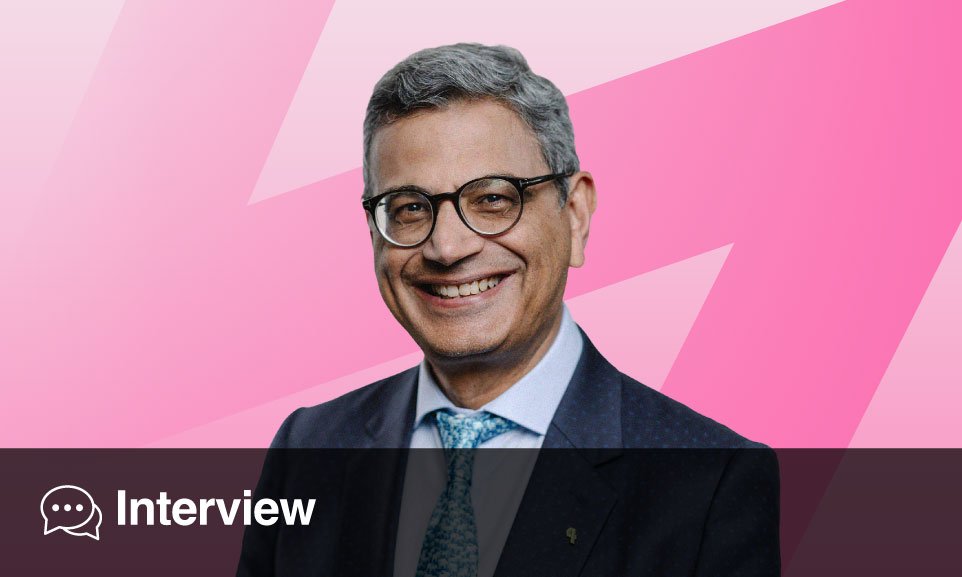
Kailash Bhatia | Professor of Clinical Neurology, Department of Clinical and Movement Neuroscience, Institute of Neurology, University College London, UK; President-Elect, European Academy of Neurology (EAN)
Citation: EMJ Neurol. 2026; https://doi.org/10.33590/emjneurol/8W25MF9R

With more than 2 decades in the movement disorders field, what advance has most changed the lives of patients, and what problem has proved far harder to solve than you expected?
In my view, the biggest advance that has changed lives is functional neurosurgery; for example, deep brain stimulation surgery and, more recently, focused ultrasound, and seeing this almost magic-like amelioration of tremor and bradykinesia. You implant the leads in a patient, then you turn on the stimulator, and within a second and a half, the tremor disappears. It is like magic. To me, if you are talking about what has changed the lives of people, that is the most important advancement. That sort of surgery has really made a big difference, particularly in people with advanced Parkinson’s disease, where drug treatments were leading to fluctuations and dyskinesias, where some doses work and some do not, where the tremor comes back, and so on. Then they undergo deep brain stimulation surgery and there is an immediate response to the tremor; their dyskinesias and fluctuations improve.
There is also another development: focused ultrasound. This is non-invasive whereby using sound waves a thermolytic lesion is made. Lo and behold, the patient who is awake lying in a scanner, you can start to see the tremor disappear. That is like magic. I am being careful in answering this question because you asked me what has changed the lives of people, and certainly functional neurosurgery would be one the biggest advances.
If you ask what has proved harder to solve, it is stopping the disease, modifying the disease, or preventing its spread. In this context, let me give the example of Parkinson’s disease, one of the most important movement disorder conditions. One major advance has been genetics, which then led us to a better understanding of the pathophysiology. For example, we were all very excited when we learned more about α-synuclein in the brain and thought that if we were able to do something about it, block it somehow with antibodies and so on, we were hopeful that we would have great results in disease modification. However, disease modification has been the problem. We thought that new approaches, using antibodies and similar strategies, would be very successful, but they have not been so far. The knowledge has not yet translated into therapy. So, are we addressing the pathophysiological mechanism in the wrong way? Is it simply a question of choosing the right people to include in trials? There are many questions still to be answered.
This year’s Congress theme is ‘Brains, Bytes & Beyond’. In an era driven by genetics, large datasets, and now AI, what insights do we risk overlooking if we spend less time with individual patients, and how do we prevent this?
Actually, I think there are two ways to look at this. The conventional concern is that AI is going to replace doctors, that doctors will not spend much time with patients, and that a bot will be answering their questions. I actually think that if AI is used properly, and this is what we hope will happen, then AI modelling, which can handle large datasets, can help us in a different way. One way to envisage this is that you have a symptom or a problem and begin addressing it before you see the doctor through an AI model. People are already talking about registering the types of movements we make. So, if you have a tremor, for example, there may be ways to examine you digitally even before you go and see a doctor. Imagine being at home on your computer. An AI model analyses your movements and is able to say, “We are dealing with a tremor. There are these additional features. It is very likely that this could be Parkinson’s disease.” Or perhaps we have a hyperkinetic movement disorder. The AI model may suggest that this is chorea. It may detect slow eye movements and suggest that this could be somebody with Huntington’s disease. Before you even meet your doctor, the AI model may already have made some predictions about what this person may have. You may even receive a request to send a genetic sample if that is relevant. By the time you actually go to meet the doctor, they already have all of this information. In fact, the doctor can then spend more time with you rather than less. So, this fear that patients will be met by a bot and that no human will be there is not going to happen. AI can actually give us more time because the preparatory work will already have been done. I think that is the way I would want AI to be used, and the way I think it will help us, rather than replacing us or reducing the time we have with our patients. Now you have a person who has already been assessed as being very likely to have Parkinson’s disease, and you can spend more time explaining what to expect, what is going to happen, and so on. At the moment, the opposite happens. We spend a lot of time arriving at the diagnosis and then have very little time left to explain what to expect. This could make a big difference in the amount of time you can spend actually talking to the patient about the disorder, what to expect, and so on, because you are spending less time reaching preliminary conclusions.
Having trained in India, worked in Europe, and later served as the European Academy of Neurology (EAN) liaison to the Indian Academy of Neurology (IAN), can you point to a partnership between neurological communities in different regions that has genuinely improved research, education, or patient care, and what made it work?
I think there are two things to say in this regard. One is that disease does not have boundaries. We saw that during COVID-19, for example. On the other hand, there are certain things that are specific or particularly relevant to certain countries. If you think of the Zika virus, for example, or, more recently, the Ebola virus, there are infections and other conditions that are more common in certain regions. What we have to do is learn from each other. If you take India as an example, there are excellent clinicians there who can bring to the table their experience with conditions that we do not routinely encounter. They may have experience with disorders that we only see occasionally in Europe, and they can educate us. Likewise, in some of the more developed countries, there may be more advanced therapies, drug development programmes, and similar advances that can be transferred in the other direction. So, I think the key is simply this: learn from each other.
At this year’s Congress, you co-chaired sessions on European brain health and the implementation of the WHO Intersectoral Global Action Plan on epilepsy and other neurological disorders (iGAP). In practical terms, what does successful implementation look like, and where are we currently falling short?
The first thing to say is that the EAN is totally committed to the brain health mission and, in that context, to the WHO iGAP. We have been supporting the WHO in its iGAP plan, particularly in the less-served areas of Europe. The issue with the brain health mission, in my view, is that we need to start early, and it depends on education and awareness, both in the public and, even more importantly, among the lay neurologists. At the moment, we have many organisations telling us how important the brain health mission is. However, until we get the lay neurologist invested in this as a stakeholder, nothing is going to happen. Here in Europe, we have already started at the school level. There have been programmes in Austria and Switzerland, for example, where we tell children how important the brain is. We give them a little brain to play with and say, “This is your brain. You have a brain like that, and you’ve got to look after it, because only you can look after it.” We then explain how to look after your brain: make sure you do not fall and sustain trauma, make sure you sleep well, eat a good diet, exercise, and so on. The reason we are doing that is because we want to bring in prevention.
Good sleep, exercise, avoiding head injuries, a good diet (such as a Mediterranean diet), and social interaction are all important. In fact, I am putting together a little paper called ‘Sow the Seeds Now’. ‘SEEDS’ stands for Sleep, Exercise, Environment, Diet, and Social interaction. For example, there are very good data emerging about pollution and pesticides, with links suggesting that pesticides may contribute to neurodegenerative diseases such as Parkinson’s disease. There was a recent paper that generated considerable press interest, suggesting that if you live within 3 miles of a golf course, your chances of developing Parkinson’s disease increase by several fold. In Parkinson’s disease, in addition to regular treatment, one of the things shown to be particularly beneficial is exercise. By exercise, we mean something as simple as walking briskly for 30 minutes, three times a week. If people could incorporate that into their lives, it would be very helpful. Avoiding a head injury is also important. You have seen examples such as boxers, including Muhammad Ali, developing a type of Parkinsonism, so avoiding head injury matters.
We have talked about diet and sleep. Social interaction is also important. Parkinson’s disease is largely a disease of ageing, and as we age, many of us become isolated. Social interaction therefore decreases. There are many studies showing this association. A large study was recently published by a Chinese group using a British sample. They divided participants into three groups: those with very little social interaction, who were more or less isolated; those with a moderate amount of social interaction; and those with a high level of social interaction involving family and friends. The group with a high level of social interaction had a much lower risk of developing Parkinson’s disease compared with those who had little or no social interaction.
So, we need to sow these seeds. We need to start early. We have to think about brain health not as something we address only after disorders develop and then say, “My goodness, we do not have good treatments.” We need to think about prevention. We have an example of this from the past. Cardiovascular medicine reduced stroke and heart attacks by a huge amount using a similar approach: exercise, looking after diabetes, controlling cholesterol, and so on. This has been very successful. We have to do the same. How do we do that? This is where it comes down to education. All the various organisations have to get involved because this is a global issue, not just a European one. Stakeholders such as the EAN, WHO, World Federation of Neurology (WFN), and others are already working on this, but we have to be even more energetic in promoting education for prevention. That should be the goal.
On Sunday, you introduced the Moritz Romberg Lecture ‘What research and patients may teach us: Parkinson’s disease, a history and perspective of learning’ delivered by Daniela Berg (University Hospital Schleswig-Holstein, Kiel, Germany). In your own career, what is the most important thing a patient has taught you that the literature did not?
I think the most important thing is to listen to your patient. We all have very large workloads, and we are very busy. Not really listening to your patients is something that can happen quite often. When I say, “Don’t just hear, listen,” that is very important, because every patient is different. We have our descriptions: “You have Parkinson’s disease, and these are the drugs you need to take.” But one person’s circumstances may be very different to somebody else’s circumstances. You need to listen to your patients to understand what their individual needs might be, what support they have, and the many other factors that affect their lives. What I have learned, not from the literature, because none of the books tell you this, is that you have to listen to your patient. You have to make decisions that are as tailor-made as possible for that individual, rather than simply saying, “Here you are. You have Parkinson’s disease. Take this prescription and go home.”
As you take on the EAN presidency, what do you most want your tenure to be remembered for, and what is the single biggest challenge facing European neurology that you most want to address?
As I mentioned earlier, we have already committed ourselves to the brain health mission, and that is our major focus. As the incoming president, I will continue with that work because we are heavily invested in it, and it is one of the most important aspects of neurology at the moment.
The other area I would like to concentrate on is inequity. Although we think of Europe as one entity, it is very clear that there are substantial differences between countries. For example, there are countries in Europe where advanced therapies for Parkinson’s disease, which we take for granted in some of the more affluent countries, are not available. One example is pump therapies. Earlier, I mentioned deep brain stimulation for people who experience fluctuations. Another option is levodopa infusion delivered by a pump. These treatments are expensive, they require specialist support and training, and they are not available in many countries because of cost. As further advances emerge, this problem of inequity is only going to increase. Although it is not related to movement disorders, you may have heard about spinal muscular atrophy in children, where highly effective treatments are available but are extremely expensive. You may also have heard about drugs being introduced for Alzheimer’s disease that offer modest improvements. Not all countries have adopted these treatments; even in the UK, I do not think we have them. Increasingly, this situation will extend across many neurological disorders. Autoimmune conditions may require expensive immune therapies and immune testing. Genetic testing is increasingly required for many disorders. There is not a level playing field. What I hope to do is first understand the extent of the problem. We need to identify what is available and what is not available across different countries, perhaps using common conditions such as Parkinson’s disease as examples. Then we need to determine how access can be improved. That is the inequity issue.
The final priority, of course, is prevention, and in that regard, the brain health mission. My view is that, until we make the lay neurologist a stakeholder, progress will be limited. At the moment, many neurologists are overwhelmed because the number of neurologists is limited and the clinical burden is high. When brain health initiatives are mentioned, they may think, “This is another thing being added to my workload. What do I gain from it?” If they can be helped to understand that they have an important role in this, and that they are already stakeholders, whether they realise it or not, then things can change. Education needs to be provided to neurologists and to primary healthcare professionals because they are the people who can implement preventive measures. We can advocate as much as we like, but the people working in the field, dealing directly with patients and the wider population, need education and support. That is what we hope to achieve through programmes designed to provide that education.
Discover more from News Link360
Subscribe to get the latest posts sent to your email.