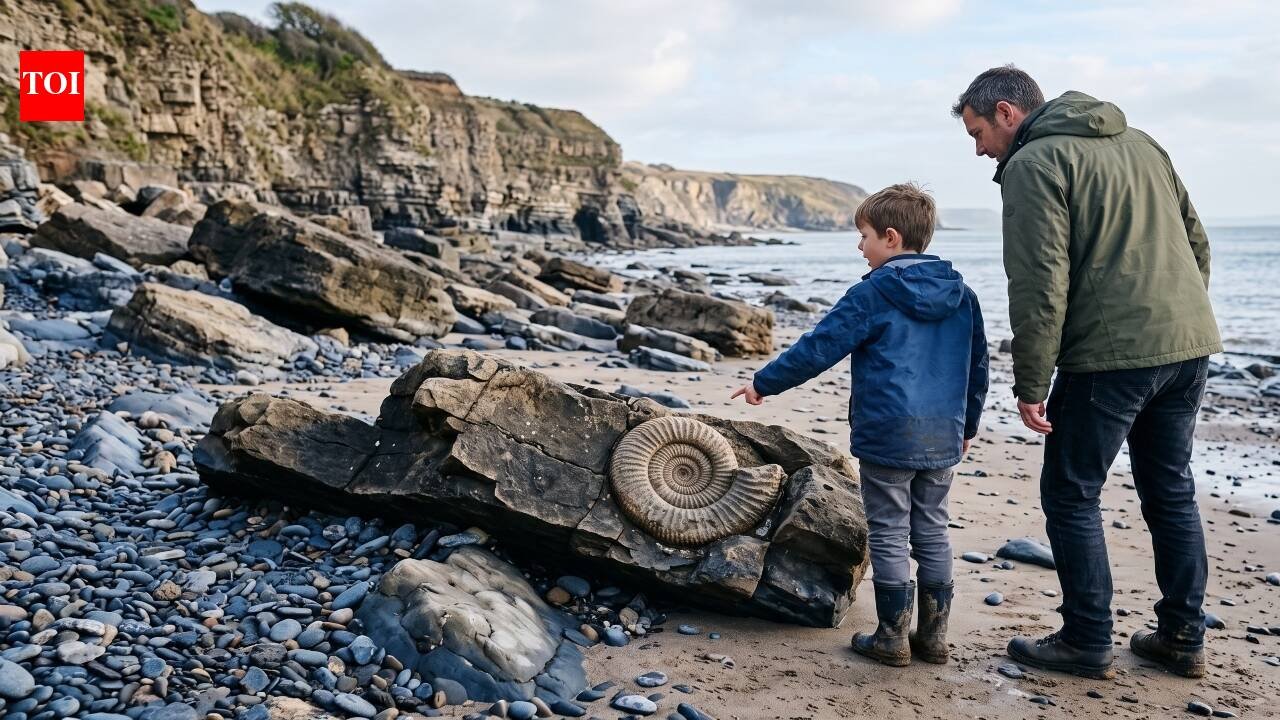
Built from layers of Jurassic mudstone and limestone known as blue lias that developed beneath a shallow tropical sea some 200 million years ago, the cliffs along Wales’ Glamorgan Heritage Coast are among Britain’s richest fossil hunting areas. Every year, rockfalls along this section of the Bristol Channel coastline reveal new fossils, drawing amateur collectors and professional palaeontologists to beaches that most tourists would pass by.By March 2023, Eli Morris was nine years old and already an enthusiastic fossil hunter who often searched the coast with his father, Glenn. The family usually went fossil hunting around Gower, and Llantwit Major was their first visit to that particular beach. The family usually went fossil hunting around Gower, where Glenn had developed his own interest in rocks and dinosaurs while growing up and later passed that interest on to Eli. The two had never actually visited Llantwit Major beach in the Vale of Glamorgan before that particular day, so Glenn later described their find there as pure beginner’s luck. Sitting on the beach rather than actively searching, Eli glanced up at the cliff face behind him, and what he saw made him freeze. The fossil turned out to be a large ammonite embedded in the eroded blue lias cliff, and Swansea University’s Dr Nick Felstead said its inner chambers had been infilled with quartz during fossilisation. He said the specimen was about 200 million years old and came from the Early Jurassic, making its size and preservation unusual for Llantwit Major.Looking up at exactly the right momentAbove him, Eli noticed a massive spiral carved into the rock, about a foot across, quite different from the loose stones at his feet. Llantwit Major is only one of many sites renowned for this sort of exposure; however, visitors are always advised to look only amongst fallen rock and not to approach the cliffs themselves, since the same erosion that reveals fossils also causes regular and occasionally fatal rockfalls, as guidance from Museum Wales makes clear to anyone planning a fossil hunting trip along that coast. Museum Wales warns visitors not to approach the cliffs because regular rockfalls have caused fatalities. Eli’s discovery was made by spotting the exposed fossil from the beach rather than by climbing or working at the cliff face.



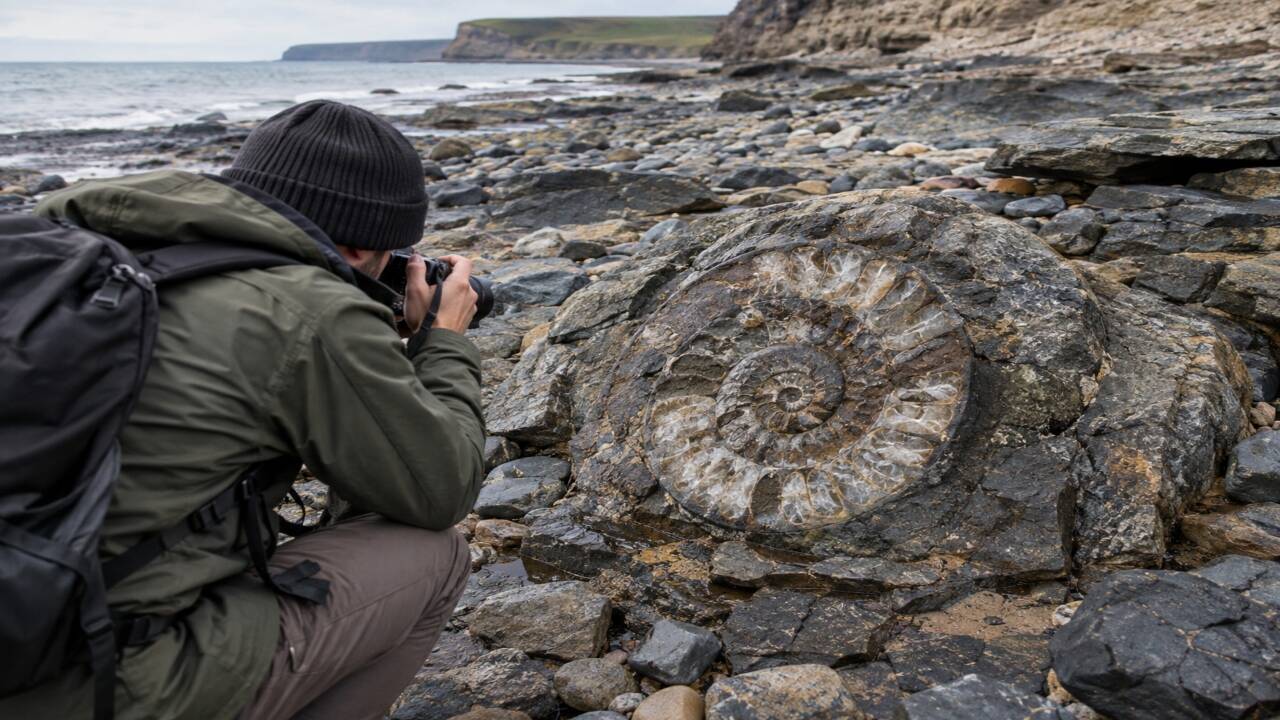
An AI-generated image showing a rare Jurassic ammonite found at Llantwit Major contains quartz-filled internal chambers that give parts of the fossil a distinctive crystalline appearance. Credits – Chat GPT
What made this particular ammonite rareDr Nick Felstead, a physical geography lecturer at Swansea University, identified the specimen as an ammonite, an extinct group of shelled marine cephalopods related to living cephalopods such as octopuses, squid, cuttlefish and nautiluses. These ammonites formerly wandered through Jurassic seas in shelled, coiled bodies. Felstead said the specimen was unusual for the area, and quartz appears to have infilled the interior chambers during fossilisation.Discoveries like Eli’s are not isolated events. The wider Glamorgan Heritage Coast, including the clifftop path officially documented by Wales Coast Path, has produced dinosaur footprints and other Jurassic fossils found by walkers of all ages recently, showing that some of Britain’s oldest evidence of prehistoric life is visible along an ordinary family beach walk. In 2021, a four-year-old girl found a 220-million-year-old dinosaur footprint on a nearby beach in Barry, and more recently a ten-year-old found a set of five footprints further along the same coastline. These finds suggest that ordinary walks along the coastline can still turn up scientifically important evidence of its prehistoric past.Eli’s ammonite, unlike the more recent footprint discoveries, preserves the shell of an animal rather than a brief trace of its movement. A footprint records a moment when an animal crossed soft ground; an ammonite shell preserves a record of growth through its expanding spiral and successive chambers. Both kinds of fossils provide evidence of animals that lived in environments that would eventually become part of the Welsh coastline. The ammonite became a notable addition to the fossil collection Eli had built from earlier outings with his father. Whether it will inspire a future in palaeontology is unknown, because by his account his primary aim still lay on a football pitch, not in a laboratory, but the fossil itself may outlast either career by another 200 million years.