Decades later, quantum mechanics and semiconductor band theory would provide the framework for explaining why materials such as galena behave differently from metals and insulators.



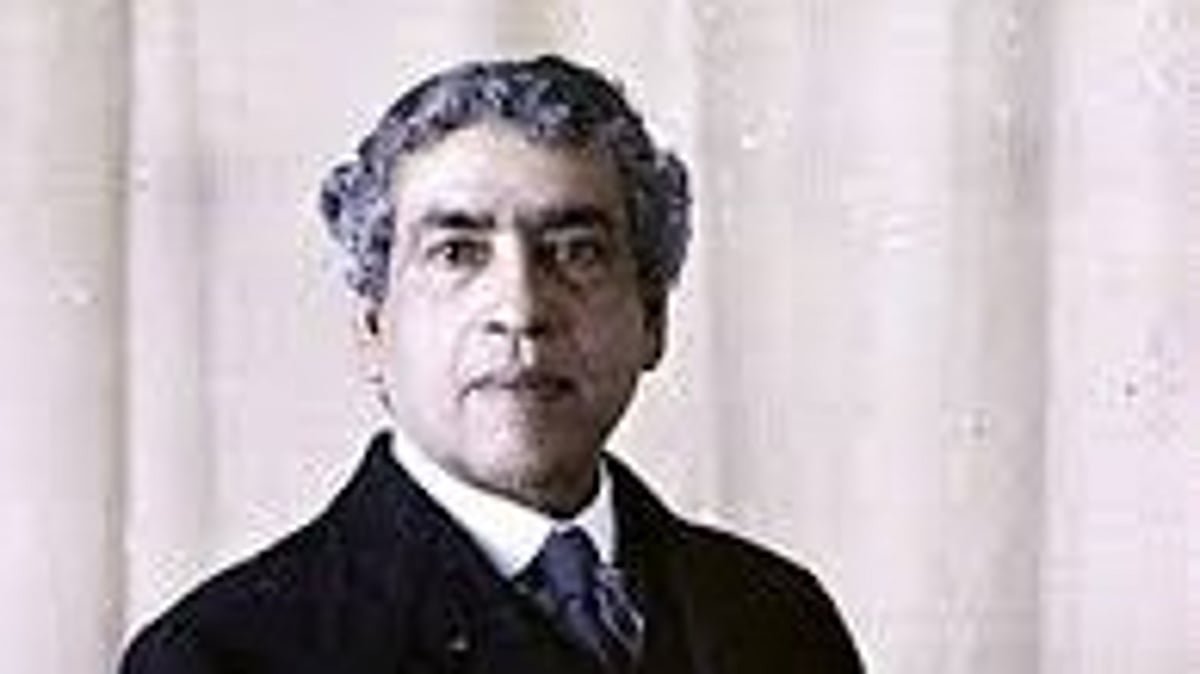
“What makes Bose’s work particularly striking is that he was working with these phenomena before the development of quantum mechanics and modern semiconductor band theory,” Dr Ramkarthik said.
Bose’s work also extended into high-frequency electromagnetic waves. His investigations into millimetre waves reached tens of gigahertz, with historical records documenting waveguides, horn antennas and semiconductor detectors operating at frequencies as high as 60 GHz. His 1895 demonstration of wireless transmission using millimetre waves came when wireless communication was still in its infancy. The principles he explored now underpin radar, satellite communication and high-speed wireless systems.
Bose’s legacy also crossed disciplines, spanning electromagnetism, materials science and plant physiology. His later experiments on plants may be better known to the public, but his work on electromagnetic waves and semiconductor detectors represents another chapter in his scientific career.
“If Bose were alive today, I do not think he would restrict himself to one field,” Dr Ramkarthik said, pointing out that Bose’s natural approach was to connect different areas and use experiments to uncover new phenomena.
Perhaps the biggest lesson is that discovery can precede explanation. Bose observed unusual electrical behaviour without the quantum theory needed to explain it. For today’s researchers in advanced materials and quantum technologies, his work is a reminder that seemingly small observations can become the seeds of new technologies, experts said.
They also point out that recognising such contributions matters beyond the research community, and that the lesser-known achievements of Indian scientists could be included in school-level science education to help students appreciate the country’s scientific legacy.