Traya Health, an Indian hair loss treatment brand combining dermatology, Ayurveda and nutrition, has released findings from a social experiment examining whether hair influences how people respond to potential partners.



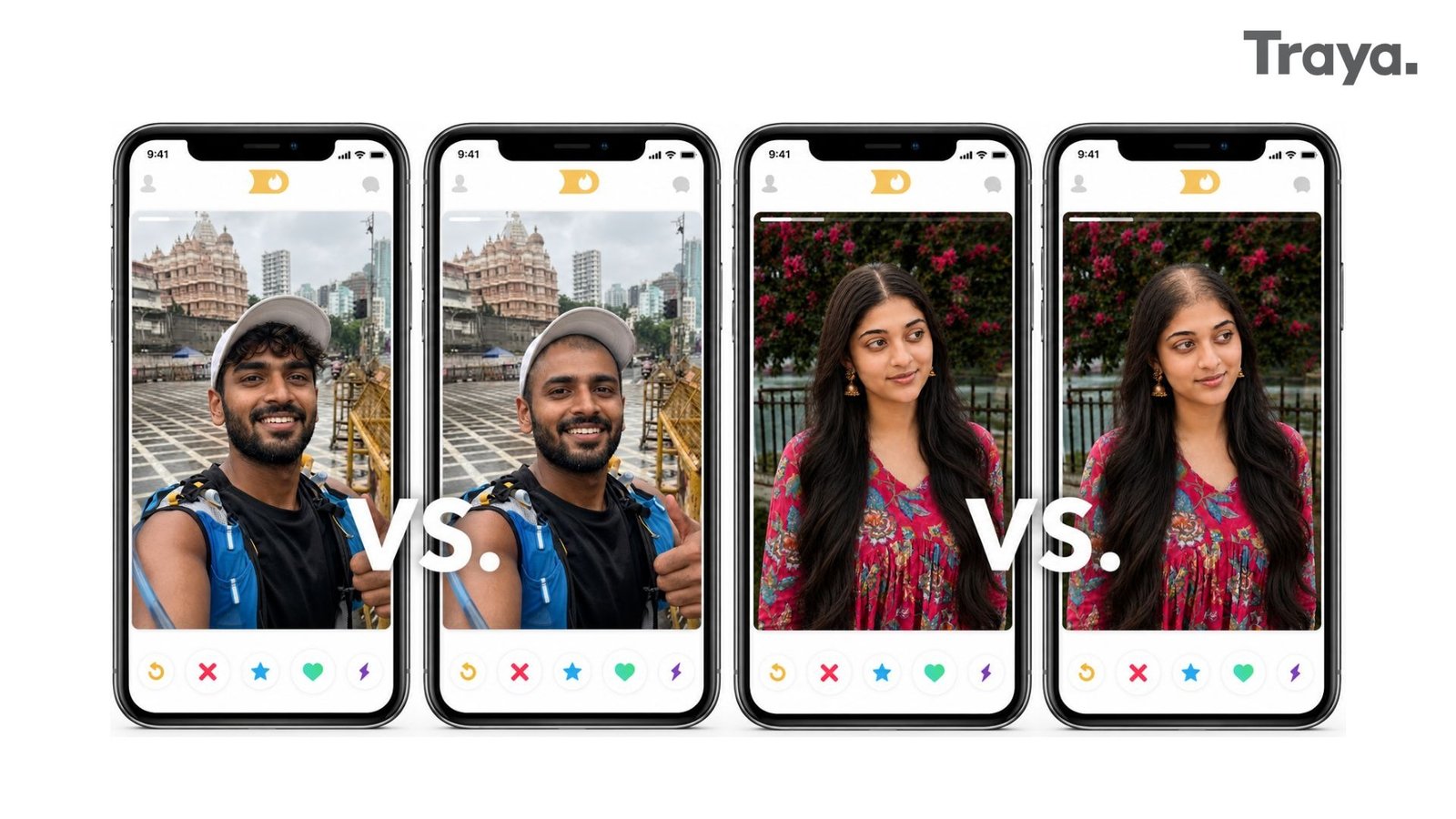
The experiment used identical dating profiles, with the same bio, prompts and base image. The only variable was the appearance of the hair. One profile featured fuller, healthier-looking hair, while the other showed visible hair loss. Traya used AI-generated images to avoid using real individuals and to isolate hair as the variable being tested.
The results showed a marked difference in engagement. The male profile with fuller-looking hair received 28 likes, while the version showing hair loss received none. For the female profile, the fuller-hair version received approximately 2,300 likes, compared with 50 for the hair-loss version.
According to Traya, the findings point to the role hair can play in forming immediate perceptions of attractiveness and appearance. The brand also draws on research examining how hair characteristics can influence perceptions of age, health and attractiveness.
Dr Rashi Soni, MBBS, Consultant at Traya, said, “Our response to hair is not limited to whether we consider it aesthetically pleasing. Hair contributes to the way we perceive a person’s age, attractiveness, and overall appearance, often as part of an immediate visual impression. This explains why changes in hair influence how someone is perceived, even before any meaningful interaction takes place.”
The brand also points to the wider relationship between hair and health. Hair loss can have several contributing factors, including genetic, hormonal and nutritional factors. Androgenetic alopecia, one of the most common forms of patterned hair loss, is associated with genetic predisposition and the sensitivity of hair follicles to androgens. Research has also examined associations between hair loss and nutritional factors such as vitamin D, iron and zinc.
Traya argues that the experiment raises a broader question about why hair can have such an immediate impact on perceptions of attractiveness. From an evolutionary perspective, some theories suggest that physical characteristics can act as visual cues that people associate with health, vitality and age, often before conscious judgement takes place.
For Traya, the findings are intended to move the conversation around hair loss beyond appearance and social perception. The brand says hair loss can be influenced by multiple underlying factors and should be understood in the context of an individual’s overall health and wellbeing.
The experiment, while limited to the profiles and engagement observed in the test, highlights how a seemingly small change in appearance can influence responses in an environment where people often make rapid decisions about potential connections.