


How illicit cultivation of cannabis has left the verdant hills of Kandhamal in the weeds
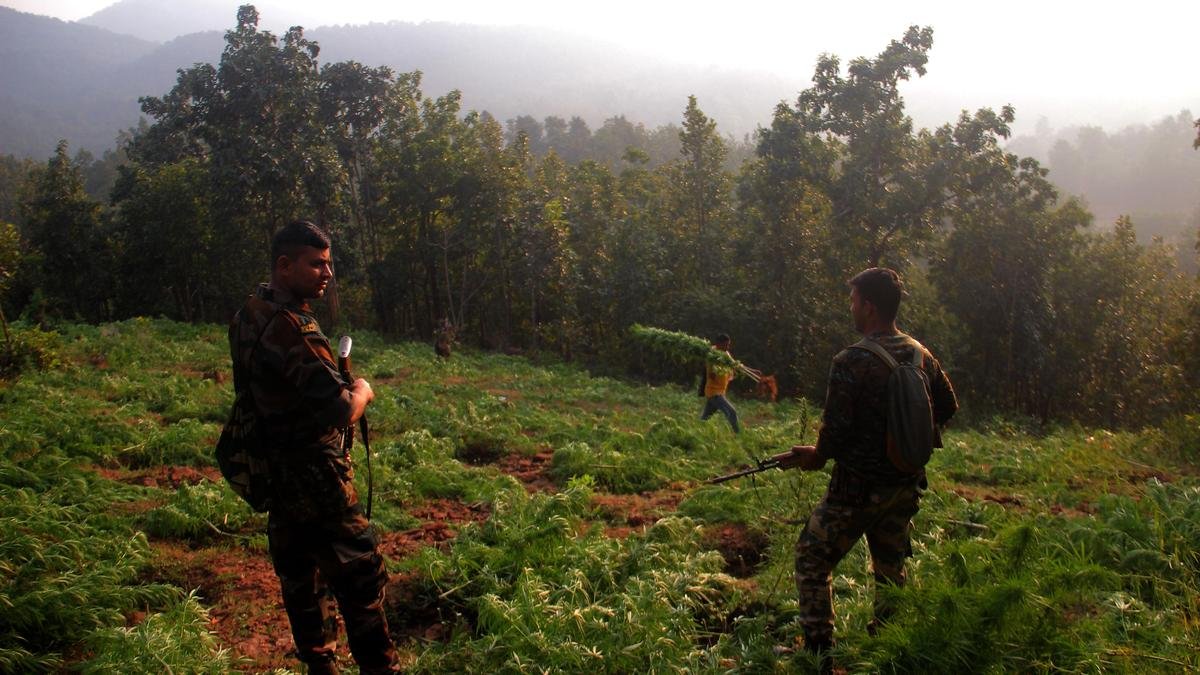
Since November, Kandhamal police have razed over 4,000 acres of such cultivation. Their action, they insist, is not oppressive but a preventive effort to choke the supply chain before cannabis (also known as ganja, marijuana, and weed) grown on these remote slopes reaches the end users in distant metropolitan cities.
Between raids and field destructions, the district administration has seized 59,068 kg of cannabis, and arrested 211 people in 185 cases in 2025 alone – the highest amount of cannabis seizure recorded by any district in the country this year.
“We have mobilised all our efforts to ensure that the ganja consignments do not leave the district and are destroyed or seized within our jurisdiction. The effort required is humongous, involving both physical and financial exhaustion. But we are up to it,” Kandhamal Superintendent of Police (SP) Harish B.C. said.
Phulbani Subdivisional Police Officer (SDPO) Subhrajit Biswal, who has been leading the teams on the ground, hopes to destroy sizeable tracts of the illicit crop before the plants begin to flower.
So, how did Kandhamal turn into a haven for illicit cultivation?
The geography and terrain of the area favour it. The remote, forested, and inaccessible areas of the district coupled with a climate well-suited for cannabis make it ideal for clandestine plantations.
Ganja cultivation is also far more lucrative than regular legal crops. It sells at around ₹2,000 per kg, and prices spike to ₹3,000 during shortage or intense police crackdowns. The crop is so lucrative that a Deputy Superintendent of Police was recently suspended over allegations of involvement in the trade.
A slice of the pie
In the past, police teams from other States have also visited Kandhamal to arrest criminals, but were found to have made attempts to take some of the seized consignments back with them, according to local officials.
“It is not easy to reach every location where ganja is grown. Sometimes the crop is found deep inside the forests, 15 km from the nearest road, requiring hours of trekking. There is a huge cost attached to the mission of uprooting these plants,” said Mr. Harish.
Police sources added that the outlawed Communist Party of India (Maoist) also extends patronage to the illicit cultivation.
Although the police and the Excise Department have deployed drones to detect illegal plantations, growers have adopted a new strategy by reducing patches to fewer than 150 plants and camouflaging them under the tree cover to evade satellite and drone imagery.
Identifying the financiers behind the cultivation is even more challenging. These funders employ villagers to grow the crop, keeping their own identity hidden.
This year, the police have begun targeting those who bankroll the plantations by running crop raids and criminal investigations simultaneously.
The crop is often grown on forestlands, which belong to the Forest Department, and establishing ownership and bringing the culprits to investigation is always a challenge. “Investigators often face difficulties in making financiers, transporters and arms dealers tied to ganja networks prosecutable. To establish a financial trail, it requires a specific skill set,” the Kandhamal SP said.
To detect, discourage
In Boudh, the police found a person whose account transactions ran into crores of rupees. But the accused person did not have any discernible business to back his income source. The case was referred to the Income Tax Department for further investigation.
To discourage villagers from growing cannabis, the police have mooted the idea of engaging them in other crops such as fruits, spices, high-value vegetables, beekeeping and agroforestry through the government’s rural employ- ment guarantee scheme during the sowing and harvest windows. A robust value-chain system could also help these farmers, the police suggest.
An official, who has been part of intelligence gathering and surveillance, said it is ironic that in Kandhamal, whose indigenous turmeric has received a geographical indication tag for its medicinal value, villagers have turned to ganja cultivation. Even though villagers participate en masse in the illicit farming, the police tread cautiously. “Antagonising villagers is the last thing on our minds,” said an officer.
Published – December 16, 2025 01:42 am IST
Discover more from News Link360
Subscribe to get the latest posts sent to your email.