

Kanpur Nagar: A local mill that runs on trust and routine
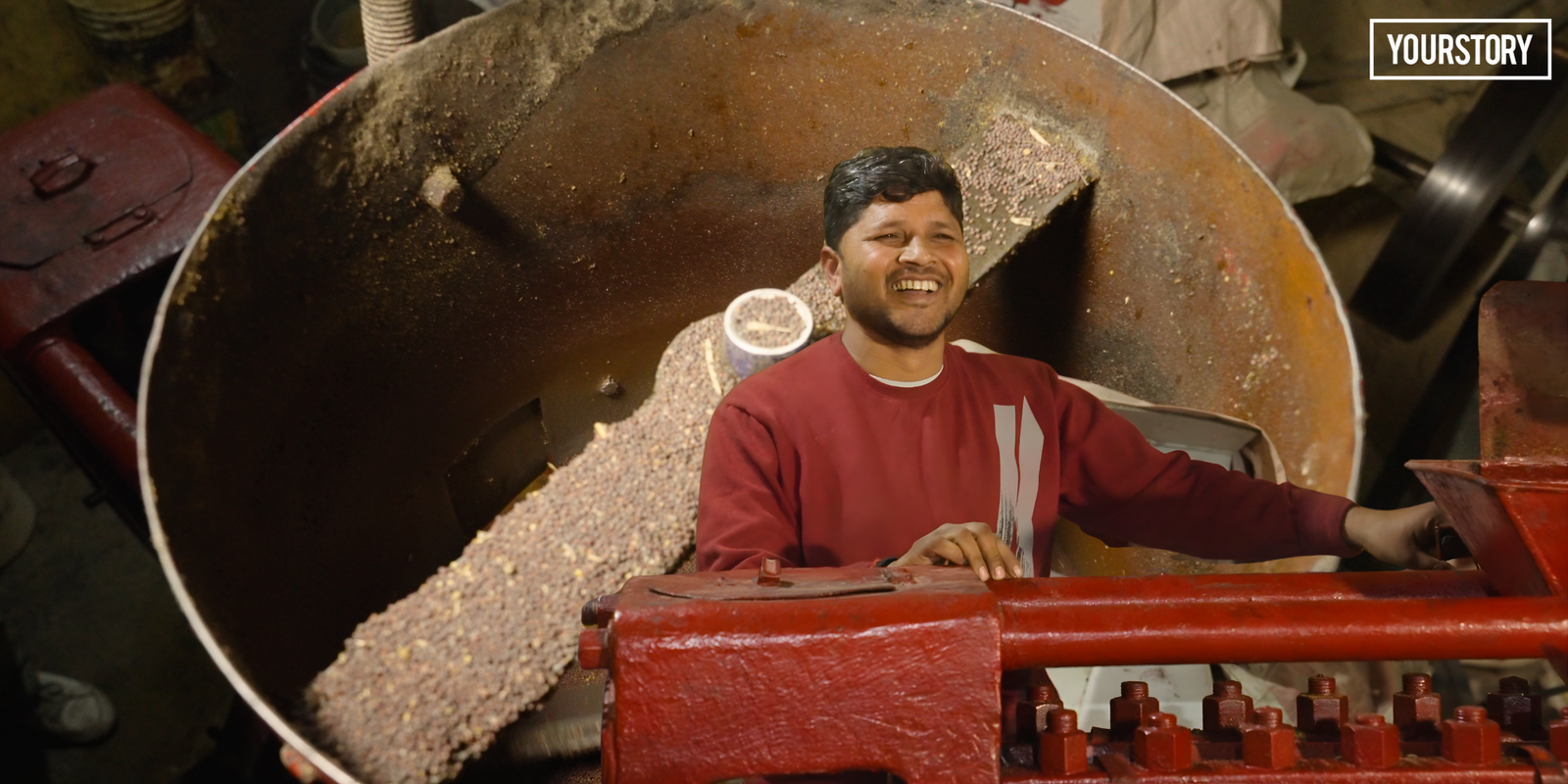
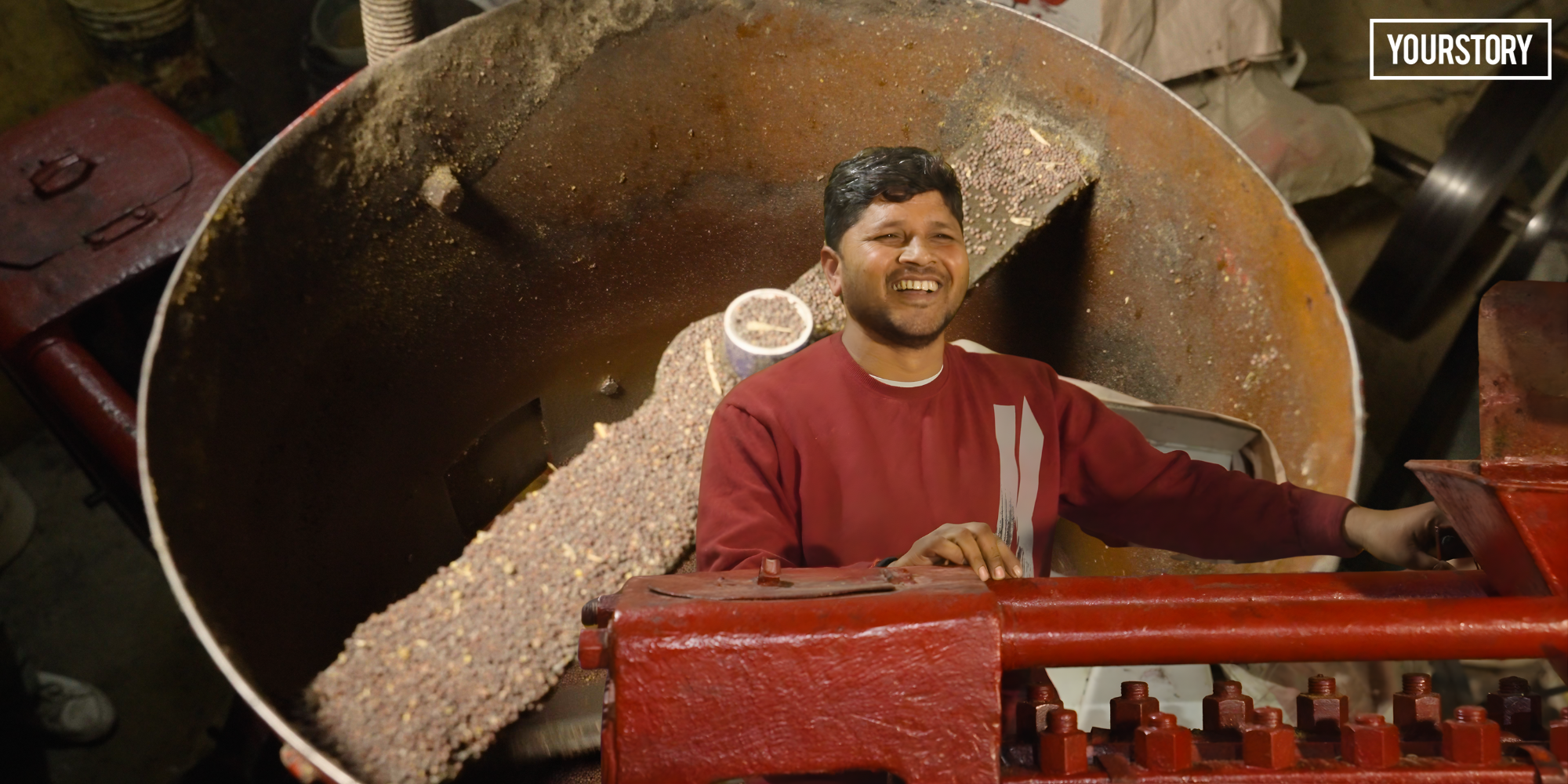

Pal’s setup handles two main tasks. One is grinding wheat into flour for customers who bring their own grain. The other is extracting mustard oil for farmers who bring their harvest to be pressed. Both processes depend on machinery that needs consistent power, something that is not always guaranteed in a village setting, so he has arranged options that can run on electricity or an engine.
Service before scale
At the mill, the transaction begins outside the business, in the fields and homes of the people who come to him. Farmers and local residents bring in sacks of wheat, and the work is to return it as usable flour, charging a fee for grinding, rather than selling a finished product of his own.
Pal describes the operation in practical terms, focusing on time and output rather than big margins. For a small machine, he says, grinding a quintal of wheat into flour that is “fit to eat” can take around an hour, especially if the customer expects a finer, more even result. Larger automatic machines can do it faster, but the expectation in his unit is not speed at any cost. It is consistency, and the assurance that the grain handed over will come back as flour that the customer recognises.
This is why his demand remains tied to the rural belt around him. He does not speak of retail expansion because, in his model, the customer is also the supplier, and the mill’s role is to process what arrives at the door.
Adding oil to the routine
While the atta chakki’s output has remained steady for years, the oil press is a recent addition. Pal says he took a loan after hearing that support was available for young entrepreneurs, and used it to install an oil machine and an engine so the work would not stop when electricity fails. He mentions receiving assistance of Rs 30,000 for setting up the machine through the Mukhyamantri Yuva Udyami Vikas Abhiyan (CM YUVA) Yojana.
The oil process mirrors the flour work in one key way: he does not stock and sell oil in the market. Farmers bring mustard, he presses it, and returns the oil to them. What remains is khali, the leftover cake, which customers use as cattle feed, in fish farming, or as a soil input in fields.
Asked how the support changed his working life, Pal keeps it modest: “After the loan, the work has been running fine.”
A small business, steadier ground
Pal is clear that moving to a larger, packaged operation would require more capital, especially as the cost of raw materials continues to rise. For now, his business stays rooted in what his customers already trust him to do: process their grain and oilseed reliably, day after day. In that routine, the early need for financial help has given way to something quieter, a mill that runs with fewer stoppages and a household that can plan around a more stable income.
Discover more from News Link360
Subscribe to get the latest posts sent to your email.