

GRAP-IV in Delhi: what is allowed and what is banned in the Capital as toughest anti-pollution measures kick in?
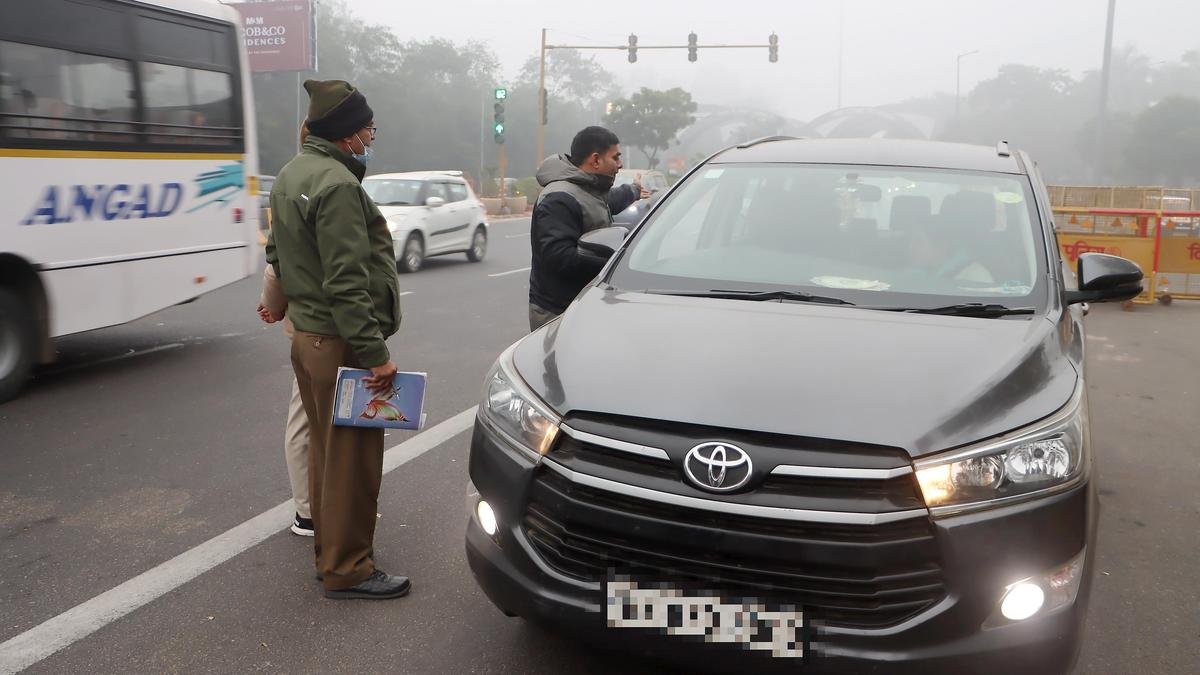
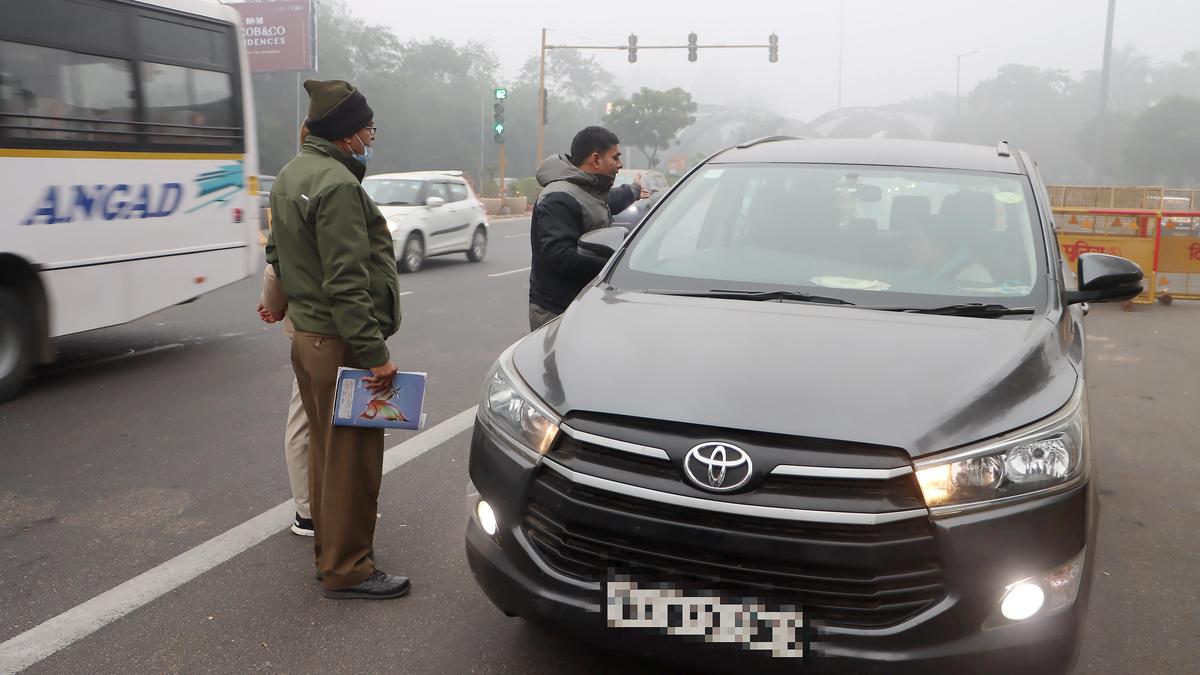
Traffic police personnel stop a vehicle for document verification at the Delhi-Noida Chilla Border, in New Delhi, on December 18, 2025.
| Photo Credit: PTI
Stage IV of Graded Response Action Plan (GRAP) brings the strictest restrictions in Delhi-NCR. This is in addition to the actions under Stages I, II and III of GRAP already in force by the Commission for Air Quality Management (CAQM).
The air quality in the national capital remained in the ‘very poor’ category on Thursday (December 18), with the air quality index (AQI) recorded at 358.
Here’s a list of what stands banned
Entry of non-Delhi private vehicles below Bharat Stage-VI, or BS-VI emission standards. BS-VI standard fuel is said to be the world’s cleanest fuel. Exceptions are those carrying essential items or using clean fuel (LNG/CNG/BS-VI diesel/electric).
Vehicles without a valid Pollution Under Control (PUC) certificate will not be allowed to refuel at petrol pumps in the national capital, starting Thursday (December 18).
Non-essential light commercial vehicles registered outside Delhi will also be prohibited, except for EVs and CNG and BS-VI diesel ones.
Vehicles carrying construction materials are also not permitted to enter the city.
All construction and demolition activities are banned, including even linear public projects such as highways, roads, flyovers, power transmission lines, pipelines and telecom works, which are otherwise allowed in lower stages.
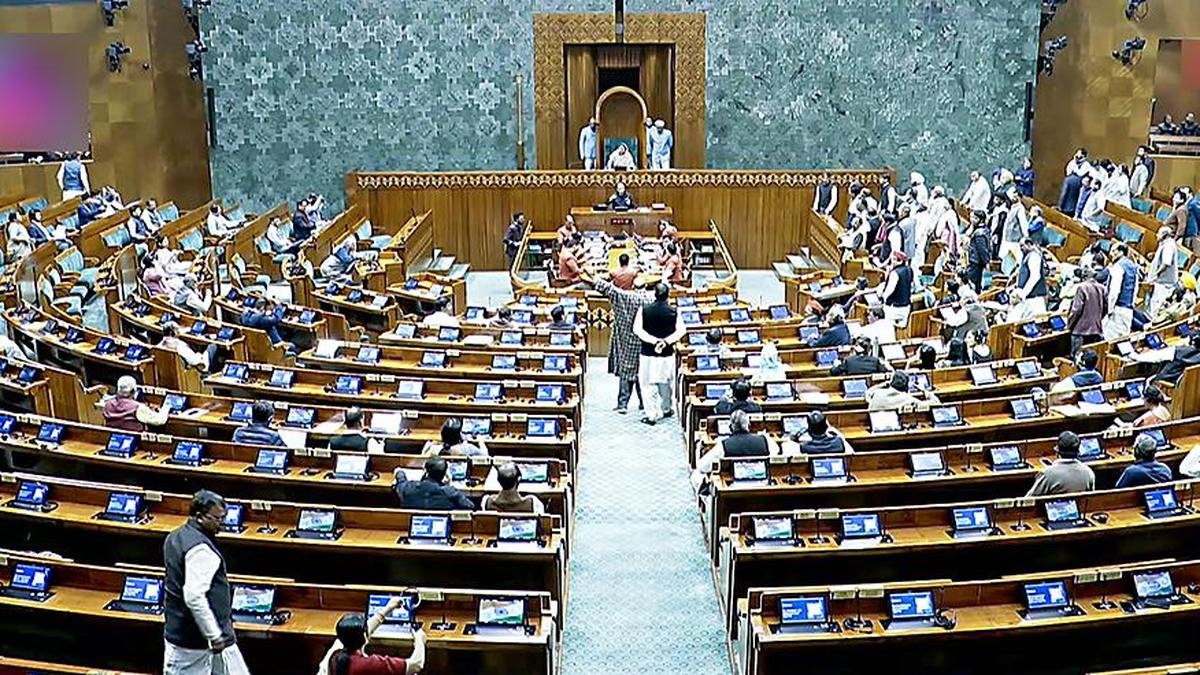
All government and private establishments are required to operate with only 50% staff in offices, as the Delhi government has a standing order mandating this whenever GRAP Stage III is invoked.
Schools are required to run classes in a hybrid mode (online and physical) not only for primary students but also for higher classes (VI to IX and XI) in Delhi, with students given the option to attend online where feasible.
Generally under Stage IV, the governments are asked to consider additional emergency steps, such as closing colleges and educational institutions, shutting non-essential commercial activities and even introducing odd-even rules for vehicles if the pollution situation worsens further.

Now, here’s a list of what is allowed
Emergency services and essential operations will not be affected by the ongoing enforcement measures on petrol and CNG vehicles in Delhi. These include hospitals, fire services, public transport, electricity, pollution control departments, the Forest Department and the Delhi Jal Board.
Professionals and staff workers involved in the said emergency/essential services will be exempt from the work from home rule.
Labour and Employment Minister Kapil Mishra on Wednesday (December 17) announced a one-time compensation of ₹10,000 for 2,57,244 registered construction workers who lost income due to the suspension of construction and demolition activities under Stages III and IV of the Graded Response Action Plan (GRAP).
Published – December 18, 2025 11:18 am IST
Discover more from News Link360
Subscribe to get the latest posts sent to your email.