



Inside India’s growing whole food plant-based movement
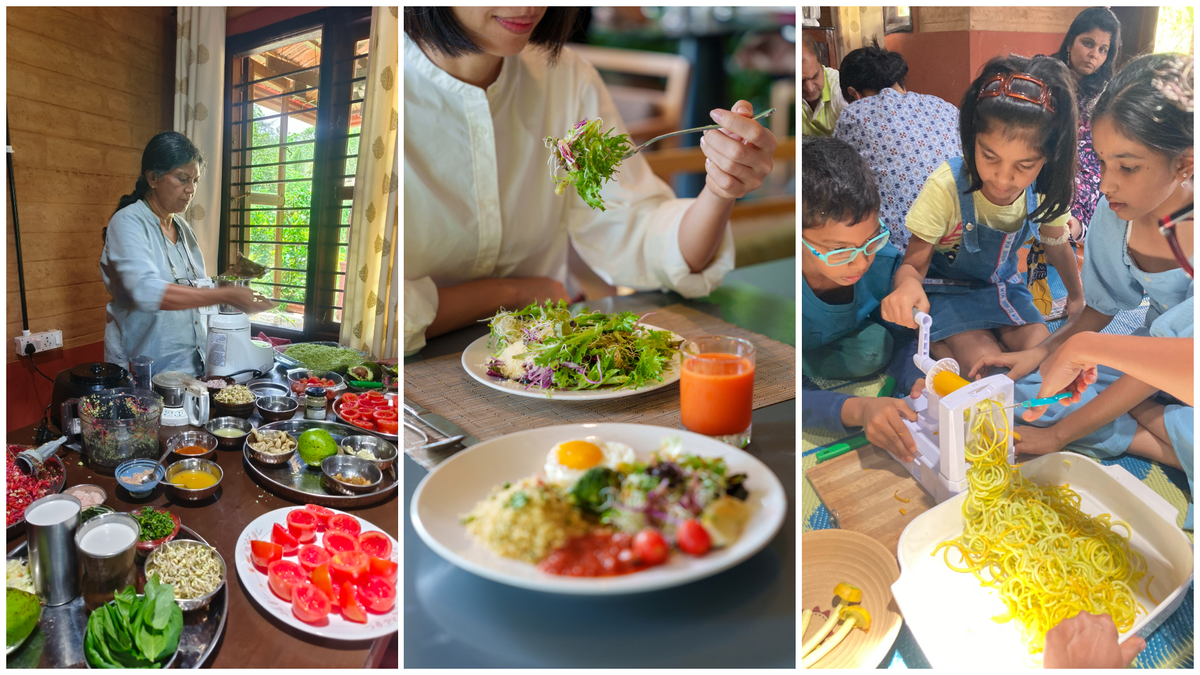
Bengaluru-based entrepreneur Deepali Gaonkar was introduced to this lifestyle five years ago when she attended a webinar by Poshak Life, a Pune-based organisation founded by nutritionist Saee Bapat that offers holistic nutrition and wellness coaching. “I joined a 21-day challenge and that’s where the journey truly began,” says Deepali, 53, who later joined Poshak Life as co-founder and now crafts the brand’s snacks.
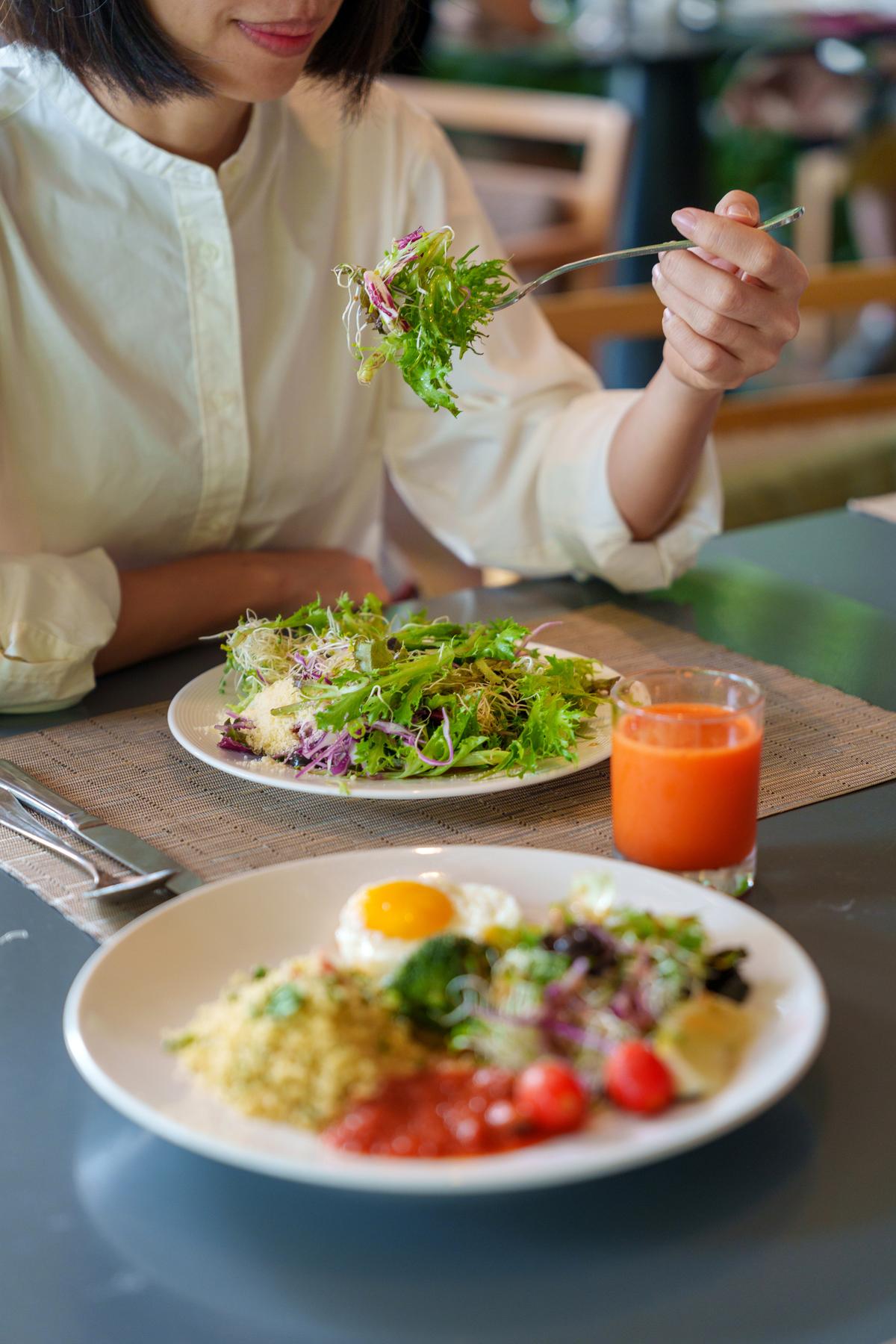
The core idea of the WFPB diet is to eliminate “the five whites”
| Photo Credit:
Thai Liang Lim
Start in the kitchen
The core idea of the diet, she says, is to eliminate “the five whites”: replace white rice with unpolished rice, dairy milk with plant-based milk, refined flour with native whole grain flour, white salt with sea salt or Himalayan pink salt, white sugar with natural sweeteners, and refined oil with whole fats from seeds, nuts, coconut, and avocado. “My kitchen has access to ripe fruits, a variety of seasonal vegetables, coconut, unpolished rice, unrefined flours, and regular Indian spices. For special occasions, I use cashew cheese or almonds but that’s not regular food. Daily meals don’t need anything fancy,” says Deepali.
The movement has followers across India. In Bengaluru, yoga and naturopathy physician Achyuthan Eswar launched Sampoorna Ahara in 2019. “After every workshop, people would ask us if someone could home deliver WFPB food, and since then we have delivered over 2.5 lakh meals across India,” he says, adding that they supply comprising ladoos, murukkus, gravy mixes and more.
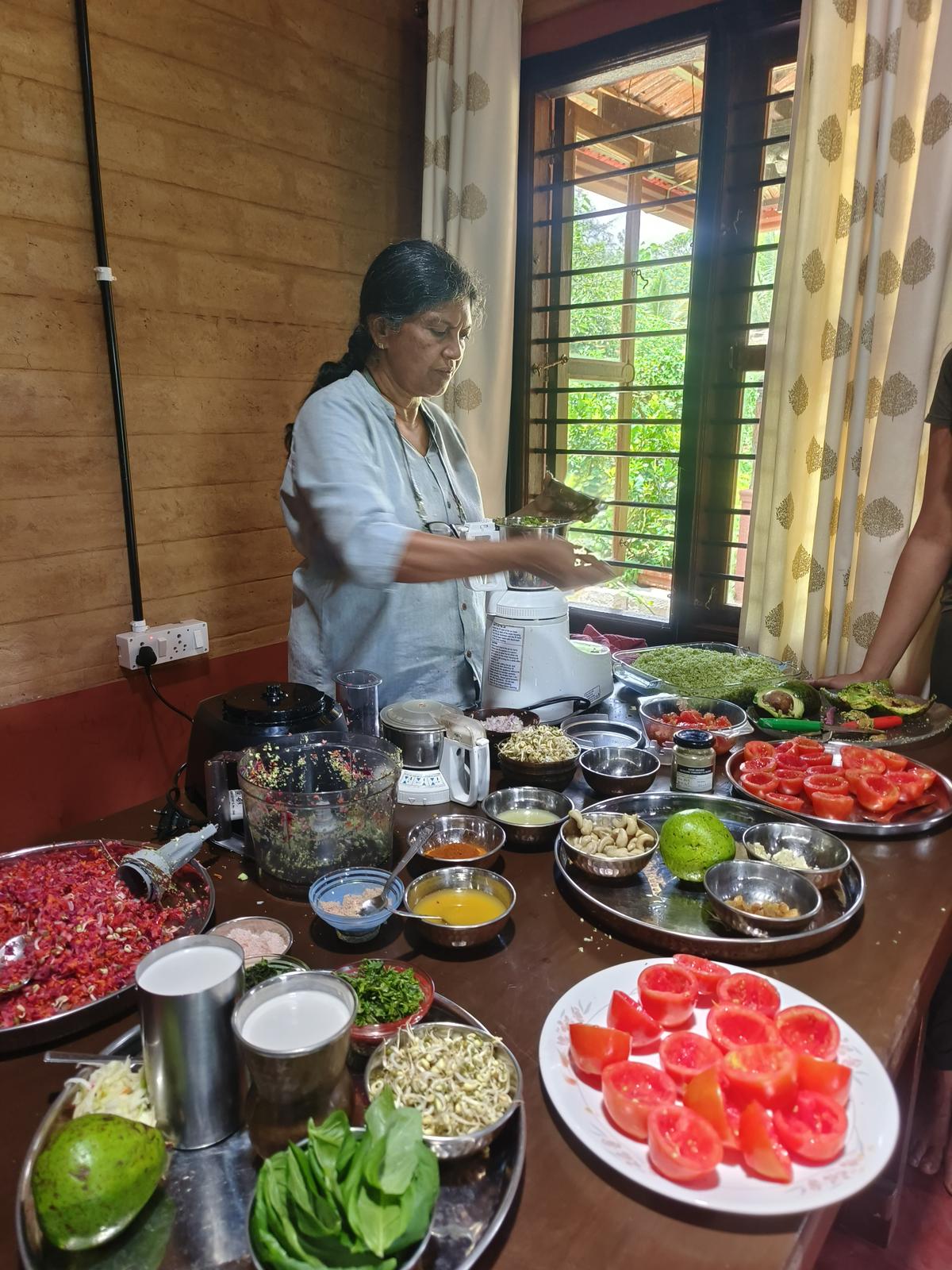
A snapshot from the Let Food Be Thy Medicine workshop
| Photo Credit:
Special Arrangement
Natural farmer, Merwin Fernandes — who runs the Savera Naturals farm in Sakleshpura — runs four-day workshops titled Let Food Be Thy Medicine, which comprise theory and practical demos coupled with yoga. The 66-year-old says he switched to a WFPB lifestyle in 2017. “Previously, I wouldn’t step into the kitchen. Now I make my own salads, desserts, etc. I don’t need alcohol to socialise which was unthinkable earlier. I feel more energetic and healthier at 66 today than in my 50s,” says Merwin.
How to bake a whole wheat cake
Chefs like Anuradha Sawhney are finding creative ways to work with whole foods. Anuradha headed People for the Ethical Treatment of Animals (PETA) for over nine years and started a WFPB kitchen, Back to the Basics, after she retired. “I transitioned to a vegan bakery where we use only whole wheat, jaggery, dates, bananas, sorghum, brown rice and other millets to make cakes. I also started Bombay Cheese Company, and my latest offering is mithai,” she says.
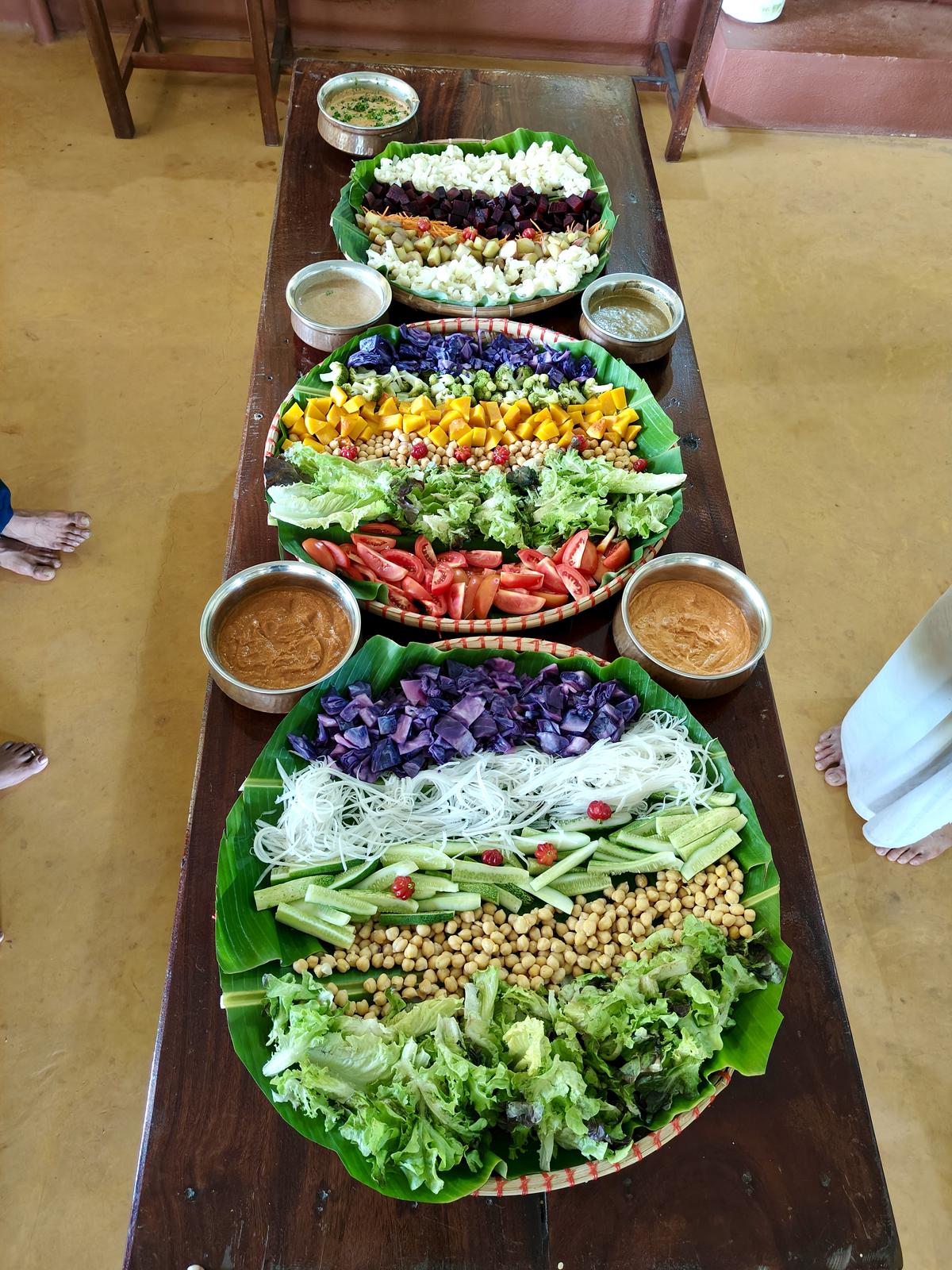
Food at the Let Food Be Thy Medicine workshop
| Photo Credit:
Special Arrangement
The distinction between vegan and WFPB is an important one, “and one that many people are still learning about”, says Nidhi Nahata who runs JustBe, a WFPB cafe in Bengaluru. “Vegan, vegetarian, and plant-based diets all stem from ethical and health-conscious choices. But WFPB diets go a step further. It is about eliminating not just animal products, but also oil, white flour, refined sugar, and highly processed ingredients. That said, I also recognised the importance of being inclusive. At Justbe, we offer both vegan and WFPB options,” says Nidhi.
Nidhi’s says training chefs is challenging. “Most are trained in the belief that flavour comes from fat: oil, butter, cream. But when they begin experimenting and tasting, they are amazed,” says Nidhi. The menu includes Parthewali Gully, a lasagna that uses vegetables instead of pasta sheets, kali dal that is rich and creamy without dairy, and gluten-free pizzas made with nut-based cheeses. She adds, “Most people equate a good meal with feeling full to the point of heaviness. WFPB food nourishes you; it fills you up without weighing you down.” .
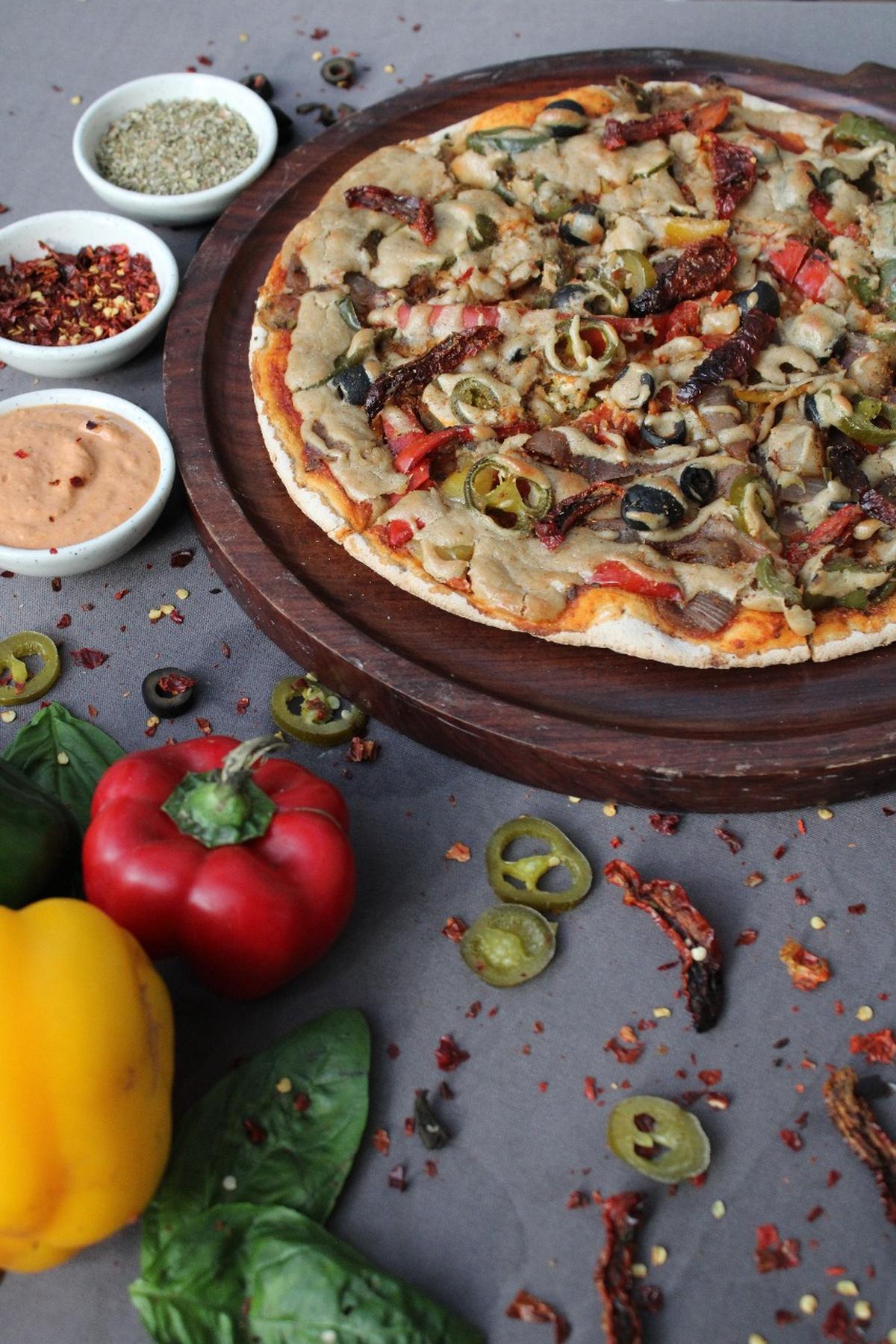
A pizza at JustBe
| Photo Credit:
Special Arrangement
Given that these diets are not as mainstream yet, social situations, dining out and travelling can be challenging. Neelima Sriram, a chef and recipe developer currently based in Almaty, Kazakhstan, from where she conducts online and offline classes says she follows the 80-20 rule. “Which means I don’t hesitate to order vegan food but I make sure to pick healthier options and I also carry a few basics like roasted seeds, trail mix, or a quick khichdi mix. At restaurants, I ask for simple customisations: steamed or lightly sautéed veggies, or salads with lemon. And when I’m invited to someone’s home, I usually take along a WFPB dish to share.”
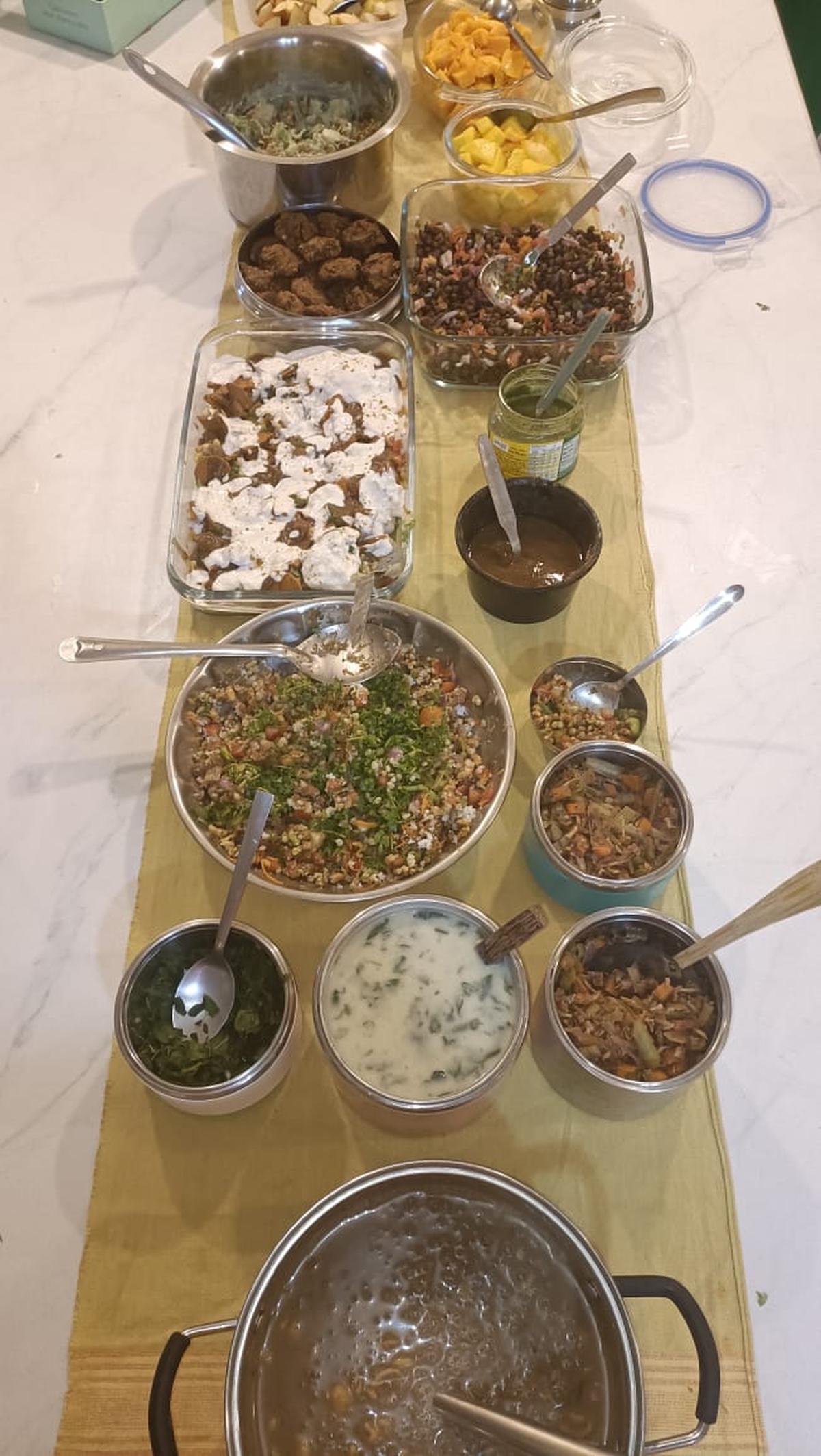
Food at a Poshak Life potluck
| Photo Credit:
Special Arrangement
What do doctors say?
However, swapping biriyani for a millet cake is not a magic solution. Dr. Lakshmi Sundar, President, Indian Society of Lifestyle Medicine, says that “While it is a healthier approach to living, I cannot follow it 100%. There are times I have a samosa or a vada, and that is alright which is something I tell my patients too,” she says. “I ask them to first increase the quantity of vegetables on their plate. If they feel like indulging in say, a biryani, I tell them to have a smaller portion and pair it up with a vegetable,” adds Dr Lakshmi who is also pushing for policy-level changes with the government. Lobbying for subsidised vegetables for the poor, for instance.
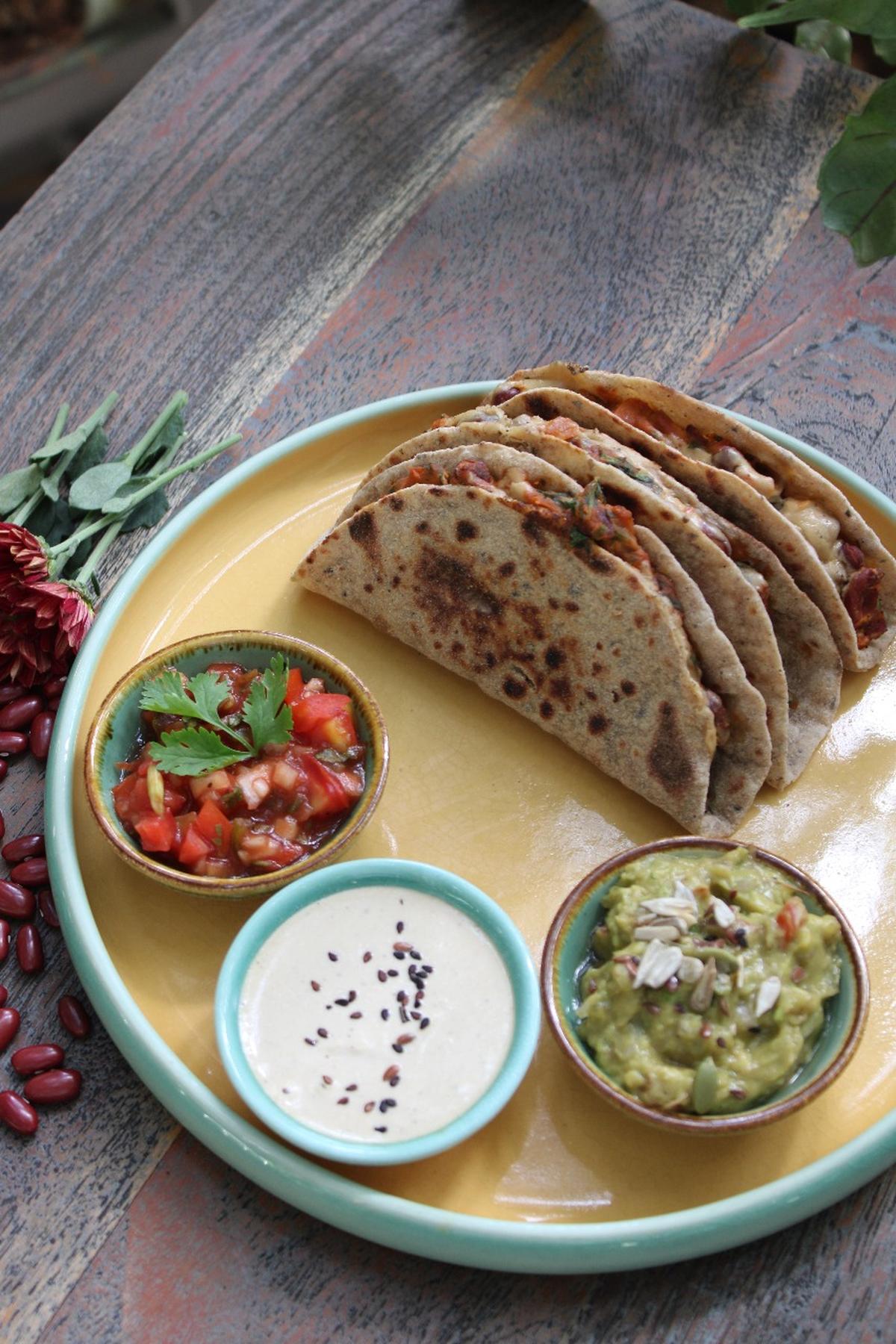
Food at JustBe
| Photo Credit:
Special Arrangement
Dr Rajeena Shahin, Medical Director for the Physicians Association for Nutrition (PAN) India, notes that nutrient inadequacy can exist if diets are poorly planned. “Plant-based diets can fall short in nutrients like B12, iron, zinc, iodine, and omega-3s, but these gaps are addressed through mindful planning, fortified foods, and targeted supplementation,” says Rajeena, who has trained nearly 10,000 doctors to integrate evidence-based nutrition interventions into clinical practice through Continuing Medical Education (CME) programmes and conducted workshops in medical colleges and AIIMS institutions.
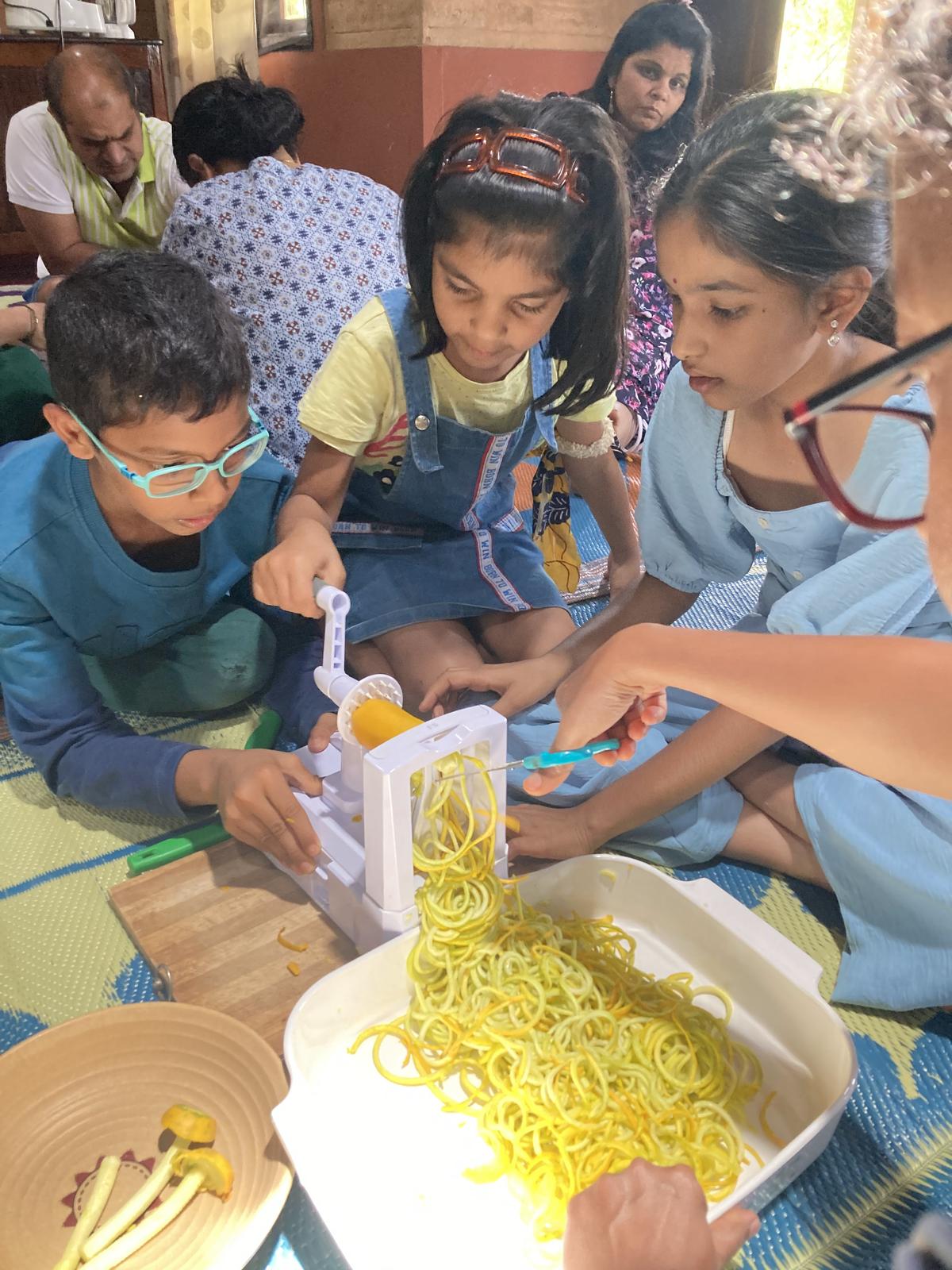
A snapshot from the Let Food Be Thy Medicine workshop
| Photo Credit:
Special Arrangement
Dr Rajeena also explains that certain medical conditions and medications may require modifications. “For example, individuals with chronic kidney disease may need to monitor their intake of potassium, phosphorus, and certain plant proteins. People on blood thinners may need to maintain consistent vitamin K intake, which is abundant in leafy greens. Those with digestive disorders might initially need a lower-fibre approach.”
If you cannot make the switch, even small swaps are beneficial. Dr. George Thomas, an orthopedic surgeon and independent practitioner, says that while a vegetarian or WFPB diet is healthier, it is not possible for everyone to follow. “Our body needs essential amino acids, the building blocks of protein, that it cannot produce by itself, and therefore depend on our diet to supplement us. Animal-based foods are the easiest source of these amino acids. It is possible to meet the requirement in a vegetarian diet, but it is expensive,” he says, adding, “One needs to be practical.”
Discover more from News Link360
Subscribe to get the latest posts sent to your email.