

Brewing for profitability: Inside Third Wave Coffee’s FY2026 playbook
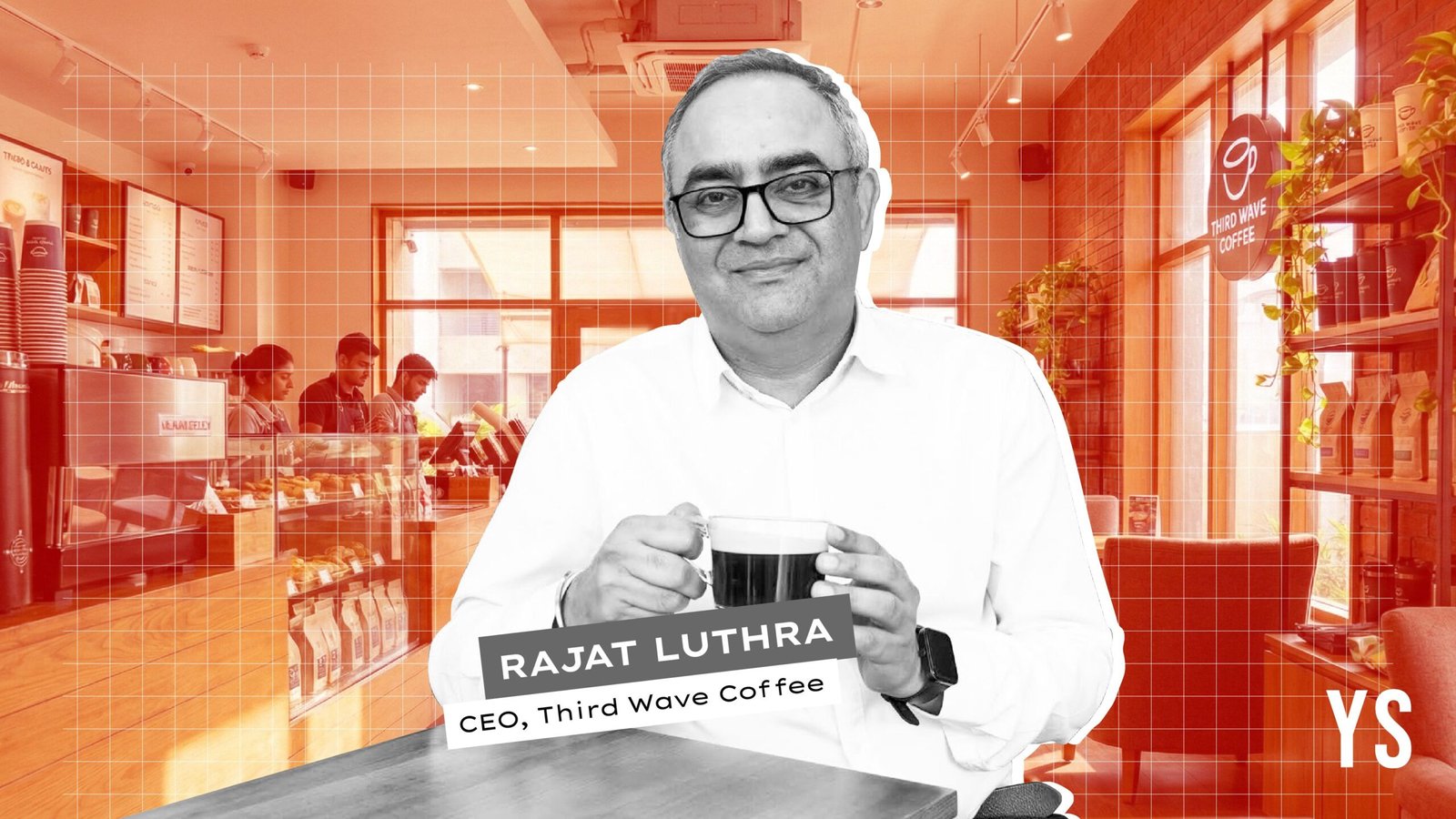
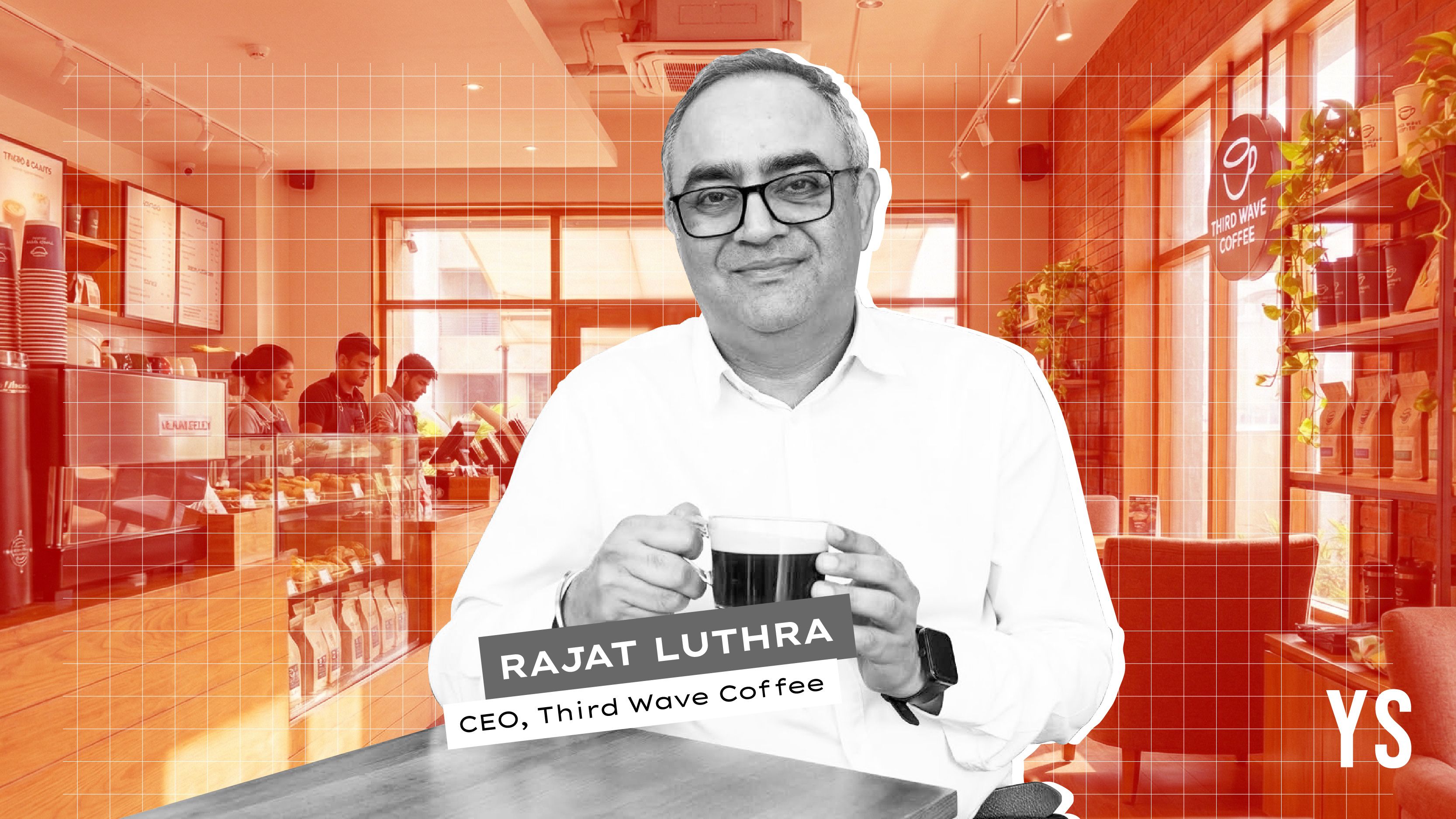

As The Captable earlier reported, around 70% of the Bengaluru-based coffee brand’s retail outlets were operating at a loss.
Almost one and a half years since he joined the brand, Luthra believes that what Third Wave required was unit economics and an ‘obsession’ around making sure that every store that the brand opens is profitable, he said during an exclusive call with YourStory.
Previously serving as the CEO of Debyani International for KFC India and Nepal, Luthra joined Third Wave in March 2024. Since then, the company has doubled down on profitability-led growth.
With 200 stores across India, Third Wave is now gearing up to add another 100 cafes in FY2026. Its expansion strategy is anchored in unit economics, backend readiness, a calibrated city-by-city expansion plan, and strengthening of its retail portfolio through easy-to-brew coffee bags, signature blends, brewing equipment, and curated merchandise.
The brand is currently growing at 45% year-on-year.
Making scale work
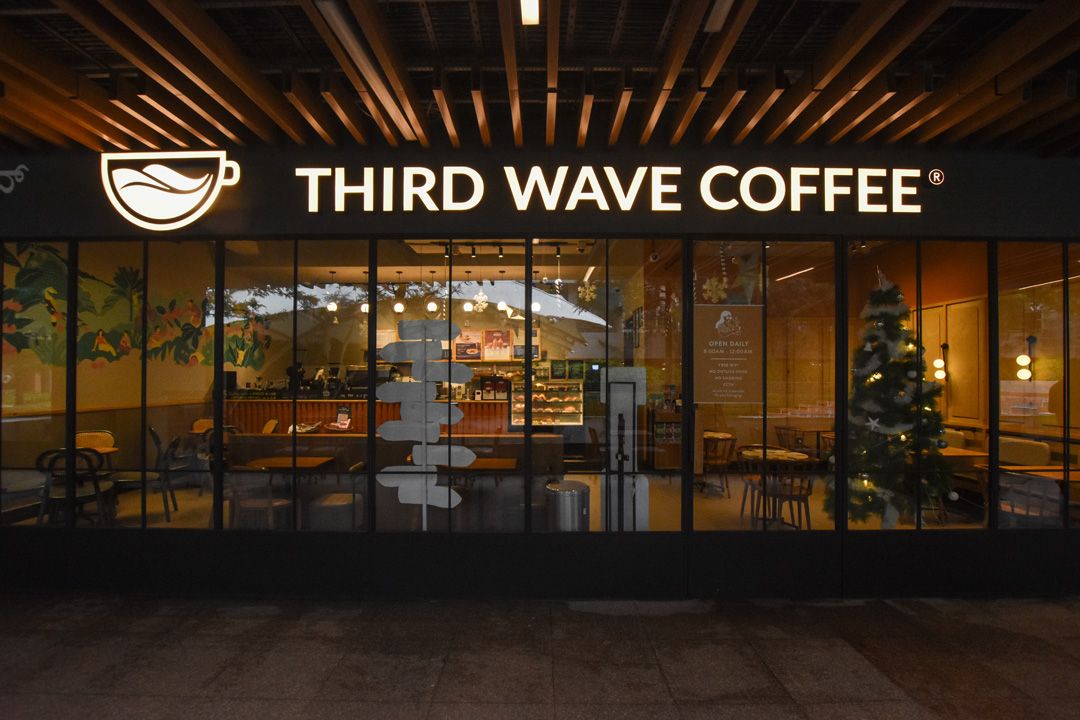
Third Wave Coffee Roasters opened around 100 stores last year, but Luthra is clear that growth for its own sake is not the objective. While the brand already enjoyed strong customer love and traction, what was needed was financial discipline across stores, operational efficiencies, and capital optimisation.
That discipline is now visible in how the company builds and operates its cafes.
“We deliver stores within 35 to 40 days from ground-break, which is far better than what we used to have earlier,” he notes.
This, Luthra suggests, was achieved by building more disciplined teams, expanding the contractor base, and investing in a strong in-house design team to ensure consistency and avoid delays.
The emphasis is on consistency across the system.
“A lot of work went into ensuring consistency, financial discipline, operational efficiency, and capital optimisation across stores.”
But is scale more important than profitability? We ask.
“Both are equally important,” Luthra says. “If you scale without unit economics, it can become difficult over time, unless you’re very clear that losses are part of a defined gestation period. Scale is important because everything you do has to be thought through a lens of scalability…Everything has to be balanced”
At present, it takes a Third Wave Coffee four to six months to reach breakeven at the unit level, and almost a year to reach 16 to 18% EBITDA at the unit level, Luthra said.
Expansion strategy
While Third Wave’s origins lie in Bengaluru’s urban neighbourhoods and its initial expansion focused on premium localities across Tier I cities, the company is now firmly focused on Tier-II expansion. Cities such as Mysore, Chandigarh, Mohali, Mangalore, and Ahmedabad are already part of the network, with more to follow in FY2026.
“The positioning of the brand has remained the same—premium and artisanal coffee, and through a lens of sustainability,” Luthra said. “That doesn’t change whether we are in Bengaluru or Mysore.”
What does change, however, is how the brand adapts locally.
“There is a 10–20% change in the menu where we can connect with the customers, but sustainability and ethical sourcing still remains a part of our overall DNA,” he explained.
Ahmedabad offers a clear example.
.thumbnailWrapper{
width:6.62rem !important;
}
.alsoReadTitleImage{
min-width: 81px !important;
min-height: 81px !important;
}
.alsoReadMainTitleText{
font-size: 14px !important;
line-height: 20px !important;
}
.alsoReadHeadText{
font-size: 24px !important;
line-height: 20px !important;
}
}

“It took us six to seven months doing market visits and focus group discussions to understand what customers want, especially around food,” Luthra said. “In India, even for a coffee-first brand, food is extremely critical.”
The findings shaped the menu mix. “There is a lot of eating out that happens after dinner (in Ahmedabad)…so there’s a lot more play on the desserts there,” he says, adding that the brand has also introduced combo deals in the menu since Ahmedabad has a strong culture of group dining.
City selection itself follows a data-led and logistical logic.
“We follow a cluster-based approach,” Luthra said, noting that Ahmedabad (along with Surat and Vadodara) could become “a 15–20 store market over one-and-a-half to two years ,” he says, while Chennai, with seven to eight outlets presently, could scale to “a 30–40 store market over a period of time.”
Third Wave is also clear about token entry. “We do not go with single store cities,” Luthra says, adding that factors like consumption patterns and real estate are also considered before entering new markets.
Behind the scenes
Over the past year, Third Wave Coffee Roasters has been strengthening its backend to prepare for faster expansion. With an expanded and automated roastery in Bengaluru, the company has upgraded its roasting capacity to support up to 700 cafes.
While Luthra refused to share the exact investment, he said that it has been a “Huge investment…It is among the largest roasting setups in the country today.”
The focus, he said, has been on building systems that prevent operational bottlenecks as the store count grows. “When you move from 200 stores and plan to add 100 stores every year, these fundamentals have to be strong,” he explained. “The idea is that our focus should be on entering new cities (and executing at the store level), not firefighting backend issues.”
Alongside its café business, packaged products are emerging as a key pillar of Third Wave’s FY2026 strategy. “There is a huge runway in the category for us,” Luthra says.
As the cafe footprint expands, brand awareness is already translating into demand beyond stores. “We saw this clearly in Ahmedabad, many customers were already familiar with Third Wave through visits to Bengaluru or Mumbai,” he said.
With at-home consumption becoming a major driver, FMCG is turning strategic. “We have the right to win on coffee,” Luthra said.
To accelerate this push, the company recently appointed Vidushi Singh as Director of FMCG to expand the brand’s footprint, accelerate innovation, and strengthen its packaged products portfolio.
While Third Wave’s packaged portfolio is receiving traction in ecommerce and quick commerce channels, the brand is yet to tap the HoReCa segment. “There are endless opportunities for the brand. Because the brand is so popular and people are asking for it, we will have to look into how quickly we can now cater to that request and needs, and make meaningful business for ourselves.”
For now, the packaged portfolio mirrors what is sold in cafes—coffee beans and easy coffee bags, with pods identified as a possible future category. However, expansion will be measured.
“We are in the planning stage, we need to ensure we get into the right category and ensure there is velocity that we give to that category. Launching five-six categories and not giving velocities to any of these categories will not make a meaningful business sense.”
Geographically, FY2026 will mark Third Wave’s entry into several new regions. “We’ll start with Kolkata in the East,” Luthra said. In the South, the company plans to launch in Vizag and expand into Kochi and Trivandrum. In the North, Lucknow is on the list, along with deeper penetration in Punjab, beyond Chandigarh and Mohali, into Ludhiana and Amritsar.
International expansion is not on the cards yet.
Edited by Megha Reddy
Discover more from News Link360
Subscribe to get the latest posts sent to your email.