
From family craft to enterprise, Bareilly’s Neelam scales up her cane business with government-backed finance

From a household skill to a business
What began as a household skill became a business when out-of-state demand picked up, especially from buyers in Punjab. According to the founder, that inflexion point pushed her to formalise operations and seek working capital.
She approached the District Industries Centre for guidance, read about a state government youth enterprise loan on her phone, and applied. The DIC helped her prepare the file, the bank manager processed it, and she received support under the Chief Minister’s Yuva Udyami Vikas Abhiyan (CM YUVA) scheme, run by the Uttar Pradesh government under the leadership of Chief Minister Yogi Adityanath, she said.
The financing followed a typical small-industry structure, with promoter margin money and the remaining 75 per cent funded by the bank. “Documentation mattered, and margin money was critical. Once that was in place, the rest moved,” she said, crediting DIC officials and the branch manager for timely support.
Inside Krishna Enterprises
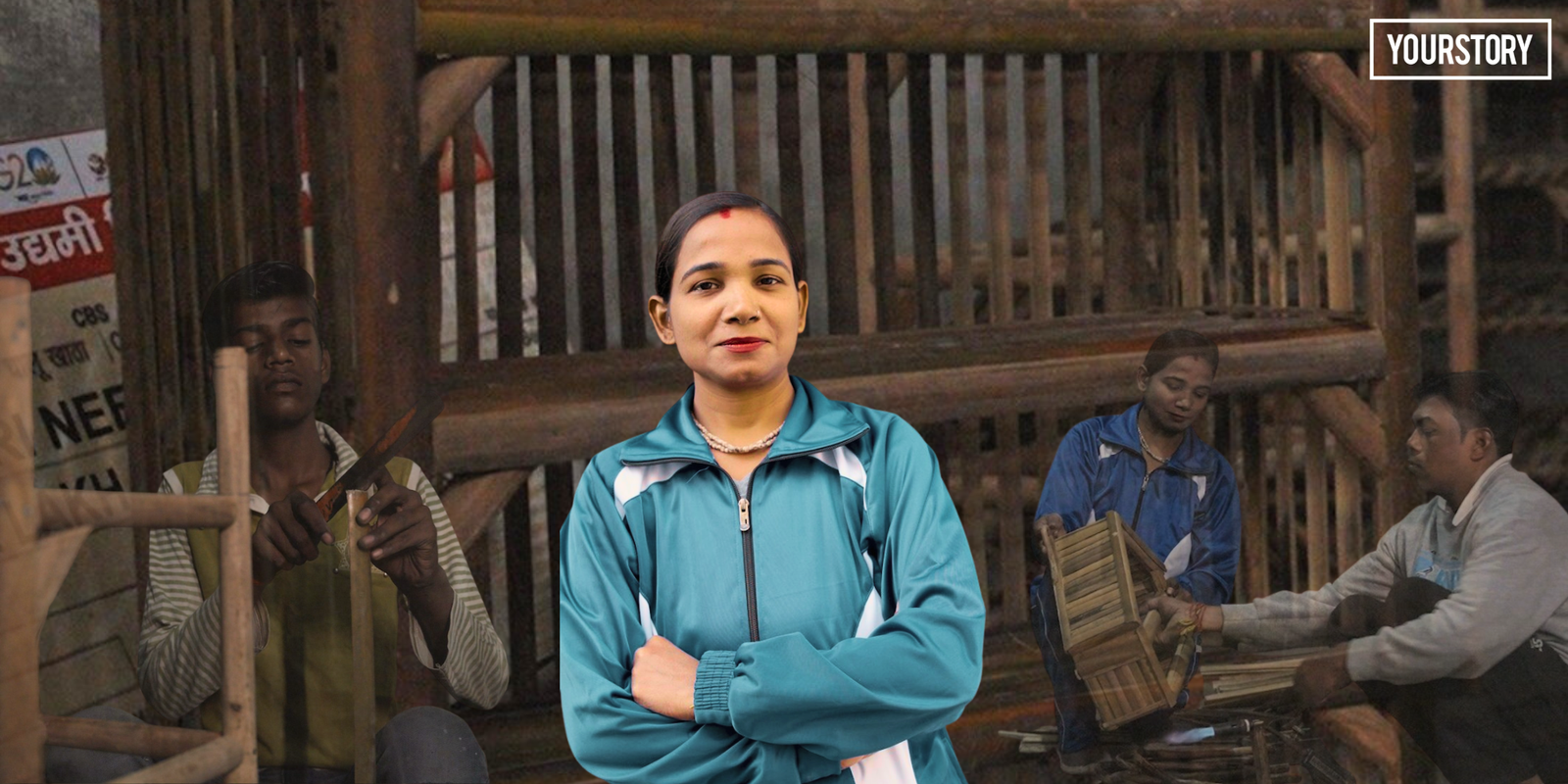
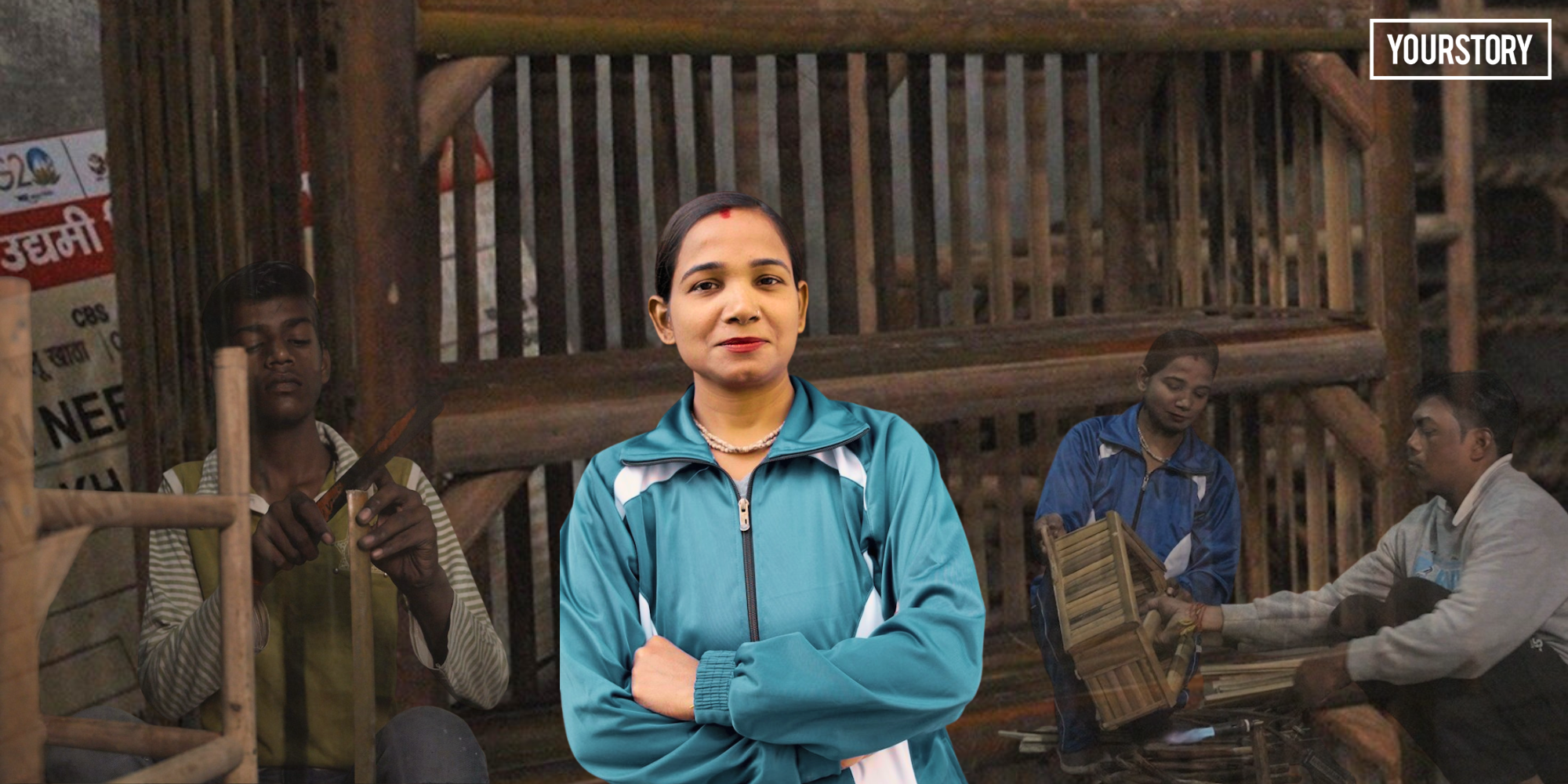
The enterprise remains tightly knit with eight to ten family members and relatives contributing across tasks. The founder, who also functions as CEO, handles customers, orders, and invoicing, then translates requirements into instructions for the shop floor.
Her husband oversees production, while an uncle manages the lamp line. The firm’s chosen name, Krishna Enterprises, reflects the family’s faith and aspiration for a simple, memorable brand identity.
Products range from four-chair dining sets with table, lounge chairs, swings, and stools, to home utility, shoe racks, storage racks, and woven accessories, and even lighting accessories with a dedicated family member handcrafting cane lamps.
Durability is a selling point. Cane, she noted, is naturally resilient and not prone to termite damage, which makes it suitable for long-lived home use.
How does the team turn cane into finished products
The raw material, cane in stick form, typically arrives from Assam. It is cleaned, heated, and bent to achieve the required curvature. Artisans then shape frames for chairs, swings or tables using controlled fire to set the form.
Once the structure is stable, weaving and finishing bring the piece together, after which fittings and a final quality check prepare it for dispatch.
Women at the centre of growth
Beyond sales, the founder is building a ten-woman group to expand capacity and create steady livelihoods. She plans to open additional workshops so more women can learn weaving and assembly.
“If I progress, two or four more should progress with me,” she said, adding that visible uptake of government schemes by youth can create a virtuous cycle of awareness and employment.
Looking ahead, Krishna Enterprises aims to widen its customer base outside Uttar Pradesh while maintaining handcrafted quality. According to the founder, sustained orders and disciplined use of formal finance are helping the family business take the next step without losing its roots.
Discover more from News Link360
Subscribe to get the latest posts sent to your email.