

Bombay HC raps BMC for ‘blind eye’ to air pollution, warns against new project sanctions
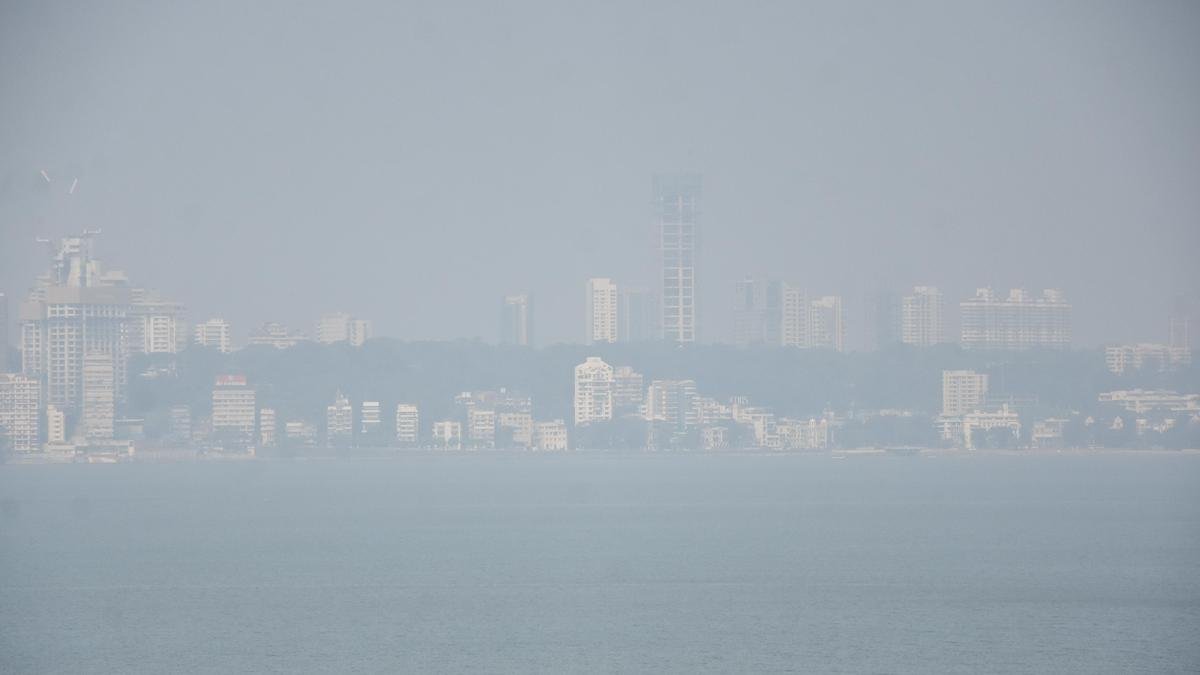
A view of Marine Drive as air pollution engulfs the area, in Mumbai.
| Photo Credit: ANI
The Bombay High Court on Wednesday (December 24, 2025) strongly criticised the Brihanmumbai Municipal Corporation (BMC) for failing to tackle Mumbai’s worsening air pollution and cautioned that it may consider halting approvals for new construction projects if the civic body does not act promptly.
A Division Bench of Chief Justice Shree Chandrashekhar and Justice Gautam Ankhad said the corporation has “turned a blind eye” to the crisis despite having “wide powers” to intervene. The judges expressed concern over the sanctioning of more than 125 large-scale development projects, each worth over ₹1,000 crore.
“In a small city how can you sanction such projects? This has gone beyond your control. Now you should wait for two weeks because your civic body isn’t manning anything properly,” the Chief Justice said.
The observations came during the hearing of petitions on Mumbai’s deteriorating Air Quality Index (AQI).
Earlier, the court had directed BMC Commissioner Bhushan Gagrani to appear with a concrete plan. On Wednesday, senior counsel S.U. Kamdar, representing the BMC, claimed that AQI levels were currently “average, moderate and satisfactory” and argued that pollution had reduced compared to last year.
The Bench, however, noted that “one-third of the monitoring devices are either not working or have no data available.” It also questioned why only 39 construction sites were inspected on Tuesday when the BMC has 94 flying squads.
“What were the remaining squads doing when only 39 of them visited the sites? Why do you have 94 squads then?” the Chief Justice asked, suggesting GPS trackers and button cameras for accountability.
“It is surprising because even traffic constables have GPS and button cameras. Why can’t you have it? We think you are not doing anything at all. You aren’t doing even bare minimum,” the court said.
Mr. Kamdar explained that many squad members were deployed on election duty, but the court rejected this excuse.
“Election duty cannot be an excuse. You can always make an application to the Election Commission seeking exemption,” the Bench said.
Senior advocate Janak Dwarkadas, appearing for one of the petitioners, said, “Right to life is subservient to election duty,” while amicus curiae Darius Khambata asked, “Who will vote if people die (due to pollution)?”
The Bench summoned Mr. Gagrani again in the afternoon and it is when the BMC Commissioner submitted a two-page plan for the next 15 days, including surprise inspections by flying squads and ward-level officers, increased water tankers for deep cleaning, and stricter compliance checks. The court suggested additional steps such as banning mobile phones during site visits and introducing GPS monitoring.
“No one should know which squad will be visiting which site. This is a sensitive work, they shouldn’t carry mobile phones,” the Chief Justice said, adding that phones should be deposited with drivers or the department.
“Issuing stop-work notices or show-cause notices is not the solution. You have wide powers, you must know how to exercise it. You can even consider terminating the contracts,” the Bench instructed to Mr. Kamdar.
The judges also sought details from the Maharashtra Pollution Control Board (MPCB) on measures to protect workers’ health at construction sites. Senior advocate Ashutosh Kumbhakoni, appearing for MPCB, said statutory boards were responsible for worker safety, but the Bench insisted on making health safeguards a mandatory condition for development permissions.
The matter will be heard next on January 20, 2026. A detailed order is awaited.
Published – December 25, 2025 02:57 am IST
Discover more from News Link360
Subscribe to get the latest posts sent to your email.