


Snicko vs UltraEdge: How the DRS technology works and why Ashes calls have raised doubts
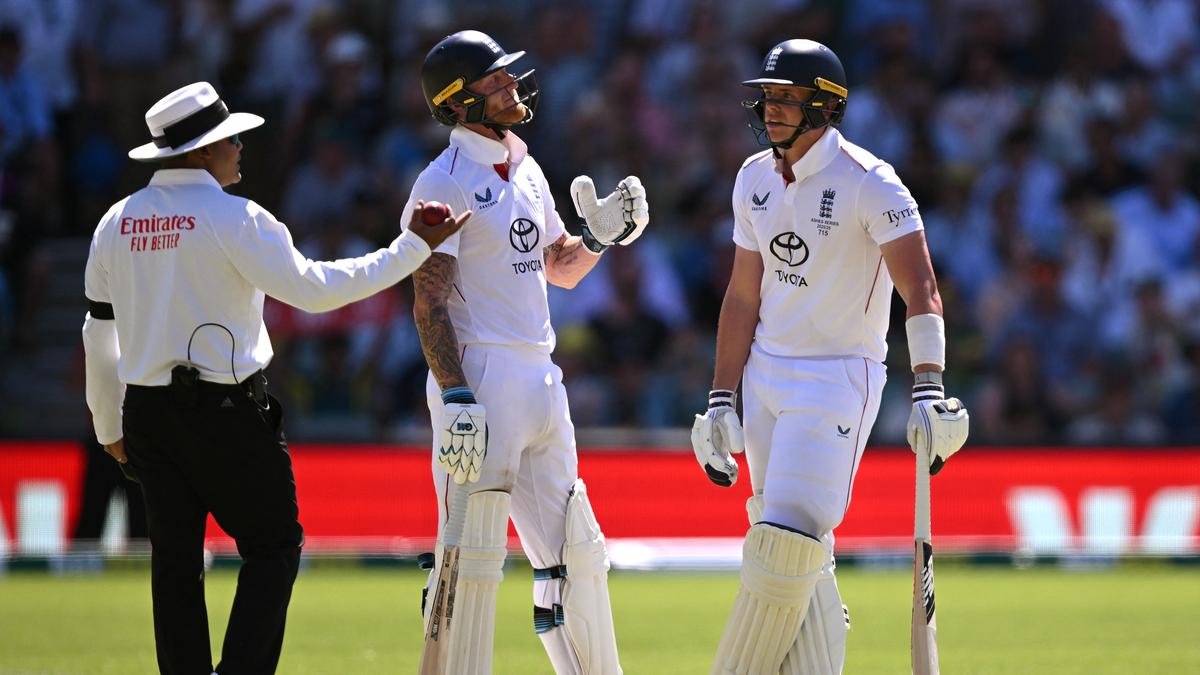
Australia wicketkeeper-batter Alex Carey was adjudged not out during the first innings of the third Test in Adelaide after England took the Decision Review System (DRS) for his dismissal. Carey admitted to edging the ball after his innings.
BBG Sports, the company that owns the technology, later admitted that an error on the operator’s end had led to the incorrect decision.
How does Snickometre work?
The Snickometre was invented by British engineer Allan Plaskett. It operates on the basis of sound and visual evidence.
The stump microphone picks up the sound and relays it to an oscilloscope — a laboratory instrument used to display and analyse the waveform of electronic signals. It detects the sound waves while the visuals are played in slow-motion.
If the ball hits the bat, the snicko graph is scanned for verification. A spike in the graph will determine an edge. If the ball touches the pad or glove, the impact is flatter.
Based on this, the third umpire makes the call whether the ball has hit the bat or not.
Is there a better alternative to Snickometre?
Recently, Hawkeye has developed UltraEdge to detect edges off the bat. This technology is more accurate since it uses the cameras deployed for ball tracking, which is also used to judge leg-before-wicket decisions.
These cameras provide pictures at 340 frames per second, which aids a better decision. Further, the sound and visuals are synced automatically in UltraEdge. The Snickometre needs a manual operator to synchronize the sound with the pictures, which leaves room for an error.
Who decides whether to use Snickometre or UltraEdge?
The call to select the technology to include in its DRS package lies with the host broadcaster. Channel Seven and Foxtel, the official broadcasters for this Ashes series, opted for the Snickometre. Currently, Australia and New Zealand are the only countries using this technology.
For all matches in England, India and South Africa, the UltraEdge is used. The technology is deployed in ICC competitions too.
Have there been other instances of Snickometre giving incorrect decisions?
In the third Test, Australia was left fuming at the technology when England wicketkeeper-batter Jamie Smith appeared to have been caught at second slip off Mitchell Starc’s bowling. The Snicko, however, showed that the ball had hit Smith’s helmet and not glove and handed him a reprieve.
Moments later, Smith was adjudged caught behind despite Snicko showing a spike after the ball had passed the bat.
Who has criticised the Snickometre technology?
Starc was heard on the stump mic criticising the Snickometre after the decision went against Australia. “Snicko needs to be sacked. That’s the worst technology there is. They made a mistake the other day, and they made another mistake today.”
Former Australia captain Ricky Ponting also expressed his frustration over the discrepancies in Snicko. “This technology that we are using here is simply not as good as technology that is used in other countries. You talk to the umpires, and they’ll tell you the same thing,” he said on Cricket Seven.
Published on Dec 25, 2025
Discover more from News Link360
Subscribe to get the latest posts sent to your email.