


United in fear, divided in politics – a view from Narva, an Estonian city bordering Russia

Some 201 km away from capital Tallinn, Narva is the most Russian speaking town of Europe with over 96% Russian speakers among its roughly 53,000 residents. The Narva river flows into the Russian Federation barely 101 metres away and the forests lead to highways nearly 250 km away from St. Petersburg.
A small nostalgic Friendship Bridge, over the dark grey river with white foam on the surface, connects the magnificent Hermann’s castle on the Estonian side built by the Danes in the 13th century to the Ivangorod Fortress built by Russian Tsar Ivan III in 1492. Both historical monuments were controlled by different conquering forces until the Estonians broke free from five decades of Soviet occupation in 1991 and the river border divided the countries. A new bridge replaced the 19th century one destroyed during the large-scale bombing of the Baroque Pearl of the Baltic in the Second World War.
But polarisation, instead of ‘friendship’, is the lived reality here today. Half the population in Narva are Estonian citizens, 33.2% are Russian citizens and 12.5% without any citizenship — those stateless citizens with grey passports issued to ethnic Russians who were relocated during the Soviet era, but post Estonian independence refused to sign up for either nationality. Many of them belong to Crimea, Georgia or other conflict zones in the region.
Mr. Kirik and Mr. Ilja avoid speaking to their parents. “The war has pulled people apart,” says Mr. Ilja. “Many families don’t even talk to each other. The older people avoid talking about the war because they favour Russian President Putin. Young people like me mostly support Ukraine,” adds Mr. Kirik. The young feel the older generation is swept by the propaganda narratives on Russian TV which is watched here through a simple antenna despite a ban on its transmission in Europe.
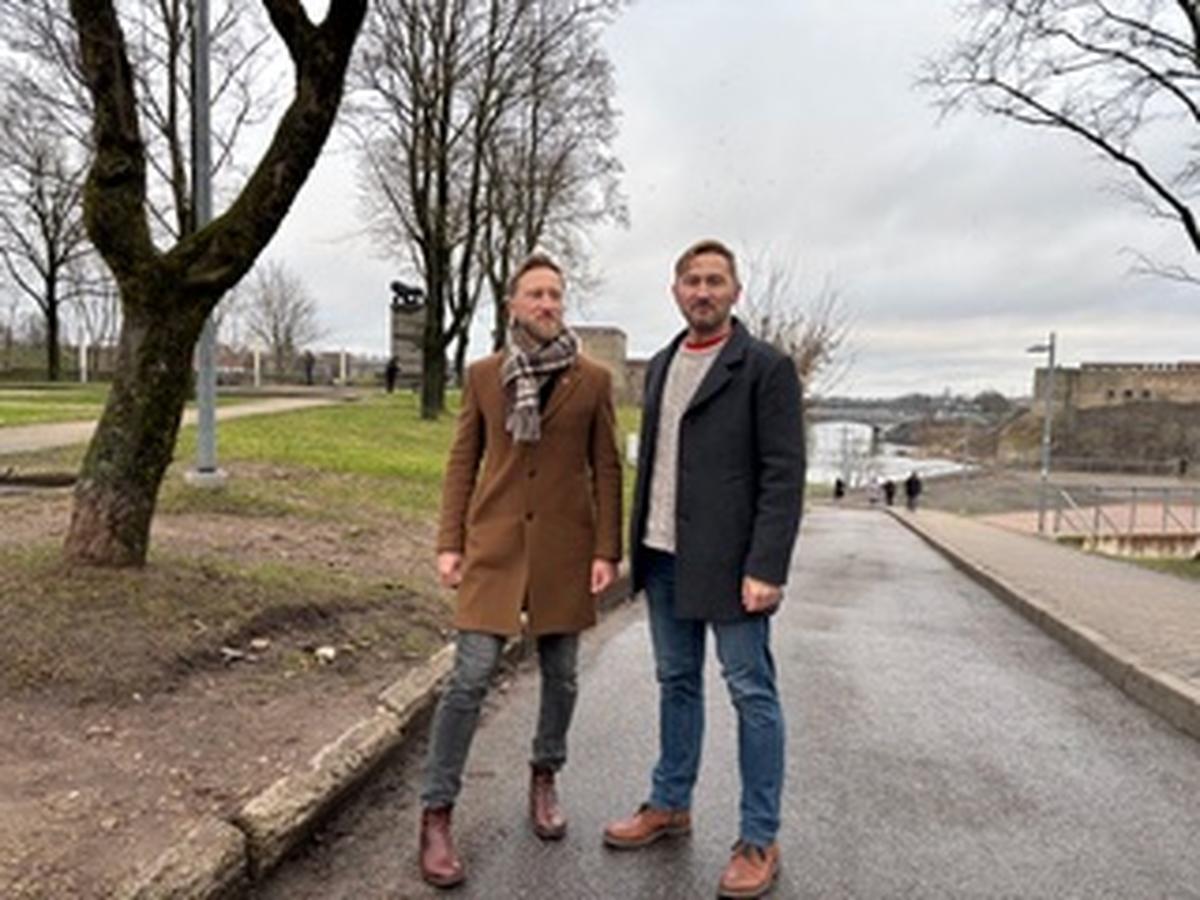
Real estate agent Kirik with his older brother, Ilja, a journalist.
| Photo Credit:
Smita Sharma
“Four years ago, it was scary as journalists from different channels and countries came here and started saying “you will be next, how will you live with that?” Now I see most of the people are not worried about any invasion because we are NATO members,” says Mr. Kirik. Though an uneasy calm prevails in the town with many choosing silence instead of discussing the war and uncomfortable political alignments.
“I had Russian friends but not anymore. But most of them have moved to other countries,” says Mr. Kirik with a smile.
Interestingly, in 2021, this historic town chose a new slogan for itself: “Europe begins here”. And with the invasion of Ukraine in February 2022, this slogan brought home the traumatic question — “what if we are next?”
This question forced several changes to the Border Check Points (BCPs) across the country, including in Narva, which facilitate movement of people on both sides. Before the pandemic hit, four million record numbers of people were crossing the check point in 2019. Around 27,000 people daily. But post Covid, and with the beginning of the war, the volume dropped by almost 95%. Some 1,600-1,700 people now cross daily even as the timings have changed from 7 a.m. to 11 p.m. The border earlier operated 24/7. Tourist visas have been stopped. Only those with some residential rights within European Union are allowed permits to travel.
And with a suspected air space violation in Finland by the Russians, all vehicular, truck and bus operations were suspended at the BCPs in May last year.
The vigil was also sharpened to prevent border smuggling. Russian gasoline, alcohol and cigarettes would often find their way into Narva earlier while Estonian cheese and dairy were in demand on the other side.
Indrek, listed among Estonia’s top chefs, runs a quirky restaurant close to the border. He has a Russian wife. Asked about the impact of the war on personal relationships, he says, “Relationships are always challenging, nationality does not matter.” Russian tourists do not frequent his restaurant anymore, where wolf paws are on display and bull testicles on the menu. He says the war has impacted the overall European economy but not him personally so much. “I hope, I really hope the war ends soon,” he adds though.
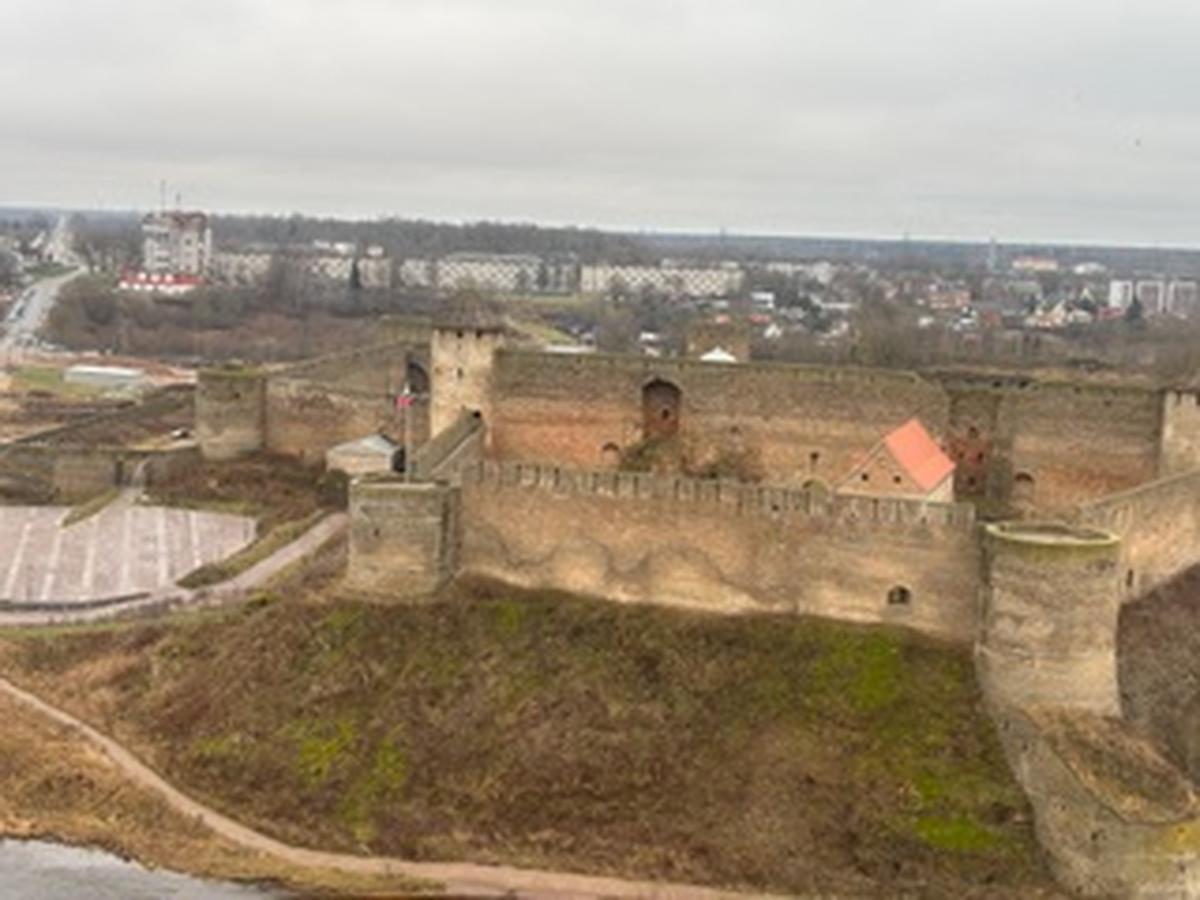
The Ivangorod Fortress as seen from Hermann’s castle.
| Photo Credit:
Smita Sharma
The Narva Museum, housed inside the Hermann’s castle, is at the centre of a narrative battle. Its director Maria Smorzhevskikh Smirnova was 14 years old when the Soviet Union collapsed. Her grandparents were in the Soviet army during the Second World War. She points to Mr. Putin’s speech in June 2022 referring to Narva as a potential target when he seemed to compare himself to the 18th century Russian Tsar ‘Peter the Great’ in drawing a parallel between the historic quests to win back Russian land and his military action. “Peter the Great waged the Great Northern War for 21 years. It would seem that he was at war with Sweden, he took something from them. He did not take anything from them, he returned [what was Russia’s],” Mr. Putin said.
A poster put up across the museum on the other side of the river in Ivangorod in 2023 announced “Russia’s borders do not end anywhere.” In May this year, the flag tower of the Narva castle hit back with a poster referring to Mr. Putin as ‘Putler – war criminal’. Smirnova is today a wanted criminal for the Russians. “Culture cannot remain silent in war time,” she responds.
Estonia, which lived through Russian and Nazi occupation, has today increased its defence spending like the rest of Europe has been forced to. Before the war, the Nordic NATO nation was spending 2% of its GDP on defence. It went up to 3.5% during the full war and will be increased to 5% in 2026.
“If you want peace, you must prepare for peace…and you must prepare smartly”, quipped Kaimo Kuusk, Permanent Secretary at the Estonian Defence Ministry in capital Tallinn earlier. A former intelligence official, he was the Ambassador to Ukraine when Russian ballistic missiles announced the start of the invasion on February 24, 2022. He stressed that Estonia does not have the resources to buy squadrons of fighters and hence the NATO membership is so crucial and 450 million people in EU is an added value and collective strength for a small country.
A sentiment resonated strongly by Foreign Minister Margus Tsahkna who told this author that Russia poses an existential threat to Europe. And this is what needs to be explained to India and Prime Minister Modi who he hoped could help build pressure for truce. Interestingly, the Estonian newsrooms chose to cover the lack of major defence agreements during the recent Putin visit to Delhi as India’s ‘snub’.
It is an information war out there as the game of throne continues. Narva for now is calm on the surface. But a resident who chose to remain anonymous expressed his nervousness that Russian speakers are under the microscope to gauge their allegiances. And people choose to stay silent than discuss the war and ask for trouble.
(Smita Sharma is an independent journalist reporting on Foreign Affairs. She was in Estonia as part of an Indian media delegation invited by the government.)
Published – December 31, 2025 05:51 am IST
Discover more from News Link360
Subscribe to get the latest posts sent to your email.