


Prana Air is helping citizens understand the air they are breathing with data and devices

Particulate matter, especially PM2.5 and PM10, has quietly become part of daily life across cities and towns. But not much is known about the exposure to it. The average Indian citizen has little information about the quality of air they are breathing.
Access to reliable, localised air-quality information is limited, fragmented, and largely inaccessible to the general public.
While government agencies collect data through a handful of monitoring stations, the average citizen does not know where or how to access this data. This is the issue that Prana Air seeks to address.
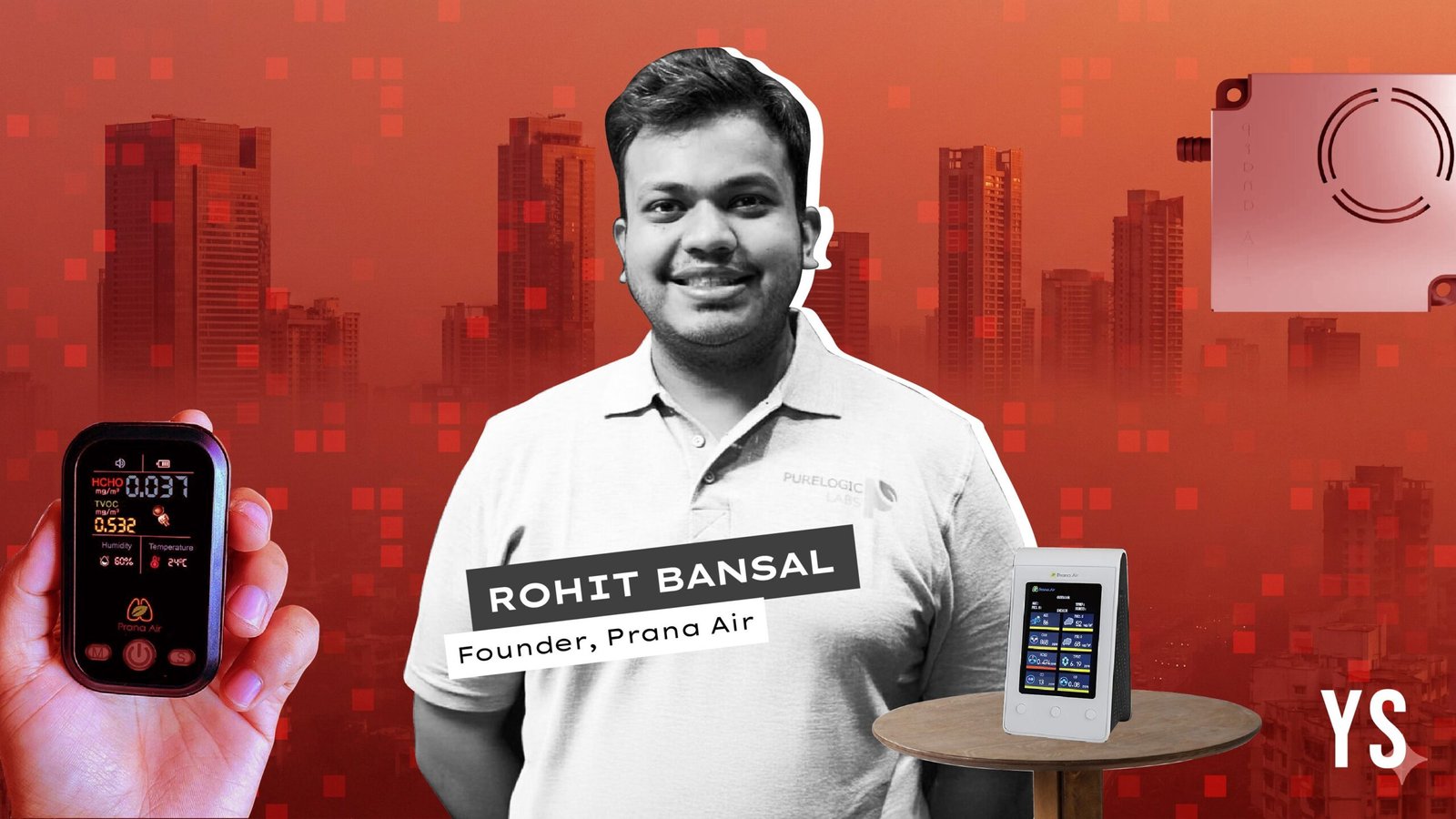
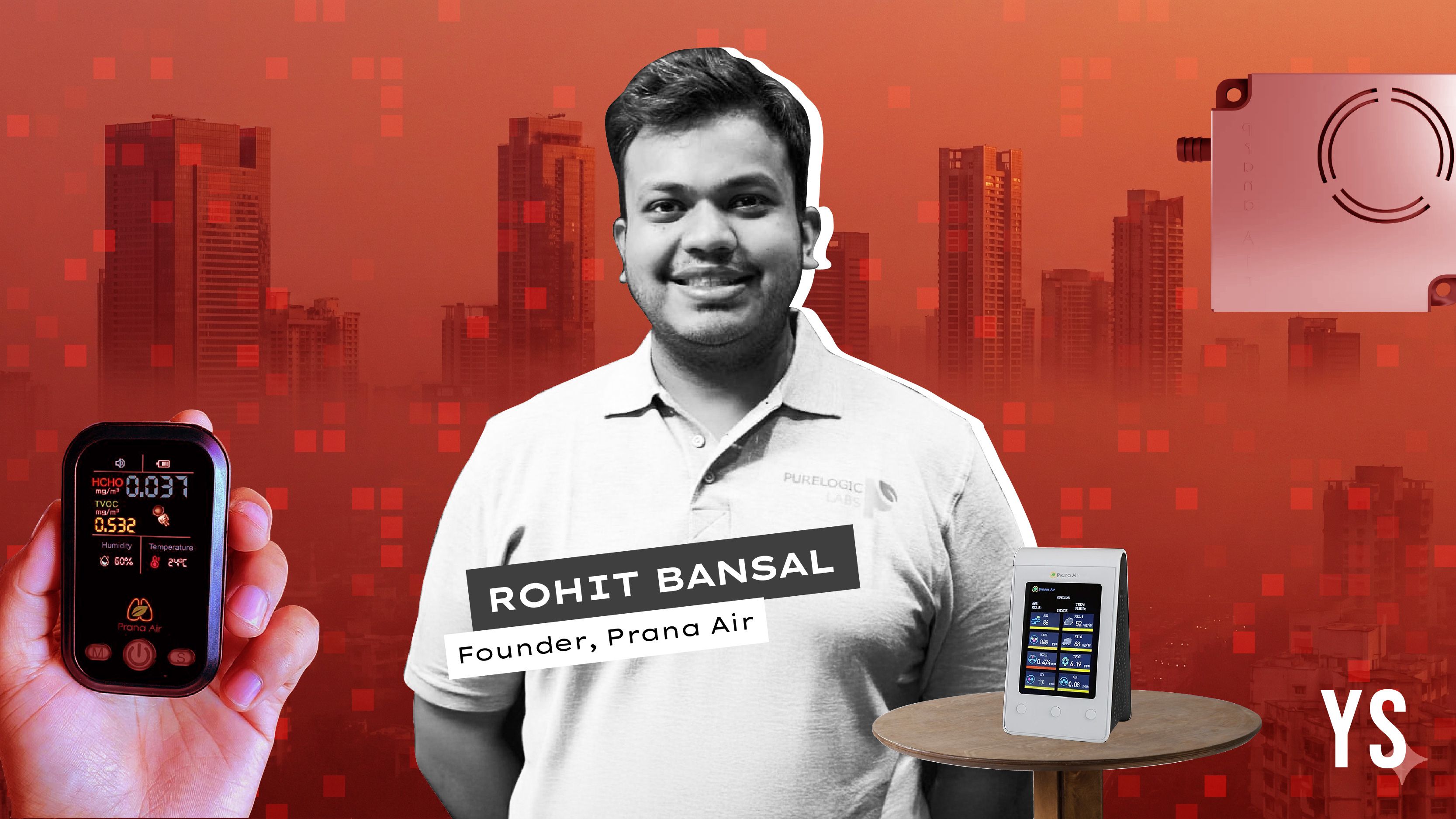
Delhi-based Prana Air builds air-quality monitoring hardware—portable devices that help check AQI (air quality index). It also operates AQI.in, a real-time environmental data platform that allows users to view air quality in their cities and neighbourhoods.
<figure class="image embed" contenteditable="false" data-id="587444" data-url="https://images.yourstory.com/cs/2/6c7d986093a511ec98ee9fbd8fa414a8/airquality-1767150352474.png" data-alt="Prana Air" data-caption="Pocket PM2.5 Monitor
” style=”float: right; margin-left: 20px; width:50%; height:auto”> Pocket PM2.5 Monitor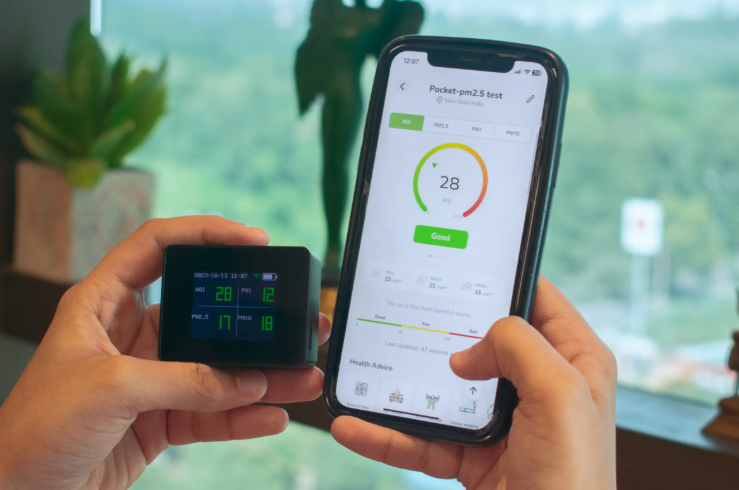
Users can access live AQI readings, key pollutant levels such as PM2.5 and PM10, health advisories, and short-term trends for a particular area, thus gaining a precise picture of their daily exposure to pollution. The platform tells users if the air quality is good, moderate, poor, unhealthy, severe, or hazardous.
AQI.in currently covers hundreds of locations across India, including major cities such as Delhi, Mumbai, Bengaluru, Chennai, Hyderabad, Pune, Kolkata, and Ahmedabad, drawing on a combination of Prana Air’s sensor network and official monitoring stations.
A personal turning point
For Rohit Bansal, Founder, Prana Air, pollution is never an abstract civic issue. Long before ‘AQI’ entered common vocabulary, polluted air had already forced its way into his lungs, impacting his health severely.
Bansal spent a part of his early years in the United States before moving to Beijing in 2008, where severe air pollution became a personal health issue, resulting in a sinus surgery in 2009, which doctors linked to prolonged exposure to polluted air.
“That surgery changed how I looked at pollution. It stopped being an environmental concept and became a biological one. It affected how I slept, functioned, and felt every morning. It was no longer distant, it was inside me,” he recalls.
During this period, Beijing began publishing real-time, hyperlocal air-quality data, allowing citizens to track pollution levels by location and time. India, by contrast, offered no such comparable data to the public.
“The absence of data was as alarming as the pollution itself. If you can’t see a problem, you normalise it,” says Bansal. “I wasn’t thinking about building a startup. I just kept asking myself why a country of this size had no simple way for people to check what they were breathing.”
Building visibility into an invisible problem
Bansal’s personal confrontation with polluted air led to the birth of Prana Air in 2016 to address a foundational gap: the absence of accessible, trustworthy, and hyperlocal data related to air quality.
<figure class="image embed" contenteditable="false" data-id="587445" data-url="https://images.yourstory.com/cs/2/6c7d986093a511ec98ee9fbd8fa414a8/Pranaairr-1767150414965.png" data-alt="Prana Air" data-caption="
Cair+ Indoor Air Quality Monitor
” style=”float: left; margin-right: 20px; width:50%; height:auto” align=”center”> Cair+ Indoor Air Quality Monitor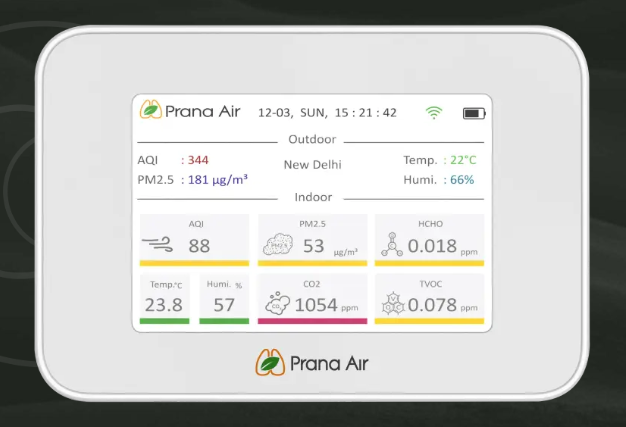
The AQI.in platform operates in line with India’s National Air Quality Index framework set by the Central Pollution Control Board (CPCB) in 2014. It converts measured levels of key pollutants, PM2.5, PM10, NO₂, SO₂, CO, O₃, NH₃, and Pb, into simple, comparable AQI scores using CPCB’s defined calculation method. This way raw pollution data is translated into an easy-to-understand air quality number.
The platform is supported by a vertically integrated technology stack, which includes PCBs (printed circuit boards), firmware, calibration systems, cloud infrastructure, and digital platforms. It reports daily averages for particles and shorter-term readings for gases like ozone, following national guidelines.
The data comes from CPCB and SAFAR (System of Air Quality and Weather Forecasting and Research) stations, Prana Air’s own sensors, and grid-based modeling systems. These inputs power dashboards at city, neighbourhood, and national levels, providing real-time air-quality readings, pollutant trends, health advisories, and short-term forecasts, all accessible on the AQI.in platform.
“People don’t just need numbers. They need context. They need to know what those numbers mean for their bodies, their children, and their daily decisions,” Bansal explains.
On the hardware side, between 2017 and 2018, Bansal developed and calibrated early hardware prototypes in China, adapting them for India’s dust, humidity, and temperature extremes.
“But we realised very quickly that unless we built the technology ourselves, we wouldn’t understand the data. And if you don’t understand the data, you can’t trust it,” Bansal explains.
By 2018, AQI.in went live as a public platform, supported by a nationwide deployment of Prana Air’s monitors.
Bansal has since invested over Rs 10 crore in his personal capital to build the hardware, data, and cloud infrastructure behind the monitors. “AQI.in doesn’t make money, and that’s intentional. Public health data shouldn’t be driven by clicks or ads.”
In 2024, the AQI platform recorded 7.7 million active users and 122 million visits, with nearly 90% of usage coming from India.
Building solutions and scale
Revenue comes from sales of hardware.
Over time, Prana Air has developed close to 20 SKUs across consumer and professional segments, priced from Rs 999 to Rs 1.77 lakh. Its portfolio spans pocket PM2.5 Wi-Fi monitors, CO₂ meters, indoor air-quality monitors, and N95 anti-pollution masks.
<figure class="image embed" contenteditable="false" data-id="587446" data-url="https://images.yourstory.com/cs/2/6c7d986093a511ec98ee9fbd8fa414a8/Pranaairrrrr-1767150487893.png" data-alt="Prana Air" data-caption="
Sensible AQ monitor
” style=”float: left; margin-right: 20px; width:50%; height:auto”> Sensible AQ monitor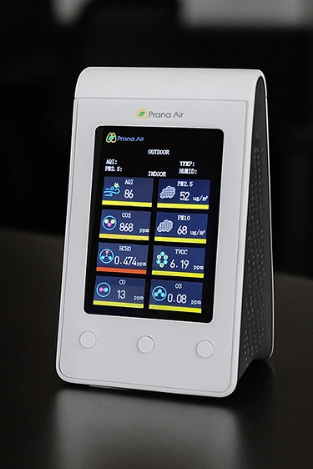
It also provides air-purification solutions, including UV- and ionisation-based air sanitiser–purifiers; HEPA-enabled fresh-air machines for indoor spaces; and wearable personal purifiers that provide on-the-go protection with extended battery life.
HEPA, which refers to high efficiency particulate air, is an efficiency standard for air filters.
The startup also offers solutions to institutions and industries, including fresh-air machines priced at Rs 1 lakh, with an annual maintenance cost of Rs 18,000.
“That was a critical moment for us. It told us we could make reliable instruments without making them unaffordable,” remarks Bansal.
In 2024, Prana Air reported a revenue of about Rs 10 crore and a profit of Rs 2.5 crore, generated through hardware sales, enterprise deployments, and data licensing.
Majority of the revenue came from India. Around 30% of its sales came from Europe. There is also growing adoption in the United States, Canada, and Brazil.
A key initiative of Prana Air is the Rs 990 community monitor programme, under which citizens can purchase outdoor monitors at a nominal cost while the company absorbs manufacturing expenses. More than 5,000 devices have been deployed nationwide, creating one of India’s densest citizen-led air quality monitoring networks, particularly in Delhi, says the founder.
.thumbnailWrapper{
width:6.62rem !important;
}
.alsoReadTitleImage{
min-width: 81px !important;
min-height: 81px !important;
}
.alsoReadMainTitleText{
font-size: 14px !important;
line-height: 20px !important;
}
.alsoReadHeadText{
font-size: 24px !important;
line-height: 20px !important;
}
}

“For the first time, people weren’t looking at a city average, they were looking at their street. That changes how you relate to pollution,” Bansal adds.
Work is in progress to add more devices in more locations to track data from streets and buildings too.
Prana Air operates in a competitive landscape that includes Indian players such as Oizom, Airveda, and Envirotech Instruments, and global firms like IQAir, Aeroqual, Horiba, and Thermo Fisher Scientific.
“Most solutions sit at either end of the spectrum, expensive regulatory tools or basic consumer devices. Our focus is on building reliable, local data people can actually use,” says Bansal.
Long-term objective
Prana Air is expanding beyond air into water quality monitoring. Pilot deployments of sensors have been done in residential water tanks in Delhi. A phased expansion across cities is on the cards.
Alongside this, the startup is developing hyperlocal weather monitoring, including street-level weather stations that track rainfall, temperature, humidity, wind patterns, and micro-climate variations, addressing increasing climate-driven inconsistencies within urban areas.
The long-term objective is to evolve AQI.in into a public, data-led platform for air, water, and weather, prioritising accessibility and trust over short-term monetisation.
“If something affects daily life, it should be measurable, and if it’s measurable, it should be accessible,” says Bansal.
Edited by Swetha Kannan
Discover more from News Link360
Subscribe to get the latest posts sent to your email.