
Roots in Khurja, resolve in Deoria
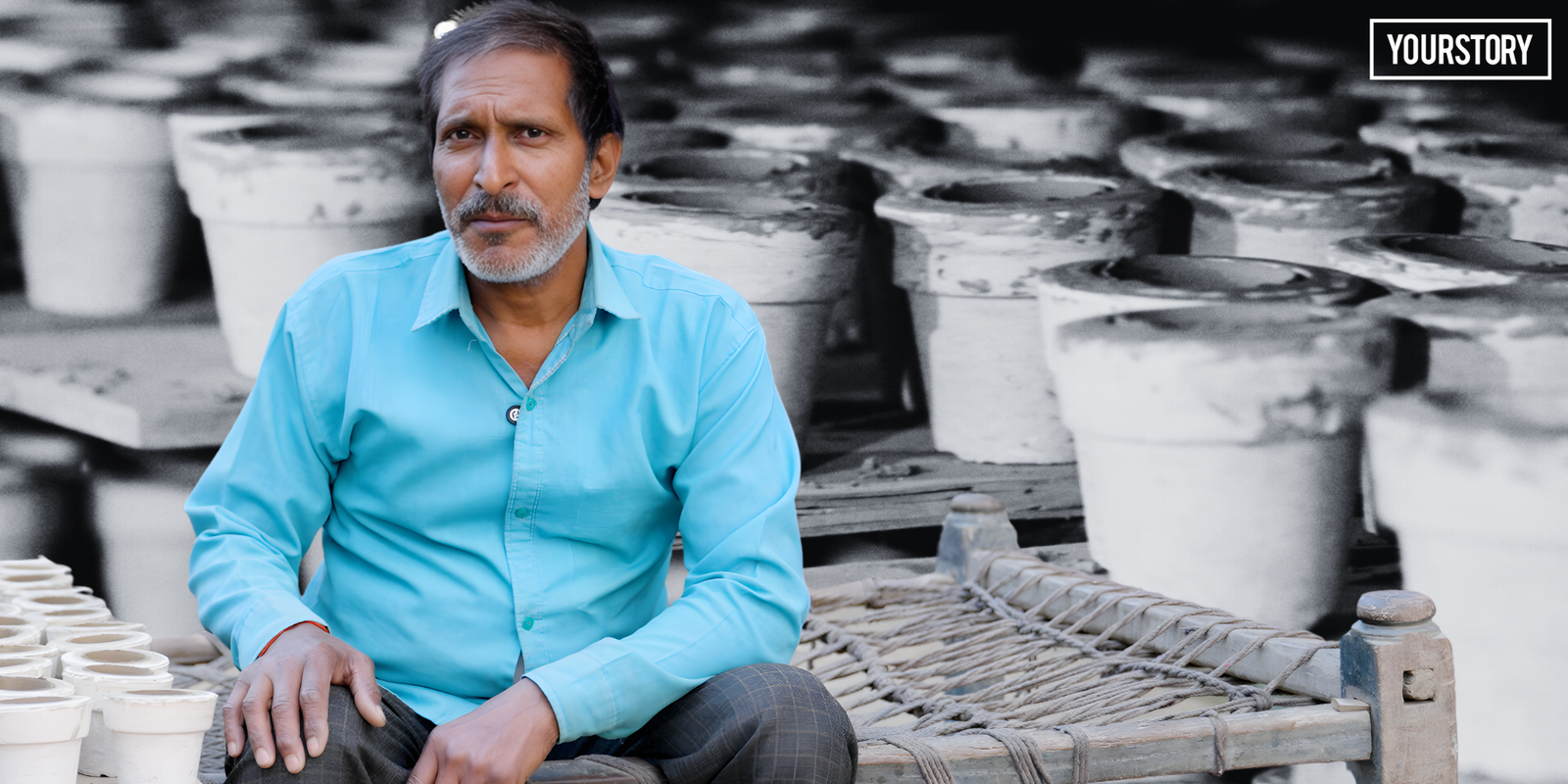
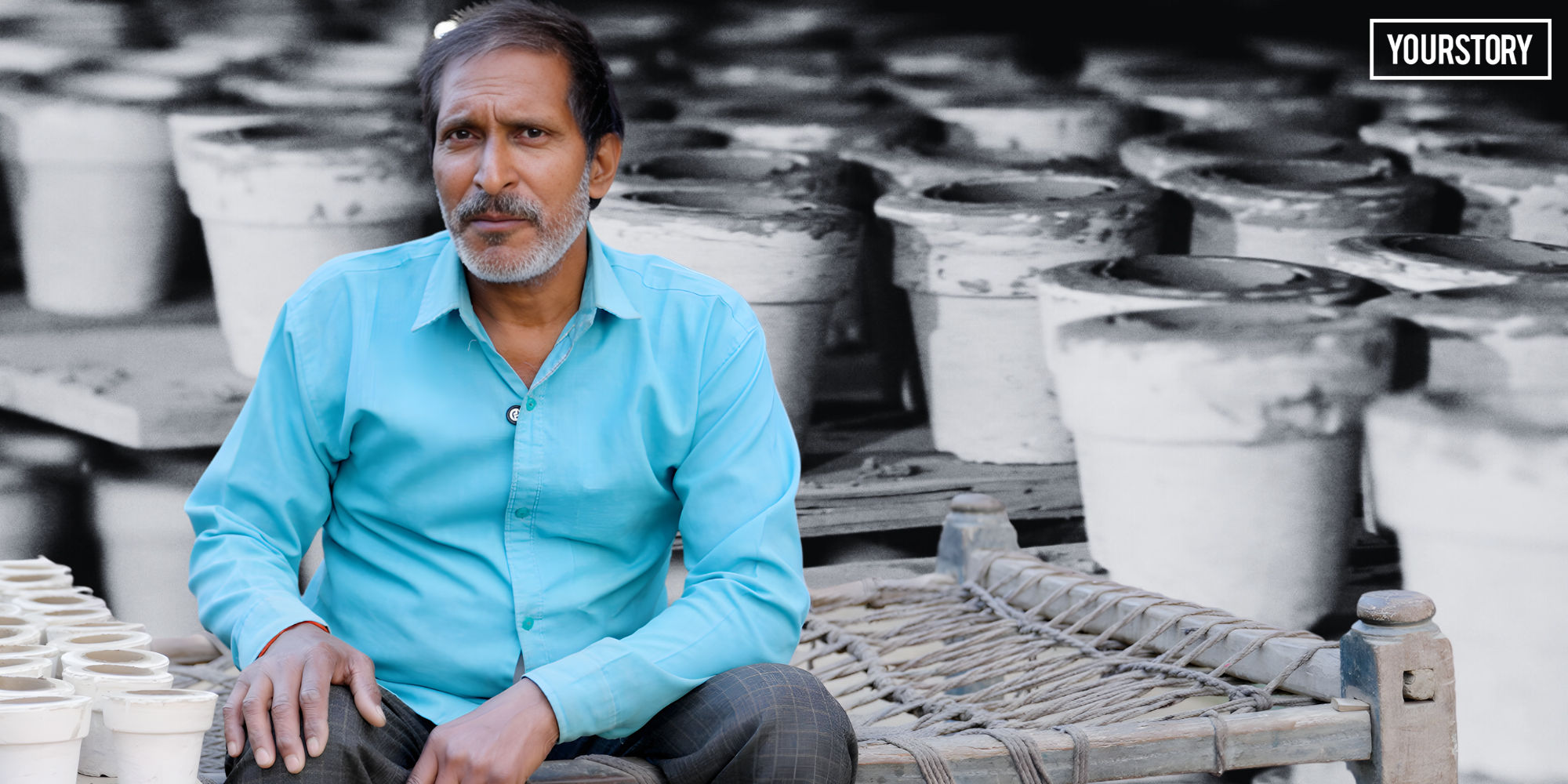
Maurya learnt the trade in Khurja, the Bulandshahr town long known for ceramics, where he first entered the pottery line in the year 2000. After years on the shopfloor and a stint running a small retail counter, he returned closer to home during 2022 and 2023. By his account, he has spent the past three years building his own unit in Basma, choosing to be self reliant rather than depend on contractors.
Today he focuses on a tight catalogue, mainly kulhads, plates, small bowls and earthen pots, while keeping the capability to make many more forms. “We can do most designs,” he told YourStory, pointing to hand sketched samples and plaster moulds stacked near the wheel. As founder, he personally oversees design, mould making and finishing.
How does the workshop turn clay into finished kulhads
The process begins with mould making. Maurya prepares casts using plaster of Paris, first creating a case, then refining the negative. Clay is pressed or formed in these moulds and shaped on a simple machine for uniformity. Greenware is released, air dried and hand finished to smooth the rims and surfaces. Once firm, batches are loaded into a brick lined bhatti, fired, and cooled before entering the market. The workflow, he says, balances speed with the handmade character buyers expect from kulhad ware.
Credit that unlocked a livelihood
Maurya says he first heard of the Chief Minister’s Yuva Udyami Yojana in 2020. He returned to Deoria intent on formalising his business, applied for a bank loan, and finally received approval in 2025. Because of age related eligibility, the sanction, he adds, came in his son Satyawan’s name. The financing allowed him to purchase a few machines, stabilise raw material supplies and book kiln time regularly. According to him, the steady working capital has helped cover family expenses and keep production continuous.
He is quick to credit policy support for nudging him to start up. “Set up industry, earn for yourself and enable others too,” he recalls as the message that pushed him to act. As a founder employer, he now aims to onboard and train neighbours when orders spike, and he encourages other village shopkeepers and relatives to explore the same scheme if they face financial constraints.
Design discipline and market focus
Even as the workshop can make a wide range, Maurya is keeping the product line narrow for quality control. He sketches a few new motifs by hand, tests them in plaster, and moves only proven shapes into regular production. Samples sourced from Khurja’s factories sit beside his own prototypes, a reminder of the benchmark he chases. Earthen kulhads, he notes, are drawing steady demand from tea vendors and ice cream sellers who want an eco friendly, affordable serving option.
Maurya’s journey, from the kilns of Khurja to an MSME unit in Barhaj tehsil, underlines a broader micro enterprise story in rural India, where craft skills, local markets and timely credit can turn a single artisan into a small business founder. For him, the goal is straightforward, keep the kiln burning, pass on the skill, and create work close to home.
Discover more from News Link360
Subscribe to get the latest posts sent to your email.