

Indian consumer trends in 2026; Building export-ready food labels

Even amid buffeting macroeconomic pressures, India is set to retain its crown as the world’s fastest-growing economy.
Gross domestic product is projected to rise 7.4% in the financial year through March, the Ministry of Statistics and Programme Implementation said on Wednesday in its advance estimates. At that pace, the economy’s size would rise to about Rs 3.57 crore crore, or $4 trillion in nominal terms, the ministry said.
Meanwhile, the airlines saga has taken a regulatory turn: India’s Directorate General of Civil Aviation has asked airlines, including IndiGo, Air India, SpiceJet, and Akasa, for average fares on each route they operated on over December 1-15, Reuters reported. This could help assess airfare patterns across airlines during the disruptions.
Lastly, scientists have long pinned their expectations on Jupiter’s moon Europa as a promising avenue in the search for life beyond Earth, owing to a large subsurface ocean thought to be hidden under an outer shell of ice.
New research, though, has made those hypotheses a bit too rocky—literally.
The study assessed the potential on Europa’s ocean bottom for tectonic and volcanic activity, which on Earth facilitates interactions between rock and seawater that generate essential nutrients and chemical energy for life.
Europa’s rocky seafloor may likely be mechanically too strong to allow such activity, the conclusions suggest.
In today’s newsletter, we will talk about
- Indian consumer trends in 2026
- Building export-ready food labels
- From village craft to livelihoods
Here’s your trivia for today: What does the Hubble Constant define?
Outlook 2026
Indian consumer trends in 2026
Rising purchasing power, an increasing need to trade up, as well as growing discovery and access to aspirational lifestyles are creating an environment for consumer brands to capture a larger share of the Indian wallet.
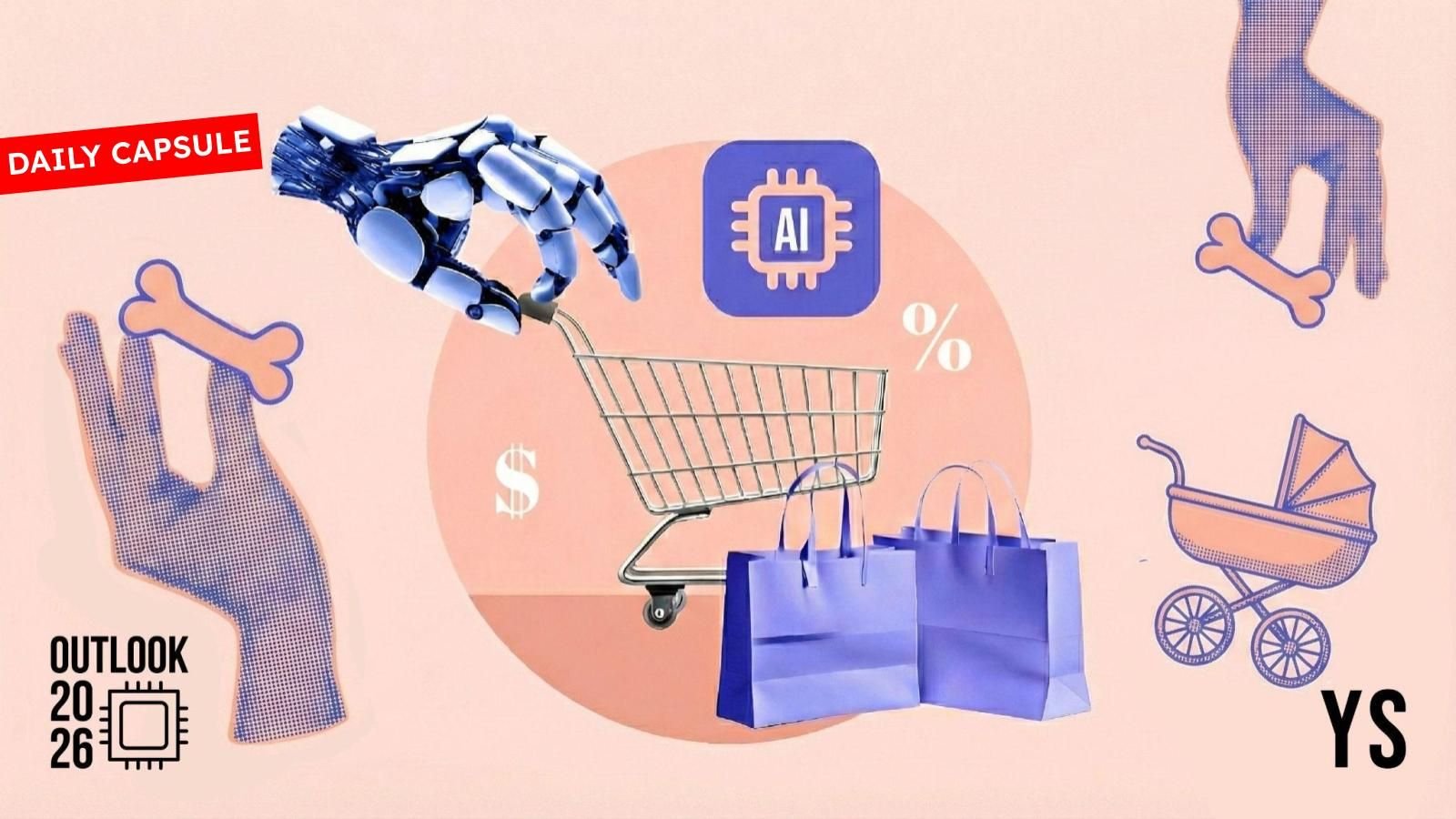
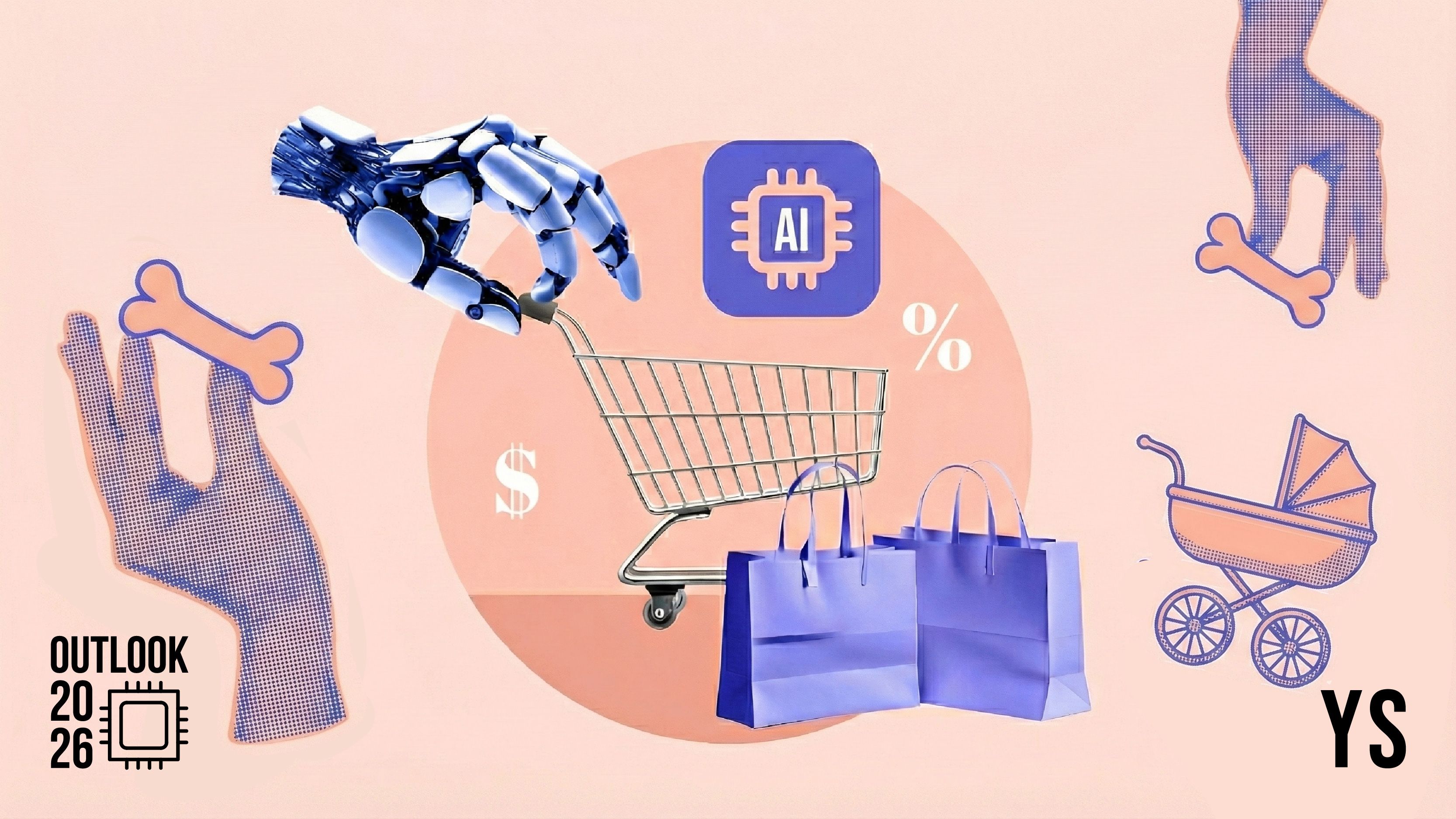
Against this backdrop, YourStory spotlights the consumer trends shaping 2026—from increased spending on petcare and the premiumisation of babycare to the rise of agentic AI reshaping retail interactions, and the next phase of quick commerce as platforms push beyond speed to focus on scale, private labels, and new business models.
Reshaping retail:
- Babycare and childcare are at an inflection point, primarily driven by greater discovery, wider access, and the means to trade up. Parents are increasingly willing to investin the best possible products and services for their children, even as they hesitate to splurge on themselves for the same.
- India’s petcare market is seeing a rapid boom, with the pet population expected to more than double from 32 million pets to 76 million by 2030. The expenses playbook has gone beyond basic food to include gourmet treats, grooming, and spa services, particularly driven by a move to organised branded players.
- In India, AI agents do more than recommend products—they place the order and optimise for cost and delivery. The shift is driven by tangible returns: retailers deploying these AI experiences are already seeing conversion gains of 5–15%, according to a report by BCG.
Funding Alert
Startup: Dream Road Technologies
Amount: 17.5M
Round: Pre-Series A4
Startup: Arrowhead
Amount: $3M
Round: Seed
Startup: Flent
Amount: Rs 21 Cr
Round: Pre-Series A
Startup
Building export-ready food labels
The next time you pick up a packaged food item off a supermarket shelf, notice the maze of nutrition facts, ingredient lists, regulatory symbols, and tiny disclaimers. What is invisible are the weeks or months of manual work that go behind the label: nutritionists checking formulations, regulatory teams ensuring compliance, designers adjusting the label art, and legal teams proofreading every word.
For decades, labelling remained a slow and error-prone manual process, even as India’s packaged-food market boomed. That is, until 2018, when nutrition expert Rashida Vapiwala decided to start LabelBlind.
Globally compliant:
- FolSol, LabelBlind’s main cloud-based software, simplifies the entire food labelling process that earlier took weeks or months. Companies enter their product formulation, and FolSol creates a complete, compliant label with the nutrition table, ingredients, and all required declarations.
- LabelBlind’s major clients include Tata Starbucks, ITC Hotels, Tim Hortons India, and PVR, all of whom continue to be active users of its menu-labelling solution. Starbucks was among LabelBlind’s first enterprise clients, coming on board when FSSAI introduced its first menu-labelling regulation in 2020.
- FolSol currently supports around 12 markets. LabelBlind plans to expand to 22 markets this month to reach 50 countries by the end of the financial year.
<figure class="image embed" contenteditable="false" data-id="587734" data-url="https://images.yourstory.com/cs/2/727115006d2011f09259ebc21ca89457/LabelBlindV21600x900-1767615580814.jpg" data-alt="LabelBlind brings AI-led compliance to food labelling" data-caption="
Rashida Vapiwala, Founder & CEO
” align=”center”> Rashida Vapiwala, Founder & CEO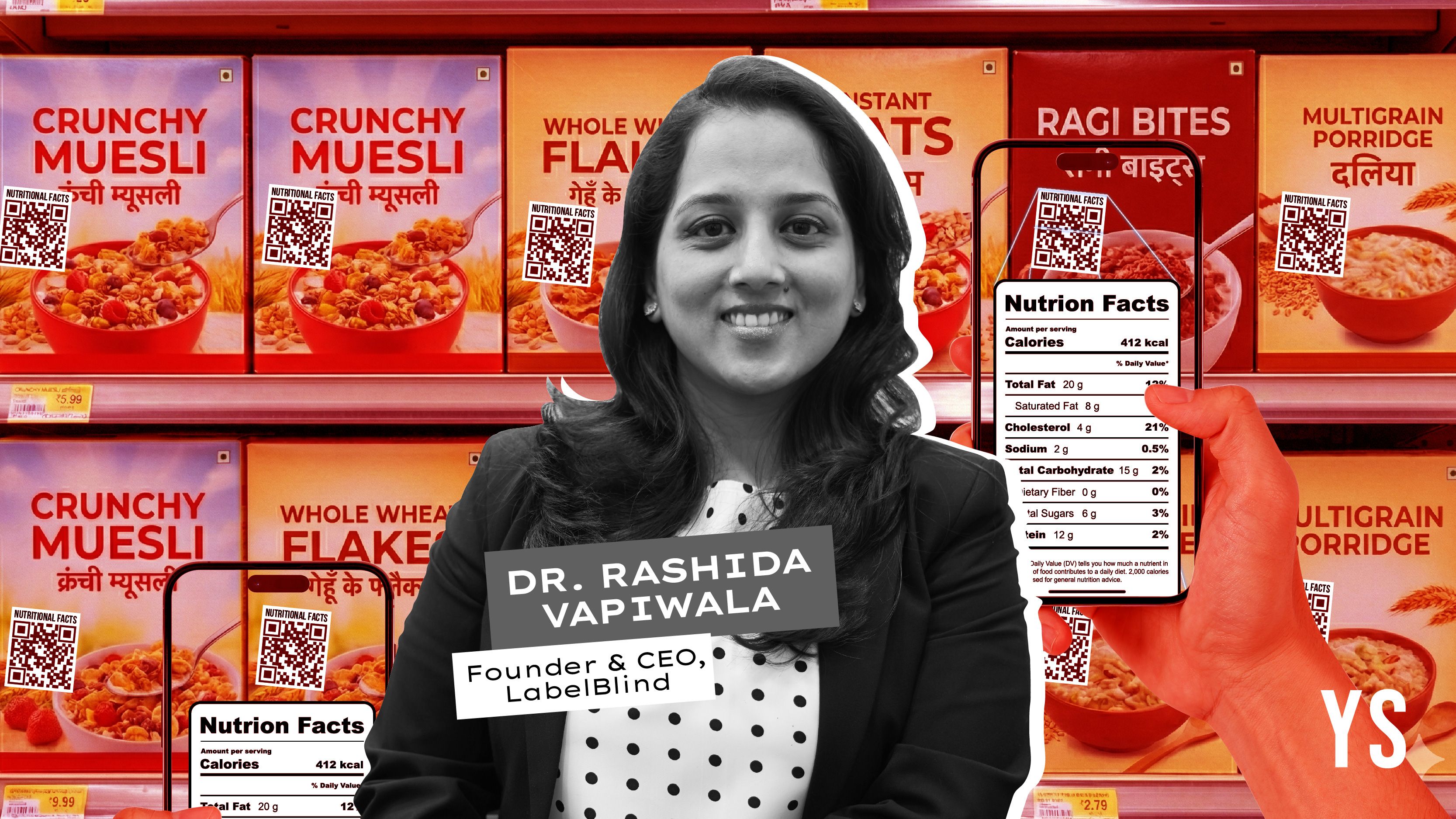
Art and Heritage
From village craft to livelihoods
Kantha embroidery, a traditional form of hand embroidery practised across parts of West Bengal and Bangladesh, is known for its simple running stitch worked over layers of fabric. Historically, it emerged from the reuse of worn saris, dhotis, or cloth scraps layered and stitched by hand, often by women inside their homes.
Today, that same domestic craft sustains a women-led social enterprise involving more than 300 women artisans from Nanoor and surrounding villages, producing kantha-embroidered dupattas, stoles, wraps and home furnishings for urban Indian and international markets.
<figure class="image embed" contenteditable="false" data-id="587733" data-url="https://images.yourstory.com/cs/4/f9bdfa20c75811ed9569e5d19beae38b/CopyofImageTaggingnoframesEditorialTem-amMaster6-1767718460189.png" data-alt="In Nanoor, a small village near Santiniketan, kantha embroidery was once a domestic practice shaped by reuse and necessity. Tajkira Begum transformed it into a women-led enterprise carrying memory, dignity and income far beyond the household." data-caption="
Photo credit: Rooh Rural
” align=”center”> Photo credit: Rooh Rural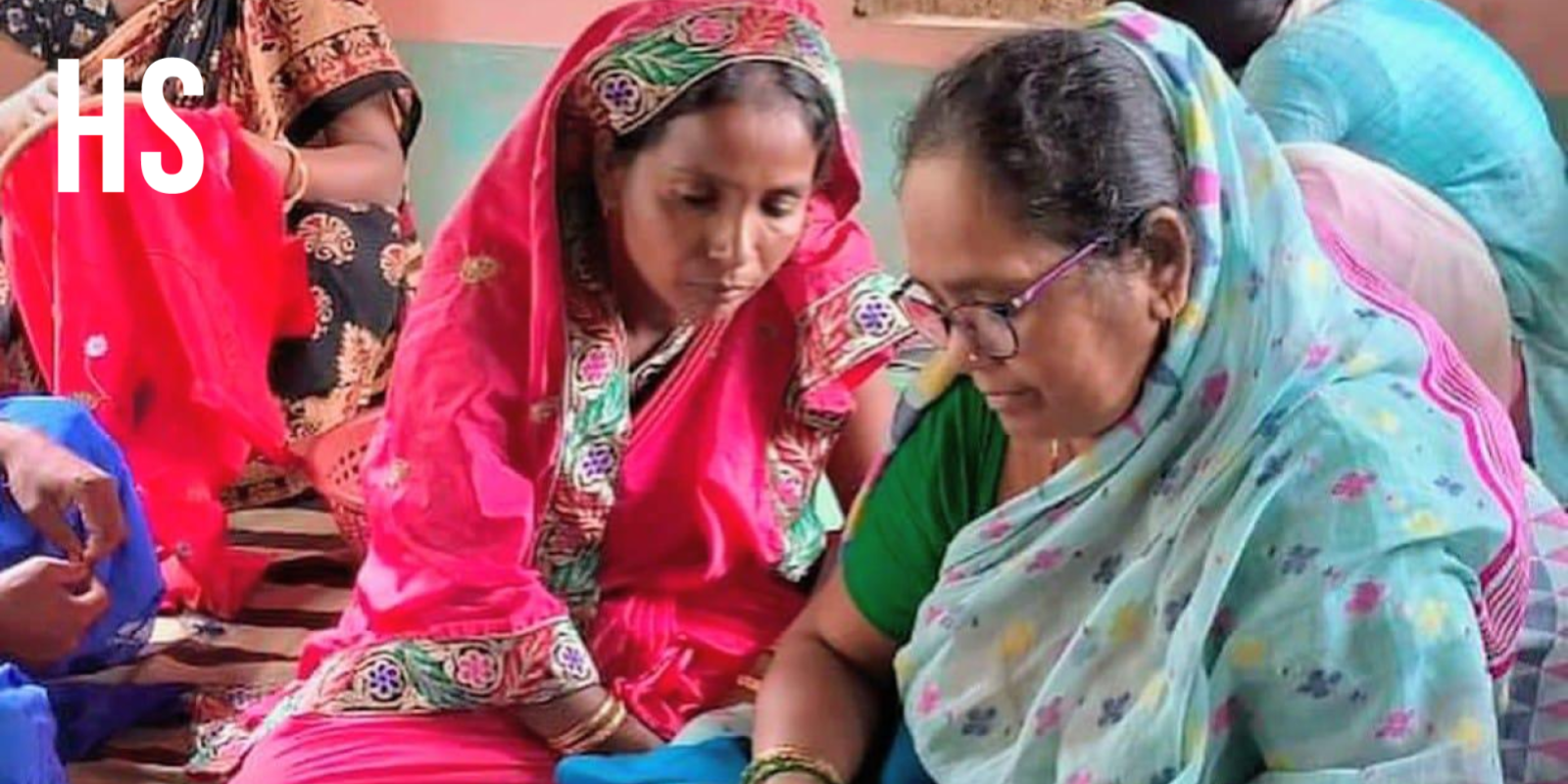
News & updates
- Tie up: Lenovo, the world’s largest personal computer maker, on Tuesday said it has teamed up with US AI chip leader Nvidia to help AI cloud providers quickly put data centres into operation, as it strives to establish itself in AI.
- AI funding: Elon Musk’s artificial intelligence startup xAI said it has completed a $20 billion funding round from investors including Nvidia Corp., Valor Equity Partners and the Qatar Investment Authority.
- Backing creators: Spotify is expanding its monetisation programme for creators and introducing new tools for video podcasters, as it aims to better compete with YouTube and Netflix in the booming market.
What does the Hubble Constant define?
Answer: The rate at which the Universe is currently expanding.
We would love to hear from you! To let us know what you liked and disliked about our newsletter, please mail nslfeedback@yourstory.com.
If you don’t already get this newsletter in your inbox, sign up here. For past editions of the YourStory Buzz, you can check our Daily Capsule page here.
Discover more from News Link360
Subscribe to get the latest posts sent to your email.