

How IISc's FSID is building a vibrant deeptech ecosystem in India
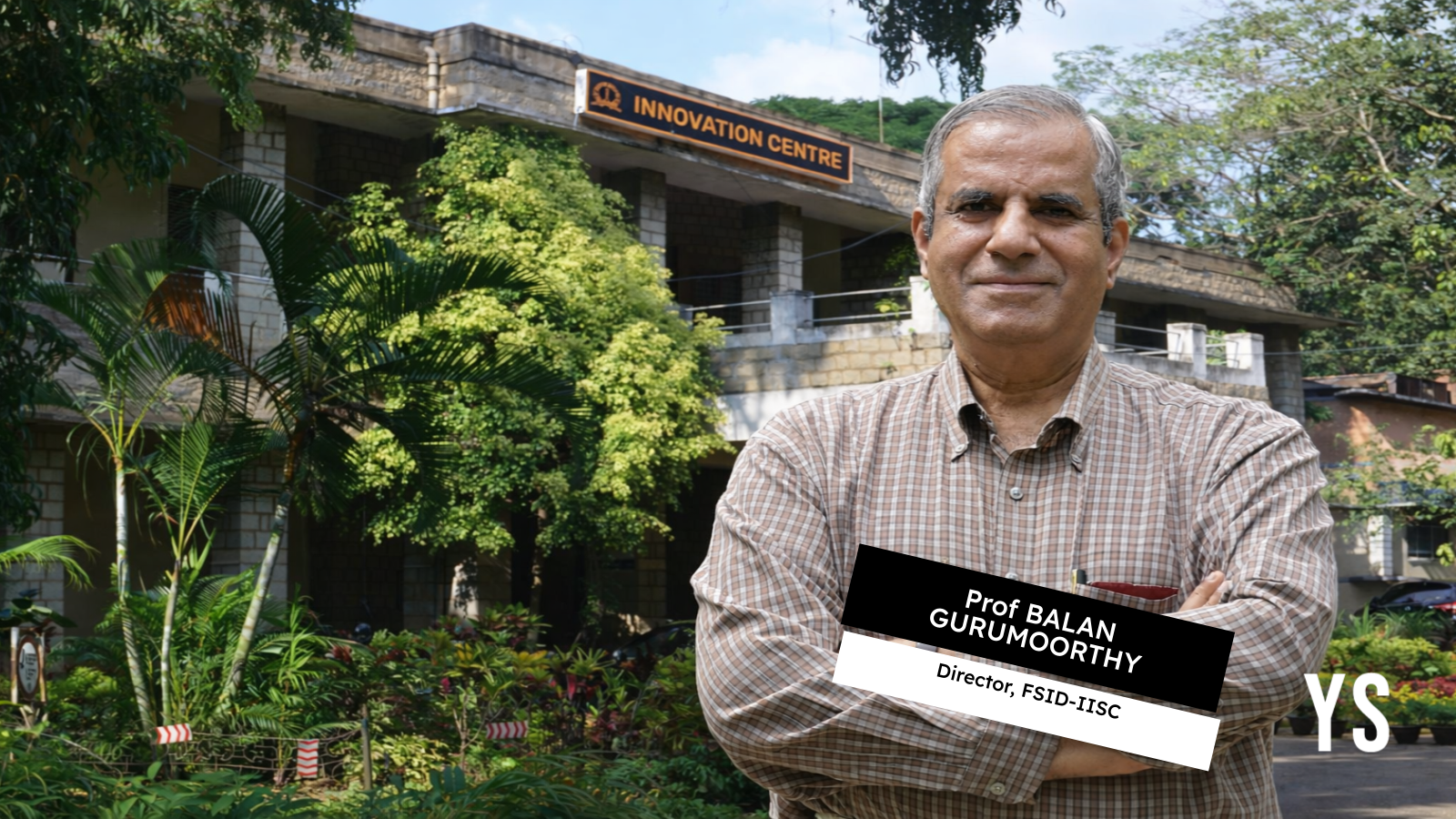
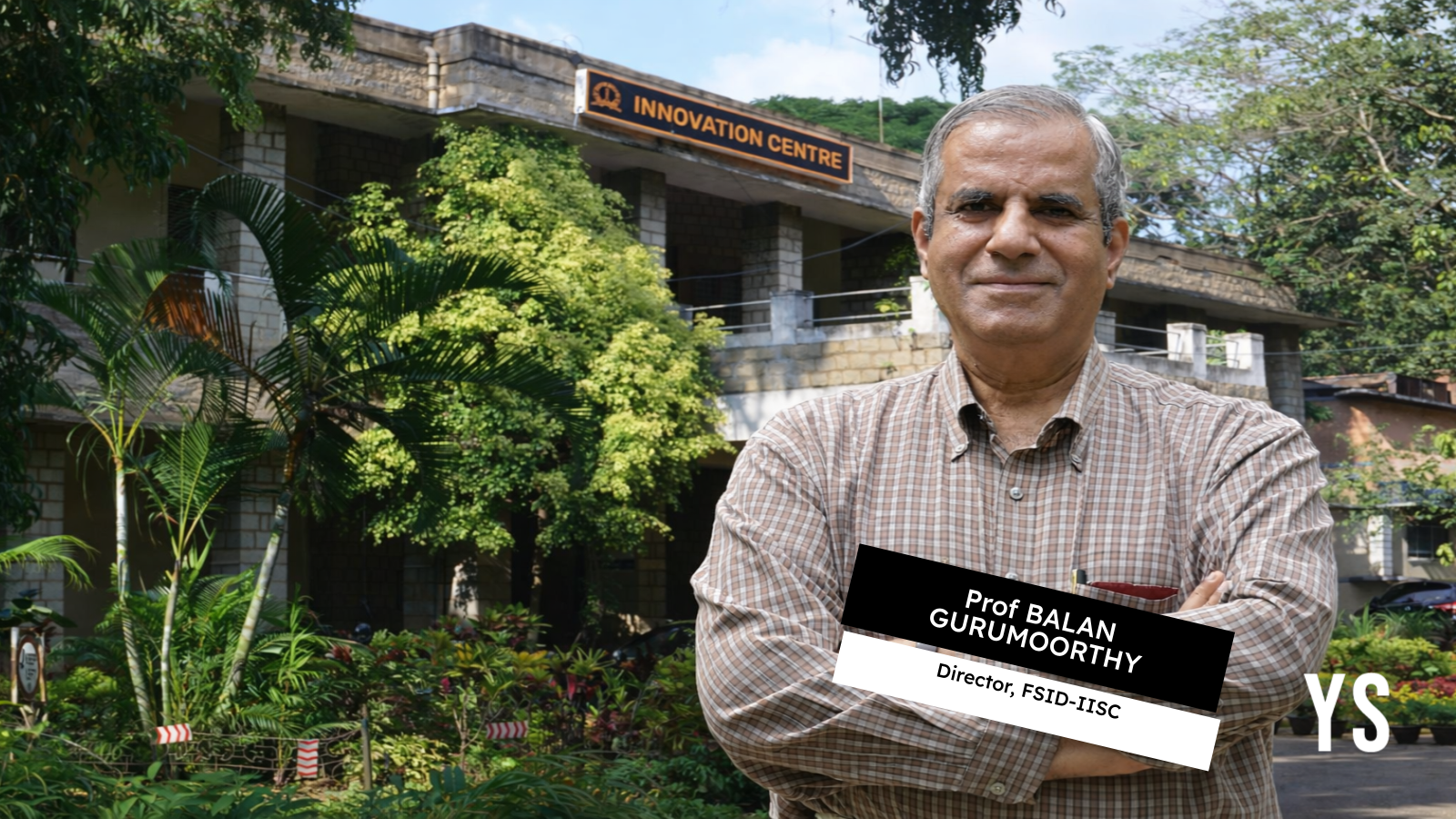

Within the Indian Institute of Science (IISc), the Foundation for Science Innovation and Development (FSID), which was formally incorporated in 2020, has been engaged with deeptech startups in the country, enlarging the scope of its activity each year. The core philosophy driving FSID aligns with that of IISc.
“It is always about taking the know-how developed on the campus (IISc) to the outside world. The second part is that it should somehow be relevant to the immediate world around us,” says Prof Balan Gurumoorthy, Director – FSID, in an interview with YourStory.
Given the depth and breadth of IISc in the varied disciplines of science and engineering, deeptech startups would easily fit into its groove. Gurumoothy highlights the path of a deeptech startup —science, technology, engineering, and finally, the product.
“Our definition is very simple, you know, which is that anything where the offering is based on unique or new science. Then we say, that is our game where we would like to be involved in that,” says Gurumoorthy.
<figure class="image embed" contenteditable="false" data-id="589970" data-url="https://images.yourstory.com/cs/wordpress/2017/04/Untitled-design-53-2.jpg" data-alt="IISC" data-caption="
” align=”center”>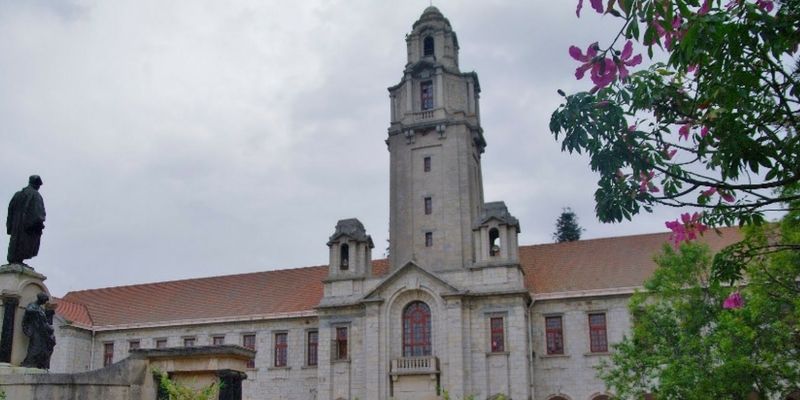
.thumbnailWrapper{
width:6.62rem !important;
}
.alsoReadTitleImage{
min-width: 81px !important;
min-height: 81px !important;
}
.alsoReadMainTitleText{
font-size: 14px !important;
line-height: 20px !important;
}
.alsoReadHeadText{
font-size: 24px !important;
line-height: 20px !important;
}
}

There are three key highlights about FSID’s engagement with deeptech startups. FSID is sector-agnostic, which means startups from any segment can be part of its programme as long as the institute believes it has the know-how to help them. An example of this is the number of spacetech startups, including Bellatrix Aerospace and Digantara, that have emerged from its programme.
Secondly, it wants to encourage its PhD students to take the path of entrepreneurship, as well as the faculty members. Lastly, it also aims to create an enlarged ecosystem where there is participation from multiple players.
Selection process
FSID now receives about 400 applications annually, and it selects about 20 deeptech startups. Earlier, the annual intake was around 13-14, largely due to the infancy of this ecosystem.
This programme is open to everyone, and around 45% of the startups it is engaged with are those from a non-IISc background. Besides, it has also got an entrepreneur in residence (EIR) programme, which is a platform for its PhD students to venture into entrepreneurship.
“It is very important because for a deeptech startup, the funnel has to be PhD students,” says Gurumoorthy.
Given the structure of IISc and its expansive campus in Bengaluru and the newly set up one in Challakere, which is about 250 kilometres from the state’s capital, it is able to provide all that is needed for a deeptech startup — laboratory space, deep domain experts, mentorship and a certain amount of funding.
The selection process goes through the conventional process of technical, business and market potential evaluations. Though FSID does not insist there has to be a proof of concept (PoC), it would be more favourable if there is at least a lab-scale PoC.
Gurumoorthy says there have been cases where startups have come to them with just drawing board ideas, and if there are faculty members at the Institute who find this interesting from an engineering point of view, they go ahead with it.
The big change that FSID has seen over the years has been the growing number of faculty at IISc donning the roles of entrepreneurs. Gurumoorthy says the percentage of faculty taking up entrepreneurship is at the same level as Stanford University in the US, which is 15%.
Ecosystem support
The structure of FSID also goes beyond the support that is provided within the campus, as it actively brings in experts from the industry, business specialists, and taps into their alumni network — anything which can help their startups. This has largely got to do with the business side of things.
“We want to expose our entrepreneurs to those executives who have been in the market and have actually built businesses,” says Gurumoorthy.
There have been cases at FSID where these mentors have either taken up an executive role in the startup or invested in the company. It also gives good exposure to deeptech startups to understand the viability of the technology or products they are building.
Given that IISc has engaged with corporates for a long time, FSID has become an avenue for them to gain exposure to new technologies that are being developed by these deeptech startups.
Gurumoorthy says FSID has also been actively engaged with venture capital firms and sees that the connections are built with their portfolio startups.
Challenges
At the same time, there are challenges that FSID continues to face as it deepens its engagement with the startup ecosystem. The primary one is on the funding side, where there is always a shortage of capital, as this entity largely relies on various grants.
“We are trying to see if we can create a fund that can provide some initial early-stage support,” says Gurumoorthy.
The biggest challenge for these deeptech startups is the near absence of a “champion customer”. Gurumoorthy remarks that the situation is unlike the West, where every successful startup has had that single customer, which is a large corporate which backs a young company.
Gurmoorthy says having such champion customers helps in multiple ways, as they invest their time and are a valuable guide in improving the product of the deeptech startups.
In addition, there is also a need to build that business sense among these startups. Gurumoorthy again remarks that all the leading academic institutes in the West have strong MBA programmes. “If you look at all the hot spots of innovations, there is a good business school.”
USP
On the USPs of FSID, Gurumoorthy says the faculty at IISc are generous both with their time and also with the facilities.
More importantly, FSID works on a startup incubator model and remains patient with the deeptech startups, as the goal is always to see that these entrepreneurs are able to stand in front of a customer or investor.
“We do not work on a clock but work on the evolution of the company,” says Gurumoorthy.
Interestingly, FSID also provides health insurance to the founders and their team. Further, it also provides mental wellness support for the founders.
Future
As part of its future plans, FSID is targeting to have around 25-30 startups each year because it believes that the infrastructure is now in place. It also expands the number of entrepreneurs in residence programmes.
FSID also believes in the concept of indigenisation, but wants the freedom given to these startups to operate globally. This organisation is also actively looking at how it can use science, engineering and entrepreneurship to provide that sustainable livelihood for the people who are at the bottom of the pyramid.
“We want to grow and have more successes,” Gurumoorthy says.
Edited by Jyoti Narayan
Discover more from News Link360
Subscribe to get the latest posts sent to your email.