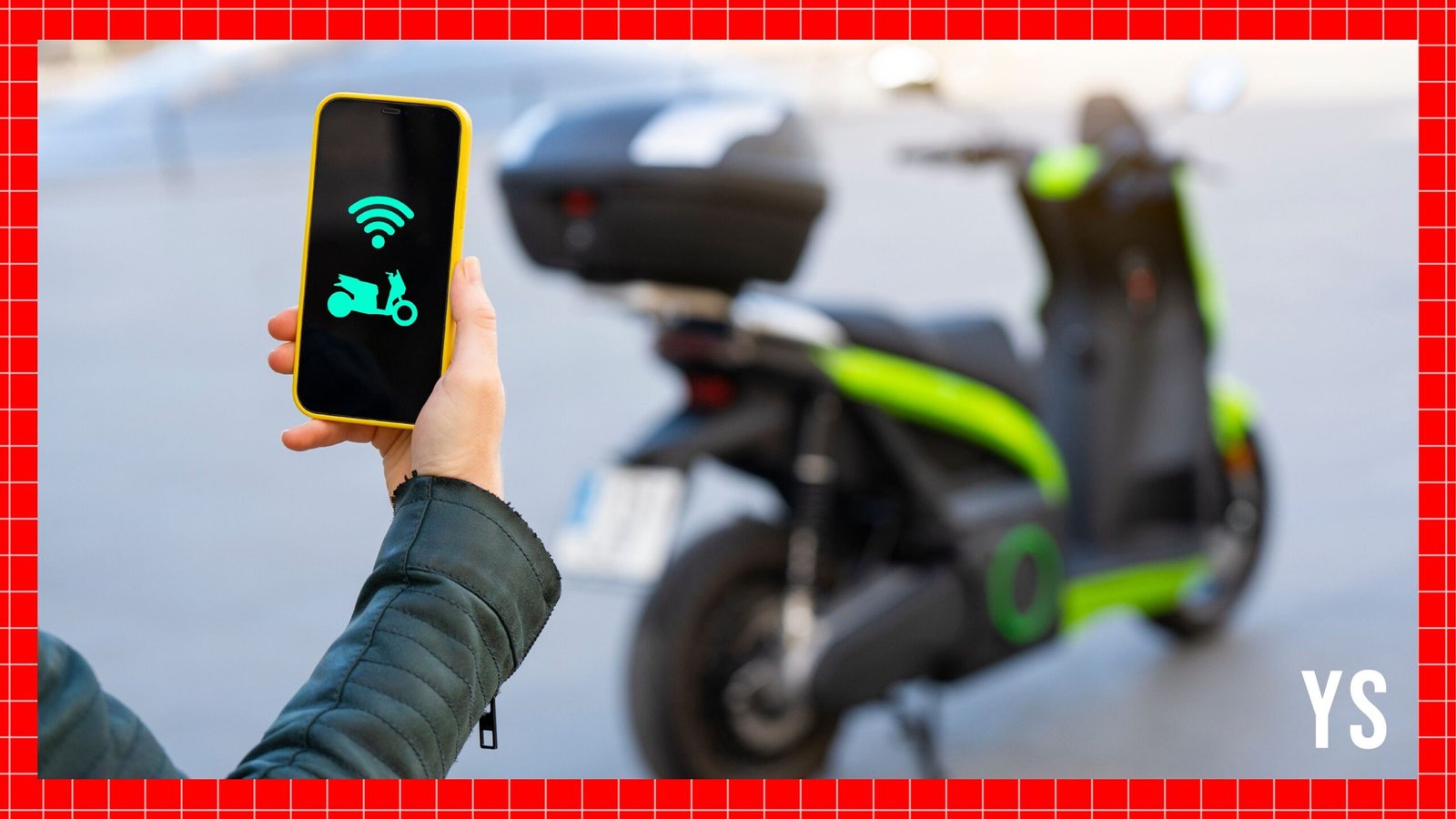
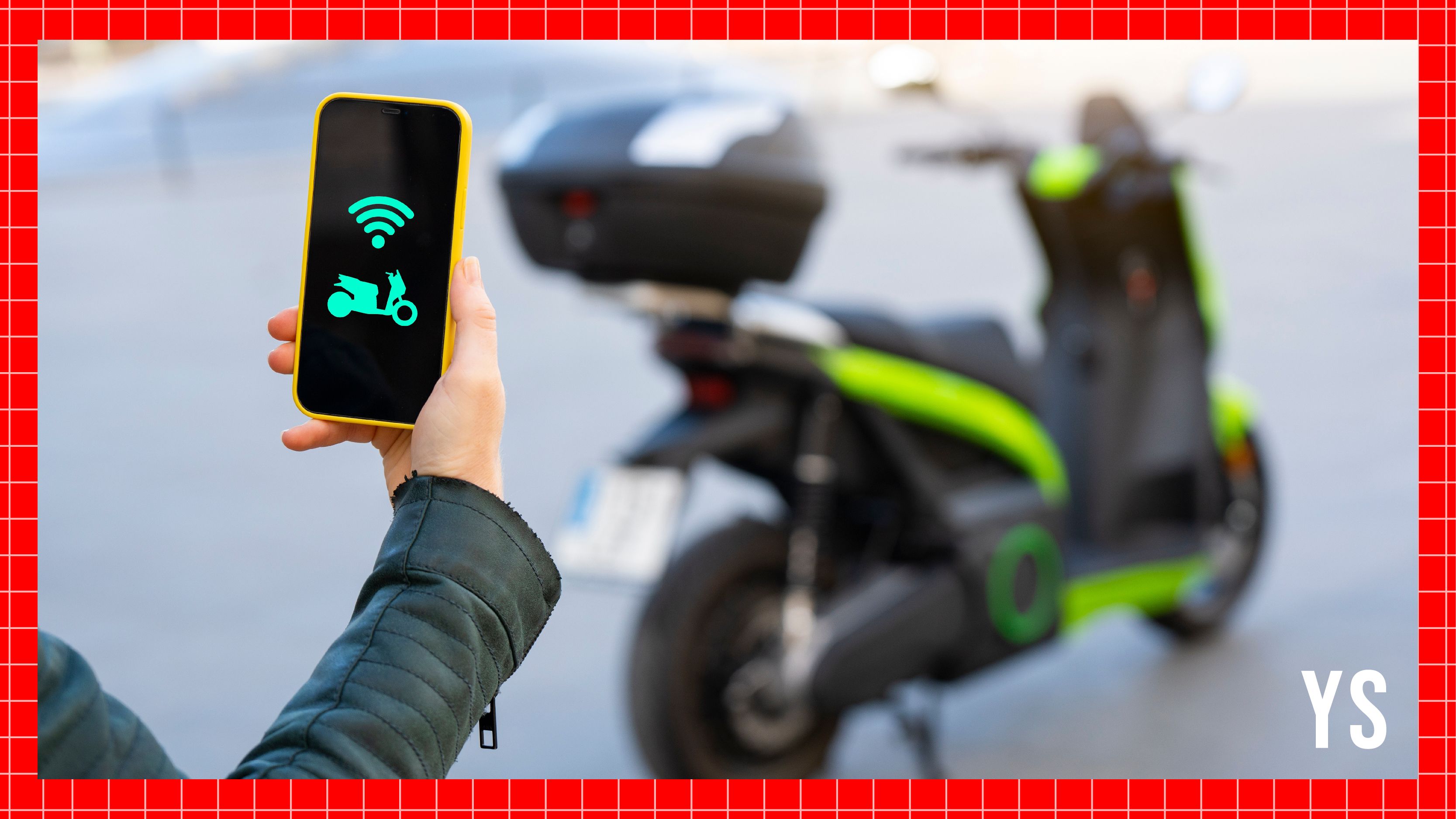

Imagine a delivery agent on a sunny day in Nagpur, waiting outside a grocery store. He is looking intently at his phone, not scrolling through social media apps but checking the real-time health data of his electric scooter battery.
The score on his screen is generated by an AI model which he may not fully understand. For him, however, the benefit is profound—he knows that if the score stays high, the battery is supposed to last longer, and the expenses are predictable. This means he can keep his income secure by ensuring that his EV battery stays healthy and eliminating unaccounted-for expenses.
Such stories of delivery riders, commercial vehicles, and even individuals who own electric vehicles are becoming increasingly common.
There are lakhs of EV owners and riders in India who are benefitting from this technological advancement, which enables them to ensure the long-term health of their vehicle batteries using precise and comprehensive data.
According to the Ministry of Road, Transport, and Highways, India has more than 1.8 million EVs that are now a crucial link in the country’s daily mobility and last-mile connectivity infrastructure. This transformation can be seen on India’s streets, and data is central to its long-term success.
Data is playing a central role in powering the EV revolution in the country. It is a game-changer not just for gig workers, last-mile delivery providers, and existing EV owners, but also for anyone who is still unsure of buying battery-powered vehicles. Deeptech solutions are building trust by reducing uncertainty around cost and battery performance. This is likely to further accelerate EV adoption across the country.
Mix of energy and intelligence
The one thing true about batteries is that they age. The degradation happens because of time, temperature, riding patterns, and charging behaviour. According to reports, a typical lithium-ion battery will lose some percentage of its capacity with consistent use, and this rate of degradation is even higher in high-utilisation vehicles, like those used by gig workers and small-fleet operators.
Traditionally, it was almost impossible to precisely predict when a battery could fail. This has been observed in non-EV vehicles too, which use batteries to power their electrical systems. The rider or driver suddenly realises one day that the battery range has collapsed. In this case, they usually had only one option to buy a new battery immediately, sometimes at an inflated cost.
In the current context, with the rise of battery financing or battery-as-a-service models, this upfront cost is saved because the rider can simply acquire a new battery from the operator with minimal upfront cost. However, the lack of data and unpredictability of asset degradation can make financing a challenge because the lenders struggle to evaluate the credit risk associated with the asset.
This is where AI and IoT are changing the entire game. By integrating the technology, every EV generates thousands of useful data points like current, voltage, temperature, depth-of-discharge, state-of-charge, and much more. When these numbers are analysed holistically by AI, they provide a clear picture of the battery health and how it evolves over time.
Extending battery life through AI
Now that we understand how AI solves a major problem of predicting battery life, you may ask: how does it help in extending the battery life?
Here’s how it happens:
- By analysing the historical and real-time data, AI models estimate how a battery will age over weeks and months. Reports have shown that machine Learning models can predict battery life with an accuracy of around 90%. It means that a user can look at the data and adjust their battery usage to slow down degradation. For the financers, it means that the asset’s lifecycle is predictable and transparent.
- The US National Renewable Energy Laboratory and other lab studies have shown that frequent fast charging, especially without good thermal management, can significantly accelerate battery degradation. India experiences warmer weather for the most part of the year, if we exclude the Himalayan regions. When battery cells are consistently exposed to temperatures above 40 degree Celsius, it expedites the degradation. AI models can flag these abnormal heat patterns so that users can take corrective measures and avoid permanent damage to the battery.
Building financial trust in an uncertain asset class
Battery financing is an important feature of India’s fast-growing EV market today. Primarily, it is a trust business, and it is hard to build trust when the risks are not known. AI and data analytics bring a high level of transparency which makes measuring risk easier, and financially accessible and affordable.
Financial service providers can adjust the pricing based on battery health. ML models can also predict when a battery is expected to fail, allowing the financiers to intervene in advance, offering timely maintenance plans, restructured EMI, or preventive servicing. This can mean lower defaults and higher trust.
Accurate data also helps the insurance and resale markets. AI-powered diagnostics can help build a strong circular economy for batteries. AI enables timely reuse, refurbishment, and second-life applications of the battery by accurately assessing its health. This means batteries are not discarded prematurely and continue to generate value for the users way beyond their first lifecycle.
India’s EV future
Government surveys estimate India could see around 10 million EV sales annually by 2030, and a large share of this growth is expected to come from Tier II and III cities. In these markets, affordable and trusted battery financing will be critical to accelerating adoption. Equally important is user confidence in the EV ecosystem—particularly the ability to rely on infrastructure and avoid unexpected costs.
Data-driven intelligence will be a key enabler of this trust. When users can leverage data to optimise battery health, extend battery life, and lower operating costs, EV ownership becomes both predictable and economical. For last-mile delivery riders, this reliability directly translates into higher vehicle uptime, higher income, and fewer financial shocks.
To unlock this shift at scale, batteries must be treated as long-term assets rather than consumables. This is where AI-driven insights become transformative. By accurately predicting a battery’s residual value at the end of its driving life, AI can enable better financing models and support battery repurposing for second-life applications. This maximises asset utilisation while reducing the total cost of ownership.
By building trust in the long-term value of the battery through data and AI, EV adoption in India can accelerate significantly—making electric mobility a financially smart, practical, and scalable choice for millions of users beyond metro cities.
The author is the founder of deeptech company BatteryPool.
Edited by Swetha Kannan
(Disclaimer: The views and opinions expressed in this article are those of the author and do not necessarily reflect the views of YourStory.)
Discover more from News Link360
Subscribe to get the latest posts sent to your email.