


‘The metaverse has always existed’: Amitav Ghosh on his new novel, Ghost-Eye
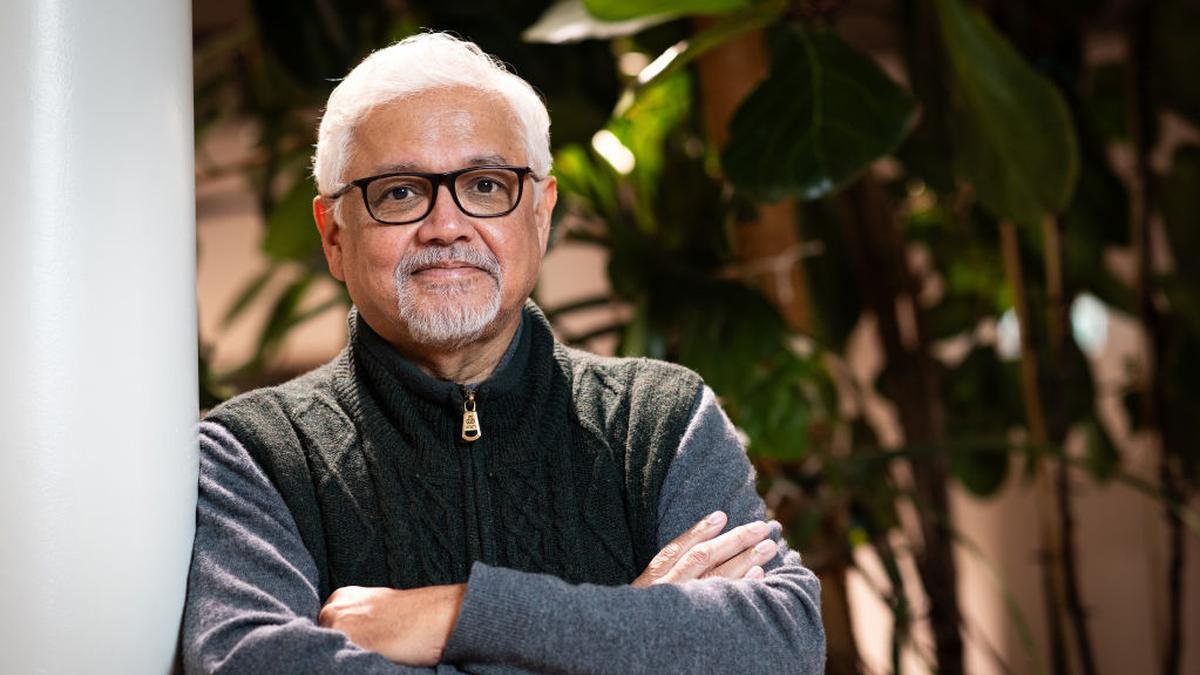
The introduction of characters from other Ghosh novels gives the reader a frisson of excitement, and yet, the novel itself is a fresh exploration. In Chennai for the launch of his book, Ghosh speaks extensively about technique, reincarnation, the fossil fuel crisis, and his book for the ‘time pod’ by Norway’s Future Library. Edited excerpts:
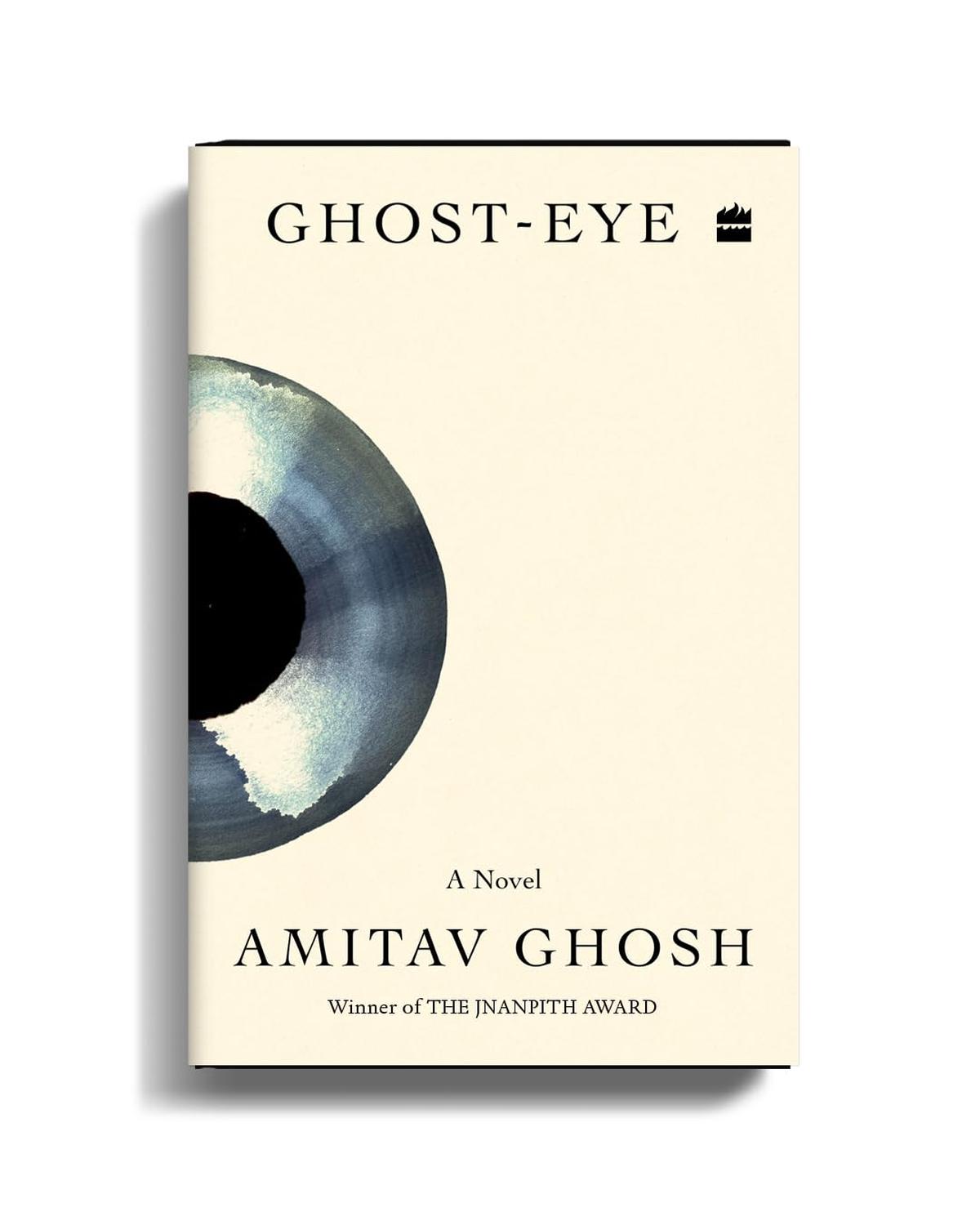

You have said earlier that Ghost-Eye ‘came to you’. How much craft or design went into shaping the idea after?

The craft and design are absolutely essential to it. The material comes to you, yes, but then the shaping and the craft happen in a different way. It calls upon everything I know about writing fiction; all my experience of 40 years. So yes, even when the material ‘comes to me’, it requires a great deal of labour to get it in shape.
Ghost-Eye reintroduces characters and themes from earlier books — Gun Island, The Hungry Tide, The Glass Palace, The Calcutta Chromosome…
A: They fell in place too, like dominoes… I wrote Gun Island with Dinu as the narrator (also the narrator in Ghost-Eye). I really liked that voice; I found it very useful and productive. So once I went back to him as the narrator, all the other characters fell into place.

As a man of science and academic rigour, how do you posit reincarnation in a scientific world?
That’s really the paradox. I’ve had a very rigorous education in some of the world’s best universities and I’m completely acculturated into a very modern materialist worldview. At the same time, if you look at all the evidence, and the enormous amount of research that’s been done on reincarnation, it is overwhelming. There are thousands of instances of children recalling, with great exactitude, their past lives.
If there’s even one case, it completely changes everything that we know about the world. It forces you to realise that this world that we take to be completely singular, is not; there are other parallel worlds that exist in simultaneity. The metaverse has always existed.
Why did you decide to unravel the denouement literally over the phone, removing the narrator from the actual location — the Sundarbans?
When you’re writing in the first person, if you place your narrator in the midst of the action, then you can only write about what they witness. It’s very difficult, within those first-person narration situations, to create a global picture of what is happening. Dinu, in the U.S., can piece together an overall picture from the many voices reporting the happenings to him. In terms of narration, it just makes it a great deal easier, much more tractable. Otherwise, that scene alone could have taken up half the book.
Food and fish are very important in Ghost-Eye; they are nearly characters. What role do they play in your life?
I’ve always been interested in food and cooking. I’ve realised that if you grow up in a city, the primary mode in which you engage with your environment is actually through food.
It was the beginning of my interest in the environment and in the world around me. Fish is so essential to Bengal, a land of rivers. We are also a land that has seen a lot of famine, and without fish, the great majority of people in Bengal would lose a primary source of nutrition. But it’s not just nutrition; it becomes a part of your culture; it becomes a sort of dense web of symbolism.
However, this is very rarely written about in literature because the production of food is done by farmers, and food, mostly, is made by very marginalised people, usually women, within the household. That is also one of the reasons why I worked at bringing it into my work. Most of all, because food grounds you in reality.
So, will a cookbook or book of recipes be your next?
No, that would be impossible, because as I say in this book, you know, the production of food in Bengal, I would say, really, that’s true of all of India, doesn’t come from written sources. It comes from practise, observation, intuition. I cook intuitively, using my body, my senses. I don’t cook in that way. So I could never write a recipe.
U.S. President Donald Trump recently withdrew America from the climate fund and a bunch of other organisations that urge climate action. How will this impact the world?
It’s going to be disastrous, there’s no doubt. Look at the ideological damage that it does, when you deny the reality of a phenomenon that everybody is experiencing around the world. It’s within the English-speaking world, most of all, that you see this phenomenon of climate denial.
The Anglo-American empire has been built upon fossil fuel. Their engagement with fossil fuel is also, in some profound sense, emotional and imaginative. The whole Anglo-American world now has such deep stakes in fossil fuel that it’s almost impossible for them to turn away from it. The great tragedy is that they’re fighting to preserve an energy regime that is already on its way out.

You were commissioned to write a book for the Future Library’s ‘time pod’, one that will not be opened or read for 100 years (from 2014). How is that going?
The daunting thing about the project is that they don’t give you any guidelines at all. When you are confronted with that kind of freedom, it’s very difficult to know what you’re going to write. Let me say that I’ve been working on it now for several months, only to find myself at a dead end. I still don’t know what I’m going to do. The challenge is to try and do something that 80 years from now will also have some relevance.
ramya.kannan@thehindu.co.in
Published – January 15, 2026 06:05 am IST
Discover more from News Link360
Subscribe to get the latest posts sent to your email.