
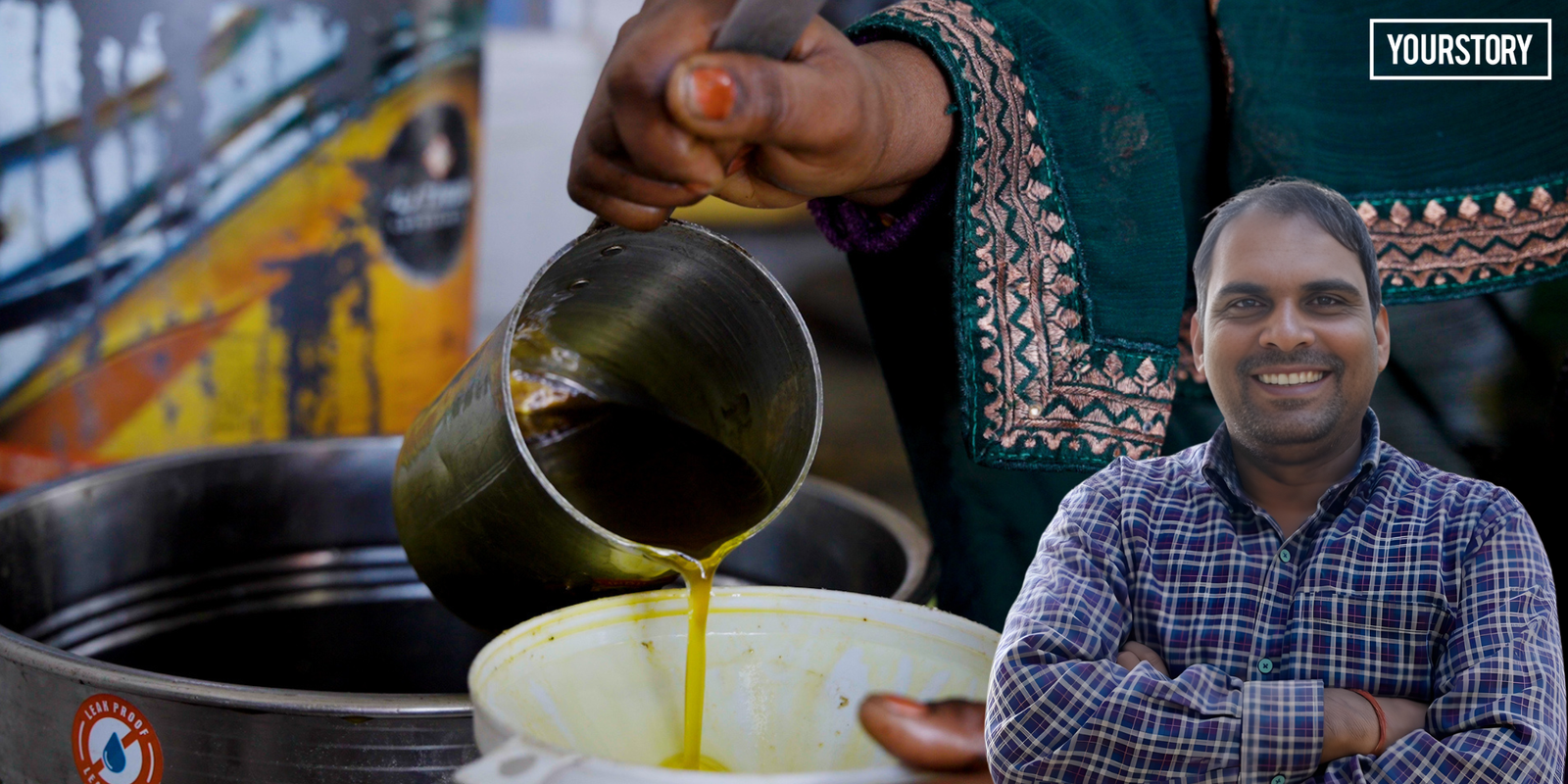
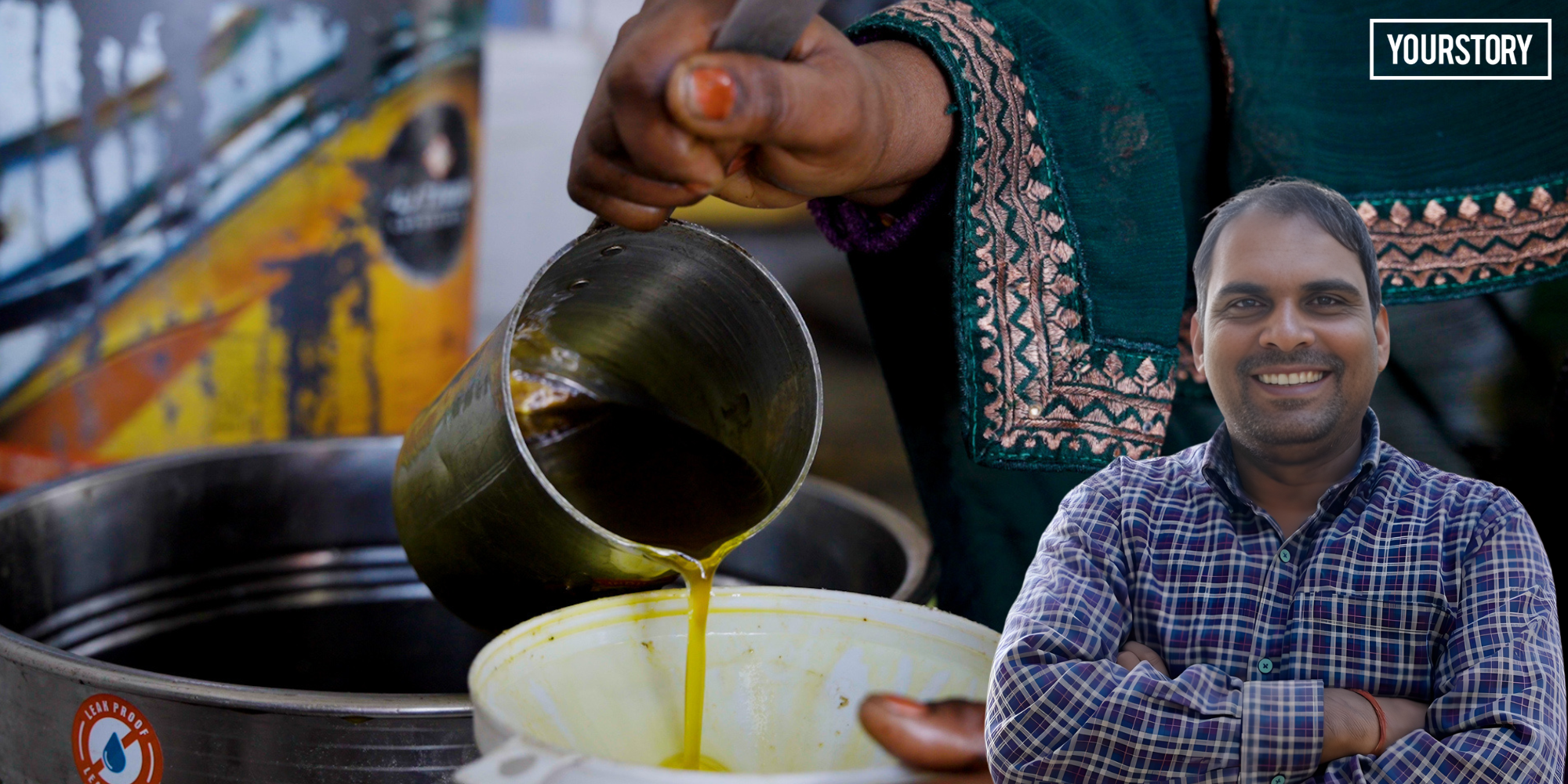

Maurya’s unit works in two ways. Some customers come with a tin or container and buy ready oil from him, while farmers arrive with their mustard and get it pressed on-site, taking the oil back for household use.
On most days, he says, that steady back-and-forth is what keeps the place running, with work depending on the season, availability of seed, and who turns up from nearby villages.
Learning the trade online
Maurya does not describe his shift into the business as a long-planned move, but as something he began and then learned along the way. He says much of his understanding came from watching videos and reading online about how small oil units are managed, what machinery is needed, and how to organise basic operations.
What he talks about most, however, is quality. “We will sell good, pure oil, we will not compromise,” he says, describing the one point he did not want to dilute even if sales were uncertain.
That focus shaped early choices, including the kind of machine he installed. Maurya says the setup he bought is used for pressing, and he associates it with traditional-style output, the kind customers recognise as cold-pressed mustard oil. He also links repeat business to small details: , how the unit is maintained, how clean the process looks, and whether buyers feel comfortable returning.
From loan to local trust
The hardest part at the start, he says, was money. He did not have enough to install a full setup, purchase seed from the market, and still keep the unit functional in the first months. Looking for a way to fund the initial costs, he approached the local department office and was guided towards Mukhyamantri Yuva Udyami Vikas Abhiyan (CM YUVA) Yojana.
Maurya describes the loan as support that helped him move from an idea to something operational, especially for arranging equipment and buying initial raw material. Since starting, he says the response has been encouraging, with customers coming not just from his immediate area but from a cluster of nearby villages, including Chhaavni Line, Roopur, Patluiya, Rangwarpur, Bisheshkar Ganj, Adarsh Bazaar, Sakra, Husenpur, Janzipur, Kotha, Atkhana, Jaspura, Usra, and Baipur.
He is already thinking about what would make the unit more stable, particularly better packaging and a more organised way to scale without losing control over process.
For now, the business remains small and tightly managed, but it has brought a predictable rhythm to his days, replacing the uncertainty he associates with the period before he could afford to begin.
Discover more from News Link360
Subscribe to get the latest posts sent to your email.